
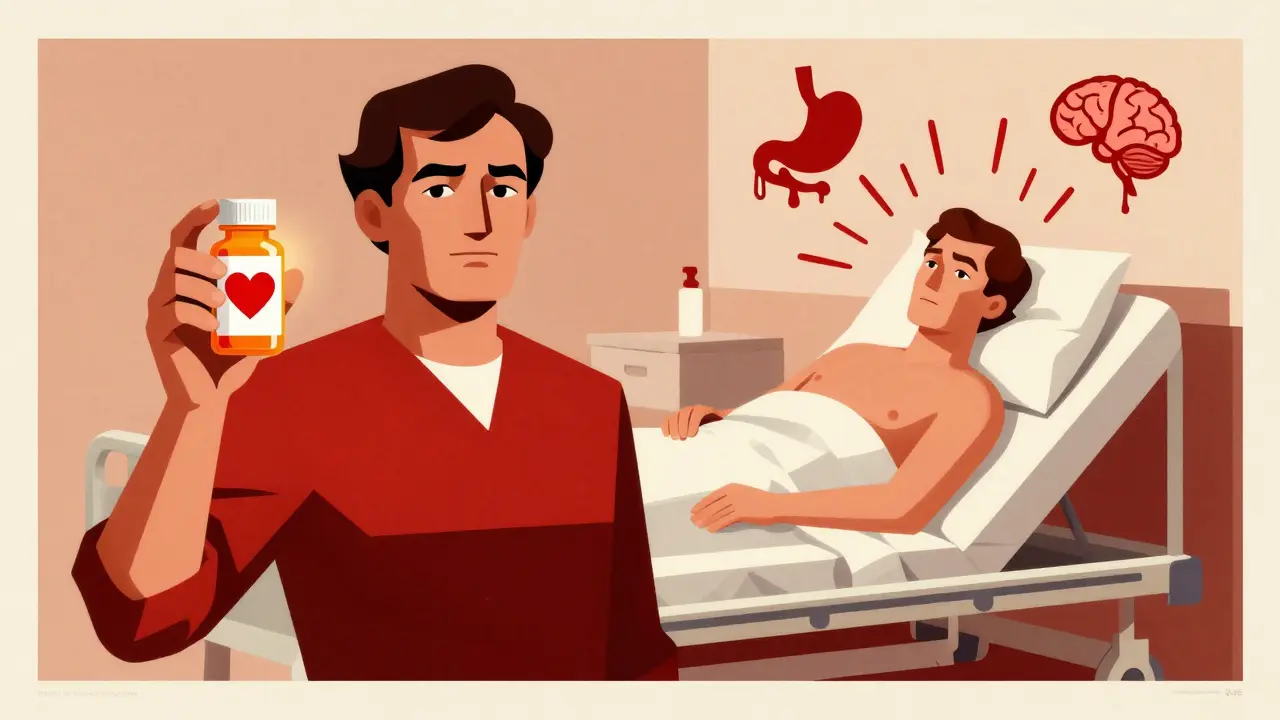
For decades, taking a daily low-dose aspirin was common advice for anyone worried about heart disease. If your parent had a heart attack, your doctor might have handed you a bottle of baby aspirin with a nod and said, "Better safe than sorry." But that’s not the story anymore. As of 2026, the science has turned a corner - and what once felt like a simple, harmless habit could now be doing more harm than good.
Why the Rules Changed
Aspirin works by thinning the blood. It stops platelets from clumping together, which can block arteries and trigger heart attacks or strokes. For people who’ve already had a heart attack, stroke, or stent placed, aspirin is still a lifesaver. That’s called secondary prevention, and it’s not up for debate. But for people without any history of heart disease - the group called primary prevention - the balance has flipped. Large, high-quality studies from 2018 onward, like ASPREE, ASCEND, and ARRIVE, showed something startling: while aspirin slightly lowers the risk of a first heart attack, it also increases the chance of dangerous bleeding - in the stomach, brain, or elsewhere - by about 43%. For many, the bleeding risk outweighs the benefit. The U.S. Preventive Services Task Force (USPSTF) updated its guidelines in 2022, and most major health groups now agree: don’t start aspirin for heart disease prevention if you’re over 60. The older you are, the higher your bleeding risk. And with better control of blood pressure, cholesterol, and diabetes thanks to statins and lifestyle changes, the extra protection aspirin offers has shrunk to almost nothing.Who Might Still Benefit
There’s a narrow group where aspirin might still make sense - but only after careful thought.- Adults aged 40 to 59 with a 10% or higher 10-year risk of heart disease, calculated using the ACC/AHA pooled cohort equation.
- People with diabetes who are over 40 and have at least one other risk factor - like high blood pressure, smoking, or kidney disease.
- Those with familial hypercholesterolemia and a very high lifetime risk, even if they’re younger.
How Risk Is Measured
Doctors don’t guess. They calculate. The standard tool is the ACC/AHA pooled cohort equation. It uses seven inputs:- Age
- Sex
- Race
- Total cholesterol
- HDL (good) cholesterol
- Systolic blood pressure (and whether you’re on treatment)
- Diabetes status
- Smoking status
- Hypertension
- Abnormal kidney or liver function
- History of stroke
- Previous bleeding
- Unstable INR (if on blood thinners)
- Age over 65
- Drinking 3+ alcoholic drinks daily
What About Family History?
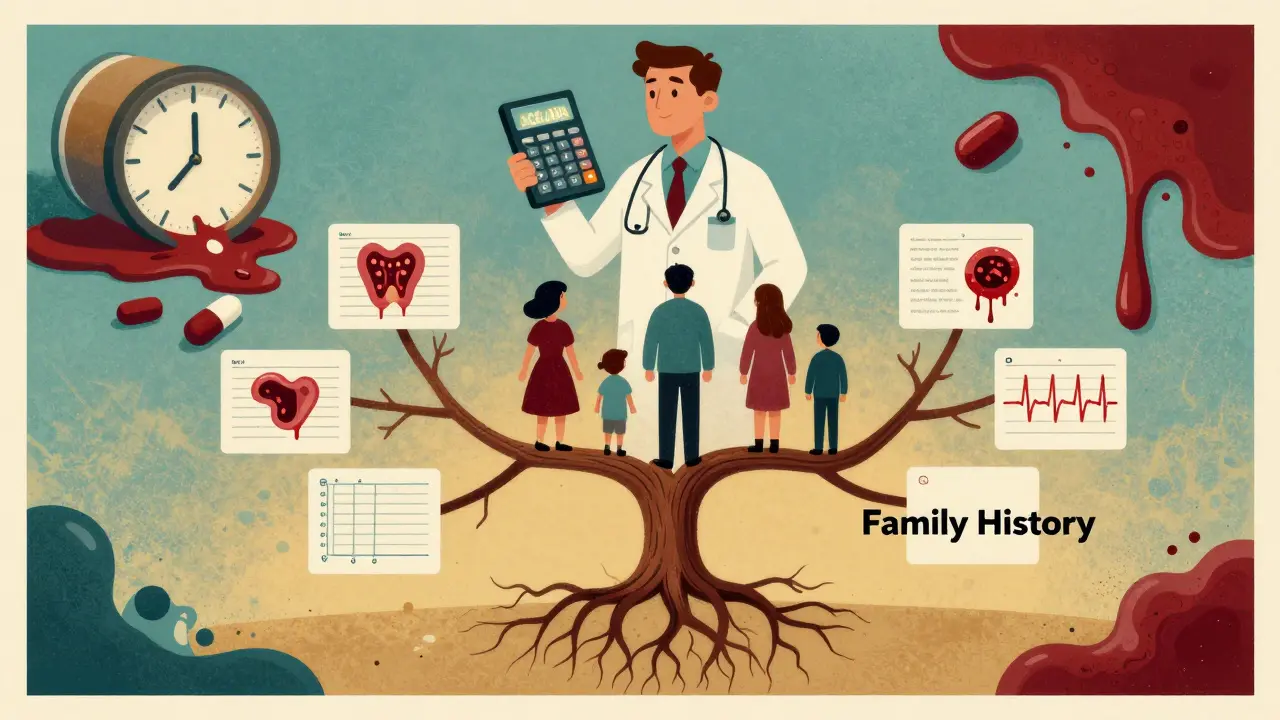
This is where confusion runs deep. Many people keep taking aspirin because their dad had a heart attack at 55. But genetics alone don’t override current risk. If you’re 65, have no high blood pressure, no diabetes, don’t smoke, and your cholesterol is fine - your family history doesn’t change the math. Your risk today is what matters. In fact, a 2019 study in Circulation found that nearly 7 million Americans over 60 take aspirin for prevention without a doctor’s recommendation - mostly because of family history. That’s outdated thinking. You’re not your father. Your body, your lifestyle, your lab results - those are your real indicators.
How Much Aspirin? And What Kind?
If your doctor says it’s right for you, the dose is 75 to 100 mg per day. That’s one low-dose or "baby" aspirin. Don’t take more. Higher doses don’t offer more protection - they only increase bleeding risk. Regular aspirin (325 mg) is not recommended for prevention. It’s for pain or fever. Stick to the low-dose version if prescribed. And don’t assume enteric-coated aspirin is safer for your stomach. Studies show it doesn’t reduce bleeding risk significantly. The real issue isn’t the coating - it’s the drug itself.Aspirin vs. Statins
Here’s the big shift: statins are now the first line for heart disease prevention. They lower LDL cholesterol - the main driver of artery-clogging plaque - by 30% to 50%. Aspirin reduces heart attack risk by only about 10% to 15%. If you’re at risk, you’re far more likely to benefit from a statin than from aspirin. In fact, many people who take aspirin for prevention don’t even take a statin - which means they’re missing the most effective tool. Think of it this way: aspirin is like putting a bandage on a leaky pipe. Statins are fixing the pipe itself.What If You’re Already Taking It?
If you’ve been on aspirin for years and have no heart disease, don’t stop cold turkey. Talk to your doctor. Stopping suddenly can cause rebound clotting in rare cases. Ask these questions:- What was my 10-year heart disease risk when I started?
- Has my risk changed since then?
- Do I have any bleeding risk factors now?
- Am I on any other blood thinners or NSAIDs like ibuprofen?
Real Stories, Real Risks
One woman in her early 60s took aspirin daily for 15 years because her mother had a stroke. She had no symptoms, no high blood pressure, normal cholesterol. One morning, she woke up with black, tarry stools. She ended up in the ER with a bleeding ulcer. She needed a blood transfusion. She stopped aspirin. No more bleeding. Another man, 58, with diabetes and high blood pressure, asked his doctor about aspirin. His 10-year risk was 18%. His HAS-BLED score was 1. His doctor said yes. He’s been on it for two years. No bleeding. No heart attack. That’s the sweet spot: high risk, low bleeding chance. But too many people fall into the middle - not high enough risk to benefit, not low enough risk to feel safe. That’s where the confusion lives.What You Should Do Now
Here’s your action plan:- If you’re under 40: Don’t take aspirin for prevention. Your risk is too low.
- If you’re 40-59: Ask your doctor to calculate your 10-year heart disease risk. If it’s below 7.5%, skip aspirin. If it’s 10% or higher, talk about whether aspirin makes sense - especially if you have diabetes or other risk factors.
- If you’re 60 or older: Don’t start aspirin. If you’re already taking it, talk to your doctor about stopping.
- If you have heart disease, a stent, or a history of stroke: Keep taking it - unless your doctor says otherwise.
- Never take aspirin with alcohol regularly. Never take it with NSAIDs like ibuprofen unless directed.
The Bottom Line
Aspirin isn’t a magic pill. It’s a tool - and like any tool, it’s only useful in the right hands. For most people today, it’s no longer the right tool for preventing a first heart attack. Statins, blood pressure control, exercise, and quitting smoking do far more with less risk. The days of blanket aspirin recommendations are over. What’s left is a smarter, more personal approach. If you’re thinking about aspirin for heart health, don’t rely on habit. Don’t follow your neighbor’s routine. Let your numbers - not your fears - guide you.Is it safe to take aspirin every day if I have no heart disease?
For most people without heart disease, daily aspirin is no longer recommended. Studies show the risk of serious bleeding - especially in the stomach or brain - often outweighs the small chance of preventing a first heart attack. If you’re over 60, guidelines strongly advise against starting aspirin. If you’re 40-59 and have high risk factors like diabetes or very high cholesterol, talk to your doctor before deciding.
What’s the best dose of aspirin for heart prevention?
If aspirin is recommended, the standard dose is 75 to 100 mg per day - that’s one low-dose or "baby" aspirin. Higher doses (like 325 mg) don’t offer more protection and increase bleeding risk. Always use the lowest effective dose, and never self-prescribe.
Does enteric-coated aspirin reduce stomach bleeding risk?
No. While enteric-coated aspirin is designed to dissolve in the intestines instead of the stomach, studies have not shown it significantly lowers the risk of bleeding. The main issue isn’t where the aspirin dissolves - it’s that aspirin affects blood clotting system-wide. Don’t rely on the coating for safety.
Can I take aspirin if I have high blood pressure?
High blood pressure is one of the factors that increases your bleeding risk - and it’s part of the HAS-BLED score used to assess safety. If your blood pressure is uncontrolled, aspirin is generally not recommended. If it’s well-managed with medication, your doctor may still consider aspirin only if your overall heart disease risk is high and your bleeding risk is low.
Should I stop aspirin before surgery?
Yes - but only under your doctor’s guidance. Stopping aspirin suddenly can increase clotting risk in some people. For most surgeries, doctors recommend stopping aspirin 5 to 7 days beforehand. But if you’re on it for secondary prevention (after a heart event), your surgeon and cardiologist must coordinate. Never stop on your own.
Is aspirin safe for people with diabetes?
For people with diabetes over 40 who have additional risk factors - like high blood pressure, smoking, or kidney disease - aspirin may still be considered. Diabetes doubles heart disease risk, so the benefit-risk balance is different. But if you’re over 70 or have a history of bleeding, even diabetes isn’t enough to justify aspirin. Always get your individual risk calculated.
Why do some doctors still prescribe aspirin for prevention?
Some doctors continue prescribing it out of habit, patient pressure, or because they haven’t updated their knowledge. Studies show many primary care providers still don’t correctly calculate heart disease risk. Also, patients often insist on continuing aspirin because they believe it’s "good for the heart." That’s why shared decision-making - where you and your doctor review your actual numbers - is so important.
What are the alternatives to aspirin for heart disease prevention?
For primary prevention, statins are the most effective. They lower LDL cholesterol and reduce heart attack risk by 25% to 37%. Other proven strategies include blood pressure control, regular exercise, quitting smoking, eating more fiber and less processed food, and managing diabetes. For people who can’t take statins, newer medications like PCSK9 inhibitors may be options - but aspirin isn’t the best alternative. Focus on what actually moves the needle: lowering bad cholesterol and improving lifestyle.
Philip Leth
January 3, 2026 AT 23:26My grandpa took aspirin daily since the 80s. He’s 89, still hikes, and never had a clot. Meanwhile, my cousin on statins got a GI bleed from ibuprofen and aspirin combo. Science changes, but people don’t. Maybe the real issue isn’t aspirin-it’s doctors oversimplifying complex biology for convenience.
Brittany Wallace
January 4, 2026 AT 20:09As someone who’s watched her mom nearly die from a bleeding ulcer after 20 years of ‘just in case’ aspirin… I’m just glad we’re finally moving past the ‘one-size-fits-all’ medicine era. 🙏 It’s not about fear-it’s about listening to your body, not your dad’s old prescription bottle.
veronica guillen giles
January 5, 2026 AT 23:31Oh wow, so now we’re supposed to trust algorithms over our own instincts? Next they’ll tell us to stop hugging our kids because ‘statistically, it increases the risk of emotional dependency.’ 😏 The real danger isn’t aspirin-it’s letting a spreadsheet decide what your body needs.
JUNE OHM
January 7, 2026 AT 23:13THEY’RE HIDING THE TRUTH. 💀 Aspirin was banned in Europe for prevention in 2021 because Big Pharma didn’t want people realizing statins cause liver damage and depression. The ‘risk calculators’? Made by drug company consultants. Your ‘10-year risk’ is a marketing tool. Wake up. 🇺🇸 #AspirinIsSafe #StopTheLies
Haley Parizo
January 9, 2026 AT 09:51You call this ‘personalized medicine’? It’s just corporate medicine with a fancy spreadsheet. They took a simple, cheap, centuries-old remedy and turned it into a liability because it doesn’t make enough money. Meanwhile, your $300/month statin? That’s the real profit center. Don’t be fooled by the ‘science.’ It’s always been about the bottom line.
Angela Fisher
January 9, 2026 AT 22:58okay so like i’ve been taking aspirin since i was 45 because my uncle died of a heart attack at 52 and now i’m 58 and i read this article and now i’m terrified because what if i have a brain bleed and my kids find me in the bathroom with black poop and then the hospital says it was because i listened to some dumb guidelines and not my intuition and then my insurance won’t cover it because it was ‘preventative’ and not ‘treatment’ and also my neighbor’s cousin’s dog had a stroke after eating a blueberry and now i think everything is trying to kill me and i’m just gonna keep taking it because i don’t trust anyone anymore and also my blood pressure is fine but what if it’s not fine enough and what if the calculator is wrong and what if the study was funded by a pharmaceutical company that also makes antidepressants and what if the antidepressants cause bleeding and what if i’m just supposed to die quietly and not complain because i’m not ‘high risk’ enough for the system to care
Michael Burgess
January 11, 2026 AT 08:43Man, this post is a godsend. I’ve been on aspirin since my 40s because my dad had a bypass. Got my ACC/AHA score done last year-12.3%. HAS-BLED? 1. My doc said ‘keep going.’ Honestly? I’m relieved. But I also started statins. And cut out soda. And walk 8k steps daily. Aspirin’s just one piece. Not the whole damn puzzle. 🙌
Hank Pannell
January 12, 2026 AT 00:47There’s a fascinating epistemological tension here: the shift from heuristic-based medical paternalism (‘take this, it’s good for you’) to evidence-based individualized risk calculus. But the problem isn’t the science-it’s the implementation. Most primary care providers lack the time, training, or incentives to run the pooled cohort equation properly. So we get cognitive dissonance: patients hear ‘aspirin is dangerous’ while their GP still scribbles ‘ASA 81 mg daily’ on the prescription pad. The disconnect isn’t in the data-it’s in the delivery system.
Ian Ring
January 13, 2026 AT 22:32Interesting piece. I’m in the UK, and NICE guidelines align closely with this. But I’ve noticed a generational divide: older patients (60+) often refuse to stop aspirin-even when clearly advised-because they’ve ‘always done it.’ Meanwhile, younger folks (30s-40s) are hyper-aware of bleeding risks and avoid it entirely-even those with diabetes and hypertension. It’s not just clinical; it’s cultural. We’ve gone from blind trust to blind skepticism. Neither is ideal.
erica yabut
January 15, 2026 AT 02:44Of course the ‘guidelines’ say not to take aspirin. The AMA, CDC, and Big Pharma are in bed together. You think they want people taking a $0.05 pill that prevents heart attacks? They need you on $150/month drugs with side effects you can’t even pronounce. I’m 52. My LDL is 110. My BP is 118/76. I don’t smoke. But I take aspirin anyway. Because I know what they’re really selling.
Tru Vista
January 15, 2026 AT 06:31statins > aspirin. duh. why is this even a debate? also enteric coated = useless. also stop taking ibuprofen with it. also if you're over 60 stop. done. ✅