
PLLR Section Guide
Understanding FDA Pregnancy & Lactation Labeling
This tool explains the three key sections of the Pregnancy and Lactation Labeling Rule (PLLR) to help you interpret drug safety information for pregnancy, breastfeeding, and reproductive health.
Select a Section
What You Need to Know About Pregnancy Section
Section 8.1 provides detailed information about drug safety during pregnancy, organized into three key parts:
"Use of this drug during pregnancy has been associated with oligohydramnios, which resolved after discontinuation and recurred upon reinitiation."
Why it matters: This section helps you understand both the specific risks to the fetus and the importance of treating the underlying condition.
What You Need to Know About Lactation Section
Section 8.2 provides information about drug safety when breastfeeding:
"Drug concentration in milk is 15% of maternal plasma levels. No adverse effects reported in 12 exposed infants."
Why it matters: This section helps you understand the actual risk to your baby if you're breastfeeding while taking the medication.
What You Need to Know About Reproductive Potential Section
Section 8.3 provides information for anyone who could become pregnant or could make someone pregnant:
"Effective contraception is required during treatment and for 6 months after the last dose."
Why it matters: This section helps prevent unintended pregnancies while taking medications that could cause birth defects.
Key Takeaways
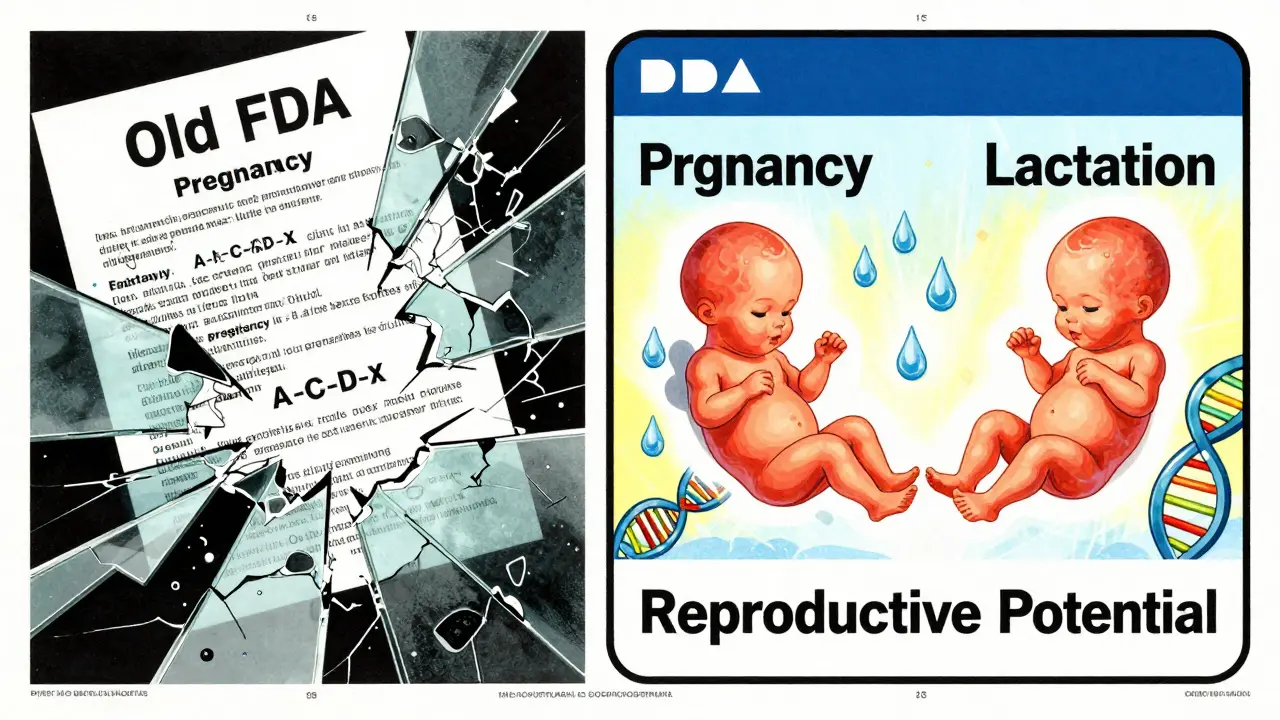
- The PLLR replaced the old letter categories (A, B, C, D, X) with detailed sections
- Always look for all three sections when evaluating pregnancy/breastfeeding safety
- If a drug has no data, the label will say "insufficient data" - not "safe"
- The PLLR requires manufacturers to update labels with new safety information
- For full labeling, check DailyMed or the FDA website
What the PLLR Actually Changes for Pregnant and Nursing Women
You used to see a simple letter on a drug label: A, B, C, D, or X. It was supposed to tell you if a medicine was safe during pregnancy. But it didn’t. Not really. That old system was broken. A Category B drug? No proof of harm in animals, but no human data? That got labeled "safe." A Category C drug? Animal studies showed problems, but no human data? That got labeled "maybe risky." But what if the human data showed real harm? The old labels didn’t say. They just gave you a letter. And doctors, nurses, and patients were left guessing.
The FDA fixed this in 2014 with the Pregnancy and Lactation Labeling Rule (PLLR). It didn’t just tweak the label. It rewrote the entire story. Now, instead of a letter, you get real information. Clear sections. Real data. No more guessing. The PLLR applies to nearly all prescription drugs and biologics approved after June 30, 2001. Older drugs had to remove the old letters by 2017. If you’re looking at a drug label today and still see an A, B, C, D, or X - it’s outdated. And you should question it.
The Three Sections You Need to Read
The PLLR splits the safety info into three clear subsections under Section 8: Pregnancy, Lactation, and Females and Males of Reproductive Potential. You don’t need to read all three every time, but if you’re pregnant, nursing, or trying to get pregnant, you need to know what’s in each.
Section 8.1: Pregnancy
This isn’t just about whether a drug causes birth defects. It’s about the full picture. The section breaks down into three parts:
- Risk Summary: This is the bottom line. It tells you what’s known about the drug’s effect on the fetus. Is there a risk of miscarriage? Heart defects? Low amniotic fluid? It doesn’t hide behind a letter. It says: "Use of this drug during pregnancy has been associated with oligohydramnios, which resolved after discontinuation and recurred upon reinitiation."
- Clinical Considerations: This is where the real advice lives. What’s the right dose during pregnancy? Does the timing matter? (Like, is the first trimester riskier?) Does the drug affect labor or delivery? Are there maternal side effects that could harm the mom - and therefore the baby? And crucially: what happens if you don’t treat the illness? Sometimes, the risk of untreated depression, epilepsy, or high blood pressure is greater than the risk of the drug.
- Data: This is the evidence. Animal studies? Human case reports? Clinical trials? Registry data? It’s all here. You can see if the data is strong or thin. If a drug has only a few case reports, the label says so. No sugarcoating.
Section 8.2: Lactation
"Can I breastfeed while taking this?" That’s the question every new mom asks. The old system didn’t answer it. The PLLR does.
- Risk Summary: Tells you if the drug passes into breast milk. How much? Is it enough to affect the baby? Some drugs are barely detectable. Others build up. The label says: "Drug concentration in milk is 15% of maternal plasma levels. No adverse effects reported in 12 exposed infants."
- Clinical Considerations: Does the drug affect milk supply? Is there a better time to take it - like right after nursing - to minimize baby’s exposure? Are there alternatives? What signs should you watch for in the baby? Sleepiness? Poor feeding? Jaundice?
- Data: Human milk studies. Infant serum levels. Reported effects. Again, if the data is weak, the label says so. No assumptions. Just facts.
Section 8.3: Females and Males of Reproductive Potential
This section isn’t just for women. It’s for anyone who could get pregnant or get someone pregnant. It answers: Do I need a pregnancy test before starting this? Do I need to use birth control? What kind? And for how long after stopping? Some drugs can cause birth defects even if taken weeks before conception. Others can affect sperm. The label now says: "Effective contraception is required during treatment and for 6 months after the last dose."
Why the Old System Failed - And How PLLR Fixes It
The old letter system didn’t just lack detail. It misled. A drug with no human data got a "B" - the same label as a drug with decades of safe use. A drug with clear fetal risks in animals but no human data got a "C" - which many doctors interpreted as "probably safe." But what if those animal studies showed heart defects at low doses? The letter didn’t say. The PLLR fixes this by forcing manufacturers to explain the science, not hide behind a letter.
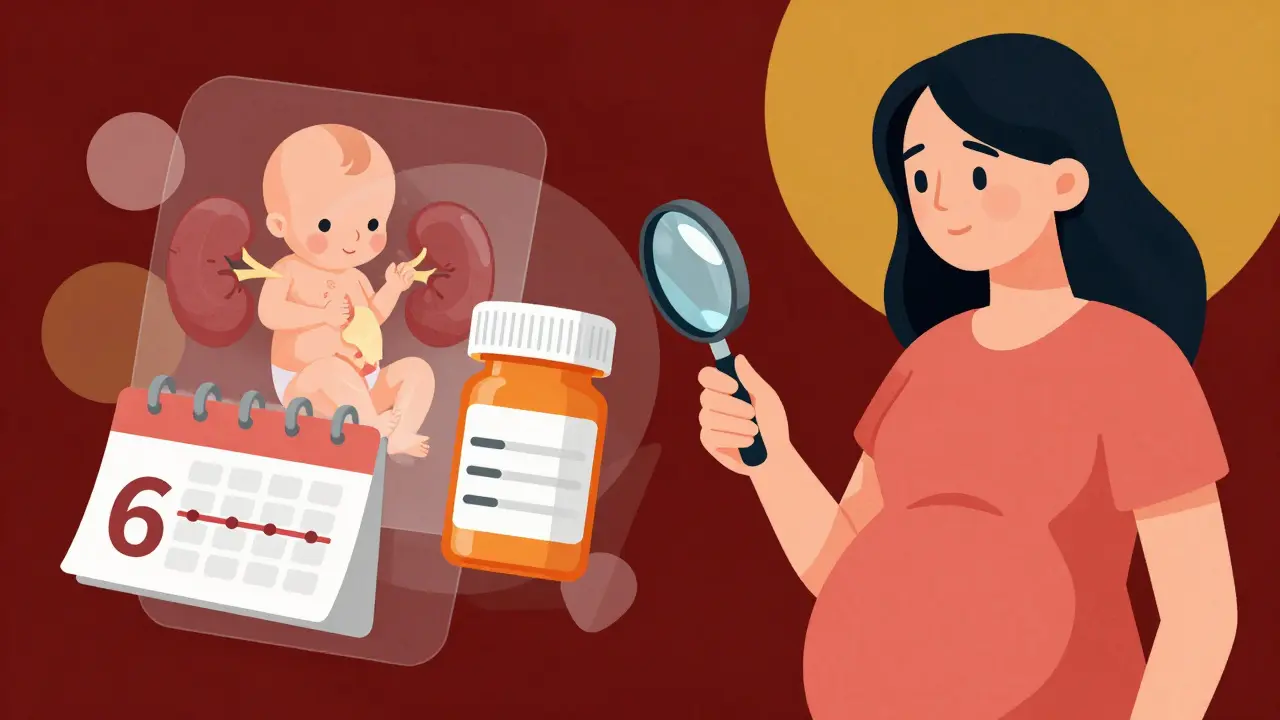
Here’s the truth: the old system created a false sense of safety. A Category B drug like ibuprofen? Many doctors thought it was fine. But we now know ibuprofen can cause kidney problems in the fetus after 20 weeks. The PLLR label for ibuprofen says exactly that - no ambiguity. It also says: "Avoid use after 30 weeks gestation."
Another big win? The PLLR forces manufacturers to include information on untreated illness. If a woman has bipolar disorder and stops her medication because she’s afraid of the drug - what happens? She might have a severe episode. That harms her and her baby. The PLLR requires labels to say: "Untreated bipolar disorder during pregnancy is associated with increased risk of preterm birth, low birth weight, and neonatal complications."
What’s Missing? And What’s New
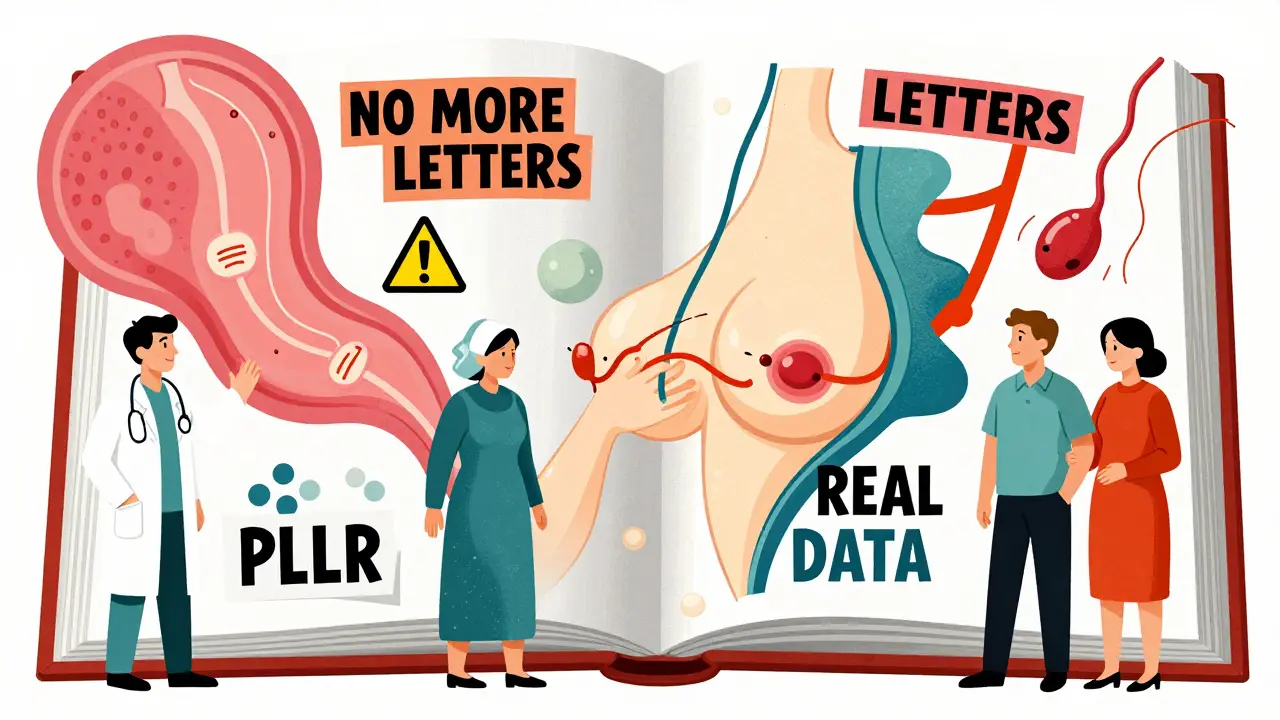
The FDA tried to make the PLLR simple. But they learned the hard way that even simple statements can be misused. So they scrapped the idea of standardized risk phrases like "risk of fetal harm." Too vague. Too easily ignored. Instead, they demanded specificity. "Risk of fetal renal dysfunction" - that’s what you get now.
One major change: pregnancy exposure registries. Before the PLLR, these were optional. Now, they’re required. If a drug has potential risks, the label will say: "A pregnancy exposure registry is available at [website]." These registries collect real-world data from women who take the drug while pregnant. That’s how we learn what’s actually safe - not from animal studies, but from thousands of real pregnancies.
And here’s something most people don’t realize: the PLLR requires updates. If new data comes out - say, a study shows a drug causes a rare heart defect - the manufacturer must update the label within months. That didn’t happen under the old system. Labels could sit unchanged for years, even when evidence pointed to danger.
How to Use This Info as a Patient or Provider
If you’re pregnant or nursing and your doctor prescribes a new drug, ask: "Can I see the full labeling?" Most drug info sites like DailyMed or the FDA’s website have the full label. Don’t rely on a pharmacy handout. Don’t trust a website that just says "safe in pregnancy." Look for the three subsections.
For providers: Don’t just glance at the Risk Summary. Read the Clinical Considerations. That’s where the prescribing advice lives. Is the dose different in pregnancy? Should you avoid this drug in the third trimester? Is there a safer alternative? The PLLR gives you the tools to make that call.
And if you’re trying to get pregnant - don’t wait until you’re pregnant to check your meds. That’s too late. Check Section 8.3. Some drugs need to be stopped months before conception. Others require a specific birth control method because they interact with hormonal pills.
Real-World Examples That Show the PLLR Working
Take lisinopril, a common blood pressure drug. The old label said "Category D" - meaning "positive evidence of human fetal risk." That’s it. The PLLR label says: "Use during pregnancy can cause fetal injury and death. Cases of fetal hypotension, oligohydramnios, skull hypoplasia, anuria, renal failure, and death have been reported. Discontinue as soon as pregnancy is detected."
Or fluoxetine (Prozac). The old label said "Category C." The PLLR label says: "Infants exposed to fluoxetine in utero may have an increased risk of persistent pulmonary hypertension (PPHN). Neonatal adaptation syndrome has been reported, with symptoms including jitteriness, irritability, and feeding difficulties. Breastfeeding is generally compatible with fluoxetine use, as infant serum levels are low."
These aren’t vague warnings. They’re specific. Actionable. Life-saving.
What About Other Countries?
The U.S. isn’t alone. The European Medicines Agency (EMA) has its own system. But here’s the problem: a 2023 study found that for 71% of drugs, the FDA and EMA used completely different language to describe the same risk. One says "avoid during breastfeeding." The other says "use with caution." That’s dangerous. A woman might move countries and get conflicting advice. There’s no global standard. The PLLR is the most detailed and structured system out there - but it’s not universal.
Final Takeaway: Information Is Power
The PLLR didn’t make drugs safer. It made the information about them safer. It replaced guesswork with facts. It replaced silence with clarity. It gave women and their providers the tools to make real decisions - not just follow a letter.
Every year, about 6 million pregnancies happen in the U.S. And most of those women take at least three medications. That’s not rare. That’s normal. The PLLR acknowledges that. It doesn’t say "don’t take anything." It says: "Here’s what you need to know. Here’s what to watch for. Here’s what to do."
If you’re pregnant, nursing, or planning to be - don’t skip reading the label. Don’t assume a drug is safe because your doctor said so. Ask for the full PLLR section. Read it. Understand it. Use it. That’s how you take control.
What does PLLR stand for?
PLLR stands for Pregnancy and Lactation Labeling Rule. It’s the U.S. Food and Drug Administration’s system for how drug labels must describe risks to pregnant and breastfeeding women, replacing the old A-B-C-D-X letter categories.
Are the old pregnancy letter categories still valid?
No. The FDA required all drug labels to remove the A, B, C, D, and X categories by 2017. If you see them on a label today, it’s outdated. Always check the current FDA-approved label on DailyMed or the FDA website.
Does the PLLR apply to over-the-counter (OTC) drugs?
No. The PLLR only applies to prescription drugs and biological products regulated under the Physician Labeling Rule. OTC drugs follow different labeling rules, though many now include pregnancy and breastfeeding info voluntarily.
How do I find the full PLLR label for a drug?
Go to DailyMed (dailymed.nlm.nih.gov), search for the drug name, and select the most recent label. Look for Section 8: Use in Specific Populations. The full PLLR sections are labeled 8.1 (Pregnancy), 8.2 (Lactation), and 8.3 (Females and Males of Reproductive Potential).
What if a drug has no data on pregnancy or breastfeeding?
The label will say so clearly. For example: "There are no adequate and well-controlled studies in pregnant women." It won’t say "safe" or "unsafe." It will say "insufficient data." That’s important. It means the risk is unknown - not that it’s low.
Can I trust the data in the PLLR?
The data comes from clinical trials, post-marketing reports, pregnancy registries, and published studies. The FDA requires manufacturers to submit this data with their labeling applications. While not every study is perfect, the PLLR forces transparency. If data is limited, the label says so. You’re seeing the truth - not a marketing summary.

Andy Heinlein
January 2, 2026 AT 02:10Paul Ong
January 2, 2026 AT 19:26Kristen Russell
January 4, 2026 AT 15:55jaspreet sandhu
January 5, 2026 AT 09:34Olukayode Oguntulu
January 7, 2026 AT 06:15LIZETH DE PACHECO
January 8, 2026 AT 16:53Lee M
January 8, 2026 AT 23:38Ann Romine
January 10, 2026 AT 07:57Bryan Anderson
January 11, 2026 AT 07:42