Insurance Formulary: What It Is and How It Controls Your Medication Costs
When you fill a prescription, what you pay isn’t just about the drug—it’s shaped by your insurance formulary, a list of medications approved and covered by your health plan. Also known as a drug formulary, it’s the hidden rulebook that decides whether your pill is covered, restricted, or completely out-of-pocket. This isn’t just paperwork—it’s the reason your $100 monthly med might suddenly cost $300 if your plan switches tiers.
Formularies are built by pharmacy benefit managers (PBMs) working with insurers, and they’re not random. They prioritize drugs that are proven, affordable, and often generic. For example, if two blood pressure pills work the same, the formulary will push the cheaper one. That’s why generic drugs dominate most lists—they’re chemically identical to brand names but cost a fraction. But here’s the catch: even generics can be excluded if the formulary favors a different one from the same class. That’s why switching from one generic to another can feel like a surprise penalty, especially for meds with a narrow therapeutic index, drugs where tiny differences in absorption can cause serious side effects or treatment failure, like cyclosporine or antiseizure drugs.
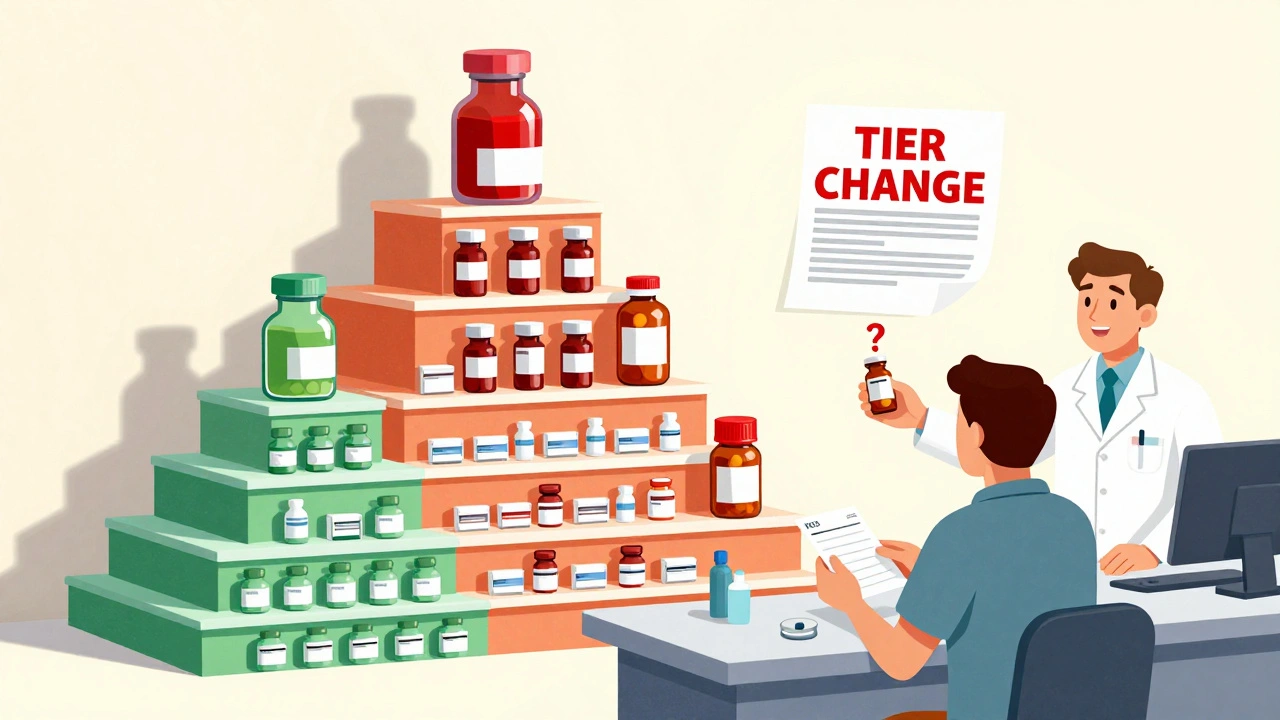
Formularies also use tiers—like a pricing ladder. Tier 1 is usually generic, lowest cost. Tier 2 is brand-name with generic alternatives. Tier 3 is brand-name with no generic. Tier 4? That’s the specialty drugs—often biologics or cancer meds—where you might pay 30% or more out of pocket. And if your drug isn’t on the list at all? You’ll need a prior authorization, an exception request, or a switch. Many people don’t realize their plan might cover prescription coverage, the portion of drug costs paid by insurance after you meet your deductible only if the drug is on the formulary. That’s why checking your formulary before starting a new med saves money and stress.
These lists aren’t static. They change every year. A drug you’ve been on for years might get moved to a higher tier, or pulled entirely. That’s why knowing how your pharmacy benefits, the system that manages drug coverage, pricing, and access through insurers and PBMs work matters. It’s not about fighting the system—it’s about navigating it smartly. You can ask your pharmacist for a formulary copy, log into your insurer’s portal, or use tools like DailyMed to compare drug names and alternatives. Some patients even use social media groups to share which formularies work best for specific meds.
What you’ll find below are real stories and facts about how formularies affect real people—how generic substitution can trigger seizures in epilepsy patients, why immunosuppressants can’t be swapped freely, how tendering systems in Europe keep drug prices low, and why the same pill can cost $5 or $500 depending on your plan. This isn’t theory. It’s your wallet, your health, and your next prescription.