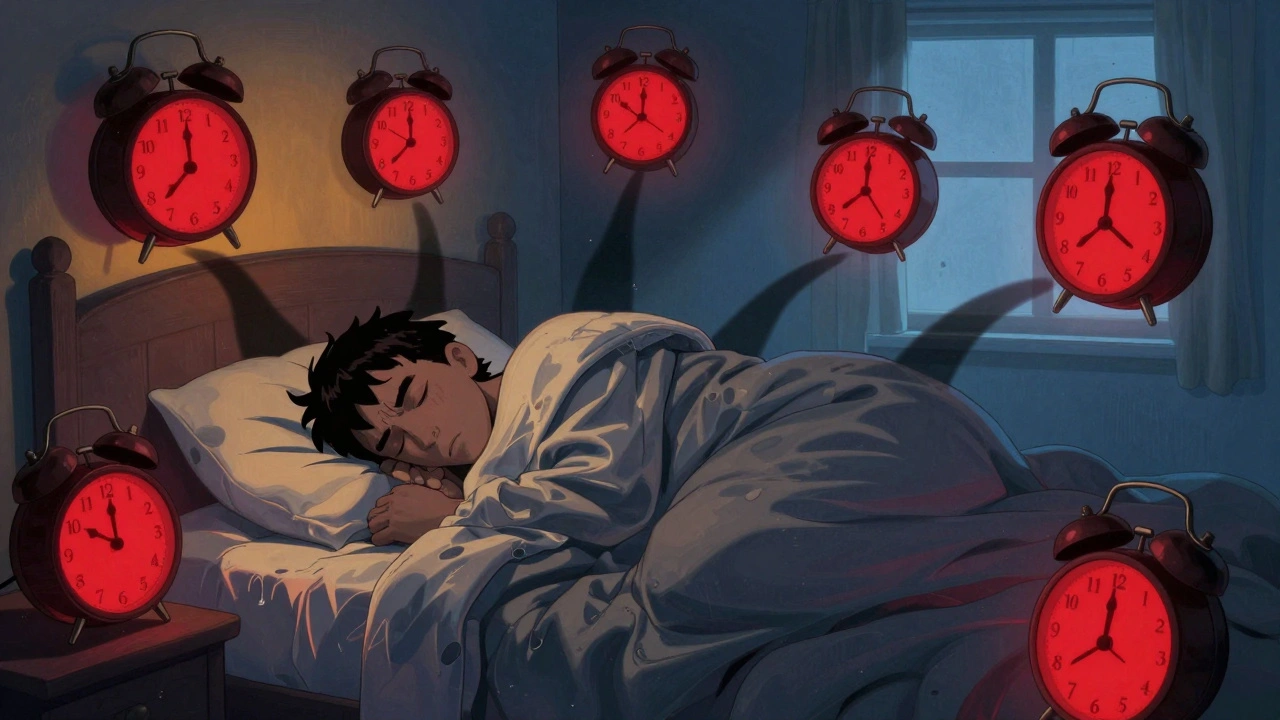
Sleep Inertia: Why You Feel Foggy After Waking Up and How to Beat It
When you drag yourself out of bed and feel like your brain is wrapped in cotton, you’re not lazy—you’re experiencing sleep inertia, a temporary state of impaired cognitive and sensory-motor performance that occurs immediately after awakening. Also known as morning grogginess, it’s not just being tired—it’s your brain struggling to transition from deep sleep to full alertness. This isn’t normal drowsiness. It’s a biological glitch built into your circadian rhythm, the internal 24-hour clock that regulates sleep, hormone release, and body temperature. If you wake up during deep sleep (stage 3 or slow-wave sleep), your brain doesn’t flip from rest to ready like a light switch. It sputters. That’s sleep inertia.
It’s worse if you’re sleep-deprived, if you nap too long, or if you wake up at the wrong point in your sleep architecture, the structured cycle of light sleep, deep sleep, and REM sleep that repeats every 90 minutes. A 20-minute power nap might leave you refreshed. A 60-minute nap? You might feel worse than before you closed your eyes. Studies show sleep inertia can last up to 30 minutes—but for some, it drags on for hours, especially after night shifts or irregular schedules. It’s not just annoying. It’s dangerous. People in critical jobs—paramedics, pilots, nurses—have made life-or-death errors during this foggy window.
Here’s the thing: caffeine doesn’t fix it. Hitting snooze doesn’t help. The real fix is timing. Waking up at the end of a sleep cycle—when you’re in lighter sleep—cuts sleep inertia dramatically. That’s why some alarms now track your movement or heart rate to wake you in the best window. Light exposure matters too. Opening the blinds or stepping outside right after waking signals your brain: it’s daytime. Cold water on your face? Surprisingly effective. Movement? Even better. A quick walk or stretch boosts blood flow and wakes up your nervous system faster than another 10 minutes in bed.
What you’ll find below are real, practical posts that dig into how sleep inertia connects to medications, chronic conditions, and daily habits. You’ll see how statins can mess with your sleep cycles, how medication timing affects morning alertness, and why some people fight this fog harder than others. No fluff. Just what works.