
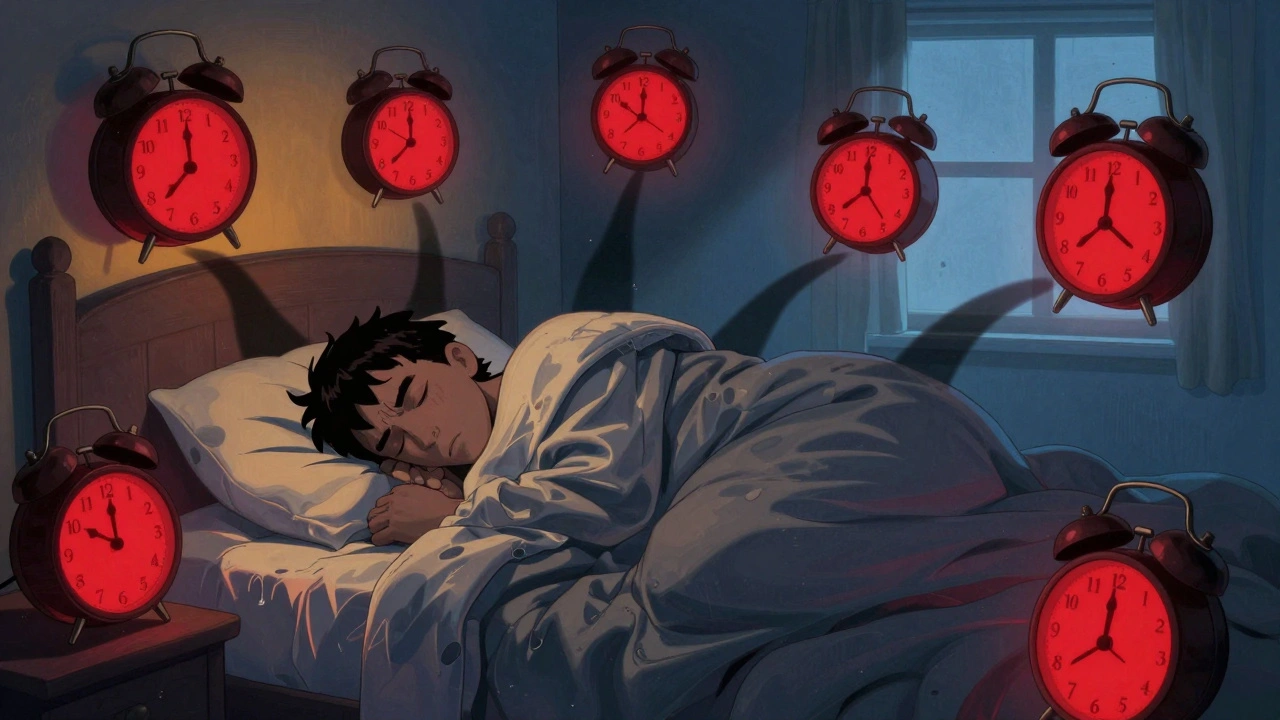
Imagine setting 17 alarms just to wake up for work-and still oversleeping three times in two months. That’s not a joke. For people with idiopathic hypersomnia (IH), it’s daily life. No matter how much they sleep-10, 12, even 16 hours-they still feel like they’ve barely rested. And when they do wake up, they’re not refreshed. They’re confused, groggy, sometimes for hours. This isn’t laziness. It’s a real, measurable neurological disorder that’s been ignored for decades.
What Is Idiopathic Hypersomnia?
Idiopathic hypersomnia is a rare neurological sleep disorder where the brain doesn’t regulate wakefulness properly. The word "idiopathic" means "of unknown cause." Unlike sleep apnea or insomnia, there’s no obvious trigger-no snoring, no anxiety, no poor sleep habits. The body is getting enough sleep, but the brain won’t let go of sleep mode.
It typically shows up in teens or young adults, creeping in slowly over weeks or months. People don’t wake up one day tired-they wake up one day unable to wake up. They sleep through alarms. They nap for two hours and still feel worse. They fall asleep mid-conversation, mid-drive, mid-meal.
Unlike narcolepsy, IH doesn’t come with sudden muscle weakness (cataplexy) or vivid dreams at sleep onset. It doesn’t show up clearly on standard sleep tests. That’s why most people go years without a diagnosis. The average time from first symptoms to correct diagnosis? Over eight years. Many are told they’re depressed, lazy, or just "not trying hard enough."
How It Feels to Live With IH
People with IH don’t just feel sleepy. They feel stuck. One patient described it as "wearing a wet blanket made of lead." Naps don’t help. Coffee fades fast. Even after a full night’s sleep, the brain feels foggy, slow, disconnected.
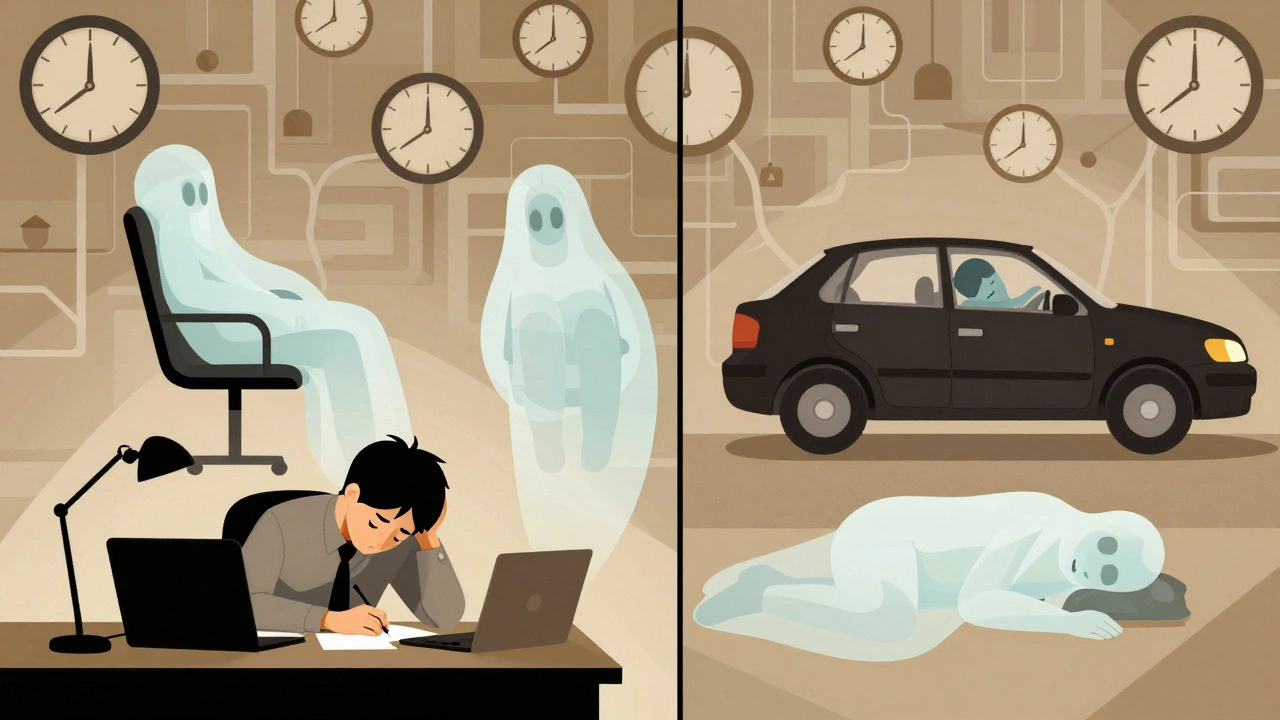
Studies show 66% of IH patients experience severe "sleep drunkenness"-a state of confusion, disorientation, and automatic behavior that can last for over an hour after waking. One woman forgot she turned on the stove. Another drove 15 miles without remembering how she got there. These aren’t rare cases. They’re common.
Work suffers. Relationships strain. Social life disappears. A 2021 survey of over 980 IH patients found 74% met clinical criteria for depression. Not because they were sad-because they were exhausted, isolated, and constantly failing at basic tasks. One man lost his promotion after missing three team meetings because he couldn’t wake up. Another was fired after falling asleep during a client call.
How Is It Diagnosed?
There’s no blood test. No X-ray. Diagnosis requires ruling out everything else. First, doctors check for sleep apnea, thyroid issues, depression, medication side effects. Then comes the sleep lab.
Two tests are key:
- Polysomnography (PSG)-an overnight sleep study that confirms you’re sleeping 9-11 hours without disruptions.
- Multiple Sleep Latency Test (MSLT)-a daytime test where you’re given four chances to nap, 2 hours apart. People with IH fall asleep quickly (in under 8 minutes) but don’t enter REM sleep rapidly, unlike narcolepsy patients.
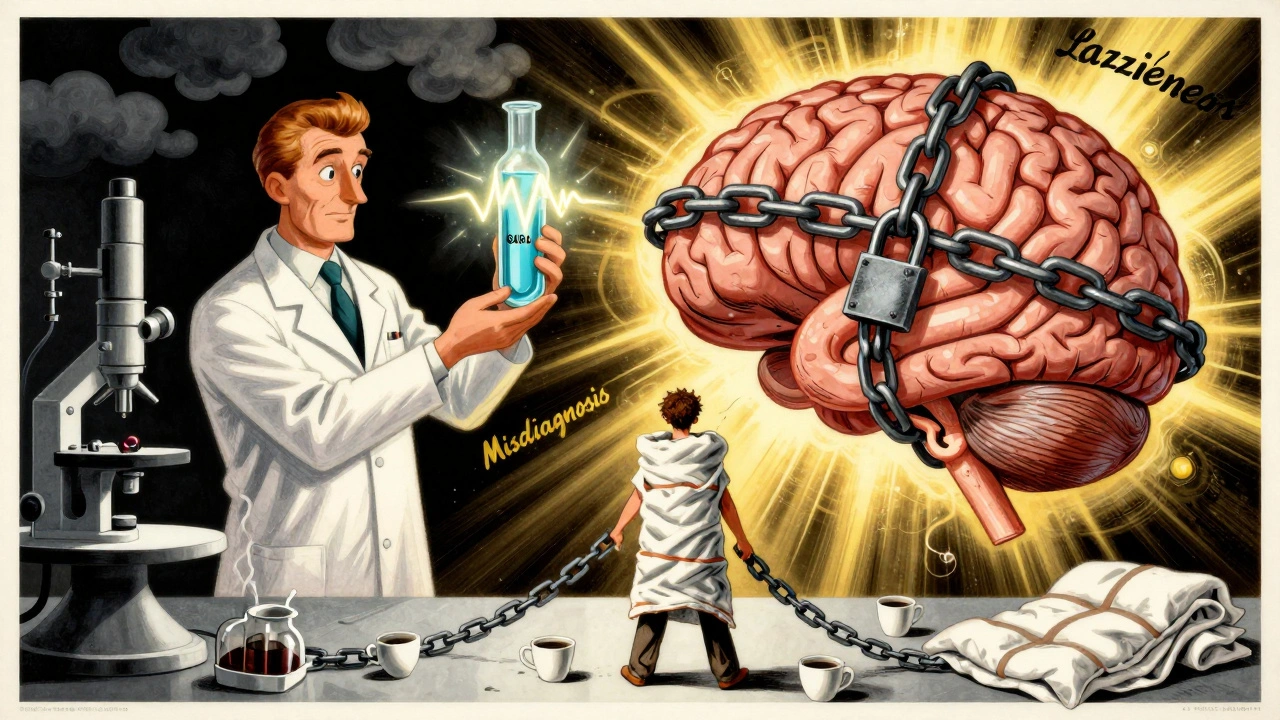
The International Classification of Sleep Disorders (ICSD-3) requires symptoms to last at least three months, with no other medical or psychiatric cause. And here’s the kicker: many IH patients have normal MSLT results. That’s why so many get misdiagnosed. The test isn’t perfect. New research from March 2023 found a biomarker pattern in cerebrospinal fluid that correctly identified 89% of IH cases. That could change everything.
What Causes It?
We don’t know for sure-but we’re getting closer.
Research points to problems in the brain’s wakefulness system. One major clue: many IH patients have a substance in their spinal fluid that makes GABA-A receptors (the brain’s "off switch") overly sensitive. It’s like the brain is stuck in sleep mode because the brakes won’t release.
Another theory involves histamine, the brain chemical that keeps you alert. Some IH patients have lower levels. Others show signs of reduced orexin signaling-a key wakefulness neurotransmitter. This isn’t just theory. In a 2020 study, patients given a drug that blocks GABA-A receptors showed improved alertness. That’s why new treatments are targeting these exact pathways.
Treatment Options: What Actually Works
There’s no cure. But there are treatments that help-some significantly.
1. Xywav (calcium, magnesium, potassium, and sodium oxybate)
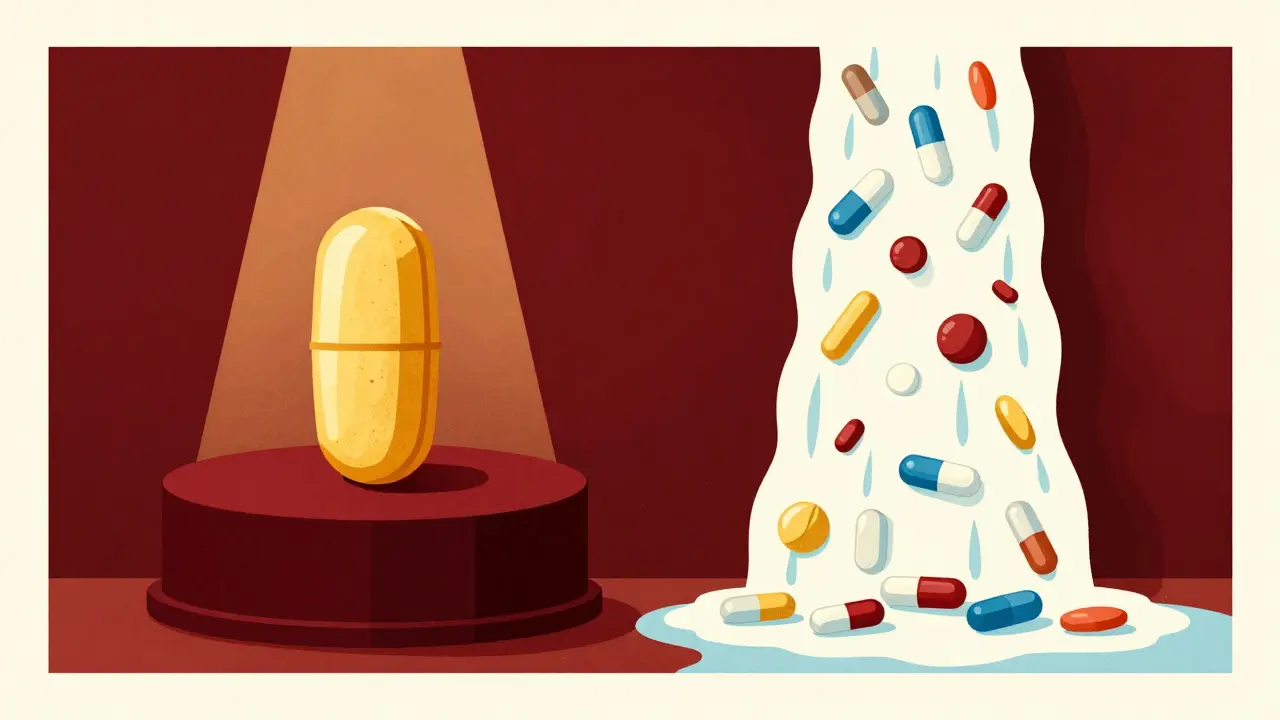
In 2021, the FDA approved Xywav as the first and only drug specifically for IH. It’s a liquid taken at night. It doesn’t wake you up-it helps you sleep more deeply, so you wake up less groggy. In clinical trials, patients saw a 63% drop in sleepiness scores. About 68% of users report moderate to major improvement. But it’s expensive, requires strict dosing, and can cause nausea or dizziness.
2. Modafinil and Armodafinil
These stimulants are often tried first. They help about 42-45% of IH patients, but the effect fades over time. Many need higher doses, which increases side effects: anxiety, headaches, heart palpitations. One patient said, "It felt like my brain was running on fumes. I was awake, but I was a mess."
3. Pitolisant
This newer drug boosts histamine in the brain. It’s approved for narcolepsy but being tested for IH. Early results show 47% of patients improved wakefulness without the crash of stimulants. It’s not yet FDA-approved for IH, but many neurologists prescribe it off-label.
4. Cognitive Behavioral Therapy for Hypersomnia (CBT-H)
Therapy isn’t just for depression. A 12-week CBT-H program teaches patients to structure sleep, manage caffeine, reduce napping guilt, and retrain their brain’s sleep-wake rhythm. In one study, 58% of patients saw meaningful improvement in daily function. When combined with medication, the success rate jumped to 37% better wakefulness.
What Doesn’t Work
Many people try caffeine, naps, or "just sleeping more." But here’s the truth:
- Drinking coffee after noon? Often makes sleep inertia worse.
- Napping for over an hour? Can deepen the grogginess.
- Going to bed earlier? Doesn’t help if your brain won’t switch off.
Some patients try herbal supplements or CBD. No strong evidence supports them for IH. In fact, one 2022 study found CBD increased sleepiness in 30% of IH patients.
Living With IH: Practical Tips
Medication helps. But daily habits make the difference.
- Stick to a fixed sleep schedule. Even on weekends. Irregular sleep confuses your brain’s internal clock.
- Limit naps to 20 minutes. Set an alarm. Longer naps make sleep inertia worse.
- Use bright light in the morning. Natural sunlight or a 10,000-lux lightbox for 30 minutes helps reset your circadian rhythm.
- Keep caffeine strictly to the morning. After 2 p.m., it interferes with deep sleep.
- Use alarms with vibration and light. Phone alarms aren’t enough. Try smart alarms that shake your bed or turn on lights.
- Don’t drive when sleepy. 22% of IH patients have had car accidents. If you’re unsure, don’t risk it.
The Future of IH Treatment
The field is moving fast. Five new drugs targeting GABA-A receptors are in Phase 2 trials. Orexin replacement therapy-once thought impossible-is now in preclinical testing. The FDA has created new tools to measure IH severity, like the Idiopathic Hypersomnia Severity Scale (IHSS), so trials can measure real improvement.
NIH funding for hypersomnia research jumped from $1.2 million in 2018 to $8.7 million in 2023. That’s a 625% increase. The Hypersomnia Foundation’s patient registry, with over 2,100 participants, is tracking long-term outcomes. By 2025, we may have better diagnostics, safer drugs, and clearer guidelines.
And for the first time, patients aren’t just waiting. They’re leading the research. Online communities like r/hypersomnia have over 8,000 members sharing tips, advocating for insurance coverage, and pushing for faster approvals.
Where to Get Help
If you think you have IH:
- See a sleep specialist-not a general doctor. Sleep medicine is a subspecialty.
- Bring a sleep diary. Track bedtime, wake time, naps, and how you feel.
- Ask about PSG and MSLT. Don’t accept "you’re just tired."
- Connect with the Hypersomnia Foundation. They offer free resources, support groups, and guidance on insurance appeals.
Insurance often denies claims. The average patient files 2.3 appeals before approval. Keep records. Get letters from your doctor. You’re not asking for luxury-you’re asking for the ability to function.
Is idiopathic hypersomnia the same as narcolepsy?
No. While both cause excessive daytime sleepiness, narcolepsy includes sudden muscle weakness (cataplexy), vivid dreams at sleep onset, and rapid entry into REM sleep. IH patients don’t have these symptoms. They sleep longer at night (often 10+ hours), take unrefreshing naps, and struggle with prolonged sleep inertia. The MSLT test often shows normal results in IH, unlike narcolepsy.
Can you outgrow idiopathic hypersomnia?
Rarely. IH is typically a lifelong condition. Symptoms may stabilize after a few years, but they rarely disappear completely. Some patients report milder symptoms after age 40, but this isn’t guaranteed. Early diagnosis and treatment are key to managing long-term impact.
Why do IH patients feel worse after napping?
It’s called sleep inertia. In IH, the brain struggles to transition from deep sleep to wakefulness. Long naps (over an hour) often pull you into deeper sleep stages, making it harder to wake up. When you do, your brain is still in sleep mode-leading to confusion, disorientation, and fatigue that can last hours. Short naps (under 20 minutes) are less likely to trigger this.
Is idiopathic hypersomnia genetic?
There’s no single "IH gene," but some families show higher rates of the disorder. Research suggests possible links to genes affecting GABA or orexin pathways. However, most cases occur without a family history. Environmental triggers or brain chemistry changes likely play a bigger role than inherited DNA.
Can lifestyle changes alone treat IH?
Not on their own. While sleep hygiene, light exposure, and caffeine timing help manage symptoms, they don’t fix the underlying neurological issue. Most patients need medication or targeted therapies. Lifestyle changes work best when combined with medical treatment.
How common is idiopathic hypersomnia?
It’s rare-about 10 cases per 100,000 people annually. That’s roughly 30,000 people in the U.S. But because it’s misdiagnosed so often, the real number may be higher. Many patients spend years being told they’re depressed or lazy before getting the right diagnosis.
Final Thoughts
Idiopathic hypersomnia isn’t about being tired. It’s about being trapped in a brain that won’t turn off sleep. It steals jobs, relationships, safety, and dignity. But it’s not hopeless. Treatments exist. Research is accelerating. Patients are speaking up. And slowly, the medical world is listening.
If you or someone you know is struggling with unrelenting sleepiness, don’t accept "just sleep more" as an answer. Push for a sleep specialist. Track your symptoms. Find your community. You’re not alone-and you’re not lazy. You have a neurological condition that deserves real care.

Deborah Jacobs
December 4, 2025 AT 21:59This post hit me right in the chest. I’ve been living with this for seven years and no one ever believed me-not my family, not my boss, not even my doctor until I dragged myself to a sleep clinic. I used to cry in the shower because I couldn’t wake up to my own kid’s birthday party. I’m not lazy. I’m just broken in a way that doesn’t show up on a scan. Thank you for writing this like someone who actually gets it.
There’s a quiet army of us out here. We’re the ones showing up to work with mascara smudged from crying, pretending we’re just ‘tired,’ while our brains feel like they’re drowning in molasses. We don’t need pity. We need to be seen.
I started Xywav last year. It didn’t make me ‘normal,’ but it gave me back my Sundays. I can play with my dog now. I can read a book without falling asleep halfway through. It’s not a cure, but it’s a lifeline.
To anyone reading this and feeling alone: you’re not. We’re here. We’re loud now. And we’re not going back to the shadows.
Lucy Kavanagh
December 6, 2025 AT 13:48Okay but have you considered that this is just a government mind-control experiment? They’ve been putting fluoride in the water since the 70s to make people drowsy so they don’t question authority. I read this on a blog run by a former CDC whistleblower who now lives in a bunker in Wales. The ‘biomarker in CSF’? That’s just a cover for the real test-they’re injecting nanobots through your toothpaste to suppress wakefulness. I’ve stopped using toothpaste. I brush with baking soda and salt now. My energy’s up 300%.
Also, the FDA is owned by Big Pharma. Xywav? It’s just a new form of mind-slime. They want you dependent. Wake up, sheeple. The real cure is sunlight, cold showers, and refusing to take pills from the elites.
Stephanie Fiero
December 7, 2025 AT 10:05YESSSSS. I’ve been screaming this from the rooftops since 2020. People think IH is just ‘bad sleep hygiene’ like it’s a lifestyle choice. NO. It’s a BRAIN THING. I used to nap 4x a day and still show up to work like a zombie. Then I tried pitolisant off-label and my life changed. Not perfect, but I can drive without panicking I’ll fall asleep.
Don’t let anyone tell you to ‘just sleep more.’ I’ve slept 14 hours and still cried because I couldn’t get out of bed. Your brain is literally stuck. It’s not you. It’s neurochemistry. And you deserve help. Go see a sleep specialist. Don’t wait 8 years like I did. I almost lost my job. Don’t let that be you.
Also-vibe check: if you’re reading this and you have this, DM me. I’ll send you my alarm setup. It’s basically a military-grade wake-up system. You’re not alone.
Jennifer Patrician
December 7, 2025 AT 15:55LMAO. So now we’re giving FDA approval to a liquid that’s basically a controlled substance disguised as medicine? Xywav is just GHB with a fancy name. They’re just trying to make money off desperate people. And don’t get me started on ‘CBT-H’-like talking to a therapist will fix a broken brain? This whole thing is a scam. The real cause? Electromagnetic pollution from 5G towers. I’ve got sensors in my house now. My sleep improved overnight after I wrapped my bed in aluminum foil. You’re being poisoned. Wake up.
Also, why is the NIH suddenly funding this? Coincidence? I think not. They’re testing population-wide suppression. You think you’re getting help? You’re being conditioned. I’ve seen the documents.
Ali Bradshaw
December 8, 2025 AT 13:10My sister has this. She used to sleep 13 hours a night and still couldn’t make it to her own wedding rehearsal. I watched her cry because she couldn’t wake up for her dog’s vet appointment. It broke me.
She got diagnosed after 6 years. Xywav didn’t work for her, but pitolisant did. She’s back to working part-time. She still has bad days. But now she has a name for it. And that matters.
Just… if you’re reading this and you feel like this, don’t wait. Don’t listen to the ‘just sleep more’ people. Go to a sleep center. Bring this post. Print it. Force them to listen. You’re not lazy. You’re not broken. You’re just misunderstood.
And if you’re a doctor reading this? Please stop dismissing people. We’re not being dramatic. We’re drowning.
Annie Grajewski
December 9, 2025 AT 04:56oh wow so its not just me? i thought i was just a lazy sack who needed more coffee and less tiktok. turns out my brain is just a glitchy android phone stuck on sleep mode. who knew.
also, the part about naps making it worse? yeah. i tried a 3 hour nap last week. woke up thinking it was 1998. forgot my last name. had to google my own face. it was like being possessed by a confused ghost.
ps: i tried CBD. it made me feel like i was underwater wearing a wool blanket. not helpful. just… no.
pps: why is everyone so surprised this is real? the brain is a weird messy thing. we’ve been treating sleep like a light switch when it’s more like a broken dimmer with a mind of its own.
Rupa DasGupta
December 9, 2025 AT 22:13OMG I FEEL YOU SO MUCH 😭😭😭 I used to fall asleep in the middle of my own conversations. People thought I was rude. I thought I was failing. I lost 3 jobs in 2 years. My mom said I was ‘attention-seeking.’
Then I found r/hypersomnia. I cried for 2 hours. I finally had a community. I’m not broken. I’m not lazy. I’m just wired wrong.
I started using a vibrating alarm on my wrist + a light alarm. I still sleep 11 hours. But now I can get up. I can breathe.
PLS if you’re reading this and you feel this way-find your people. You’re not alone. I’m here. I’m real. I’m tired too. But we’re still here. 💪💖
Marvin Gordon
December 11, 2025 AT 16:42My wife has IH. I used to get angry. I thought she was being dramatic. Then I read the MSLT results. I saw the sleep logs. I watched her try to eat breakfast and just… stare at the spoon for 10 minutes because she couldn’t coordinate her limbs.
I stopped saying ‘just wake up.’ I started saying ‘I’m here.’ I set the alarms. I drive her to appointments. I hold her when she cries because she can’t get out of bed on a Monday.
This isn’t a medical condition. It’s a war. And she’s fighting it every single day. So if you’re reading this and you’re someone’s loved one? Stop judging. Start showing up.
And if you’re the one with IH? You’re not a burden. You’re a warrior. We see you.
Michael Dioso
December 12, 2025 AT 16:16So you’re telling me the solution to a neurological disorder is more pills and more therapy? Brilliant. Just like how we fixed depression with Prozac. Or ADHD with Ritalin. We don’t fix systems-we just drug the symptoms until the patient looks normal enough to go back to work.
The real problem? Capitalism. You’re not tired because your brain is broken. You’re tired because you’re being exploited. Sleep is the last act of resistance. The system doesn’t want you rested. It wants you productive.
Maybe the cure isn’t Xywav. Maybe it’s quitting. Maybe it’s burning the alarm clock. Maybe it’s refusing to play the game.
Just saying.
Krishan Patel
December 13, 2025 AT 02:06It is deeply concerning that society continues to pathologize fatigue rather than interrogate the moral decay of modern labor. One does not require a neurochemical explanation to understand that the human body, when subjected to 16-hour workdays, algorithmic surveillance, and perpetual digital stimulation, will naturally retreat into somnolence as an act of existential self-preservation.
Modern medicine, in its infantile reductionism, seeks to pharmacologically silence the body’s wisdom. The true cure is not oxybate, but the abolition of the 9-to-5. Sleep is not a malfunction-it is a protest.
Furthermore, the notion that a biomarker in CSF validates this condition is laughable. What does it prove? That the body is reacting to oppression? Or that we have simply become too weak to endure the demands of a post-industrial wasteland?
I do not pity you. I honor your exhaustion. Now go lie down. The world does not deserve your wakefulness.
sean whitfield
December 13, 2025 AT 07:54