Vitamin D: What It Does, Why You Need It, and What the Research Says
When we talk about vitamin D, a fat-soluble nutrient your body makes when skin is exposed to sunlight. Also known as calciferol, it’s not really a vitamin—it’s more like a hormone that talks to nearly every cell in your body. You can’t get enough from food alone, and if you live north of the 37th parallel, you’re probably not making enough from sunlight during winter months.
vitamin D deficiency, a widespread but often overlooked condition shows up in surprising ways: tiredness that won’t quit, muscle aches with no clear cause, or even low mood that doesn’t lift with coffee or sunshine. Studies show over 40% of adults in the U.S. have levels below what’s considered optimal, and it’s not just older people—teenagers and young adults are affected too. Your body needs vitamin D to absorb calcium, sure, but it also helps regulate immune responses, reduce inflammation, and even influence how your brain produces serotonin.
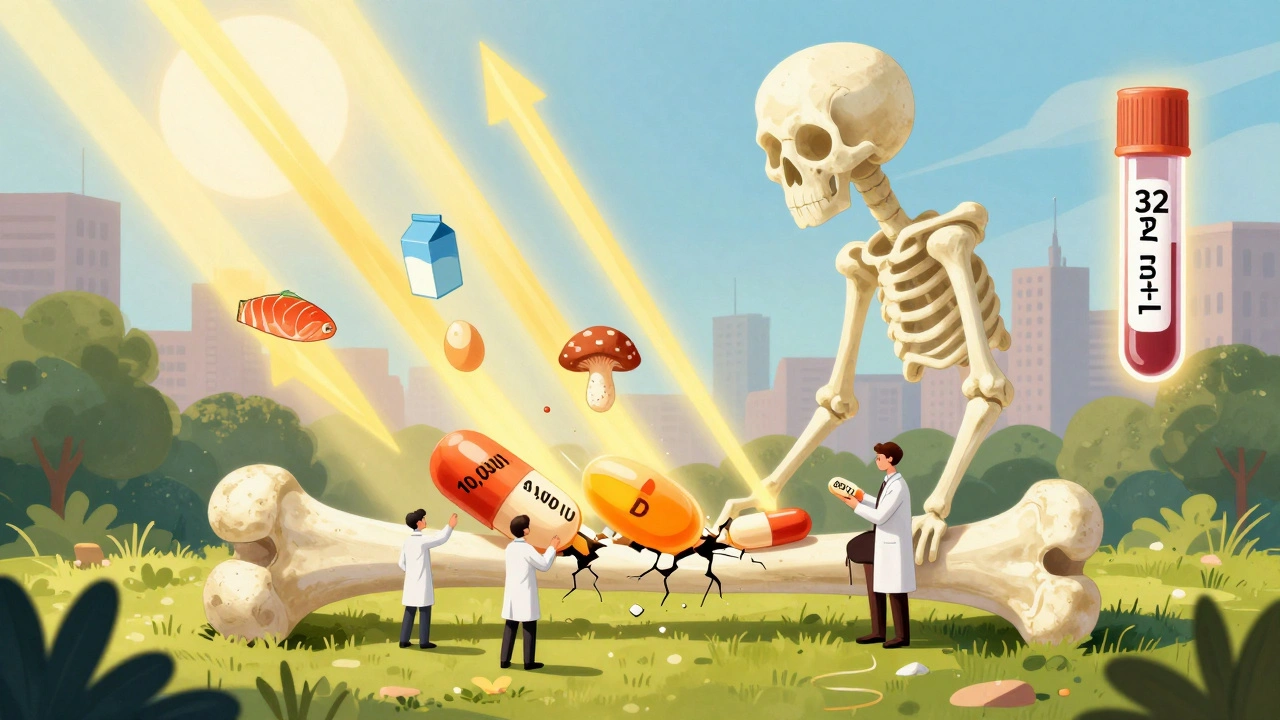
vitamin D supplements, the most common way to fix low levels come in two forms: D2 (from plants) and D3 (from animals or sunlight). D3 is the one your body uses best. But taking more isn’t always better—too much can raise calcium levels dangerously, leading to kidney stones or heart issues. Most people need 600–800 IU daily, but if you’re deficient, doctors often prescribe 1,000–4,000 IU for a few months to catch up. Blood tests are the only way to know where you stand.
sunlight and vitamin D, the original source isn’t as simple as stepping outside. Skin tone, age, sunscreen use, time of day, and even air pollution change how much you make. A fair-skinned person in shorts under midday sun might make 10,000 IU in 15 minutes. Someone darker-skinned, older, or wearing sunscreen? Maybe 1,000 IU—or less. That’s why supplements are often necessary, especially from October to March in northern regions.
What you’ll find here isn’t guesswork or marketing hype. These articles dig into real data: how vitamin D affects chronic disease risk, why some people don’t respond to supplements, what blood test numbers actually mean, and how it connects to other meds you might be taking—like statins or immunosuppressants. You’ll see how low levels might be hiding behind unexplained fatigue, why some people need way more than others, and what happens when you ignore it for years. No fluff. No vague advice. Just what works, what doesn’t, and what the science actually says.