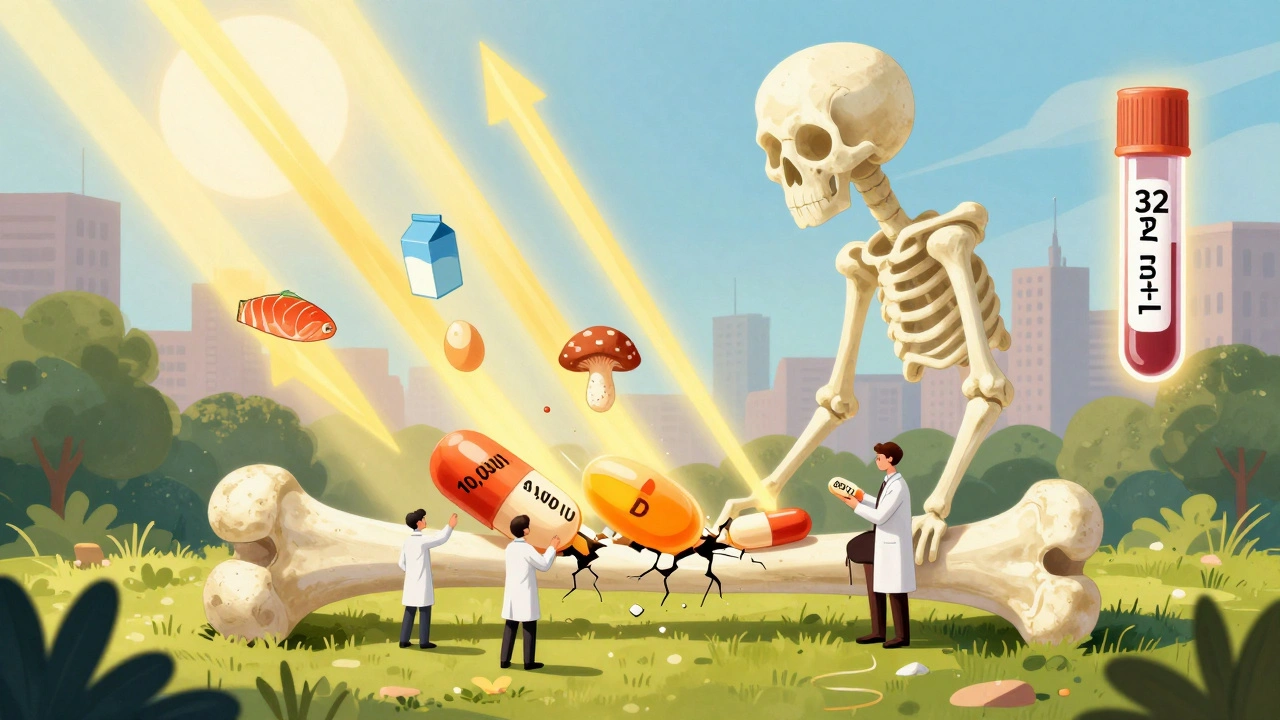
Vitamin D Deficiency: Causes, Risks, and What You Can Do
When your body doesn’t get enough vitamin D, a fat-soluble nutrient critical for bone health, immune function, and mood regulation. Also known as calciferol, it’s not just something you get from milk—it’s made by your skin when exposed to sunlight. Too many people assume they’re fine if they’re not getting rickets, but low vitamin D levels are quietly linked to fatigue, muscle weakness, frequent infections, and even depression.
Most cases of vitamin D deficiency, a condition where blood levels fall below the threshold needed for optimal function come from not enough sun, not from poor diet. People who work indoors, live in northern latitudes, wear full clothing for cultural or medical reasons, or use sunscreen constantly are at higher risk. Darker skin tones need more sun exposure to make the same amount of vitamin D as lighter skin. Even then, many people still test low—especially in winter.
It’s not just about bones. Low vitamin D is tied to weaker immune responses, higher inflammation, and worse outcomes in chronic conditions. Some studies show people with low levels are more likely to get respiratory infections, and recovery can be slower. The vitamin D blood test, a simple lab test that measures 25-hydroxyvitamin D levels is the only way to know for sure if you’re deficient. Levels under 20 ng/mL are considered deficient; 20–30 ng/mL are insufficient. Most experts recommend keeping levels above 30 ng/mL for better health.
Supplements help—but not all are created equal. Vitamin D3 (cholecalciferol) works better than D2 (ergocalciferol) for raising blood levels. Dosing varies: 600–800 IU daily is standard for adults, but those with deficiency often need 1,000–5,000 IU daily for months, under a doctor’s care. Too much can be dangerous—levels above 150 ng/mL can cause calcium buildup in blood vessels and kidneys.
You won’t fix a deficiency just by eating salmon or fortified cereal. Sunlight is still the most natural source. Ten to 30 minutes of midday sun on arms and legs, two to three times a week, can be enough for many. But if you can’t get outside, or live where the sun barely shines in winter, supplements are your best bet. And if you’re on certain medications—like steroids or antiseizure drugs—you’re more likely to be low, even if you think you’re doing everything right.
What you’ll find below are real, practical posts about how vitamin D deficiency shows up in daily life, how it interacts with other meds, why some people still stay low even after taking supplements, and how to track your levels safely. No fluff. Just what works—and what doesn’t—based on what patients and doctors are seeing right now.