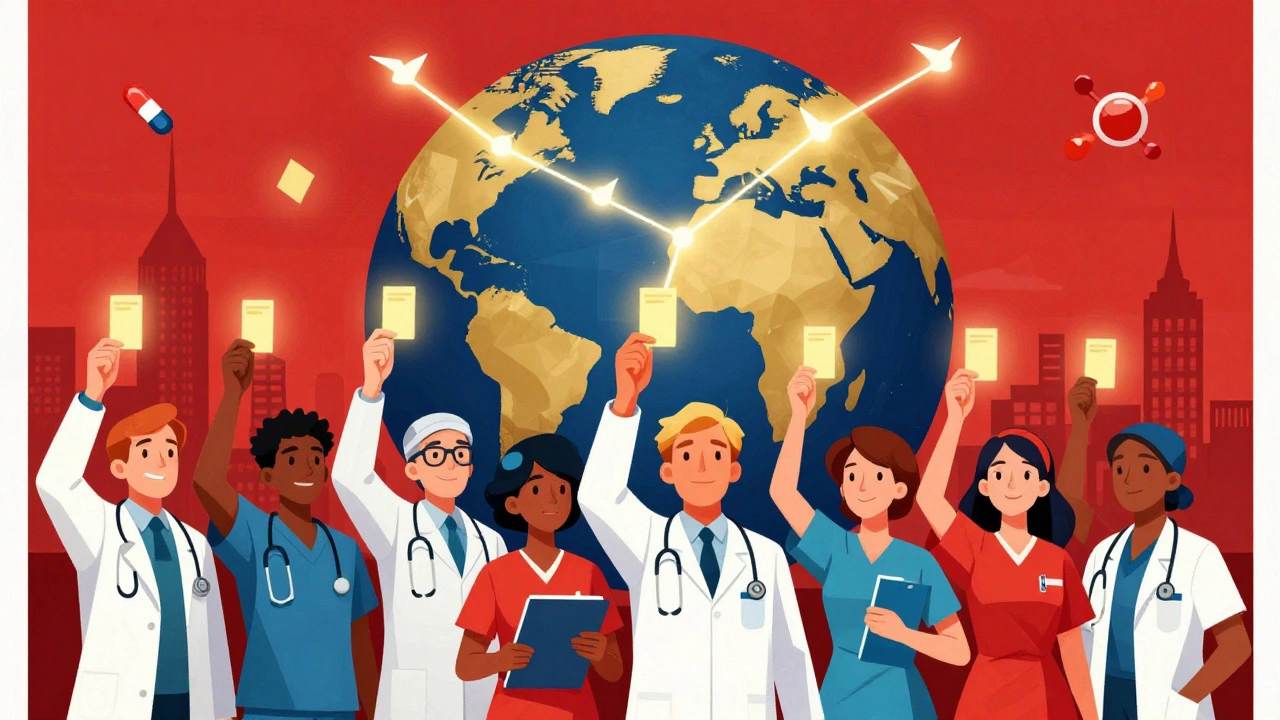
WHO Medicine Safety: Trusted Guidelines for Safe Drug Use
When it comes to taking medicine, WHO medicine safety, a global framework established by the World Health Organization to reduce harm from medications. Also known as pharmaceutical safety standards, it’s the reason you can trust that a pill bought in Nairobi works the same way—and is just as safe—as one bought in Warsaw. This isn’t just bureaucracy. It’s the difference between a patient getting better and a patient getting hurt because of a wrong dose, a bad interaction, or a fake drug.
WHO medicine safety isn’t just about pills. It covers everything from how drugs are made, stored, and labeled to how doctors and pharmacists are trained to use them. It’s why the medication errors, preventable mistakes in prescribing, dispensing, or taking drugs drop in countries that follow WHO’s guidelines. It’s why pharmaceutical regulations, legal rules that ensure drugs meet quality, safety, and effectiveness benchmarks are the same whether you’re in Brazil or Bangladesh. And it’s why the WHO pushes for clear labeling, proper storage, and real-time reporting of side effects—because a single bad batch or mislabeled bottle can kill.
Look at the posts here. They’re all connected to this. Tramadol causing serotonin syndrome? That’s a drug interaction WHO tracks. Generic immunosuppressants triggering organ rejection? WHO warns about narrow therapeutic index drugs. Medication shortages? WHO helps countries plan supply chains. Even placebo effects and drug disposal? WHO has guidelines on how to communicate risks and prevent environmental harm. This isn’t a random list of articles—it’s a practical toolkit built on global safety standards.
You don’t need to memorize every WHO document. But you do need to know: if a drug doesn’t follow these rules, it’s riskier. If your pharmacy skips safety checks, it’s not just cutting corners—it’s ignoring life-saving global practices. The posts below give you real examples: how to read warnings, spot dangerous interactions, choose safer generics, and avoid common mistakes. All of it ties back to the same goal: keeping you safe while you take medicine. That’s what WHO medicine safety is really about—not paperwork, but protection.