
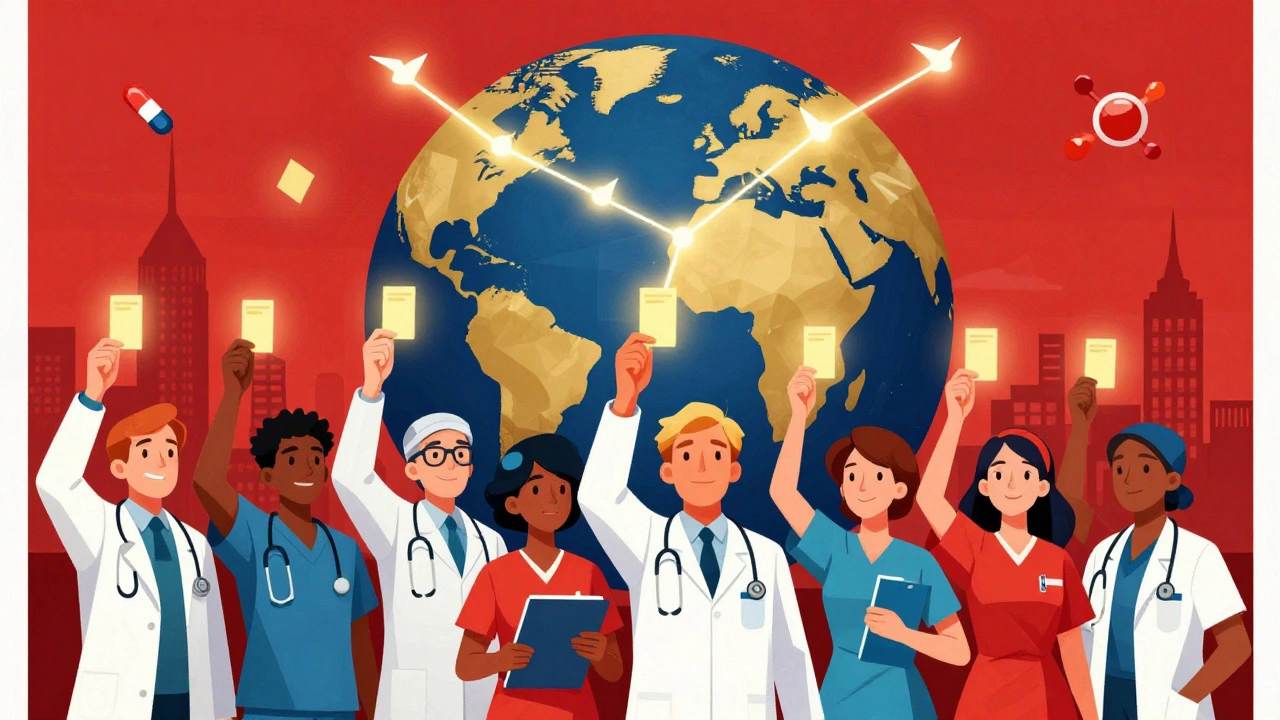
Every year, millions of people around the world take medications that save their lives. But for every success story, there are thousands of hidden cases where a drug caused harm - and no one reported it. Less than 10% of adverse drug reactions are ever reported to health authorities. That means most safety issues go unnoticed until it’s too late. If you work in healthcare, or even if you just care about the medicines you or your family take, staying informed about global medication safety isn’t optional. It’s essential.
Follow the Global Reporting Systems
The foundation of medication safety is reporting. When a patient has an unexpected reaction to a drug - whether it’s a rash, dizziness, or something more serious - that information needs to reach regulators. The World Health Organization (WHO) runs the WHO Programme for International Drug Monitoring, which connects 150 countries through national pharmacovigilance centers. These centers collect reports and share them globally so patterns can be spotted early. In the UK, that’s the Yellow Card scheme run by the MHRA. In the U.S., it’s the FDA’s MedWatch system. Australia uses the TGA’s adverse event reporting portal. These aren’t just bureaucratic forms. They’re live safety nets. The Yellow Card app lets pharmacists and doctors report side effects in under two minutes from their phone. One Australian pharmacy saw a 25% increase in staff reporting after they started using the app and posted campaign posters in waiting rooms during #MedSafetyWeek.Sign Up for Official Alerts
Don’t wait for news to find you. Go straight to the source. Subscribe to email updates from:- WHO Medicines Safety - They send out bulletins on new safety alerts, policy changes, and global guidelines. Their May 2025 update on controlled medicines (like opioids and benzodiazepines) was a major shift in how countries balance access and safety.
- Uppsala Monitoring Centre (UMC) - The hub behind #MedSafetyWeek. They send out campaign kits in August each year, including ready-to-use posters, social media templates, and training materials.
- ISMP (Institute for Safe Medication Practices) - Their biennial Targeted Medication Safety Best Practices report (2025-2026 edition) is a goldmine for frontline staff. It includes step-by-step checklists for things like weight-based dosing in kids, vaccine storage, and returning unused meds to stock.
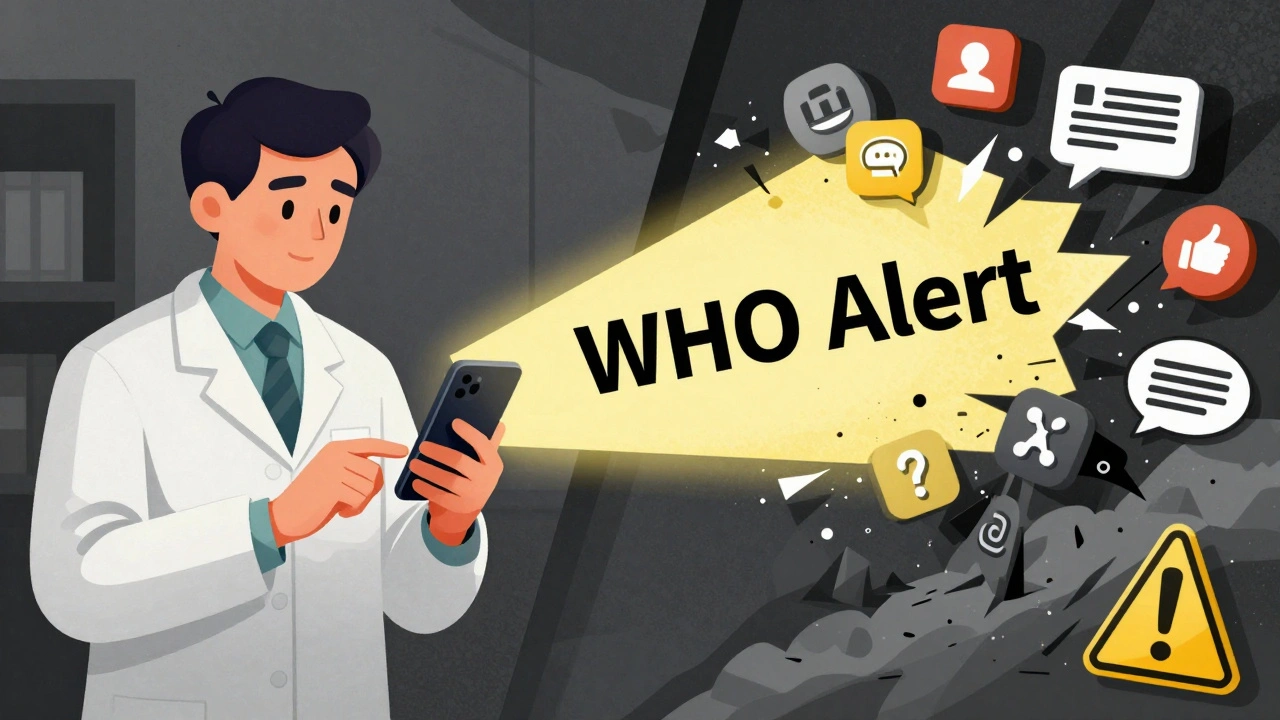
These aren’t marketing emails. They’re urgent safety notices. One pharmacist in Melbourne told me she missed an alert about a new interaction between a common antibiotic and a blood thinner. Two weeks later, a patient had a dangerous bleed. Now she checks her inbox every Monday.
Join #MedSafetyWeek - Every November
The first week of November is when the global medication safety community comes alive. #MedSafetyWeek, coordinated by UMC since 2016, is the largest campaign of its kind. In 2025, it’s hitting its 10th anniversary with a theme: “We can all help make medicines safer.”What happens during this week? Hospitals run training sessions. Pharmacies hand out free reporting cards. Clinics post infographics about how to spot a bad reaction. And you? You can download free materials from the UMC website starting in August. Use them. Share them. Post them where patients can see them.
One hospital in Canada tracked a 40% rise in side effect reports during #MedSafetyWeek 2024. Why? Because people finally knew how and where to report. Don’t wait for your organization to act - start the conversation yourself.
Use Trusted Tools to Avoid Errors
Technology can help - if you use the right tools. Medi-Span, a clinical decision support system used in Saudi Arabia and parts of Europe, cut medication errors by 40% by giving doctors real-time alerts on drug interactions, dosing limits, and allergies. It’s not magic. It’s smart programming built on real-world data.In the U.S., the FDA’s Sentinel Initiative links data from 300 million patient records to spot safety signals faster. In the EU, new rules require each country to report at least 500 adverse events per million people each year. That’s not just a target - it’s a benchmark. If your country reports less than 50, something’s broken.
For pharmacists, ISMP’s 2025-2026 Best Practices include printable worksheets for team huddles. One item: “Verify weight before every pediatric dose - even if you’ve done it a hundred times.” A Reddit user from r/pharmacy shared that this single step prevented a fatal overdose in a 6-month-old last month. That’s the kind of detail that saves lives.
Watch Out for Misinformation
Social media is the biggest threat to medication safety today. The ECRI/ISMP 2025 Top 10 Patient Safety Issues ranked medical misinformation as the third most critical risk. False claims about vaccines, unproven “miracle cures,” and manipulated drug safety data are spreading faster than ever.Studies show that in regions with high social media use, false reports of side effects spiked by 18% - not because the drugs were more dangerous, but because fear went viral. Always check the source. If you see a post claiming “Drug X causes brain damage,” look for the original data. Was it from WHO? FDA? A peer-reviewed journal? Or a random Instagram influencer?
When you see misinformation, don’t just scroll past. Share the correct info. Link to WHO’s official page. Post a screenshot of the Yellow Card app. Be the person who brings facts into the conversation.
Understand the Gaps - And Push for Change
Here’s the uncomfortable truth: medication safety isn’t equal. High-income countries report 350-400 adverse events per million people. Low-income countries? Often fewer than 10. That doesn’t mean people there have fewer reactions. It means they lack systems to report them.WHO’s 2024 Global Patient Safety Report shows that 70% of low- and middle-income countries don’t have the staff, tech, or funding to run proper pharmacovigilance. That’s why the WHO’s 2025 guideline on controlled medicines is so important - it’s not just about banning drugs. It’s about making sure people who need them - like those with chronic pain or epilepsy - can get them safely.
If you work in a clinic or hospital, ask: Are we using the same reporting tools as our global peers? Are we training staff on how to report? Are we sharing data with national centers? If the answer is no, start pushing. Use ISMP’s worksheets. Request UMC’s campaign materials. Bring up WHO’s guidelines in staff meetings.
What You Can Do Today
You don’t need to be a doctor or pharmacist to make a difference. Here’s your simple action plan:- Download the Yellow Card app (or your country’s equivalent) and test it now. It takes 90 seconds.
- Subscribe to WHO’s Medicines Safety updates - go to who.int/medicinesafety and sign up.
- Bookmark the UMC website (umc-worldwide.org) and check it every August for #MedSafetyWeek materials.
- Print and display one of ISMP’s 2025-2026 Best Practices posters in your waiting area or break room.
- Call out misinformation when you see it. Reply with a link to an official source.
Medication safety isn’t about perfection. It’s about progress. One report. One conversation. One poster. It adds up. And right now, the system is counting on you to speak up.
What’s Coming in 2026
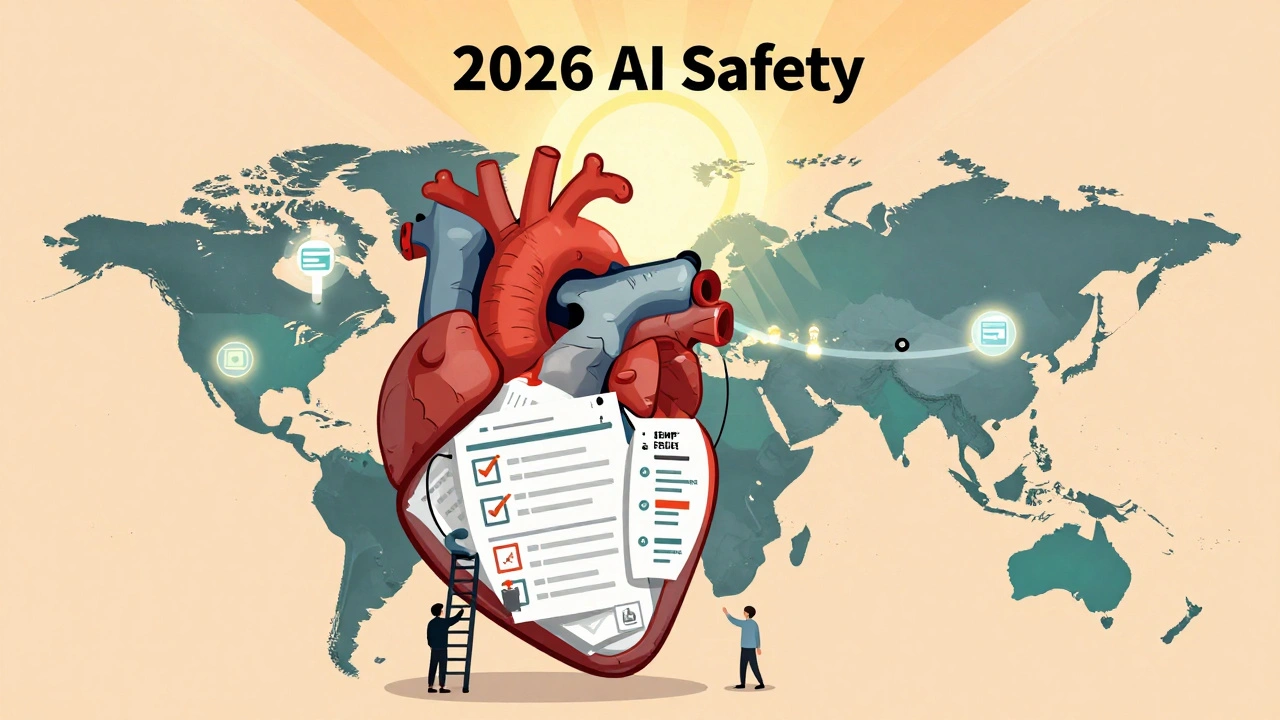
The next big shift? AI. By 2027, clinical tools like Medi-Span will use machine learning to predict risks before a dose is even given. WHO is testing AI-powered symptom checkers in 15 countries that can turn a patient’s text description into a formal safety report. But none of this works without human input. The AI learns from the reports you file. The system improves because you act.So don’t wait for the next big update. Start today. Your next report might prevent a tragedy you never even knew was coming.
Kurt Russell
December 6, 2025 AT 23:02Just downloaded the Yellow Card app on my phone while drinking my morning coffee. Took 47 seconds. I’m reporting that weird dizziness I had after that new allergy med last month. If I didn’t know about this, I’d have just blamed it on lack of sleep. But now? I’m part of the system. That’s wild. We’re not just patients-we’re sensors. And the system needs our data, not just the doctors’.
Kyle Oksten
December 8, 2025 AT 03:59There’s a deeper truth here that nobody’s talking about: safety reporting is a power imbalance disguised as public service. The system asks patients and frontline workers to do the labor of surveillance while the pharmaceutical industry and regulators sit back and wait for the data to come in. It’s like asking the victims of a leak to report the smell. The real fix isn’t more apps-it’s mandatory transparency from manufacturers and real consequences for suppressing signals. Until then, we’re just taping over the cracks.
Ernie Blevins
December 9, 2025 AT 18:06lol why are we even doing this. most of these reports are garbage. people report headaches after taking aspirin like it’s a miracle. the system is broken. they get 500 reports of the same thing and ignore it. why bother? just take your meds and shut up.
Oliver Damon
December 10, 2025 AT 00:58From a pharmacovigilance systems engineering standpoint, the current paradigm is fundamentally constrained by latency and data heterogeneity. The WHO’s global network, while commendable in scope, suffers from non-uniform data ingestion protocols across jurisdictions. The UMC’s campaign materials are valuable as awareness vectors, but they lack integration with EHR workflows. The real bottleneck isn’t reporting-it’s signal extraction. Without standardized ontologies and real-time API ingestion into centralized analytics platforms, we’re merely aggregating noise. The Sentinel Initiative’s federated architecture is the only scalable model, but its adoption remains fragmented due to institutional inertia and vendor lock-in. Until we move from passive reporting to active, predictive surveillance, we’re just doing harm reduction theater.
Ryan Sullivan
December 11, 2025 AT 21:30Let’s be honest-this post reads like a pharmaceutical industry whitepaper dressed up as public service. You’re telling people to download apps and subscribe to newsletters while ignoring the fact that 90% of adverse events go unreported because patients are terrified of being dismissed, or worse, blamed. And you call this ‘essential’? It’s performative. The real problem isn’t awareness-it’s accountability. Who gets punished when a drug kills? Not the executives. Not the regulators. Always the patient. So no, I won’t ‘join #MedSafetyWeek.’ I’ll wait until someone loses their job over a preventable death.
Wesley Phillips
December 13, 2025 AT 03:08so i just reported my cousin’s rash from that new blood pressure med using the app and then i posted a screenshot on my story with #MedSafetyWeek and tagged my local pharmacy and like 3 people asked me how to do it and one of them is my aunt who takes 7 meds and she’s like ‘wait this is real??’ i’m not a doctor but i’m pretty sure this is the most useful thing i’ve done all year
Helen Maples
December 13, 2025 AT 23:12Ernie, your comment is dangerously naive. Dismissing adverse event reporting because some are ‘garbage’ is like saying seatbelts are pointless because some people wear them wrong. The system isn’t perfect-but it’s the only thing standing between a silent death and a preventable one. If you don’t report, you’re not just passive-you’re complicit. And Helen, I’m not asking you to be nice. I’m asking you to be responsible. Download the app. Report the symptom. Share the link. That’s not activism. That’s basic human decency.
Jennifer Anderson
December 14, 2025 AT 07:25just wanted to say i printed out the ismp poster about weight-based dosing and taped it next to our med cart. one of the new nurses saw it and asked if we could do a quick huddle on it. we did. 20 minutes. saved a kid from a 10x overdose. this stuff matters. dont overthink it. just do it.