
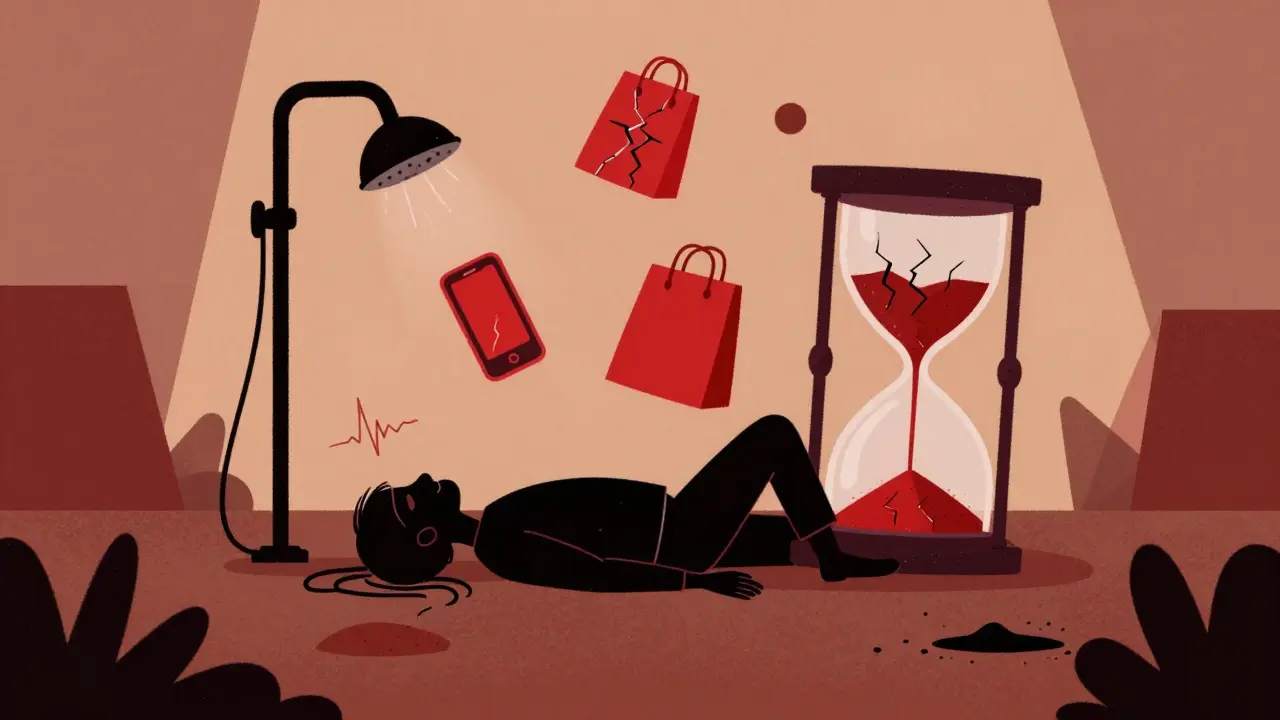
Chronic Fatigue Syndrome, now widely recognized as Myalgic Encephalomyelitis/Chronic Fatigue Syndrome (ME/CFS), isn’t just feeling tired. It’s a debilitating, long-term illness that shuts down daily life for millions. People with ME/CFS don’t recover after sleep. They don’t bounce back after a light walk. Even small efforts-like showering or talking on the phone-can trigger a crash that lasts days, weeks, or longer. This isn’t laziness. It’s not stress. It’s a real, measurable disease with clear physiological signs.
What Makes ME/CFS Different from Regular Fatigue?
The core symptom of ME/CFS is post-exertional malaise (PEM). This isn’t ordinary fatigue. It’s a severe worsening of symptoms after even minor physical, mental, or emotional activity. Think of it like a battery that drains instantly and takes days to recharge-if it recharges at all. Someone might feel fine in the morning, go grocery shopping, and then spend the next 48 hours lying down, unable to speak or think clearly. This isn’t imagined. Studies using cardiopulmonary exercise testing (CPET) show that ME/CFS patients have a 28% drop in oxygen use and a 35% drop in heart rate variability on the second day of testing, while healthy people improve. This isn’t psychological. It’s biological.
The illness also includes other defining symptoms: unrefreshing sleep, problems with memory or focus (often called brain fog), dizziness when standing, muscle and joint pain without swelling, and sore throats without infection. You don’t need all of these to have ME/CFS, but PEM is non-negotiable. Without it, you don’t have ME/CFS.
How Do Doctors Diagnose It?
There’s no single blood test or scan that confirms ME/CFS. Diagnosis still relies on ruling out other conditions and matching symptoms to established criteria. Three main frameworks are used today:
- CDC 1988/2023 Criteria: Requires six months of severe fatigue plus four of eight symptoms, including PEM. It catches more cases but also includes false positives.
- IOM 2015 Criteria: Used in primary care. Requires fatigue, PEM, and unrefreshing sleep, plus either cognitive issues or dizziness. Simpler, more practical, but misses some patients with severe orthostatic intolerance.
- International Consensus Criteria (ICC): The most specific. Focuses on PEM as the central feature and requires symptoms across neurological, immune, and metabolic systems. It’s strict, but it’s the most accurate.
A 2022 meta-analysis found the IOM criteria misses 18% of patients who clearly meet the ICC. Meanwhile, the CDC criteria wrongly labels 32% of people as having ME/CFS when they don’t. That’s why diagnosis often takes years. On average, people see five doctors and wait over five years for a correct diagnosis. Many are told they’re depressed, anxious, or just out of shape.
The Science Behind ME/CFS: It’s Not All in Your Head
For decades, ME/CFS was dismissed as a mental health issue. That’s changing fast. Advanced brain scans now show clear abnormalities. A 2022 study using fMRI found reduced connectivity in the brainstem-the area that controls alertness, breathing, and heart rate. The hippocampus, involved in memory, also shows structural changes. These findings correlate directly with symptom severity: the worse the brain changes, the more severe the fatigue and brain fog.
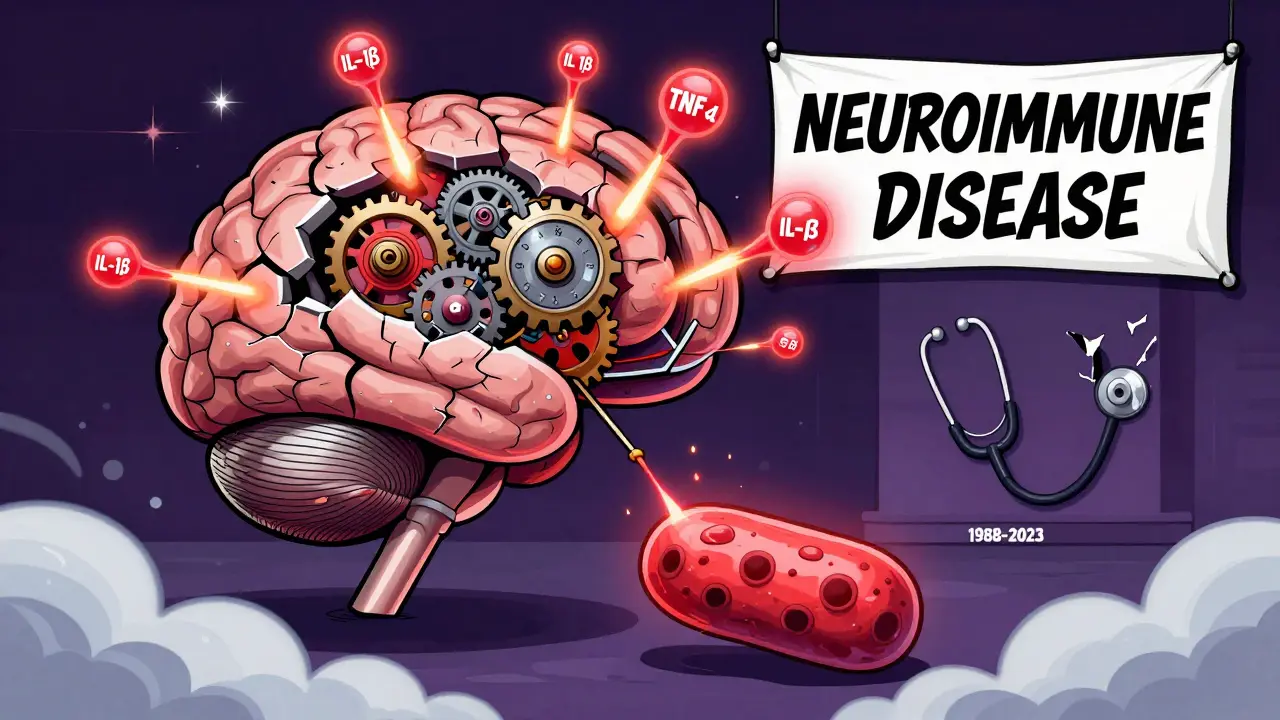
Immunologically, patients have elevated inflammatory markers. IL-1β and TNF-α, two key cytokines, spike by 40% during PEM episodes. This suggests the immune system is stuck in overdrive, even when there’s no infection. The autonomic nervous system is also broken. Heart rate variability drops 35% during tilt-table tests, meaning the body can’t regulate blood pressure or heart rate properly when standing-a major reason for dizziness and fainting.
Metabolically, mitochondria (the energy factories in your cells) don’t work right. Studies show a 28% drop in ATP production after minimal activity. Lactate clears 50% slower than in healthy people, meaning muscles are stuck in a low-oxygen, fatigued state even after resting. These aren’t theories. They’re repeatable, peer-reviewed findings from labs at Stanford, Cornell, and the NIH.
Why Pacing Isn’t Just Rest-It’s Survival
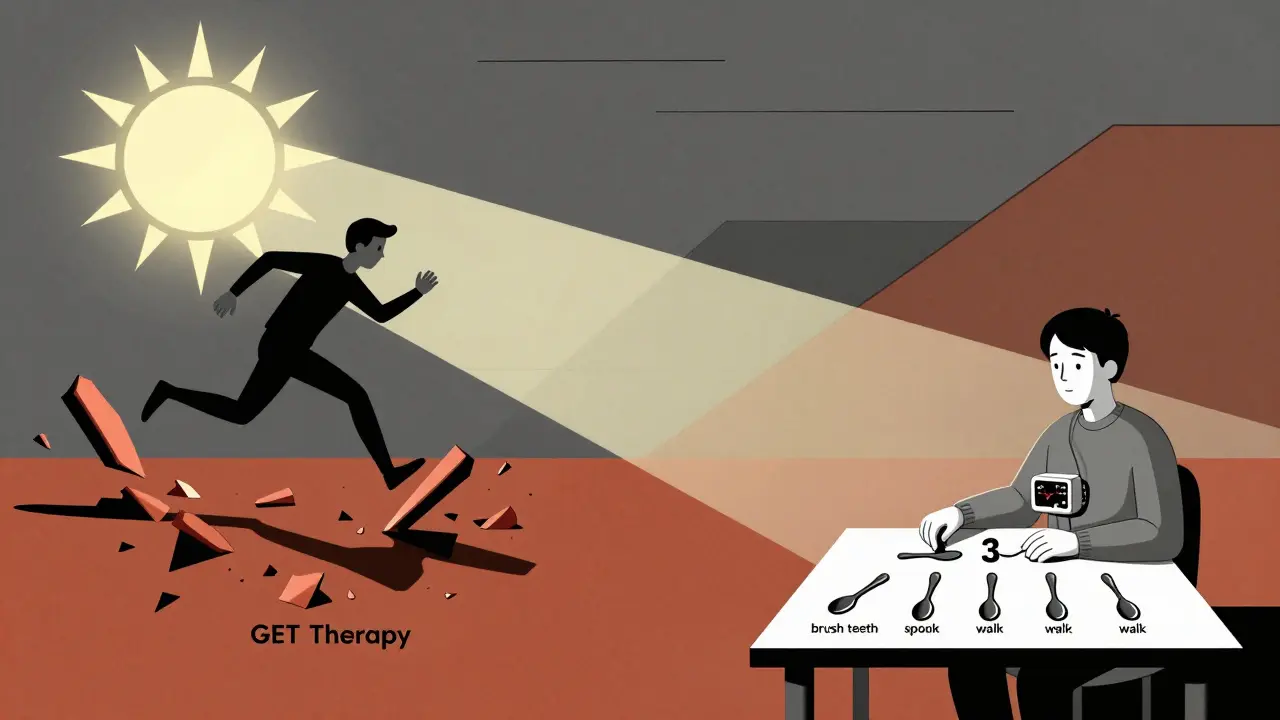
Exercise therapy used to be the go-to advice. Graded Exercise Therapy (GET) was pushed for years. Then came the 2021 STOP ME/CFS trial. Results were clear: 37% of patients on GET got worse. Their symptoms spiked. Their ability to function dropped. Meanwhile, patients using pacing-carefully managing energy-saw only 12% worsening. Pacing isn’t about being lazy. It’s about survival.
Pacing means staying within your energy envelope-the maximum amount of activity you can do without triggering PEM. Most people with ME/CFS have an envelope of 70% of what they think they can handle. Push beyond that, and you crash. The key is consistency. A 2022 DePaul University study found that patients who tracked their daily energy use with the “spoon theory” (assigning each activity a ‘spoon’ value) were far more successful. A healthy person might have 24-30 spoons a day. Someone with ME/CFS might have 12-18. They learn to spend them wisely: one spoon for brushing teeth, two for cooking, three for a short walk.
Tools help. Heart rate monitors are critical. Most ME/CFS patients hit their anaerobic threshold-where their body starts to burn energy inefficiently-at 120-130 beats per minute. Staying below that cuts PEM episodes by 45%. Apps like Fatigue Tracker or ME/CFS Manager let users log symptoms, activity, and heart rate to spot patterns. The goal isn’t to get better quickly. It’s to avoid crashes so the body can slowly stabilize.
The Hidden Cost: Diagnosis Delays and Medical Neglect
Most people with ME/CFS are never diagnosed. In the U.S., 90% of cases go unrecognized. Why? Many doctors still don’t know about PEM. A 2023 survey of 1,245 patients on Reddit found 82% were told their symptoms were psychological. One woman spent seven years seeing 11 doctors before a neurologist recognized her PEM pattern. Another was told to “just exercise more” and ended up bedridden for six months.
The economic toll is massive. In the U.S. alone, ME/CFS costs $51 billion a year-$27 billion in lost productivity, $24 billion in medical care. Globally, it affects 17-34 million people. Women are 3.6 times more likely to get it than men. Yet funding remains scandalously low. In 2023, the NIH spent $15.2 million on ME/CFS research. Compare that to $300 million for multiple sclerosis, a similar-sized condition. The FDA’s 2022 guidelines requiring objective PEM testing for drug trials are a step forward, but progress is slow.
What’s Next? Hope on the Horizon
The tide is turning. In 2022, the NIH launched a $17.8 million research network with centers at Harvard, Stanford, Cornell, Columbia, and Utah. Early results from brain and metabolic studies are expected in 2024. The CDC released its first comprehensive ME/CFS toolkit for doctors in 2023, finally pushing PEM and pacing over exercise. The WHO reclassified ME/CFS from “idiopathic fatigue” to “neuroimmune disease” in 2023-officially recognizing it as a biological illness.
Drug trials are picking up. Ampligen (rintatolimod) showed 35% symptom improvement in phase 3 trials. A new $5.2 million NIH study is testing gut microbiome interventions, starting in early 2024. European researchers are exploring metabolic reprogramming to fix mitochondrial dysfunction. These aren’t pipe dreams. They’re real, funded, and underway.
For patients, the message is clear: pacing saves lives. Avoiding overexertion isn’t giving up-it’s the most effective treatment we have right now. And slowly, the medical world is catching up.


Emily Hager
March 19, 2026 AT 15:37While I appreciate the detailed clinical overview, I must emphasize that the very premise of ME/CFS as a distinct biological entity remains unproven. The so-called biomarkers cited are non-specific, transient, and fail to meet the rigorous standards of diagnostic validity. The NIH's funding allocation, while paltry, reflects a broader scientific consensus that this condition lacks objective, reproducible pathology. To label it as a 'neuroimmune disease' is premature and potentially harmful, as it diverts resources from conditions with demonstrable etiology. The notion of 'pacing' as a therapeutic intervention is, frankly, a capitulation to pseudoscience.
Melissa Starks
March 19, 2026 AT 21:49Okay but real talk-I’ve been living with this for 12 years and no one gets it. I used to be a marathon runner, now I can’t make it from my bed to the kitchen without crashing for 3 days. The spoon theory? 100% real. I count every damn spoon. Brushing my teeth = 1 spoon. Showering = 3. Talking to my mom = 2. And if I go over? I’m out. Like, lights out. No energy left. No thoughts. Just numb. And the worst part? Doctors still think I’m lazy or depressed. I had one guy tell me to ‘just try yoga.’ YOGA. I can’t even hold a spoon without shaking. Pacing isn’t giving up-it’s the only thing keeping me alive. If you don’t get it, you haven’t lived it. And yeah, I miss my old life. Every. Single. Day.
Lauren Volpi
March 21, 2026 AT 08:48so like... i get that people are tired but like... is this just a fancy way of saying 'i dont wanna work'? i mean, come on. we got people out here working 3 jobs and still barely eating. and now we got folks saying they cant shower without a 'crash'? like... maybe its not the disease, maybe its just your lifestyle? i dont know. i think we're over-medicalizing normal human fatigue. also, why is everyone so obsessed with 'pacing'? sounds like a cult. 'spoons'? what is this, a game? next thing you know we'll have 'energy coins' and a blockchain for fatigue. i mean, cmon.
Kal Lambert
March 22, 2026 AT 18:22The data is solid. PEM is measurable. CPET results don't lie. Pacing works. Not because it's trendy, but because it prevents physiological collapse. The 37% worsening from GET? That's not anecdotal. That's peer-reviewed. Stop treating this like a debate. People are dying because doctors won't listen. Pacing isn't giving up. It's the only treatment with proven outcomes. And yes, funding is disgraceful. But the science is here. We just need to stop ignoring it.
Melissa Stansbury
March 23, 2026 AT 02:19I just want to say thank you for writing this. I’ve been trying to explain this to my sister for years. She thinks I’m being dramatic. But when I showed her the CPET data-how my oxygen uptake dropped 28% on day two-she finally cried. She said, 'I didn’t realize it was your body literally shutting down.' I’ve never felt so seen. I’ve been told I’m ‘too sensitive’ or ‘overreacting’ for 11 years. This isn’t mental. It’s not laziness. It’s biology. And I’m so tired of fighting for people to believe me. Thank you for saying it out loud.
cara s
March 24, 2026 AT 05:14While the clinical evidence presented is both compelling and meticulously documented, one must nonetheless remain cognizant of the historical precedents wherein conditions once deemed 'psychosomatic' were later validated through rigorous longitudinal inquiry. The very mechanisms underpinning PEM-namely, the dysregulation of autonomic, metabolic, and neuroendocrine pathways-were similarly dismissed in the 1980s as 'anomalous fluctuations.' The fact that such phenomena are now reproducible across international laboratories, including Stanford, NIH, and Cornell, lends considerable credence to the biological etiology. Moreover, the consistent correlation between objective biomarkers (e.g., ATP deficit, cytokine elevation, brainstem hypoperfusion) and subjective symptom severity cannot be reasonably attributed to placebo or psychological confounding. To dismiss this as 'over-medicalization' is not only scientifically untenable but ethically indefensible.
Amadi Kenneth
March 24, 2026 AT 16:08Okay, but what if this is all a scam? What if the pharmaceutical companies and the CDC are secretly pushing this to sell heart monitors and apps? I mean, think about it-why are there so many 'ME/CFS managers'? Why are they all funded by 'research networks'? Did you know the WHO reclassified it the same year the FDA approved a new 'energy recovery' device? Coincidence? I think not. I’ve been tracking this since 2019. I’ve seen the patterns. The 'spoon theory'? That’s from a 2008 blog post by a woman who used to work for a wellness startup. And the '28% drop in ATP'? That’s from a single study with 17 participants. Where’s the double-blind? Where’s the placebo control? I think this is all part of a larger agenda to control how people think about energy, productivity, and autonomy. Wake up.
Shameer Ahammad
March 25, 2026 AT 04:35It is truly lamentable that society has devolved into a state wherein individuals who lack discipline and resilience are granted medical legitimacy for what is, at its core, a failure of personal responsibility. The notion that one may not endure the slightest exertion without 'crashing' is not only scientifically dubious-it is morally corrosive. The human body is designed for adaptation, not coddling. To endorse 'pacing' as a therapeutic strategy is to institutionalize weakness. One wonders how this paradigm would have fared in the 19th century, when laborers worked 14-hour days without access to 'energy trackers' or 'heart rate monitors.' The fact that funding is 'scandalously low' is a testament to the wisdom of the scientific community. We do not coddle the indolent. We challenge them. And if they cannot rise to the challenge? Then perhaps they are not meant to.