
Imagine a doctor prescribing a medication that seemed safe during clinical trials, only to find out years later that it carries a risk of a catastrophic side effect. This is where the boxed warning is the strongest safety alert mandated by the U.S. Food and Drug Administration (FDA) for prescription drugs . Also known as a "black box warning," these alerts don't just suggest caution-they demand attention by sitting in a bold, bordered box at the very top of the prescribing information. But these labels aren't static. They shift, expand, and sometimes disappear as we learn more about how a drug behaves in the real world.
Understanding why and how these warnings change is a critical part of drug safety monitoring. Whether you're a healthcare provider, a pharmacist, or a patient, knowing how to read the evolution of a label helps you distinguish between a known risk and a newly discovered danger. Since the FDA first introduced this system in 1979, it has evolved from simple alert signs into complex regulatory tools that guide the risk-benefit analysis of thousands of therapies.
Why Boxed Warnings Actually Change
A boxed warning isn't a permanent stamp of failure; it's a living document. The FDA typically updates these labels for three main reasons. First, they highlight adverse reactions so severe that they could change whether a doctor decides to use the drug at all. Second, they identify risks that can be stopped if the drug is used in a specific way. Third, they set strict rules on who can get the drug to ensure it's used safely.
The trigger for these changes is often the MedWatch program, the primary reporting mechanism for adverse events that allows the FDA to detect safety signals from real-world use . When thousands of reports suggest a pattern-like a specific type of heart failure or a psychiatric shift-the FDA moves to update the label. For instance, the 2004 warning for antidepressants initially focused on children and adolescents, but by 2006, it was expanded to include young adults aged 18-24 after data showed they were also at risk for suicidal behavior.
The Shift from General Alerts to Precise Data
If you look at labels from the 1980s and 90s, you'll see broad, vague statements. Modern warnings are different. They are moving toward risk quantification-giving you actual numbers instead of just "increased risk." A perfect example is the April-June 2025 update to Clozaril an antipsychotic medication used to treat schizophrenia . The updated warning doesn't just mention myocarditis; it specifies an incidence of 0.84 cases per 1,000 patient-years. This level of detail allows clinicians to weigh the risk with mathematical precision.
We're also seeing a change in the language used. The FDA is pushing for clinical precision to avoid confusion. Take the case of Unituxin (dinutuximab). In 2017, the FDA replaced the general term "neuropathy" with "neurotoxicity." While that might seem like a small tweak, it accurately reflects the drug's actual mechanism of nerve damage and provides clearer criteria for when a doctor must stop the treatment entirely.
| Feature | Early Warnings (1980s-1990s) | Modern Warnings (2010-Present) |
|---|---|---|
| Language | Broad safety statements | Clinically precise terminology |
| Risk Data | Qualitative ("May cause") | Quantitative (Incidence rates/percentages) |
| Guidance | General caution | Detailed mitigation and monitoring steps |
| Update Speed | Slow, periodic reviews | Driven by real-world evidence (RWE) |
The Timeline: How Long Until a Warning Appears?
One of the most concerning aspects of drug safety is the gap between a drug's approval and the appearance of its first boxed warning. Data shows this window is widening. In 2002, the median time from approval to a boxed warning was about 7 years; by 2009, it had climbed to 11 years. Why is this happening? It's likely because newer drugs are more complex and are often approved through accelerated pathways.
The Prescription Drug User Fee Act a 1992 law that accelerated the drug approval process by allowing the FDA to hire more reviewers (PDUFA) fundamentally changed the landscape. Drugs approved after PDUFA are 2.3 times more likely to receive a post-marketing boxed warning or be withdrawn from the market. Because these drugs get to patients faster, the "real" testing happens in the general population, making post-marketing surveillance more vital than ever.

When Warnings Are Removed: The Case of Evidence-Based Reversal
It's a common misconception that once a black box warning is added, it stays forever. Sometimes, new evidence proves the risk was overestimated or not linked to the drug. A notable example is Chantix (varenicline). In 2009, the FDA added a warning about depression and suicidal thoughts. However, after a massive clinical trial involving 8,144 participants found no significant difference in neuropsychiatric events between the drug and a placebo, the FDA removed the warning in 2016.
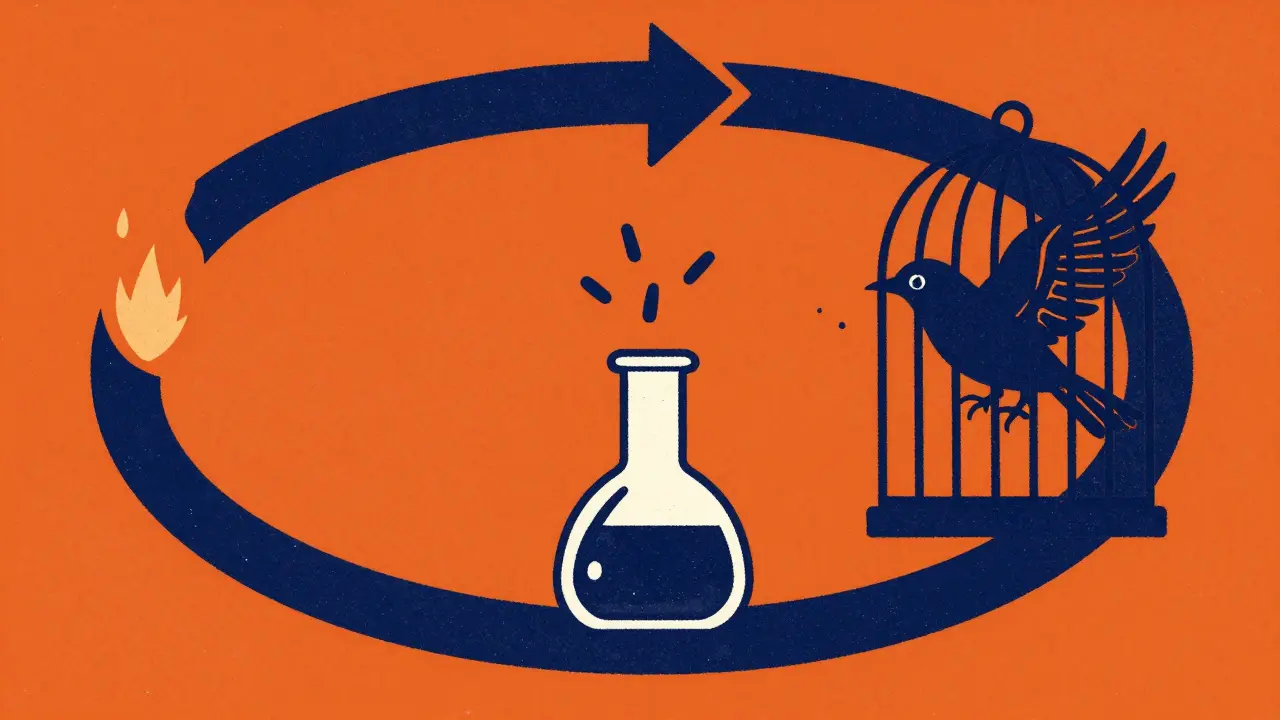
This demonstrates the circular nature of pharmacovigilance the science and activities relating to the detection, assessment, understanding, and prevention of adverse effects . The process is: Signal Detection $\rightarrow$ Warning Implementation $\rightarrow$ Further Study $\rightarrow$ Label Refinement. This ensures that warnings don't become "noise" that doctors simply ignore due to warning fatigue.
Practical Tools for Monitoring Label Changes
Keeping up with these changes is a full-time job, but there are a few reliable channels you can use to stay current. If you are looking for data from 2016 to the present, the FDA's Drug Safety-related Labeling Changes (SrLC) database is the gold standard. It's updated quarterly and is the fastest way to see recent tweaks, like the recent Clozaril revisions.
For older data (pre-2016), you'll need to dig into the MedWatch Medical Product Safety Information archive. For a complete history of a drug's regulatory journey, the Drugs@FDA database provides the original approval documents and all subsequent amendments. For those in hospital settings, journals like the American Journal of Health-System Pharmacy provide quarterly summaries that distill these changes into actionable clinical insights.
The Human Element: Do These Warnings Actually Work?
Despite the strict formatting, the effectiveness of boxed warnings is debated. On one hand, they are life-savers. Some data suggests that cardiovascular monitoring mandated by warnings for drugs like rosiglitazone reduced heart attack incidence by 23% in high-risk patients. On the other hand, physician awareness is surprisingly low. One study found that only 43.6% of primary care physicians could correctly identify drugs with boxed warnings during actual patient encounters.
There's also a psychological impact. In physician communities, like those found on Sermo or Reddit, many doctors report "therapeutic dilemmas." For example, some avoid using first-line antidepressants for adolescents because the boxed warning makes them overly cautious, even when the clinical need is urgent. This shows that while the warning provides the data, the interpretation of that data varies wildly between providers.
What is the difference between a boxed warning and a regular warning?
A boxed warning is the most serious type of alert. While regular warnings are buried in the "Warnings and Precautions" section of the label, a boxed warning is placed prominently in a black-bordered box at the beginning of the document to ensure it is the first thing a prescriber sees. It is reserved for risks that could lead to death or permanent hospitalization.
How often does the FDA update these warnings?
Updates happen as new safety signals emerge. The FDA maintains the SrLC database, which is updated quarterly. Some drugs may see updates every few years, while others may remain unchanged for decades. The timing usually depends on the volume of adverse event reports coming through MedWatch.
Can a boxed warning be removed completely?
Yes. If new, high-quality clinical trial data proves that the risk was not caused by the drug or is significantly lower than previously thought, the FDA can remove the warning. This happened with Chantix in 2016 after a large-scale study showed no significant neuropsychiatric risk compared to a placebo.
Where can I find the most recent boxed warning updates?
The most current updates are available in the FDA's Drug Safety-related Labeling Changes (SrLC) database. For those who prefer summarized reports, the American Journal of Health-System Pharmacy publishes quarterly reviews of these changes.
Does a boxed warning mean a drug is unsafe to use?
Not necessarily. It means there is a serious risk that must be managed. Many drugs with boxed warnings are essential and safe if the prescriber follows the mandated monitoring-such as regular blood tests for clozapine to prevent agranulocytosis.
Next Steps for Staying Safe
If you are a patient, the best way to handle a boxed warning is to ask your doctor: "What specific monitoring do I need to do to avoid this risk?" Don't just ask if the drug is safe; ask how the safety is being tracked. If you're a healthcare provider, integrating clinical decision support systems into your EHR can help reduce the "warning fatigue" that leads to missed alerts.
For those tracking a specific medication, set a calendar reminder to check the SrLC database every six months. As we move toward "dynamic warning systems"-where EHRs might update warnings in real-time based on a patient's lab results-the gap between a safety signal and a clinical action will hopefully shrink from years to days.



Goodwin Colangelo
April 4, 2026 AT 11:19Keeping tabs on the SrLC database is a game changer for anyone in the clinic. I've seen so many folks rely on outdated handouts, but getting that real-time data helps you actually manage the patient instead of just fearing the drug. It's all about the risk-benefit trade-off, and having those specific percentages makes the conversation with the patient way more honest and productive.
Joseph Rutakangwa
April 5, 2026 AT 17:06great point on the risk-benefit analysis
Joey Petelle
April 6, 2026 AT 01:32Oh, how quaint that we trust a government agency to tell us when a drug is actually poisonous after they've already let us be guinea pigs for a decade. Truly a masterpiece of bureaucratic efficiency. I love how we just accept that the "real" testing happens on the general public because someone decided a 1992 law was a great idea to speed things up. Absolutely stellar work by the finest minds of the state, obviously.
Will Baker
April 6, 2026 AT 16:50Actually, the whole idea that warnings "work" is a joke. Most doctors just click through the alerts on their screens without reading a single word, so why even bother with the fancy formatting? It's basically just a legal shield for the pharmaceutical companies so they can say they warned us while they keep raking in the cash. The system is designed to be ignored.
Beth LeCours
April 7, 2026 AT 17:30too long
Sam Hayes
April 9, 2026 AT 16:10the point about the gap between approval and warning is really the most important part here. if you are a patient just remember that the first few years of a drug on the market are always the most uncertain. its helpful to look at the original approval date and see how long it has been since then before you feel totally confident in the safety profile of a new med
angel sharma
April 11, 2026 AT 03:18We absolutely must push for more transparency in how this data is communicated to the public because when we empower patients with knowledge we create a safer healthcare ecosystem for everyone involved and it is simply inspiring to see how the transition toward quantitative data like that Clozaril example can actually save lives by removing the guesswork from the equation while encouraging doctors to be more proactive in their monitoring strategies throughout the entire treatment process!
Vicki Marinker
April 12, 2026 AT 01:11The notion that removing a warning based on a single trial, as with Chantix, constitutes a complete reversal of risk is intellectually dishonest. One does not simply erase years of adverse event reports because a controlled study failed to replicate them in a sterile environment. The inherent volatility of human biochemistry renders these binary labels almost meaningless in a clinical setting, yet we pretend this process is a linear path toward truth.
HARSH GUSANI
April 12, 2026 AT 11:46Why follow US rules anyway? 🇮🇳 We have our own ways and we dont need this FDA drama telling us what is safe or not! The system is just a way for them to control the market and make money 🙄
Sakshi Mahant
April 14, 2026 AT 06:55It is interesting to see how different countries handle these alerts. While the FDA is very structured, the focus on a collaborative approach to safety is something we can all learn from regardless of where we live. Maintaining a respectful dialogue between the regulatory bodies and the patients is the only way to ensure truly safe medicine for all.
Rob Newton
April 15, 2026 AT 13:24PDUFA is a disaster. Speed kills.
Dee McDonald
April 16, 2026 AT 15:08Everyone needs to start demanding these specific numbers from their providers right now! Stop settling for "it might happen" and start asking for the actual incidence rate per thousand patient-years as mentioned in the text. If we don't push for this level of precision, the doctors will just keep ignoring the boxes and we'll keep taking the risks without knowing the actual odds. Get your data, get your numbers, and take control of your own health before the system does it for you!