
It’s not about forgetting. It’s about medication adherence being harder than it looks. You know you need to take your pills. You’ve been told why. But somehow, by Wednesday, you’re not sure if you took your blood pressure medicine this morning-or if it was yesterday. You’re not alone. Half of all people with chronic conditions don’t take their meds as prescribed. And it’s not because they’re lazy. It’s because the system isn’t designed for real life.
Why Your Routine Keeps Falling Apart
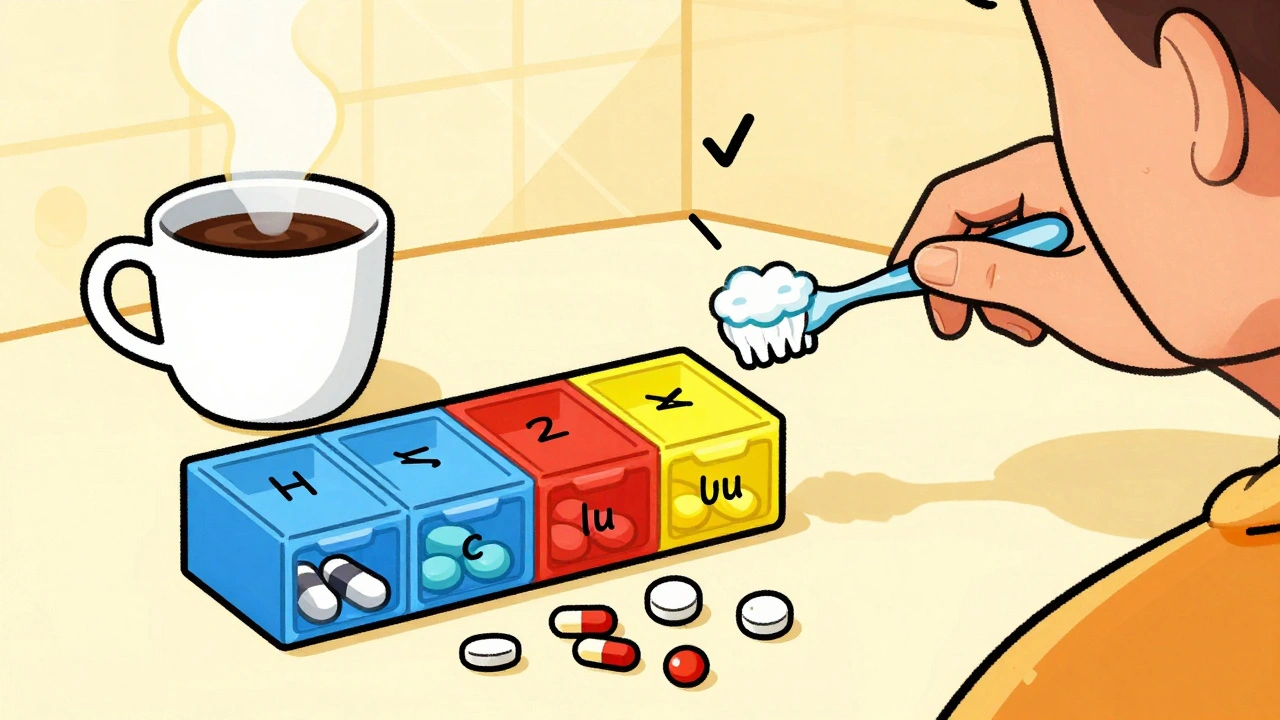
Most medication schedules feel like adding another job to your day. Wake up. Take pills. Eat breakfast. Go to work. But what if your pills were already part of your morning? What if they didn’t feel like a chore, but like a natural step-like brushing your teeth or pouring your coffee? The truth is, your brain doesn’t remember new habits unless they’re tied to something you already do. That’s why pairing your meds with an existing habit works better than alarms that you ignore. Stanford Medicine found that 78% of people who linked their pills to something like brushing their teeth or feeding their dog stuck with it. Why? Because those actions are automatic. They don’t need willpower. Another big problem? Too many pills. If you’re on five or more medications, your chances of missing one jump dramatically. Medicare data shows adherence drops from 75% for one drug to just 50% for four or more. That’s not because you’re bad at remembering. It’s because your brain is overloaded.Simple Tools That Actually Work
You don’t need fancy apps or smart bottles. Most people over 65 still use the same tool they’ve used for years: a pill organizer. And for good reason. Weekly pill boxes with separate compartments for morning, afternoon, and night reduce missed doses by up to 35%. Fill it every Friday night after dinner. Make it part of your weekly ritual. You’ll know exactly what’s been taken and what’s left. If you’re not sure which pills go when, ask your pharmacist to label them. Use colors: blue for morning, red for afternoon, yellow for bedtime. A 2021 American Heart Association study showed this cut dosing errors by 28%. No reading tiny labels. Just look at the color. For people who forget even with a pill box, try the flip bottle trick. After you take your pill, turn the bottle upside down. If it’s upright in the morning, you missed it. Simple. No tech. No battery. Just a physical cue your hands remember.Timing Matters More Than You Think
It’s not just about taking your pills. It’s about taking them at the right time. Some meds need an empty stomach. Others work better with food. Taking a statin at night? That’s when your liver makes cholesterol. Taking a diuretic at 8 p.m.? You’ll be up all night. Don’t guess. Ask your doctor or pharmacist. Write it down. The best time to take meds? When they fit into your life. If you eat breakfast at 7 a.m., take your morning pills right after. If you always brush your teeth at 9 p.m., do your nighttime meds right after. Consistency beats perfection. Missing a dose by two hours? Better than skipping it entirely.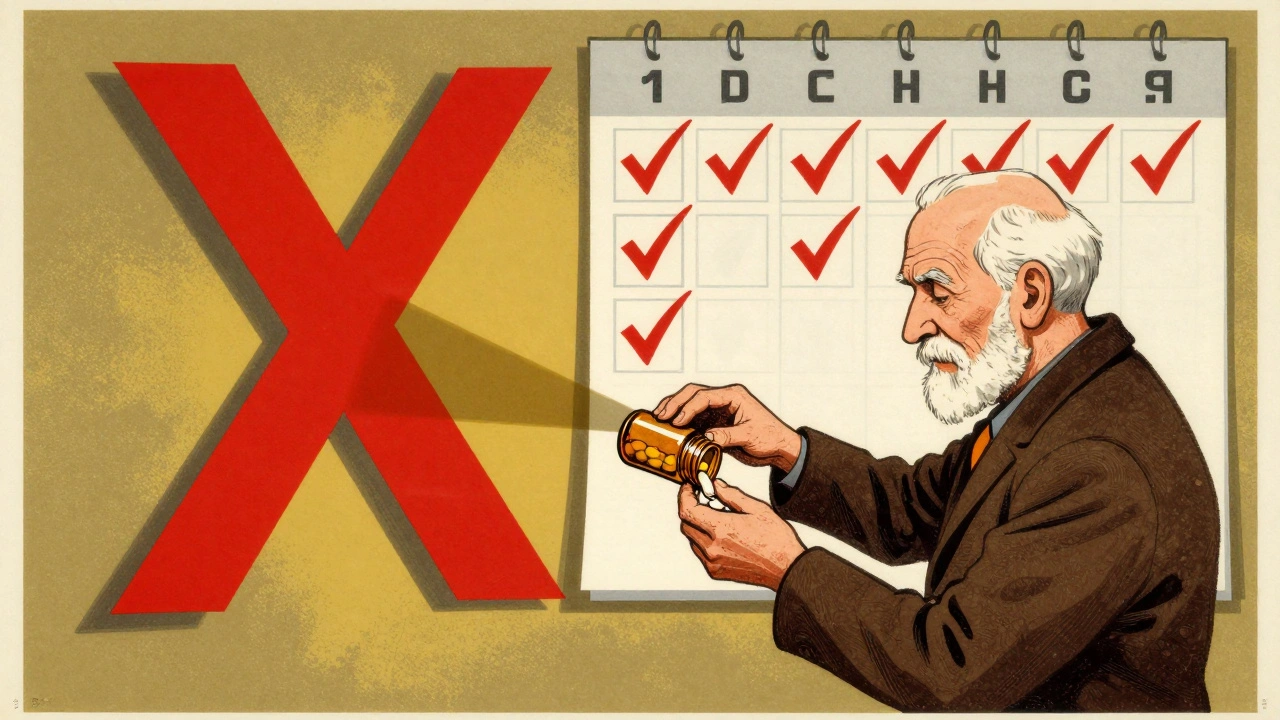
Technology Can Help-But Only If It Fits You
Smartphone alarms work great-for some. A 2020 MedStar Health study found 63% of people aged 50-75 improved adherence with phone reminders. But for those over 75? That number drops to 45%. Why? Phones get silenced. Notifications get ignored. Batteries die. Timer caps on pill bottles that beep when it’s time? They work across all ages. No phone needed. Just a gentle buzz. And they’re cheap-under $20. ProMedica found they maintain 62% effectiveness, even for people who struggle with tech. If you like apps, try ones that track your doses and send gentle nudges-not loud, annoying alarms. But don’t rely on them alone. Always have a backup: a pill box, a written schedule, a family member who checks in.When You’re Traveling, Sick, or Just Off Schedule
Life doesn’t pause for your meds. You get sick. You travel. You stay up late. You forget. That’s normal. When you’re traveling, pack your pills in a small daily pill box. Don’t rely on hotel mini-fridges or room service. Bring a copy of your prescription. Know what to do if you miss a dose-don’t double up unless your doctor says so. If you’re sick and nauseous, talk to your doctor. Maybe your meds can be switched to a patch, an injection, or a liquid form. Don’t skip them because you feel awful. Your body needs them more than ever.Make It Yours-Not Your Doctor’s
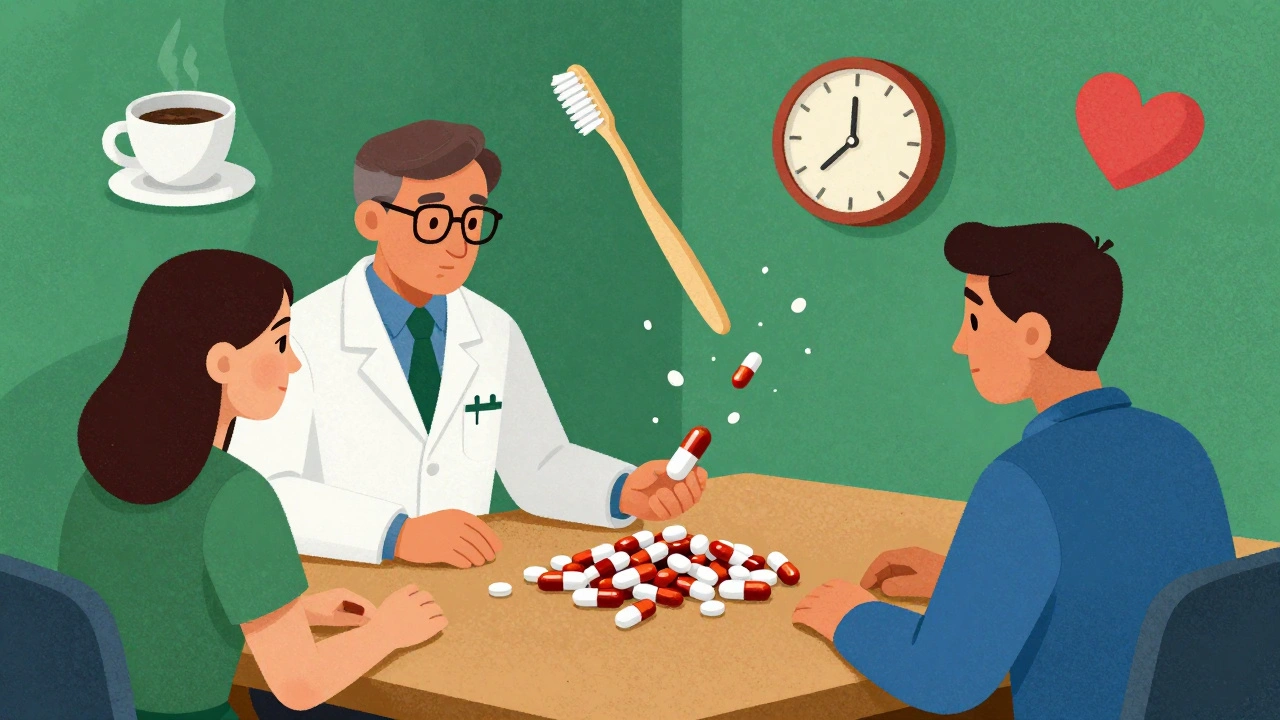
The most effective routines aren’t handed to you. They’re built with you. Johns Hopkins research showed patients who helped design their own medication plan improved adherence by 37%. That means asking questions:- Can I take this with my morning coffee?
- Is there a once-daily version?
- Can we reduce the number of pills I take?
Track It-But Keep It Simple
You don’t need a journal with entries every day. But a simple calendar on your fridge? Check it off with a marker. A 2011 study found this cut missed doses by 32%. People who used checkmarks maintained 90%+ adherence. People who relied on memory? Only 52%. Try this: get a big monthly calendar. Put a big X over each day you took all your meds. No X? That’s your cue to figure out why. Did you run out? Were you too tired? Was the pill box too confusing? Fix it next week.What If You Still Can’t Stick With It?
If you’ve tried everything and still miss doses, you’re not failing. The system is failing you. Talk to your doctor. Say: “I want to take these pills. But I can’t. What can we change?” Maybe your dose can be lowered. Maybe a different pill has fewer side effects. Maybe you need help from a home nurse or a community pharmacy program. In Australia, many pharmacies offer free medication reviews. They’ll sit with you, look at all your pills, and find ways to simplify. You don’t need to figure this out alone.It’s Not About Perfection. It’s About Progress.
You don’t need to take every pill, every day, perfectly. That’s impossible. But you can get better. Missed one dose last week? Great. Missed one this week? Even better. You’re learning. You’re adjusting. You’re building a routine that works for your life-not the other way around. The goal isn’t to be perfect. It’s to stay healthy. To avoid hospital visits. To live longer, feel better, and have more control. And that starts with one small change: linking your pills to something you already do. Every day. Without thinking.What’s the easiest way to remember to take my meds every day?
Link your pills to a daily habit you already do-like brushing your teeth, eating breakfast, or turning off your alarm. People who pair meds with existing routines are 78% more likely to stick with them, according to Stanford Medicine. No alarms needed.
Should I use a pill organizer or a phone app?
For most people, especially over 65, a weekly pill organizer works better than apps. Phone reminders get ignored or silenced. A pill box is visual, tactile, and doesn’t need charging. Use apps as a backup-not your main tool.
Can I combine my medications to take fewer pills?
Yes, often. Talk to your doctor or pharmacist. Many blood pressure, cholesterol, and diabetes meds come in combination pills. Reducing from five doses to two a day can cut missed doses by 40%, according to the American Pharmacists Association.
What if I forget because of side effects?
Don’t stop taking your meds just because you feel weird. Call your doctor. Side effects often fade after a few weeks. Or your doctor may switch you to a different pill. Forgetting because of side effects is common-but it’s fixable.
Is it okay to skip a dose if I feel fine?
No. Even if you feel fine, your meds are still working. Skipping doses can cause your condition to flare up-sometimes without warning. Studies show people who skip meds have a 30-40% higher risk of hospitalization. Stick to the schedule, even when you feel good.





Donna Anderson
December 11, 2025 AT 15:38Audrey Crothers
December 12, 2025 AT 01:30Nathan Fatal
December 13, 2025 AT 18:07sandeep sanigarapu
December 15, 2025 AT 12:42wendy b
December 16, 2025 AT 17:31Ashley Skipp
December 17, 2025 AT 22:36Reshma Sinha
December 19, 2025 AT 12:09Robert Webb
December 20, 2025 AT 05:34Lawrence Armstrong
December 20, 2025 AT 09:57Adam Everitt
December 20, 2025 AT 21:27nikki yamashita
December 21, 2025 AT 21:26Laura Weemering
December 23, 2025 AT 19:09Rob Purvis
December 24, 2025 AT 01:48Stacy Foster
December 24, 2025 AT 15:28Levi Cooper
December 26, 2025 AT 01:27