
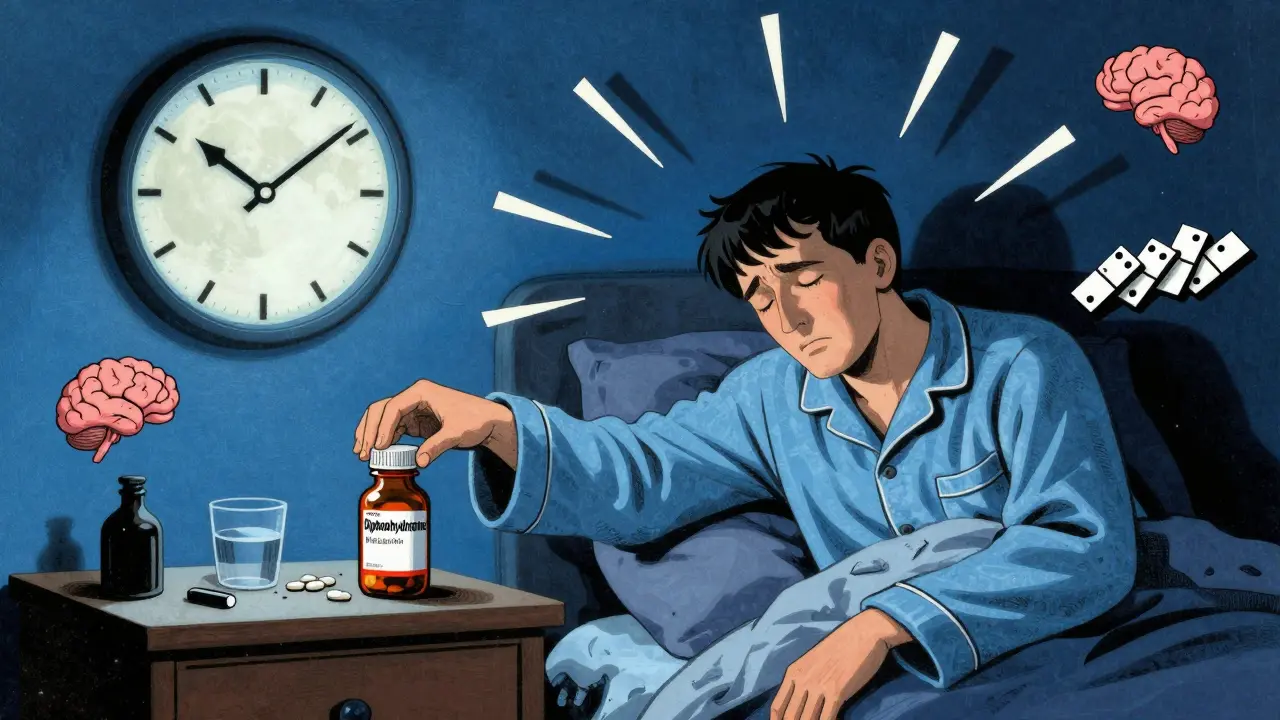
Everyone wakes up tired sometimes. A late night, a stressful day, or jet lag can throw off your sleep rhythm. That’s when many people reach for an OTC sleep aid - a pill from the drugstore that promises a quick fix. But what’s really in those capsules? And what happens when you use them too often? The truth isn’t as simple as "it helps me sleep."
What’s Actually in OTC Sleep Aids?
Most over-the-counter sleep aids fall into two groups: antihistamines and supplements. The most common antihistamines are diphenhydramine and doxylamine. You’ll find them in brands like Benadryl, Sominex, and Unisom SleepTabs. These were originally designed to treat allergies, but one side effect? Drowsiness. That’s why they ended up in sleep products.
The other group is supplements. Melatonin is the most popular. It’s a hormone your body naturally makes to signal bedtime. Supplements try to boost that signal. Then there are herbal options like valerian root and chamomile. These are sold as natural, but "natural" doesn’t mean safe or effective for everyone.
Here’s the catch: melatonin supplements aren’t regulated like drugs. A 2017 study tested 31 products and found that melatonin content ranged from 83% less to 478% more than what was listed on the label. That’s not a typo. One pill might have 0.2mg; another, labeled "1mg," could have nearly 5mg. You have no idea what you’re actually taking.
How Well Do They Actually Work?
Let’s be clear: OTC sleep aids don’t cure insomnia. They might help you fall asleep a little faster - but only slightly. Clinical trials show they reduce the time it takes to fall asleep by just 3 to 13 minutes. Total sleep time increases by 20 to 60 minutes. That’s not a full night’s rest. That’s barely a nap.
And it’s not just about quantity. The quality of sleep changes. Antihistamines like diphenhydramine suppress deep sleep stages. You might sleep, but your brain doesn’t get the restorative rest it needs. That’s why people wake up feeling foggy, even after 8 hours.
One Reddit user, u/SleeplessInSeattle, wrote in March 2024: "Diphenhydramine helps me fall asleep within 20 minutes when I’m really stressed." That’s a real moment of relief. But another user, u/InsomniacNoMore, shared: "After using melatonin for 6 months, I couldn’t sleep without it. When I stopped, my insomnia got worse." That’s rebound insomnia - and it’s real. About 30% of people who use these aids for more than two weeks experience it.
The Hidden Risks: Side Effects You Might Not Expect
Side effects aren’t just "I feel groggy tomorrow." They can be serious - especially with long-term use.
Antihistamines like diphenhydramine and doxylamine are in the anticholinergic drug class. These block a brain chemical called acetylcholine. That’s why they cause dry mouth, blurred vision, constipation, and urinary retention. For men with prostate issues, that last one can be dangerous.
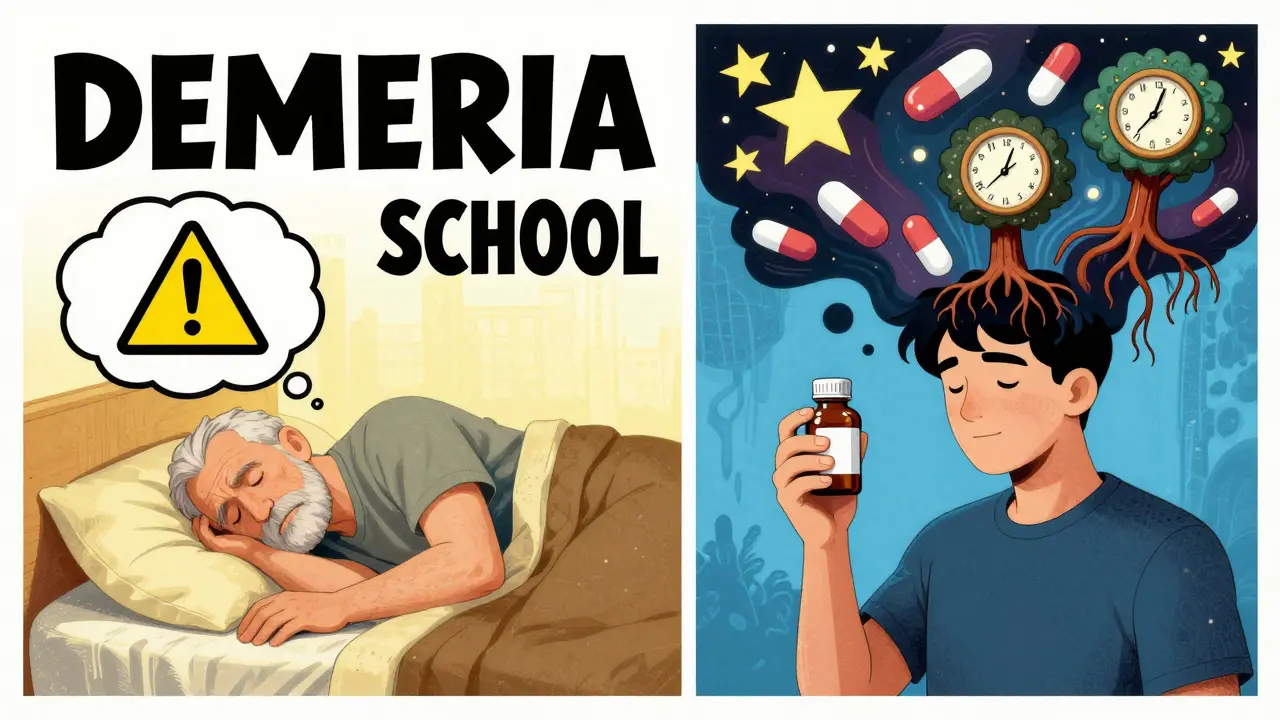
But the biggest concern? Dementia risk. A 2015 study tracked over 3,400 people for more than 7 years. Those who took anticholinergic drugs - including OTC sleep aids - for long periods had a 54% higher risk of developing dementia. The risk went up the longer they were used.
For older adults, the dangers are even clearer. The Beers Criteria (updated in 2023) lists diphenhydramine as "potentially inappropriate" for anyone over 65. Why? It increases fall risk by 50%. One stumble, one hip fracture - and your life can change forever.
Melatonin seems safer, but it’s not harmless. Common side effects include daytime drowsiness (45% of users), headaches (31%), and vivid dreams or nightmares (68%). Higher doses - above 5mg - can cause nausea, dizziness, confusion, and even nighttime waking. The NHS warns that melatonin can cause "pains in your arms or legs." If that happens, stop taking it.
And don’t assume it’s safe for kids. One study found 8% of children using melatonin experienced bedwetting. That’s not a rare side effect. It’s common enough to be documented.
Who Should Avoid OTC Sleep Aids Entirely?
Not everyone should even consider these products.
If you have sleep apnea, OTC sleep aids can be dangerous. They relax the muscles in your throat, making breathing interruptions worse. The American Sleep Apnea Association says 22 million Americans have this condition - many don’t even know it.
Pregnant women should avoid them. Diphenhydramine is classified as Pregnancy Category B - no proven harm, but not enough studies either. Melatonin? There’s almost no safety data. The NIH’s LactMed database says: "Use with caution."
People on other medications need to be careful too. Antihistamines can interact with antidepressants, blood pressure meds, and even alcohol. Melatonin can interfere with diabetes drugs and blood thinners. Always check with a pharmacist before combining them.
What’s the Safe Use Limit?
The FDA says: don’t use antihistamine sleep aids for more than two weeks. The Cleveland Clinic agrees. So does the Sleep Foundation. But here’s the problem: a 2022 survey found 38% of users go past that limit. Nearly 20% use them for more than a month straight.
That’s not just ineffective - it’s risky.
For melatonin, the European Food Safety Authority says 1mg is enough for most adults. Yet most bottles sell 3mg, 5mg, or 10mg. Taking more doesn’t mean better sleep. It just means more side effects.
Here’s the rule: start low. Use 0.5mg of melatonin. Use diphenhydramine only once or twice a week. Never take it every night. If you still can’t sleep after two weeks, talk to a doctor. Don’t just reach for another pill.
There’s a Better Way
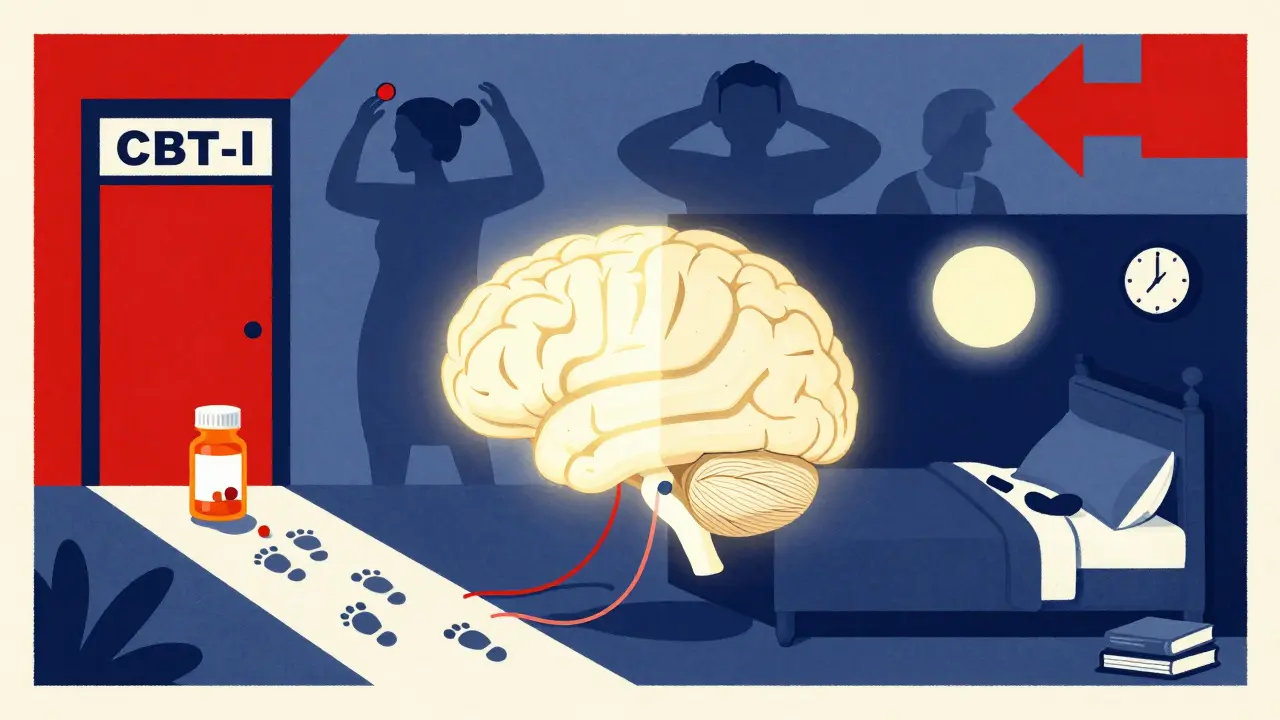
Experts agree: the best treatment for chronic insomnia isn’t a pill. It’s Cognitive Behavioral Therapy for Insomnia (CBT-I).
CBT-I teaches you how to fix the thoughts and habits that keep you awake. It doesn’t rely on chemicals. It doesn’t cause drowsiness. It doesn’t increase dementia risk. And it works. Studies show 70-80% of people who complete CBT-I see lasting improvement. That’s better than any OTC sleep aid.
It’s not magic. It takes time. But so does learning to drive or cook a new recipe. Sleep is a skill. And like any skill, you can relearn it.
Simple changes help too: keep your bedroom cool and dark. Avoid screens an hour before bed. Get up at the same time every day - even on weekends. No naps after 3 p.m. Cut caffeine after noon. Exercise, but not right before bed.
These aren’t just tips. They’re science-backed strategies that work better than pills.
Final Thoughts
OTC sleep aids aren’t evil. Sometimes, they help - briefly. A trip across time zones? A one-off night of anxiety? A pill might give you the reset you need.
But if you’re using them regularly, you’re not fixing the problem. You’re masking it. And the cost? It’s higher than you think.
Long-term use of antihistamines raises your risk of dementia. Melatonin can mess with your natural rhythm. Rebound insomnia can leave you worse off than before.
The next time you feel the urge to grab a sleep aid, ask yourself: "Am I treating a symptom - or the cause?"
If you’ve been struggling for more than two weeks, it’s time to talk to someone who can help - not a pharmacist, but a doctor or sleep specialist. There are safer, smarter ways to sleep well.
Are OTC sleep aids addictive?
OTC sleep aids aren’t addictive in the same way as prescription sedatives, but they can lead to psychological dependence. People start relying on them because they believe they can’t sleep without them. This is especially true with melatonin - some users report feeling unable to fall asleep naturally after daily use for weeks. Rebound insomnia, where sleep gets worse after stopping, affects about 30% of long-term users.
Can I take melatonin every night?
It’s not recommended. While melatonin is less risky than antihistamines, taking it nightly can disrupt your body’s natural production of the hormone. The Sleep Foundation advises using it only as needed - for jet lag or occasional trouble falling asleep. If you’re using it every night for more than 10 days, you may develop tolerance, meaning you need more to get the same effect. Stick to the lowest effective dose - often 0.5mg to 1mg - and avoid daily use.
Why do OTC sleep aids cause next-day grogginess?
Antihistamines like diphenhydramine and doxylamine don’t just help you fall asleep - they linger in your system. Their half-life can be 8 to 10 hours, meaning they’re still active the next morning. This causes drowsiness, reduced alertness, and slower reaction times. WebMD found that 42% of users reported moderate to severe next-day drowsiness. That’s not normal tiredness - it’s a drug side effect that can affect driving, work, and decision-making.
Is melatonin better than diphenhydramine?
It depends on your needs. Melatonin is better for circadian rhythm issues - like jet lag or shift work - because it mimics your body’s natural sleep signal. Diphenhydramine works faster for acute sleeplessness but carries higher risks: dry mouth, confusion, urinary retention, and long-term dementia risk. For short-term use, melatonin is safer. For regular use? Neither is ideal. CBT-I is the better long-term solution.
What should I do if I’ve been using OTC sleep aids for months?
Don’t stop suddenly. If you’ve been using them daily for weeks or months, you may experience rebound insomnia or withdrawal symptoms like anxiety or restlessness. Talk to a healthcare provider. They can help you taper off safely and suggest alternatives like CBT-I, sleep hygiene changes, or - if needed - prescription options with fewer risks. Your sleep isn’t broken. You just need the right tools to fix it.
Adebayo Muhammad
March 7, 2026 AT 05:53Let’s be brutally honest: we’re not sleeping-we’re pharmacologically self-medicating our existential dread.
OTC sleep aids? They’re the aspirin of the soul: temporary relief for a condition that needs surgery.
You don’t need more melatonin-you need to confront why your brain refuses to shut off at 11 p.m.
The real side effect isn’t grogginess-it’s the slow erosion of your autonomy. You’ve outsourced your biology to a 99-cent capsule.
And let’s not romanticize "natural"-valerian root is just plant-based placebo with a side of placebo-induced guilt.
The 54% dementia risk? That’s not a statistic-it’s a sentence. You’re trading tomorrow’s cognition for tonight’s illusion of rest.
CBT-I isn’t "therapy." It’s recalibration. Like tuning a violin after years of playing out of tune.
We treat sleep like a commodity. It’s not. It’s a biological ritual-sacred, fragile, and non-negotiable.
Stop asking "which pill?" Start asking: "what am I running from?"
The answer’s not in the pharmacy-it’s in the silence you’ve been too afraid to sit with.
And yes-this is why we’re collectively falling apart.
One pill at a time.
Joe Prism
March 7, 2026 AT 21:01Truth is, most people use these because they don’t know what else to do.
Not lazy. Not weak. Just overwhelmed.
And yeah-CBT-I works. But it’s not easy to find a good therapist.
Until then? A low-dose melatonin isn’t evil. It’s a bridge.
Not a solution. Not a crutch. A bridge.
Ferdinand Aton
March 8, 2026 AT 14:33Wait-so you’re saying melatonin isn’t magic?
But I read on Reddit that it’s the key to unlocking eternal slumber!
Also, I take 10mg. Every night. For 3 years.
My cat sleeps better than me. And she doesn’t even take anything.
…maybe I’m the problem?
William Minks
March 10, 2026 AT 01:06Y’all are overthinking this 😅
I take 1mg melatonin twice a week when I’m jet-lagged.
No side effects. No guilt. Just a little help.
It’s not a lifestyle. It’s a tool.
Like ibuprofen for headaches.
Use it right-don’t fear it.
🫶
Jeff Mirisola
March 11, 2026 AT 18:43I used to be the guy who took diphenhydramine every night.
Woke up like a zombie. Couldn’t focus at work. Forgot names.
Then I tried CBT-I.
It’s not sexy. No pills. No shortcuts.
But after 6 weeks? I slept deeper than I had in 10 years.
No more fog. No more dread.
It’s not a miracle. It’s a habit.
And habits? They’re harder-but they last.
Don’t give up.
You’re not broken.
You’re just out of practice.
Susan Purney Mark
March 13, 2026 AT 00:20My mom took diphenhydramine for 8 years.
She didn’t realize she was at risk for dementia.
She thought it was "just a little help."
Then she started forgetting where she put her keys… then who I was.
I’m not trying to scare anyone.
But if you’re using this daily? Please, please talk to someone.
You’re worth more than a pill.
❤️
Ian Kiplagat
March 14, 2026 AT 09:40CBT-I is the gold standard.
But in the UK? NHS waiting lists are 18+ months.
So people turn to OTC.
It’s not ignorance.
It’s systemic failure.
Fix the system.
Not the sleepers.
Amina Aminkhuslen
March 14, 2026 AT 10:23Let me get this straight-you’re telling me that the same people who think "raw honey cures cancer" are now suddenly okay with taking a 478% overdosed melatonin pill because it’s "natural?"
Oh honey.
You don’t get to call something "natural" and then act like it’s not a drug.
Valerian root? That’s a sedative. Just like alcohol. Just like benzos.
Stop pretending your herbal tea is a spiritual cleanse.
It’s not. It’s a placebo with a side of delusion.
And if you’re taking it nightly? You’re not self-care-ing.
You’re self-sabotaging.
Wake up.