
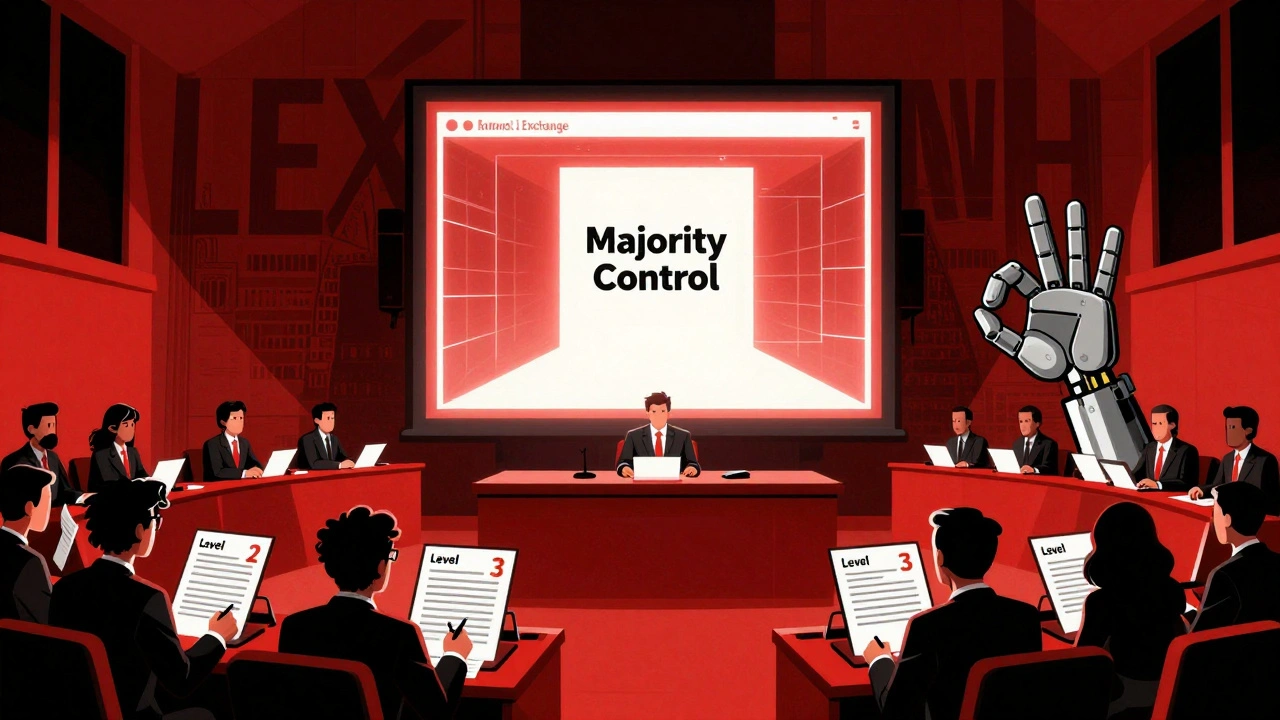
When you think of how laws get made, you probably picture floor debates, hand-raising votes, and dramatic speeches. But the real engine of legislative change often happens behind closed doors - in committee markups, where amendments are swapped, rewritten, and sometimes buried before they ever reach the floor. Between 2023 and 2025, the U.S. House of Representatives made some of the most significant changes to how substitution works in decades. These aren’t just procedural tweaks. They’ve reshaped who gets to shape the law.
What Exactly Is Amendment Substitution?
Amendment substitution is when a legislator replaces an existing proposed amendment with a new version - not just tweaking a word or two, but completely rewriting the text. Before 2023, any member could file a substitute amendment on the fly during a committee markup. It was messy. One member might propose a change to fund mental health programs, and another could slip in a provision gutting environmental protections. That’s called a ‘poison pill’ - a tactic used to derail or hijack legislation.
Now, under the new rules adopted in January 2025, you can’t just swap an amendment on a whim. You have to file it electronically at least 24 hours before the markup begins. The system, called the Amendment Exchange Portal, requires you to tag every line you’re changing, explain why you’re changing it, and classify your substitution as Level 1, 2, or 3 based on how much it alters the policy.
The New Rules: How Substitution Works Today
The 119th Congress (2025-2026) didn’t just tighten the rules - they built a whole new system around them. Here’s how it works now:
- File early. All substitutions must be submitted through the Amendment Exchange Portal at least 24 hours before a committee meeting. No exceptions unless the Speaker grants a special waiver.
- Classify your change. Your amendment gets labeled Level 1 (minor wording), Level 2 (procedural shift), or Level 3 (major policy change). Level 3 substitutions need 75% committee approval - up from 50% before.
- Get reviewed. Each committee now has a five-member Substitution Review Committee: three from the majority party, two from the minority. They have 12 hours to approve or reject your submission.
- Prove it’s germane. You must show your substitution relates directly to the bill’s subject. The portal automatically flags anything that looks off-topic.
These changes cut amendment processing time by 37% in the first quarter of 2025, according to the House Rules Committee. Bills moved through committee faster. But the trade-off? Minority party members filed 58% more formal objections to rejected substitutions than they did in 2024.
Why the Change? Efficiency vs. Fairness
House Republican leadership argued the old system was broken. In 2023, one committee markup on a defense bill took over 14 hours because of 47 substitute amendments - many filed minutes before the meeting. Leadership called it chaos. The new rules, they said, were about restoring order.
But critics say the real goal was control. The Brookings Institution found the new system gives the majority party 62% more influence over substitutions than in the 117th Congress (2021-2023). The automatic right to substitute - a feature since 2007 - was wiped out. Now, if you’re not in the majority, your best shot at changing a bill is convincing three of the five members on the Substitution Review Committee. That’s not democracy. That’s gatekeeping.
Take Representative Pramila Jayapal’s experience in March 2025. She submitted a substitution to H.R. 1526, aimed at stopping rogue judicial rulings on reproductive rights. The portal flagged her changes as Level 3 - a major policy shift - even though she was only tightening language around court jurisdiction. Her amendment was rejected. She later found out the system misclassified it because the keyword “court” triggered a high-risk algorithm. No human reviewed it until after the rejection.

Senate vs. House: A Tale of Two Systems
While the House tightened the screws, the Senate kept its old rules. In the Senate, you still only need to give 24 hours’ notice. No review committee. No classification levels. No portal. Substitutions fly in fast and often.
That means the Senate’s substitution process is 43% faster than the House’s, according to the Congressional Management Foundation. But it also means more last-minute surprises. In May 2025, a rider banning telehealth abortions was tacked onto a pandemic preparedness bill via substitution - and passed in under 15 minutes. In the House, that would’ve been blocked before the committee even met.
The result? Lawmakers are now gaming the system. They file major substitutions in the Senate, knowing they’ll pass, then use them as leverage in House negotiations. It’s creating a two-tiered legislative process - one efficient, one open - and the public has no idea which chamber is actually shaping the laws they live under.
Who’s Winning? Who’s Losing?
Staff surveys tell the real story. A May 2025 survey of 127 committee aides showed 68% of majority-party staff called the new system “more efficient.” They liked the predictability. The paperwork was a pain, but the chaos was gone.
Among minority-party staff? 83% said it was “restrictive of legitimate input.” One staffer told me, “We’re not trying to kill bills. We’re trying to fix them. But now we have to beg for permission to even suggest a change.”
And it’s not just lawmakers. Lobbying firms had to restructure entire teams. Quinn Gillespie & Associates reported 63% of major firms shifted resources from floor lobbying to committee staff outreach. Why? Because the real power now lies with the five people on the Substitution Review Committee - not the full committee, not the House floor. If you want to influence a bill, you don’t call your rep anymore. You buy lunch for the committee clerk.
What’s Next? The Fight Over Transparency
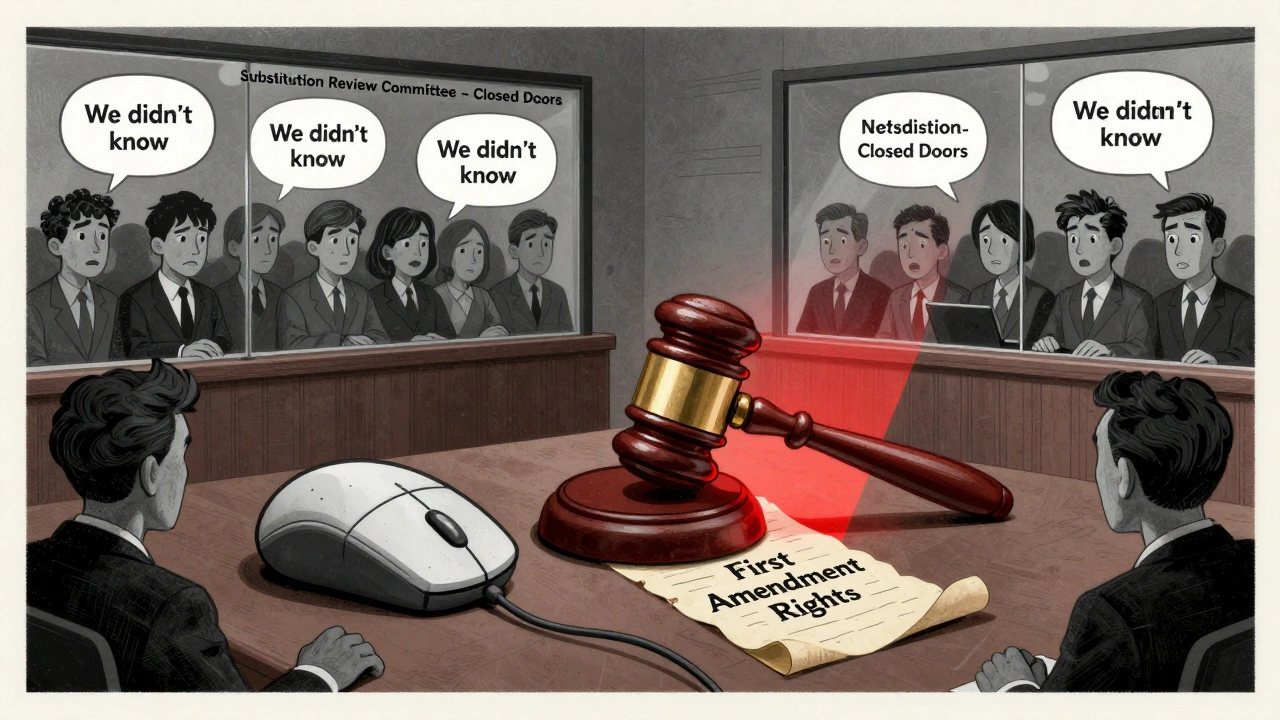
There’s already pushback. In June 2025, Representative Mark Pocan introduced H.R. 4492, the Substitution Transparency Act. It would require every Substitution Review Committee to publish its deliberations - votes, reasoning, emails - within 72 hours. Right now, those meetings are closed. No public record. No accountability.
The Constitutional Accountability Center has filed a legal brief arguing the new rules violate the First Amendment by restricting lawmakers’ ability to speak freely on the floor. Meanwhile, the Brennan Center warns the system could backfire after the 2026 elections. If control flips, the new majority might scrap the whole thing - and the chaos could return worse than before.
The biggest update came in July 2025, when the House Rules Committee revised the Level 3 classification criteria after bipartisan complaints. The new guidelines are more detailed - but still subjective. One staffer said, “Now we have 17 pages of instructions to figure out if changing ‘shall’ to ‘may’ is a policy shift or just grammar.”
What This Means for You
These changes don’t just affect Congress. They affect how laws get written - and who gets left out. If you care about health policy, mental health funding, or reproductive rights, you need to understand this: the loudest voices aren’t on the House floor anymore. They’re in committee rooms, behind closed doors, with access to the Amendment Exchange Portal and a seat on the Substitution Review Committee.
The system is faster. It’s cleaner. But it’s also less democratic. And if you’re not paying attention, you won’t even know when your voice got silenced.
What is the Amendment Exchange Portal?
The Amendment Exchange Portal is the official online system used by the U.S. House of Representatives since January 2025 to submit, track, and review all amendment substitutions. It requires users to upload amendment text with machine-readable metadata, including line-by-line changes, justification, and classification level (1-3). It’s mandatory for all substitutions and integrates with Congress.gov for public tracking.
Can minority party members still influence legislation under the new rules?
Yes - but it’s much harder. Minority members can still submit substitutions, but they need 75% approval from the Substitution Review Committee to pass Level 3 changes. Since the committee has three majority members and only two minority members, the majority can block any substitution they oppose. Minority members have filed 58% more formal objections since the rules changed, showing frustration with the limited influence.
What’s the difference between Level 1, 2, and 3 substitutions?
Level 1 substitutions are minor wording changes - like fixing typos or adjusting punctuation. Level 2 are procedural changes - such as shifting funding between accounts or changing reporting deadlines. Level 3 are substantive policy changes - adding new programs, eliminating rights, or altering legal standards. Level 3 requires 75% committee approval; Levels 1 and 2 only need simple majority.
Why does the Senate have looser substitution rules?
The Senate has always operated under more flexible rules, rooted in its tradition of unlimited debate. There’s no formal review committee, no classification system, and no mandatory portal. Only a 24-hour notice is required. This makes the Senate faster but more vulnerable to last-minute amendments. The House adopted stricter rules to reduce gridlock - a trade-off many see as sacrificing openness for efficiency.
Are there legal challenges to these new substitution rules?
Yes. The Constitutional Accountability Center filed an amicus brief in May 2025 arguing the rules violate the First Amendment by restricting legislators’ ability to propose amendments freely. The Brennan Center also warns the system may violate the Constitution’s Presentment Clause by creating procedural barriers that effectively block bills from reaching the floor. Legal challenges are expected to grow after the 2026 elections.




Cole Newman
December 13, 2025 AT 07:50Emily Haworth
December 13, 2025 AT 08:50Tom Zerkoff
December 15, 2025 AT 04:31Yatendra S
December 15, 2025 AT 23:27Himmat Singh
December 17, 2025 AT 12:31nithin Kuntumadugu
December 17, 2025 AT 22:34John Fred
December 19, 2025 AT 21:49Harriet Wollaston
December 20, 2025 AT 07:45Lauren Scrima
December 20, 2025 AT 22:36sharon soila
December 21, 2025 AT 16:13nina nakamura
December 22, 2025 AT 22:04Hamza Laassili
December 23, 2025 AT 20:39