Opioid Side Effects: What You Need to Know About Risks and Management
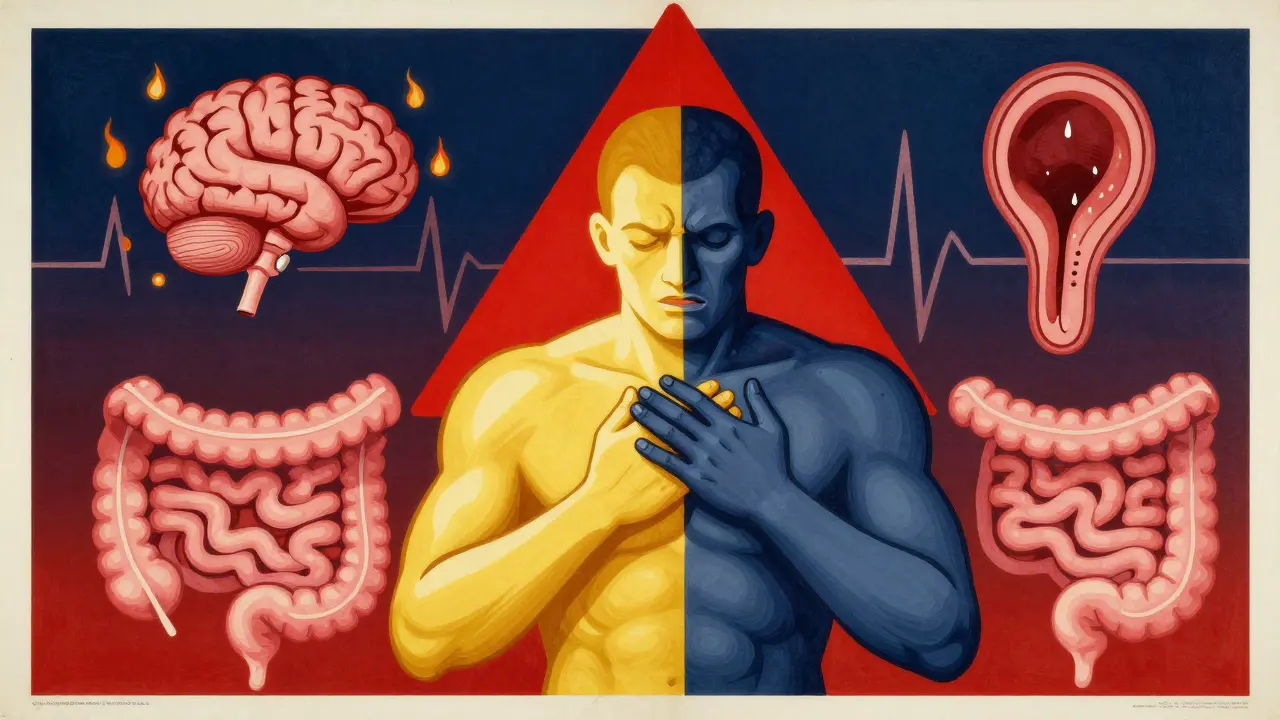
When you take opioids, a class of powerful pain-relieving drugs that include oxycodone, hydrocodone, morphine, and fentanyl. Also known as narcotics, they work by binding to receptors in your brain and spinal cord to reduce pain signals. But they don’t just block pain—they change how your body functions in ways that can be dangerous if you’re not paying attention. The most common opioid side effects aren’t the scary ones you hear about on the news—they’re the quiet, persistent ones that sneak up on you: constipation, drowsiness, nausea, and dizziness. These aren’t rare. Up to 90% of people on long-term opioids deal with at least one of them. And while many assume these will fade over time, constipation often doesn’t. It sticks around, and it’s one of the main reasons people stop taking their meds—even when they still need them for pain.
Then there’s the bigger risk: respiratory depression, a slowdown in breathing that can become life-threatening, especially when opioids are mixed with alcohol, benzodiazepines, or sleep aids. This isn’t just a concern for people misusing drugs. Even patients taking prescribed doses at the right time can experience it, particularly if they’re older, have lung disease, or are on multiple medications. opioid dependence, a physical adaptation where your body starts to rely on the drug to feel normal. Also known as tolerance and withdrawal, it’s not the same as addiction—but it’s just as real. If you stop suddenly, you’ll likely get flu-like symptoms, sweating, anxiety, and intense cravings. That’s why tapering under medical supervision matters. And while opioid withdrawal, the uncomfortable physical and emotional response when opioids are reduced or stopped. is rarely deadly, it’s brutal enough to make people go back to using just to feel normal again.
What you’ll find in these articles isn’t just a list of side effects. It’s practical advice from people who’ve lived through them—how to manage constipation without harsh laxatives, how to spot early signs of breathing trouble, what alternatives exist when opioids aren’t working or are too risky, and how to talk to your doctor about reducing your dose safely. You’ll also see how some generic versions of these drugs can behave differently than others, and why even small changes in formulation might make your side effects worse. This isn’t about fear. It’s about control. Knowing what to expect means you can stay ahead of the problems instead of reacting to them.