
Don’t Let Diabetes Stop Your Next Trip
You’ve booked the flight, packed your clothes, and planned the itinerary. But then you remember: you need insulin, sensors, test strips, and backup gear - all while flying through security, dealing with time zones, and hoping your bag doesn’t get lost. It’s not just about remembering your meds. It’s about making sure they work when you need them most.
Traveling with diabetes isn’t impossible. In fact, millions of people with Type 1 and Type 2 diabetes do it every year. But if you skip the basics, you risk a low blood sugar emergency in an airport bathroom, a broken CGM sensor miles from a pharmacy, or insulin that’s gone bad because it got too hot or too cold. The difference between a smooth trip and a medical scare? How well you pack.
Double Everything - Yes, Even the Snacks
Rule #1: Bring twice as much as you think you’ll need. Not 20% more. Not a spare vial. Double.
Why? Because delays happen. Your flight gets canceled. Your luggage disappears. You get stuck in a remote town with no pharmacy. According to a 2022 survey by Beyond Type 1, 68% of diabetic travelers had at least one diabetes-related issue while away from home. The biggest culprits? Low blood sugar during security checks (42%) and lost or damaged supplies (29%).
Here’s what doubling looks like in practice:
- Insulin: If you use 10 vials for a 7-day trip, bring 20.
- CGM sensors: For a week, pack at least 3 sensors - even if you only change them every 10 days. Sensors can fail unexpectedly.
- Test strips: Bring 50-100% more than your usual daily count. If you test 6 times a day for 5 days, bring at least 45 strips.
- Lancets and alcohol swabs: Same rule. Double.
- Glucose tablets or gel: Bring extra. But here’s a better idea - swap them for fruit leathers. They’re lighter, tastier, and 37% more effective at preventing lows on the go, according to Diabetech.info.
Insulin Has a Temperature Sweet Spot
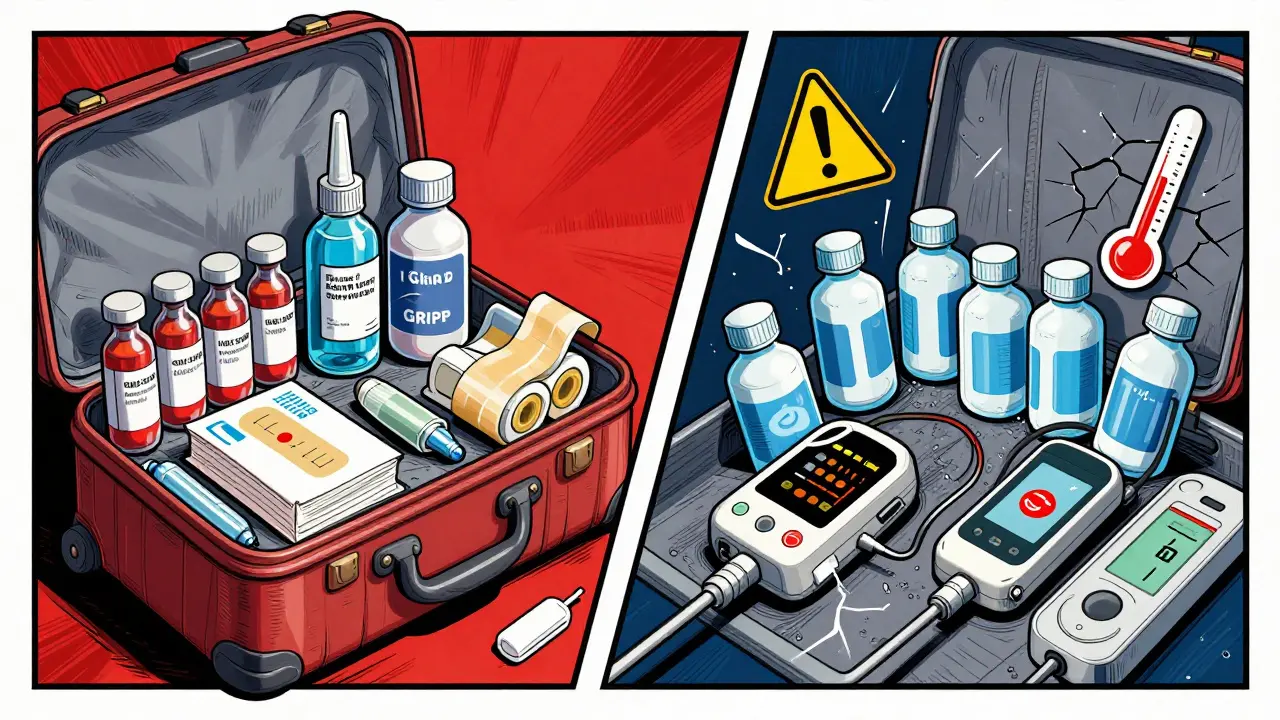
Insulin doesn’t like extreme heat or freezing cold. The sweet spot? Between 40°F and 86°F. Too cold, and it loses potency. Too hot, and it breaks down fast.
Checked baggage? Never. The cargo hold can drop below freezing or spike over 120°F. The Journal of Diabetes Science and Technology found that insulin stored in checked luggage loses up to 30% of its effectiveness. That’s not a risk you can afford.
Always carry insulin in your carry-on. And if you’re heading somewhere hot - think Dubai, Thailand, or even a summer road trip across Arizona - use a cooling sleeve. The Frio Insulin Cooling Sleeve is used by 73% of travelers who swear by it. It’s reusable, lightweight, and keeps insulin cool for up to 45 hours without ice. No batteries. No plugs. Just soak it in water, let it gel, and slip your insulin vials inside.
And here’s a game-changer: Tresiba U-200, approved by the FDA in May 2023, is now the first insulin that stays stable at room temperature for up to 8 weeks. If your doctor can switch you to this, you’ll have one less thing to worry about.
CGM Sensors Are Your Lifeline - Protect Them
Your CGM is doing the heavy lifting: tracking glucose trends, alerting you to highs and lows, even predicting drops. But sensors can fall off, get damaged, or stop transmitting - especially when you’re sweating, swimming, or hopping on a plane.
Here’s how to keep yours working:
- Bring at least 2-3 extra sensors. Even if your sensor lasts 10 days, plan for failure.
- Use Skin Grip CLEAR tape. It’s thin, waterproof, and keeps sensors stuck even during showers or long hikes. Regular tape peels off. This doesn’t.
- Carry a backup transmitter. Dexcom and Abbott sensors rely on transmitters. If yours dies, you’re blind. Most manufacturers sell spares for under $50.
- Don’t pack sensors in checked luggage. The pressure changes during flight can damage them. Keep them in your carry-on, ideally in a padded case.
And if you’re flying internationally? Check if your CGM brand works in your destination. Some countries have different signal frequencies or regulatory restrictions. Dexcom and Libre generally work worldwide, but always verify before you go.
Pump Users: Have a Backup Plan
If you use an insulin pump - Tandem, Insulet, Medtronic - you’re used to relying on it. But pumps can fail. Batteries die. Tubing kinks. And you’re 500 miles from home.
Every pump user must carry backup insulin delivery: syringes and vials. Not just one. Bring at least two sets. And don’t forget:
- Extra reservoirs (3-5)
- Infusion sets (2-3)
- Alcohol wipes and syringes (10-15)
- A small cooler or insulated pouch for backup insulin
Good news: Most pump companies offer free loaner pumps if yours breaks while traveling. Tandem and Insulet will mail you a replacement overnight - even overseas. Just call their travel support line before you leave. Keep the number saved in your phone.
Security Lines Are a Minefield - Know the Rules
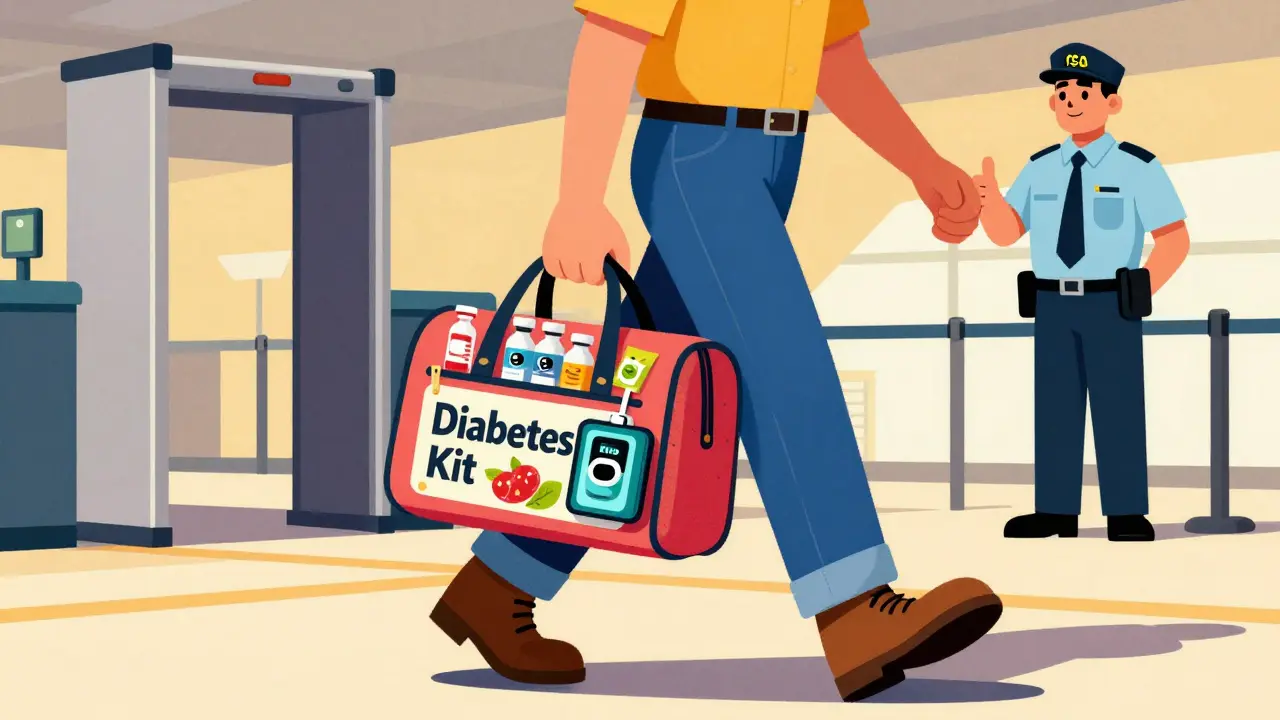
TSA allows all diabetes supplies through security - insulin, CGMs, syringes, test strips, even liquid glucagon. But they don’t always know that.
Here’s how to breeze through:
- Keep everything in a clear, sealable plastic bag. TSA says this speeds up screening by 28%.
- Declare your supplies before you reach the checkpoint. Say, “I have diabetes medical equipment.”
- Don’t put your pump or CGM through the X-ray. Ask for a hand search. The FDA says radiation can damage sensors and transmitters.
- Carry a doctor’s letter. It doesn’t have to be fancy. Just a note on letterhead saying you have diabetes, list your supplies, and include your insulin-to-carb ratio and correction factor. Dr. Anne Peters’ survey found travelers with this letter had 42% fewer delays.
- Get a TSA Disability Notification Card. It’s free. Download it from diabetes.org. Keep it in your wallet.
And if you’re flying internationally? Research your destination’s rules. Some countries require a prescription for insulin or CGMs. Others ban certain brands. Don’t assume your U.S. supplies are legal everywhere.
Time Zones, Meals, and Your Schedule
Crossing time zones isn’t just jet lag. It’s a diabetes management puzzle.
If you’re flying east (say, from New York to London), your day gets shorter. You might need less insulin. Fly west (New York to LA), and your day stretches. You might need more.
Dr. Peters recommends planning 15-20 minutes per time zone crossed. Here’s how:
- Keep your insulin schedule tied to your home time zone for the first 24-48 hours. Then adjust gradually.
- Use your CGM’s trend arrows. They’ll tell you if you’re heading high or low after a meal change.
- Carry snacks. Always. Even if you’re not hungry. A low can hit fast when your body’s confused by time shifts.
And don’t forget: meals on planes aren’t always carb-controlled. Ask for the nutrition info. Or better yet - bring your own food. A sandwich, cheese sticks, nuts - things you know won’t spike your glucose.
Traveling With Kids? Pack Smart
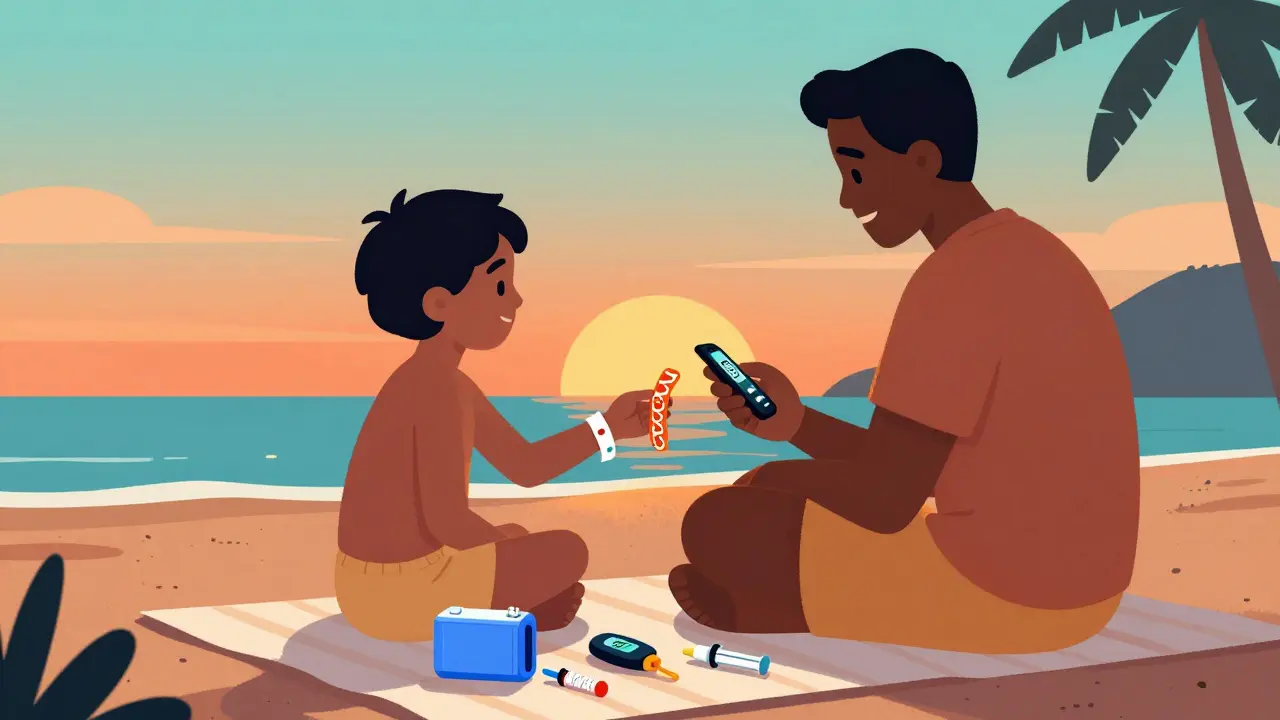
If you’re traveling with a child who has diabetes, you’re managing more than just supplies - you’re managing panic, hunger, and meltdowns.
Use the two-bag rule:
- Primary bag: Carry-on. All insulin, CGM, backup supplies, snacks, glucagon, and your doctor’s letter.
- Secondary bag: Checked luggage. Extra test strips, lancets, syringes, and backup insulin (in case your carry-on gets lost).
And give your child a small ID bracelet or card that says “Type 1 Diabetes” with your emergency contact. If they get lost or have a low and can’t speak, someone can help.
What You Forgot to Pack (But Shouldn’t Have)
Here’s a list of the top 5 things travelers forget - and regret:
- A pen and paper. Your phone dies. Your CGM glitches. You need to write down your glucose numbers manually.
- Glucagon. Not just for emergencies. For when you’re too low to eat or drink.
- A waterproof case for your meter. Sand, rain, pool water - they kill electronics.
- A portable charger. Your CGM transmitter and phone need juice. Bring a 10,000mAh power bank.
- A reminder note. Stick a Post-it on your front door: “Insulin? Check. Sensors? Check. Glucagon? Check.” It’s simple. It works.
Final Checklist: Before You Walk Out the Door
- ✅ Double all supplies (insulin, sensors, strips, lancets)
- ✅ Insulin in carry-on only
- ✅ Cooling sleeve for heat
- ✅ Backup syringes and vials
- ✅ Extra CGM sensors and transmitter
- ✅ Skin Grip tape
- ✅ Doctor’s letter + TSA card
- ✅ Glucagon kit
- ✅ Snacks (fruit leathers, nuts, cheese)
- ✅ Power bank
- ✅ Waterproof case for meter
- ✅ Emergency contact list (local numbers at destination)
Traveling With Diabetes Gets Easier - But Never Easy
The first trip is the hardest. You’ll forget something. You’ll panic when your sensor stops working. You’ll wonder if you packed enough.
But after three or four trips, you’ll have your system down. You’ll know which snacks work. You’ll know how to talk to security. You’ll know how to adjust for time zones without a headache.
And you’ll realize something: diabetes doesn’t have to stop you from seeing the world. It just asks you to be prepared. Pack smart. Double up. Stay calm. And go.
Can I bring insulin through airport security?
Yes. The TSA allows all diabetes supplies, including insulin, syringes, test strips, and CGMs, through security. You must declare them and keep them in your carry-on. Never pack insulin in checked luggage - it can freeze or overheat and lose effectiveness.
How many CGM sensors should I pack for a week-long trip?
Pack at least three sensors, even if your sensor lasts 10 days. Sensors can fail unexpectedly due to sweat, movement, or pressure changes during flights. It’s better to have one you don’t need than to run out in a foreign country.
Do I need a doctor’s letter to travel with diabetes?
It’s not required by TSA, but it’s highly recommended. A simple letter from your doctor listing your diagnosis, medications, and emergency protocols reduces screening delays by 42%. Include your insulin-to-carb ratio and correction factor - this helps security and medical staff understand your needs.
Can I use my insulin pump on a plane?
Yes. You can wear your insulin pump through security. Do not put it through the X-ray machine. Ask for a hand search. Keep your pump on at all times - turning it off can cause dangerous highs. Bring backup syringes and vials in case of pump failure.
What’s the best way to keep insulin cool while traveling?
Use a Frio Insulin Cooling Sleeve. It’s reusable, needs no ice or electricity, and keeps insulin between 40°F and 86°F for up to 45 hours. Just soak it in water, let it gel, and slip your vials inside. Avoid coolers with ice - they can freeze insulin and damage it.
Are there countries where I can’t get insulin or CGM supplies?
Yes. About 64% of countries don’t reliably stock U-100 insulin, which is standard in the U.S. Some use U-40 or U-80 - using the wrong concentration can cause deadly overdoses. Never buy insulin abroad unless you’re certain of the concentration. Always bring enough from home.
What snacks are best for treating low blood sugar while traveling?
Fruit leathers are better than glucose tablets for most travelers. They’re lightweight, tasty, and absorb quickly. A single pack (4x6 inches, 0.5 oz) contains enough glucose to treat a low. Glucose tablets are bulky, messy, and often ignored. Keep fruit leathers in your pocket, purse, or travel bag.



Juan Reibelo
January 23, 2026 AT 12:17Pro tip: Tape your backup insulin vial to your inner thigh with medical tape. No one’s going to check there, and it stays body-temp perfect.
Sushrita Chakraborty
January 24, 2026 AT 19:44Shanta Blank
January 25, 2026 AT 10:13I mean, why else would they make you declare your insulin like it’s a weapon?? And why is the Frio sleeve so popular? Because they don’t want you using your own ice packs-those are TOO EFFECTIVE and CHEAP. They want you buying their $40 gel packs. I’ve seen it. I’ve seen the memo. They don’t want you thriving. They want you dependent.
Also-your CGM? That’s a spy device. They track your glucose trends. They know when you eat. They know when you’re stressed. Don’t you feel watched??
Bring a paper journal. Burn your phone. Live free.
Himanshu Singh
January 26, 2026 AT 16:59Also, the part about keeping insulin in your carry-on? I once had a bag lost in Dubai, and the backup insulin in my checked luggage froze solid. I had to borrow a syringe from a local pharmacy and beg for help. Don’t be me. Double everything.
And yes, fruit leathers > glucose tabs. I carry them in my sock now. No one looks there. 😊
Helen Leite
January 26, 2026 AT 21:10Marlon Mentolaroc
January 28, 2026 AT 06:08Also, the ‘doctor’s letter’ thing? Most TSA agents don’t even read it. Just say ‘I’m diabetic’ and hold up your supplies. Done. Stop overcomplicating it.
Don Foster
January 29, 2026 AT 08:55siva lingam
January 30, 2026 AT 23:45Bro. I just bring my phone and hope I don’t die.
Phil Maxwell
January 31, 2026 AT 07:17Maybe the real secret is just not stressing about it.