
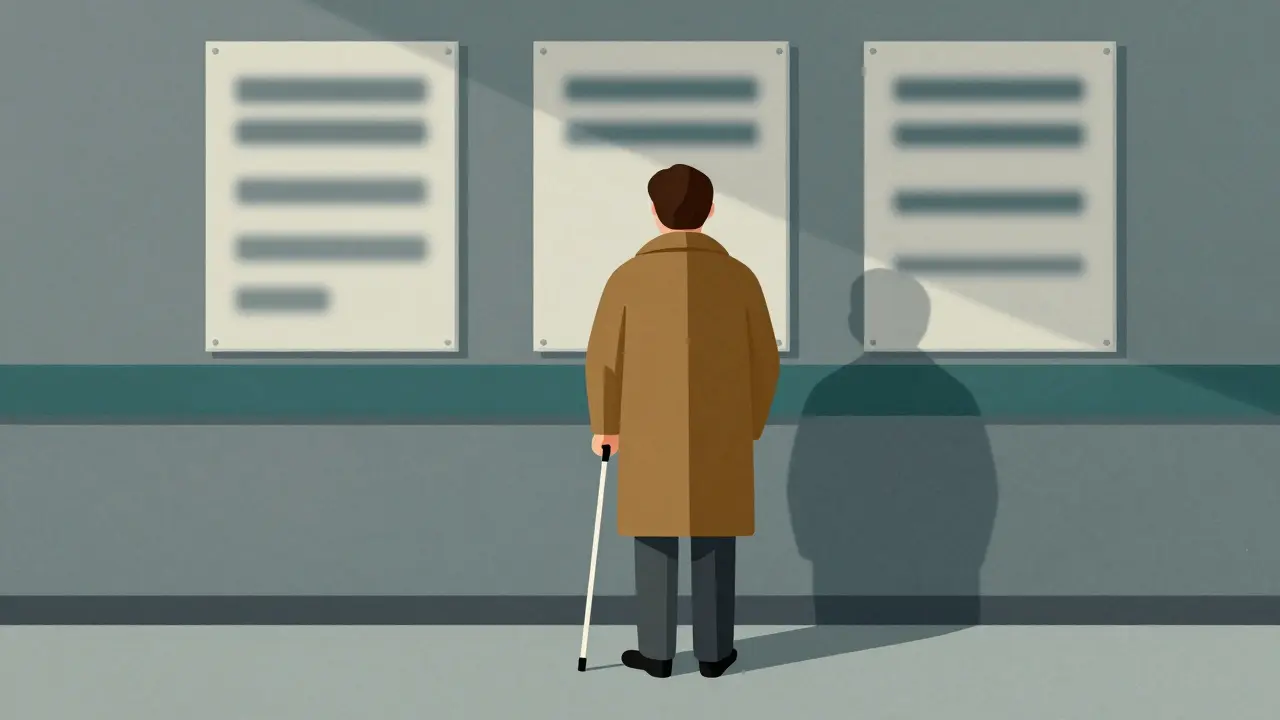
Imagine walking into a busy hospital waiting room. You need to read your test results, find the exam room, and understand your medication schedule. For someone who cannot see printed signs or small text, this environment creates barriers that many healthcare systems still struggle to remove. Accessible information shouldn't be a luxury; it is a fundamental requirement for safe care. This is where audio resources come into play. These tools transform visual data into sound, allowing patients with sight loss to navigate the medical system independently.
The landscape of healthcare accessibility has shifted significantly over the last decade. With 7.6 million Americans aged 16 and older facing vision loss impacting daily activities, providers are under increasing pressure to comply with federal mandates. Regulations like the Americans with Disabilities Act (ADA) of 1990 and Section 504 of the Rehabilitation Act form the backbone of these requirements. More recently, the Centers for Medicare & Medicaid Services Office of Minority Health (CMS OMH) has clarified that facilities must offer auxiliary aids. This means doctors cannot simply hand you a pamphlet; they must provide the same information through formats you can actually use.
Understanding the Core Technology
To make sense of the options, you need to know what constitutes a reliable audio resource in a clinical setting. These aren't just recordings of a doctor's voice. They encompass sophisticated software and hardware designed to interpret visual environments into auditory cues. NLS BARD Mobile is a digital library service providing access to nearly 50,000 books and magazines in audio format. National Library Service for the Blind and Physically Handicapped App, it requires an iOS device running version 12.0 or later, or Android 5.0. This platform is critical because it bridges the gap between general literature and specialized medical texts.
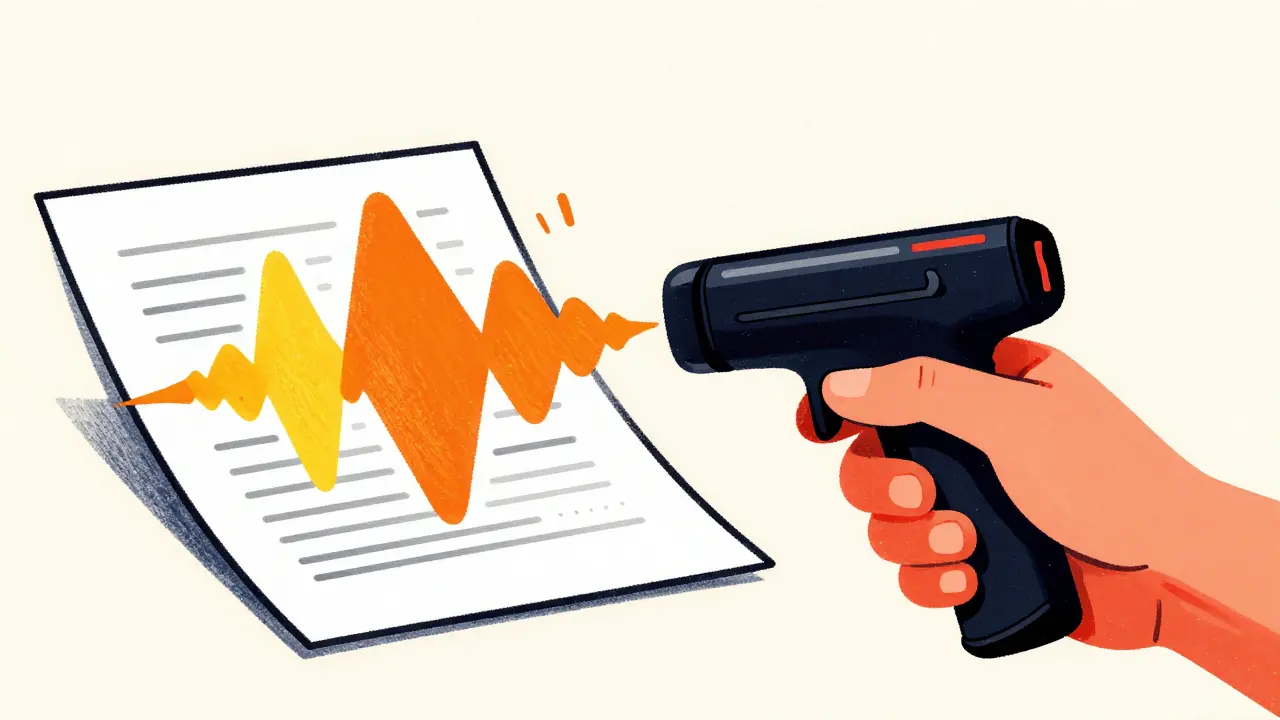
Beyond libraries, there are dedicated applications that function as personal assistants. Voice Dream Reader stands out by converting text from websites or computer files into speech across 30 languages. At roughly $29.99, it remains a premium choice compared to free government services, but it offers customization that public services often lack. Then there is KNFBReader, priced around $99.00, which converts physical printed documents to speech in seconds. Its accuracy rate sits near 99%, making it vital for reviewing physical prescription slips or lab results handed to you at a counter.
Comparing Leading Solutions
Not every tool works for every situation. A hospital might need a building-wide signage system, while an individual patient needs a phone app to read a document at home. Here is how the top contenders stack up against each other in a real-world scenario.
| Service Name | Primary Function | Cost Estimate | Best Used For |
|---|---|---|---|
| NLS BARD Mobile | E-books & Magazines | Free (Eligibility Required) | Medical Literature |
| Voice Dream Reader | Text to Speech | $29.99 (One-time) | Websites & PDFs |
| KNFBReader | Document Scanning | $99.00 (One-time) | Printed Papers |
| RightHear Talking Signage | Wayfinding | Varies (Subscription) | Hospital Navigation |
While consumer apps like Audible offer convenience, they lack specialized medical content. BARD Mobile wins on content depth, especially for understanding conditions. However, for navigating a physical space, RightHear's Talking Signage system changes the game. Launched initially in 2018 and expanded to U.S. markets in 2022, it uses Bluetooth beacons to guide you through buildings. Hospitals implementing this reported a 47% drop in navigation assistance requests. That number matters because relying on staff help increases wait times and anxiety.
Compliance and Provider Responsibility
Patients often assume the burden falls on them to bring technology to appointments. While helpful, the responsibility lies heavily with the provider. Dr. Roxana Mehran highlighted in a 2023 commentary that audio delivery reduces adverse events by 31%. When a patient understands medication instructions via clear audio, adherence improves significantly. Facilities with structured protocols saw patient satisfaction scores jump by 28% according to CMS OMH data.
The implementation process takes time. Developing a communication access plan typically requires 8 to 12 weeks. Staff must be trained not just on the hardware, but on the etiquette of assisting visually impaired individuals. Many users report that inconsistent implementation is the biggest hurdle. A survey by the National Federation of the Blind found 63% of respondents faced inconsistent availability of materials across different providers. You shouldn't have to ask for Braille at one clinic and get audio at another; consistency builds trust.
User Experiences and Real Challenges
Statistics tell part of the story, but lived experience tells the whole truth. On community forums, users share raw feedback about what works. One participant noted that St. Jude's implementation of VisionConnect™ reduced their appointment confusion from 67% to 12%. That metric represents hours saved and stress avoided during a vulnerable time.
However, gaps remain. A significant portion of users, specifically 58%, reported staff unfamiliarity with available audio resources. Imagine trying to explain to a receptionist how to activate a screen reader on their kiosk because you can't see the buttons. That friction point breaks the flow of care. Furthermore, 37% cited poor audio quality in hospital-provided recording systems. Clarity is non-negotiable when discussing dosage or surgical recovery steps.

Future Trends and AI Integration
The technology continues to evolve rapidly. By March 2026, we are seeing the rollout of AI-powered personalized summaries. The Mayo Clinic is piloting systems that can take complex electronic health records and generate simplified audio briefings for patients. This moves beyond simple text-to-speech into intelligent summarization.
We are also looking at real-time translation capabilities. A 2025 update to CMS standards mandated real-time audio translation for non-English speaking visually impaired patients. This combination of language and sensory access ensures that linguistic barriers do not compound visual disabilities. The global assistive technology market is projected to reach nearly $19 billion by 2027, signaling massive investment in these critical areas.
Frequently Asked Questions
Do I need to pay for these audio services?
Many core services like NLS BARD Mobile are free for eligible users with certified visual impairment. Some commercial tools like KNFBReader require a one-time purchase, typically ranging from $30 to $100 depending on the functionality needed.
Are hospitals required to provide audio information?
Yes. Under the ADA and Section 504 of the Rehabilitation Act, healthcare providers must offer auxiliary aids. This includes audio recordings or screen-reader compatible digital documents to ensure effective communication.
What if my smartphone is old?
Most modern tools require relatively recent operating systems. NLS BARD requires iOS 12.0+, while Voice Dream needs iOS 14.0+. Check your specific app requirements before downloading to ensure compatibility with your device.
Can I get audio instructions for medications?
Pharmacies increasingly provide audio labels or digital files you can download. You should request these explicitly during your visit. Studies show audio instructions reduce medication errors by up to 2.3 times compared to visual-only methods.
How do I qualify for the National Library Service?
Qualification involves professional verification of your visual impairment. The application process typically takes 14 to 21 business days from submission. You will need a physician's certificate confirming your inability to read standard print.
Does Medicare cover audio description services?
Medicare began covering audio description services for beneficiaries with certified visual disabilities in January 2023 under CMS Rule 42 CFR §410.152. You may need to verify specific billing codes with your provider to ensure coverage.
Why do some apps work better than others?
Interoperability is the key issue. Some hospital apps do not work well with mainstream screen readers. Apps like Voice Dream excel because they are designed specifically for independent use, whereas facility apps often prioritize visual interface design.
Is offline mode available for navigation apps?
Solutions like RightHear use Bluetooth beacons that work without active internet connectivity during navigation. This ensures reliability in basement labs or shielded imaging suites where cellular signals are weak.
Can I use these tools outside the hospital?
Absolutely. Most reading apps are universal. Once downloaded, you can use Voice Dream or KNFBReader to manage prescriptions, read nutrition labels at home, or access research papers for your condition anytime.



Debbie Fradin
March 30, 2026 AT 19:24hospitals love to talk about innovation until you actually need help finding the bathroom
the regulations are nice on paper but good luck getting a nurse to hand over a digital tablet instead of a paper brochure
accessibility is treated like an afterthought until a lawsuit happens
i hope someone reads this before i have to navigate another maze blind
Adryan Brown
April 1, 2026 AT 02:43It is fascinating to observe the shift toward digital accessibility in modern healthcare environments.
We often forget that technology evolves faster than policy does in these sectors.
There was a time when braille machines were the primary solution for documentation issues.
Now we see apps like Voice Dream Reader taking over the heavy lifting for PDF files.
The cost difference between free government services and premium tools is quite stark.
Families sometimes struggle to afford the ninety dollar scanners required for physical notes.
Hospitals claim they are compliant but staff training remains a significant bottleneck everywhere.
You cannot simply install software and expect the reception desk to understand the workflow immediately.
There needs to be a cultural shift alongside the technological upgrade in every facility.
Regulations like the ADA set the floor but do not define the ceiling for patient comfort.
Staff familiarity accounts for the bulk of success rates in these implementation strategies.
Without proper etiquette training, the best hardware becomes useless clutter in a waiting room.
It is unfortunate that inconsistent availability causes such high levels of anxiety for visitors.
We should aim for universal design principles rather than patchwork fixes in every department.
The goal must always be seamless integration of auditory cues into the daily routine.
dPhanen DhrubRaaj
April 2, 2026 AT 10:45technology helps yes but human interaction matters more still
Carolyn Kask
April 3, 2026 AT 05:36american healthcare standards are lightyears ahead of most countries in implementing these aids
yet people complain about compliance costs which is pathetic given the safety benefits
why should taxpayers subsidize private companies ignoring basic civil rights
the nls bard mobile service alone saves millions in administrative waste annually
Angel Ahumada
April 4, 2026 AT 01:01one must consider the metaphysical implications of sensory substitution in care contexts
we build systems to mask the brokenness of society rather than fix the foundation
it feels like bandaid surgery on a dying patient honestly
Brian Yap
April 5, 2026 AT 23:27G'day mate! 👋 Love seeing Aussie support for these initiatives too 😊
RightHear signing is brilliant stuff down here
Can't believe how long it took to implement Bluetooth tracking in older buildings 🏥
Huge win for independence though 🙌
Calvin H
April 6, 2026 AT 11:27Sounds great until you get stuck at security waiting for a Bluetooth signal.
Christopher Curcio
April 8, 2026 AT 03:01Clinical fidelity of assistive modalities requires rigorous validation against adverse event metrics
Current telemetry from CMS indicates a 31% reduction in medication errors using audio verification protocols
However inter-operability challenges persist across legacy EHR platforms during patient handoffs
Standardized APIs would mitigate variance in transcription quality scores significantly
Providers must integrate AAC capabilities into core workflow engines rather than peripheral modules
This alignment ensures continuity of care across outpatient and inpatient environments seamlessly
emma ruth rodriguez
April 9, 2026 AT 00:09While the clinical fidelity points are noted; one must emphasize the operational readiness of the infrastructure; furthermore; compliance audits often overlook backend configuration errors; consequently; patients experience friction during enrollment phases; therefore; staff training programs require mandatory certification in assistive technology deployment; additionally; budget allocations for maintenance must be secured annually; otherwise; system degradation leads to reduced utility over time.
Jonathan Sanders
April 9, 2026 AT 10:19all this tech talk ignores the emotional toll of needing assistance just to survive a basic visit
i feel like the system treats us like broken machinery waiting for repair parts
nobody cares about the stress of asking for help repeatedly
just wondering if the authors ever actually visited a clinic with a disability
Beccy Smart
April 10, 2026 AT 08:49Your attitude is really toxic considering the progress made 💔🚫
People work hard to improve access for everyone ✊🏼
Stop centering yourself instead of listening to what solutions exist 🤐😤
We need positivity not victimhood narratives constantly 😒💅