
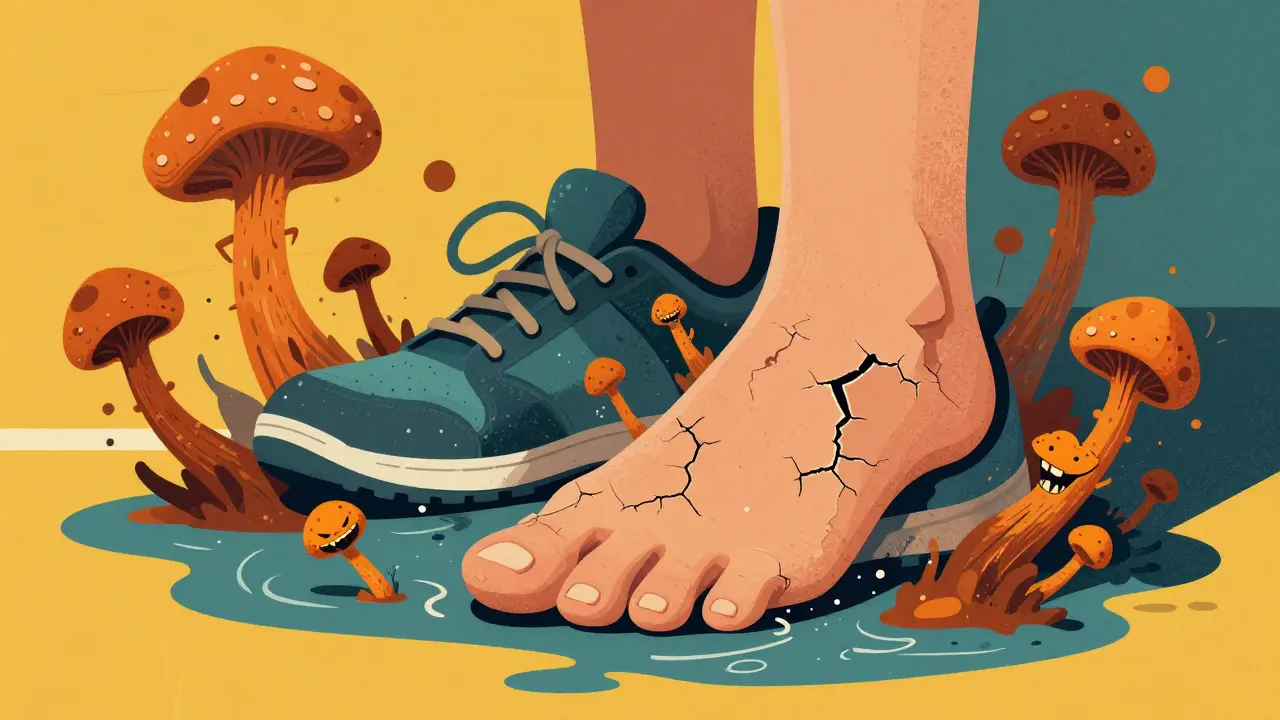
More than 1 in 7 people worldwide have a fungal infection right now. It’s not something you hear much about, but it’s everywhere - between your toes, under your nails, even inside your mouth. Two of the most common types are athlete’s foot and Candida infections. They sound simple, but they’re not the same. And treating them the wrong way can make them worse.
What’s Really Causing Your Itchy Feet?
Athlete’s foot isn’t just for athletes. It’s caused by fungi called dermatophytes - mostly Trichophyton rubrum - that eat keratin, the protein in your skin, hair, and nails. These fungi love warm, damp places. That’s why locker rooms, public showers, and sweaty shoes are their favorite hangouts. You don’t need to be an athlete to get it. Just walk barefoot in a gym, share a towel, or wear the same socks for days. There are three main types of athlete’s foot:- Interdigital - the most common. It hits between your fourth and fifth toes. Skin peels, cracks, and itches. Up to 70% of cases look like this.
- Moccasin type - dry, flaky skin on the soles and sides of your feet. It looks like chronic dryness, but it’s fungal. About 20% of cases.
- Vesicular/bullous - small blisters. Rare, but painful. Only about 10% of cases.
Here’s the thing: athlete’s foot doesn’t go away on its own. Even if the itching stops after a few days of cream, the fungus is still there. If you stop treatment early, it comes back - and often worse. Studies show 40% of people who quit too soon get it again within a year.
Candida: When Your Body’s Own Fungus Turns Against You
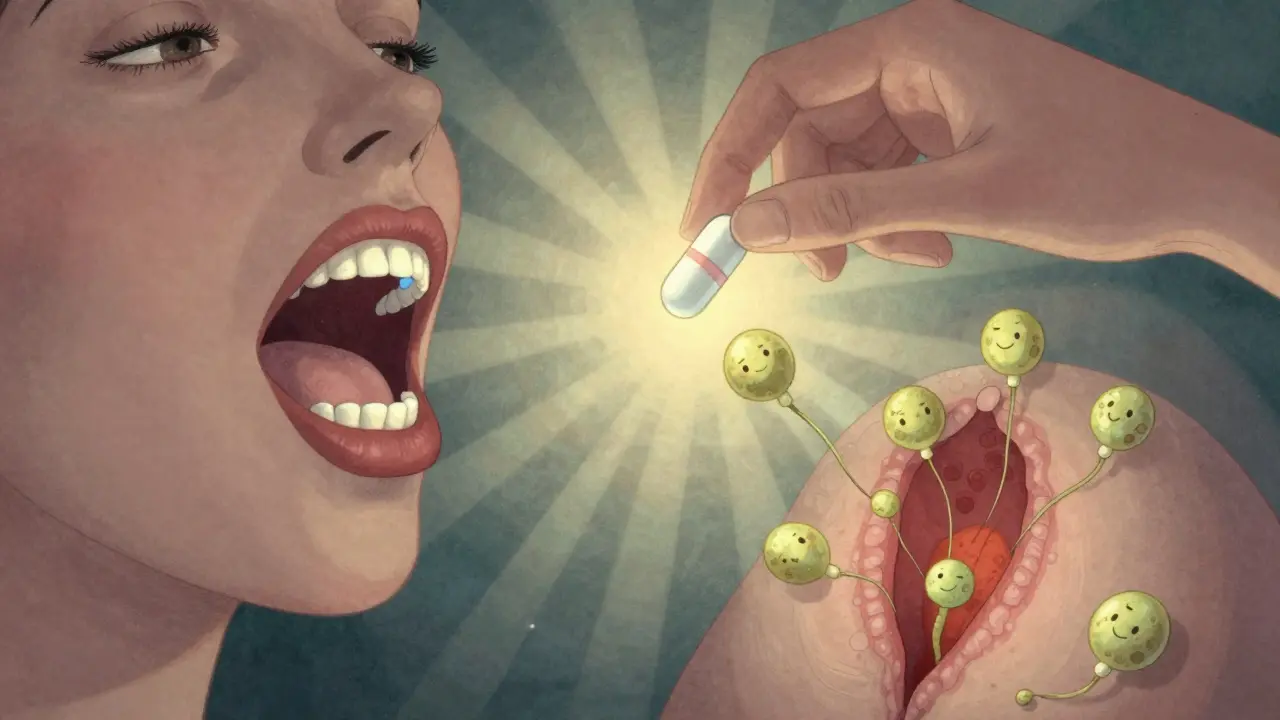
Candida is different. It’s not an outsider. It’s a yeast that lives naturally in your mouth, gut, and vagina. Normally, your immune system and good bacteria keep it in check. But when something tips the balance - antibiotics, diabetes, stress, or a weakened immune system - Candida overgrows. Most people know it as a yeast infection. About 75% of women will get at least one vaginal yeast infection in their life. Oral thrush - white patches in the mouth - is common in people with HIV or those on long-term steroids. In rare cases, especially in hospitalized or immunocompromised patients, Candida can enter the bloodstream. That’s invasive candidiasis. The CDC reports about 46,000 cases in the U.S. each year, with up to 40% mortality in severe cases. Unlike athlete’s foot, Candida doesn’t need keratin to survive. It can infect mucous membranes, organs, even the blood. That’s why treatment is more complex. A simple cream won’t cut it if it’s deep inside your body.Antifungal Treatments: What Actually Works
Not all antifungals are created equal. The right one depends on what you’re treating and how bad it is.Topical Treatments (For Skin and Feet)
For mild athlete’s foot, over-the-counter creams work well. Here’s what’s in them:- Azoles - clotrimazole, miconazole. Kill fungi by disrupting their cell membranes. Good for early cases. Cure rates: 70-80% with consistent use.
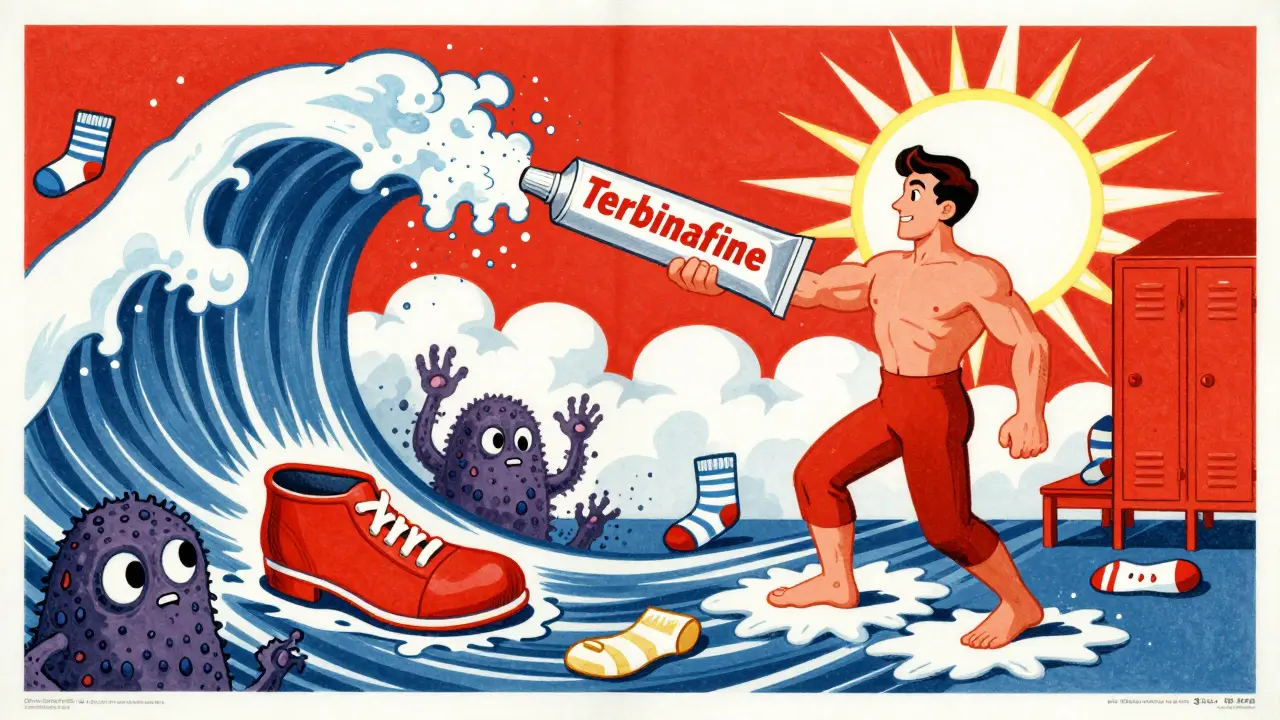
- Allylamines - terbinafine (Lamisil). More powerful. Kills fungi faster and stays in the skin longer. Often clears symptoms in 1-2 weeks. Studies show 65% of users see improvement in 72 hours.
- Whitfield’s ointment - a mix of benzoic acid and salicylic acid. It doesn’t just kill fungus - it peels off dead skin. Especially effective for the peeling, cracked skin between toes. One study found 65% clearance after 4 weeks, compared to 55% with clotrimazole alone.
Here’s the catch: topical treatments only work on the surface. If the fungus has gotten deep into your skin or nails, you need oral meds.
Oral Treatments (For Stubborn or Internal Infections)
When creams fail, or if Candida is in your mouth or bloodstream, you need pills:- Terbinafine - 250 mg daily for 2-6 weeks. First-line for athlete’s foot that won’t quit. Cure rates: up to 90%.
- Fluconazole - 150 mg once a week for 2-4 weeks. Used for vaginal yeast infections and oral thrush. Fast-acting. Often clears symptoms in 3 days.
- Itraconazole - 200 mg daily for 1-2 weeks. Used for nail infections and resistant cases.
And then there’s ibrexafungerp (Brexafemme). Approved by the FDA in 2021, it’s the first new class of antifungal in 20 years. It works against strains that resist older drugs, especially for recurrent vaginal yeast infections.
Why Treatments Fail - And How to Avoid It
Most people don’t fail because the medicine doesn’t work. They fail because they don’t use it right.- Stopping too early - 67% of patients who finish the full course get cured. Only 32% of those who quit early do. If the itching stops after 3 days, keep applying the cream for another 1-2 weeks.
- Not covering enough - Apply cream 1 inch beyond the visible edge of the infection. Fungus spreads under the skin before it shows up.
- Ignoring hygiene - Changing socks daily, drying feet thoroughly, using antifungal powder, and avoiding barefoot walking in public areas cuts recurrence by 50%.
- Sharing towels or shoes - Fungus lives on fabric and leather. Wash socks in hot water. Don’t borrow flip-flops.
And never scratch. You can spread the fungus to your hands, groin, or under your nails. That’s how jock itch and nail fungus start.
When to See a Doctor
You don’t need to rush to the clinic for a mild case. But call your doctor if:- Your skin is swollen, red, hot, or oozing pus - that’s a bacterial infection, not just fungus.
- You have diabetes and your foot looks even slightly abnormal - fungal infections can turn into ulcers or bone infections fast.
- It comes back after treatment - especially if it’s the same spot.
- You have oral thrush and you’re not immunocompromised - it could signal an undiagnosed condition like HIV or uncontrolled diabetes.
The Bigger Picture: Fungal Infections Are Rising
The global antifungal market is growing fast - from $14.3 billion in 2022 to an expected $21.7 billion by 2028. Why? Because fungi are adapting. A new strain, Trichophyton indotineae, first spotted in India in 2017, is now in 28 countries. It’s resistant to common antifungals. The WHO lists it as a priority pathogen. Climate change is making things worse - warmer, wetter climates are expanding the areas where these fungi thrive. Hospitals are seeing more cases of drug-resistant Candida. The CDC’s “My Action Plan” program, which teaches diabetes patients how to care for their feet, has cut recurrent infections by 35% in participating clinics. Simple steps - daily foot checks, proper drying, moisture control - make a huge difference.What You Can Do Today
If you have athlete’s foot:- Use terbinafine cream twice daily for at least 2 weeks - even if it feels better after 3 days.
- Wash and dry your feet thoroughly, especially between the toes.
- Apply antifungal powder to your shoes and socks daily.
- Don’t wear the same shoes two days in a row. Let them air out.
If you have a yeast infection:
- Use fluconazole (one pill) or clotrimazole cream for 7 days.
- Avoid scented soaps, douches, and tight synthetic underwear.
- Consider probiotics - some studies show they help prevent recurrence.
Fungal infections aren’t embarrassing. They’re common. But they’re not harmless. Left untreated, they can lead to serious complications - especially if you have diabetes or a weak immune system. The good news? With the right treatment and habits, most cases clear up fast. The key isn’t finding the strongest drug. It’s being consistent.
Can athlete’s foot spread to other parts of the body?
Yes. Scratching or touching the infected area and then touching other parts of your body - like your groin, hands, or underarms - can spread the fungus. That’s how jock itch and fungal nail infections often start. Always wash your hands after applying cream, and don’t share towels or shoes.
Is athlete’s foot contagious?
It’s mildly contagious. You don’t catch it just by being near someone. You catch it from direct contact with infected skin or from walking barefoot on contaminated surfaces - like locker room floors, pool decks, or shared showers. Fungus can survive on towels, socks, and shoes for weeks.
Can I use the same cream for athlete’s foot and yeast infection?
Some creams, like clotrimazole, work for both. But they’re not equally effective. Athlete’s foot often needs stronger, longer treatment. Yeast infections in the vagina respond better to vaginal suppositories or single-dose pills like fluconazole. Don’t assume one treatment fits all - use the right product for the right infection.
Why does my athlete’s foot keep coming back?
Mostly because treatment was stopped too early or hygiene wasn’t maintained. Fungus hides under the skin and in shoes. Even if your skin looks normal, the fungus can still be alive. That’s why you need to keep using the cream for 1-2 weeks after symptoms disappear. Also, wearing damp socks or tight shoes creates the perfect environment for it to return.
Are natural remedies like tea tree oil effective?
Some studies show tea tree oil has antifungal properties, but it’s not strong enough to replace FDA-approved treatments. It might help as a supplement - like adding a few drops to foot soak - but don’t rely on it alone. For stubborn or recurring infections, stick with proven antifungals like terbinafine or fluconazole.
Can fungal infections be prevented?
Absolutely. Keep skin clean and dry. Wear moisture-wicking socks. Change them daily. Avoid walking barefoot in public showers. Use antifungal powder in shoes. Don’t share towels, shoes, or nail clippers. If you have diabetes, check your feet every day. Prevention is easier - and cheaper - than treating a recurring infection.



Candice Hartley
January 28, 2026 AT 02:26I had athlete’s foot for years and thought it was just dry skin 😅 Then I read this and finally used terbinafine for the full 2 weeks-no more itching. My feet feel like new again. Also, antifungal powder in my shoes? Game changer. 🙌
Andrew Clausen
January 29, 2026 AT 21:38Terbinafine cure rates are not 90%. That’s a manufacturer-funded study. Real-world data shows 60-70% clearance even with compliance. And ‘don’t scratch’? That’s like telling someone not to sneeze when they have a cold. You’re ignoring the neurology of itch. Also, fluconazole for vaginal yeast? It’s overprescribed. Most cases resolve without pills. Stop pushing pharmaceuticals as the only answer.
Kirstin Santiago
January 31, 2026 AT 01:01Thanks for breaking this down so clearly. I’ve seen so many people feel ashamed about fungal infections like they did something wrong. It’s just biology. My mom had recurrent Candida after antibiotics-she didn’t know it was linked until she read something like this. Simple hygiene tips like drying between toes and rotating shoes? These are the little things that change everything. No judgment, just facts. 🙏
April Williams
January 31, 2026 AT 16:23YOU’RE ALL JUST IGNORING THE TRUTH. This isn’t about fungus-it’s about your LIFESTYLE. You eat sugar, you wear synthetic socks, you don’t pray enough, you don’t detox. That’s why it comes back. Tea tree oil is a joke? Try raw garlic wrapped in gauze overnight. I cured my nail fungus in 3 weeks with that and a 7-day lemon water cleanse. Also, stop using chemicals. Your body is sacred. This is why America is sick.
suhail ahmed
February 1, 2026 AT 14:04Man, this hit different coming from India where Trichophyton indotineae is now the norm. We used to just slap on clotrimazole and hope. Now? We’re seeing kids with foot infections resistant to everything. I’ve seen guys with both feet covered in cracks, walking barefoot to work because they’re scared of the clinic. This post? Lifesaver. Terbinafine oral is our new best friend now. Also-antifungal powder? We call it ‘chuna’ here. Lime powder. Cheap, effective, and grandma-approved. 🙏
astrid cook
February 2, 2026 AT 08:45Of course you’re all talking about creams and pills. But nobody’s talking about the REAL culprit: your partner’s dirty socks. I’ve seen it too many times. One person gets athlete’s foot, the other gets it in their mouth from kissing. Or worse-nail fungus from sharing a bath. This isn’t just about hygiene. It’s about boundaries. And if you’re still sharing towels after 2024? You’re part of the problem.
Kegan Powell
February 2, 2026 AT 21:14It’s wild how something so simple can be so misunderstood. Fungi aren’t evil they’re just trying to survive like us. We created the perfect storm with synthetic fabrics and damp shoes and then act shocked when they thrive. The real victory isn’t killing the fungus-it’s learning to live with it without fear. I used to panic every time my foot itched. Now I just slap on terbinafine and laugh. It’s just a guest that overstayed its welcome. Let’s treat it like a roommate not an enemy 🌱
Harry Henderson
February 3, 2026 AT 02:13STOP WASTING TIME. If you’ve got athlete’s foot and you’re still using OTC cream after 5 days you’re doing it wrong. Go straight to terbinafine pills. 250mg daily. 2 weeks. Done. No excuses. I’ve seen people suffer for years because they were too lazy to take a pill. Your feet don’t care about your comfort. Get it done. Now. Go. I’m not kidding.