
When your bones start to thin out without you noticing, everyday actions - like bending over to pick up a grocery bag or slipping on a wet floor - can lead to a fracture. This isn’t just about aging. It’s about osteoporosis, a silent disease that weakens bones to the point where they break easily. About 10 million Americans have it, and another 44 million are on the edge, with bone density low enough to put them at risk. It’s more common in women after menopause, but men aren’t immune. The real danger? Many people don’t know they have it until they break a bone.
What Happens When Bones Lose Density?
Your bones aren’t static. They’re alive, constantly being broken down and rebuilt. Special cells called osteoclasts remove old bone, while osteoblasts build new bone. With osteoporosis, this balance shifts. Osteoclasts start winning. Bone breaks down faster than it’s replaced. Over time, the inside of your bones becomes porous, like a sponge with holes. The outer shell thins. What was once strong and dense becomes fragile.It’s not just about getting older. Hormones play a big role. Estrogen helps protect bone. When estrogen drops after menopause, bone loss speeds up. That’s why nearly 80% of osteoporosis cases are in women. But men over 70 are also at risk, especially if they’ve had long-term steroid use, low testosterone, or a sedentary lifestyle.
Fractures from osteoporosis aren’t like sports injuries. They happen from low-impact forces - a stumble, a cough, even getting out of bed. The most common breaks are in the spine, hip, and wrist. A spinal fracture might not even hurt at first. You might just notice you’re shorter, or your posture has changed. Hip fractures are more serious. About 20% of people over 50 who break a hip die within a year. Many never regain their independence.
How Bisphosphonates Stop Bone Loss
Bisphosphonates are the most prescribed drugs for osteoporosis. They don’t rebuild bone. They slow down the breakdown. Think of them as a brake on the osteoclasts - the cells that chew up bone. By slowing those cells, bisphosphonates help your body keep what bone you still have.There are two main types: non-nitrogen and nitrogen-containing. The nitrogen ones - like alendronate (Fosamax), risedronate (Actonel), and zoledronic acid (Reclast) - are stronger and are now the first choice. They work by blocking a key enzyme in osteoclasts. Without that enzyme, the cells can’t function. They die off. Bone resorption drops.
Studies show these drugs cut fracture risk by up to 50%. Alendronate reduces spine fractures by 48% and hip fractures by 51% over three years. Zoledronic acid, given as a yearly IV infusion, cuts hip fractures by 41% in high-risk women. That’s not a small win. It’s life-changing.
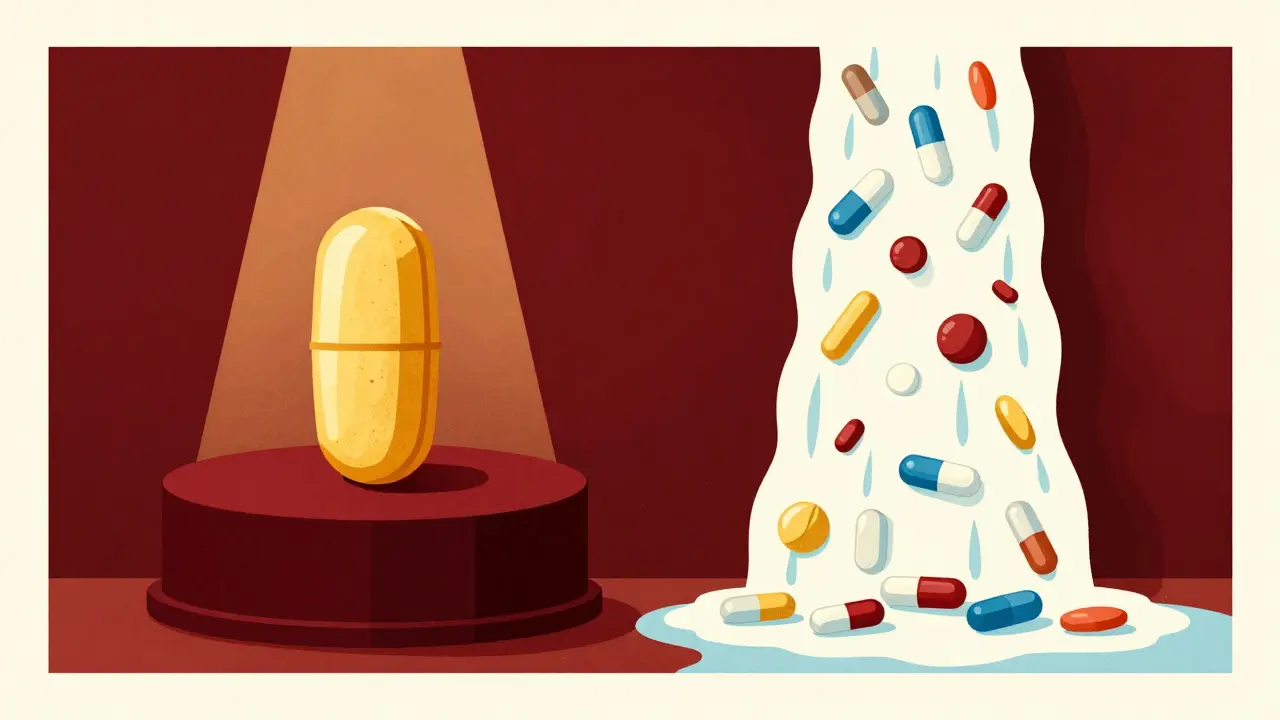
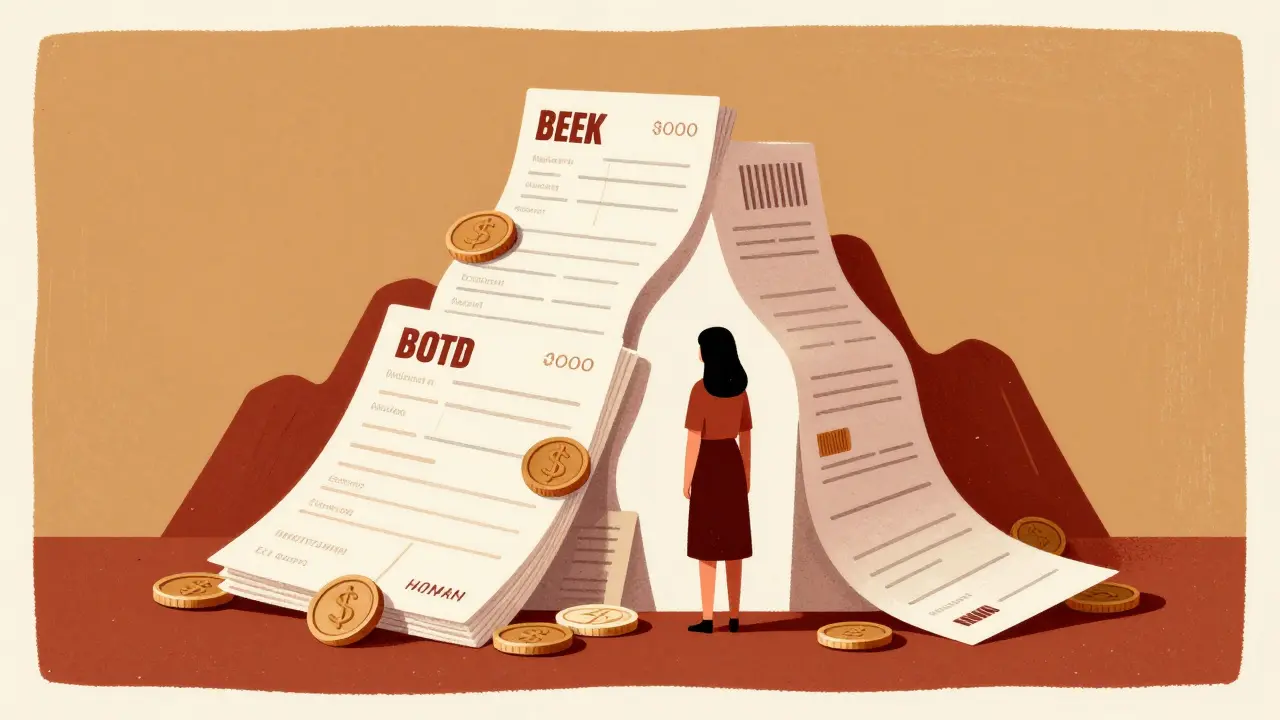
They’re also cost-effective. Generic alendronate costs $20-$40 a month. Compare that to teriparatide (Forteo), which costs about $1,800 a month and can only be used for two years. Bisphosphonates make up about 65% of all osteoporosis prescriptions in the U.S. That’s because they work, they’re safe for most people, and they’re affordable.
How to Take Bisphosphonates Right - Or Don’t Take Them at All
Taking bisphosphonates wrong can make them useless - or even harmful. Oral versions like alendronate and risedronate must be taken on an empty stomach with a full glass of plain water. You have to sit or stand upright for at least 30 minutes after swallowing. No lying down. No eating. No coffee, juice, or other pills. Why? Because if the pill gets stuck in your esophagus, it can burn the lining. That causes pain, ulcers, and even long-term damage.Up to 15% of people can’t tolerate this. One Reddit user wrote, “I couldn’t handle the burning in my throat. Switched to the yearly IV. No more pain.” That’s why zoledronic acid - given as a 15-minute infusion once a year - is becoming more popular. It skips the GI tract entirely.
Even then, adherence is poor. Only about half of people are still taking their oral bisphosphonate after one year. Why? The rules are too strict. People forget. They get frustrated. Doctors need to explain this clearly - not just hand out a prescription. A simple conversation can make a difference.
Side Effects: Rare, But Real
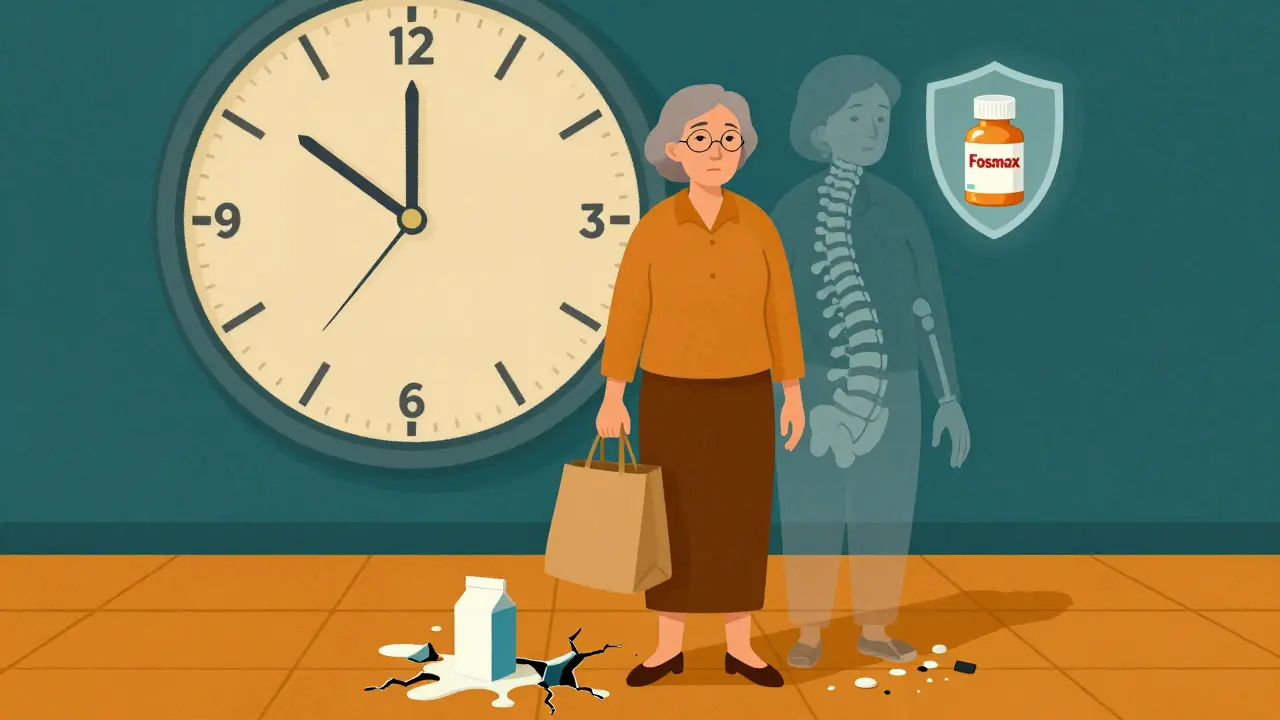
Most people tolerate bisphosphonates fine. But there are two rare but serious risks that every patient should know about.First: atypical femoral fractures. These are unusual breaks in the thigh bone, often happening with little or no trauma. They’re rare - about 3 to 5 cases per 10,000 patient-years. But they’re serious. The fracture often starts as a dull ache in the thigh or groin. If you’re on bisphosphonates for more than five years and feel that kind of pain, get it checked.
Second: osteonecrosis of the jaw (ONJ). This is when the jawbone stops healing after dental work - like an extraction or implant. It’s extremely rare: 0.01% to 0.04% of patients. But it’s preventable. Before starting bisphosphonates, see your dentist. Get any major dental work done. After that, keep up with cleanings. Avoid invasive procedures if you can.
The FDA requires black box warnings on all bisphosphonate labels for these risks. But that doesn’t mean you should avoid them. It means you should be informed.
When to Stop - The Drug Holiday
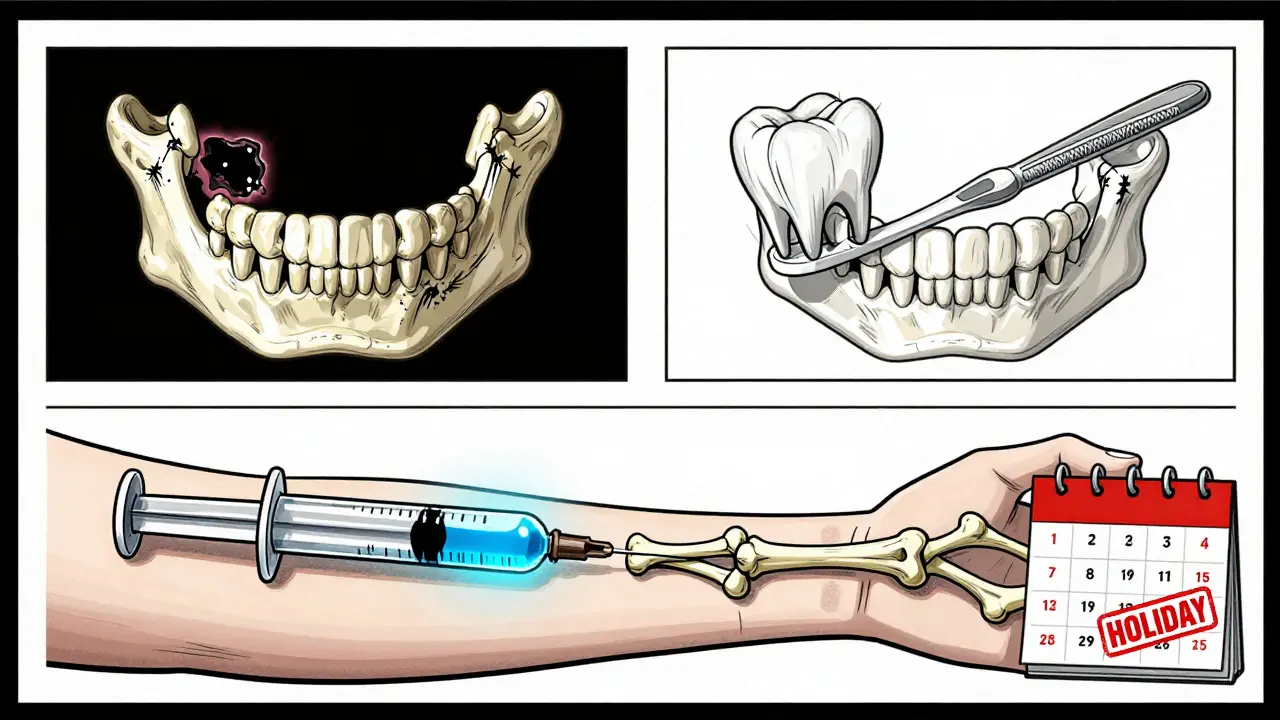
You might hear doctors talk about a “drug holiday.” That means stopping bisphosphonates after 3 to 5 years - especially if you’re low-risk. Why? Because the benefits of long-term use (beyond 5 years) are unclear. Meanwhile, the rare risks start to creep up.Research shows that even after stopping, bone density stays higher than before treatment for years. Your bones still have some protection. So for someone who’s had no fractures, good bone density, and no other risk factors, taking a break makes sense.
But if you’ve already had a fracture, or your bone density is still very low, staying on longer might be better. Your doctor should use your FRAX score - a tool that estimates your 10-year fracture risk - to decide. A score above 20% for major fractures or 3% for hip fracture means treatment should continue.
Bone density scans (DXA) are usually repeated every 1-2 years to track progress. If your numbers are stable or improving, a holiday is a real option. If they’re dropping, you might need to switch or restart.
Other Treatments - What Else Is Out There?
Bisphosphonates aren’t the only option. But they’re still the starting point.Denosumab (Prolia) is a yearly injection that works differently. It blocks a protein that activates osteoclasts. It’s slightly more effective than bisphosphonates at increasing bone density. But here’s the catch: if you stop it, bone loss happens fast - sometimes with a spike in spine fractures. So you can’t just quit. You have to switch to another drug immediately.
Teriparatide (Forteo) is the opposite of bisphosphonates. Instead of slowing bone loss, it builds new bone. It’s an injectable hormone that stimulates osteoblasts. It increases bone density by 9-13% over 18-24 months. But it’s expensive. And you can only use it for two years. After that, you usually switch to a bisphosphonate to hold the gains.
Romosozumab (Evenity) is the newest. It does both - builds bone and slows breakdown. It cuts spine fractures by 73% in the first year. But it comes with a warning: increased risk of heart attack and stroke. So it’s not for people with heart disease. It’s also given as monthly injections for only 12 months, then followed by another drug.
For most people, bisphosphonates still win. They’re proven, affordable, and flexible. Newer drugs are great for specific cases - like severe osteoporosis, or when bisphosphonates don’t work. But they’re not replacements. They’re backups.
What You Can Do Right Now
If you’re over 50 and have risk factors - a family history of hip fractures, low body weight, smoking, long-term steroid use - ask for a bone density scan. Don’t wait for a fracture. That’s too late.If you’re on bisphosphonates, make sure you’re taking them right. Set a daily alarm. Keep a log. Talk to your pharmacist. If you’re having side effects, don’t quit. Ask about the IV option.
And don’t forget the basics: get enough calcium and vitamin D. Walk every day. Do strength training. Avoid falls. Remove rugs. Install grab bars. These things matter just as much as the pill.
Osteoporosis isn’t inevitable. It’s manageable. Bisphosphonates have helped millions avoid fractures. But they’re not magic. They work best when used smartly - with the right timing, the right monitoring, and the right lifestyle.
Can bisphosphonates rebuild bone?
No, bisphosphonates don’t rebuild bone. They slow down bone loss by inhibiting the cells that break it down. This allows your body to maintain existing bone density. To actually build new bone, you’d need an anabolic drug like teriparatide or romosozumab.
How long should I take bisphosphonates?
For most people, 3 to 5 years is enough. After that, your doctor may recommend a "drug holiday" - stopping the medication to reduce rare side effects. If you’ve had fractures or still have very low bone density, you might need to continue longer. Bone scans and your FRAX score help guide this decision.
Are bisphosphonates safe for people with kidney problems?
Oral bisphosphonates are generally safe if your creatinine clearance is above 30-35 mL/min. Zoledronic acid (the IV version) requires a minimum of 35 mL/min. If your kidney function is lower, your doctor will likely avoid bisphosphonates and consider alternatives like denosumab.
Why do I have to sit upright after taking an oral bisphosphonate?
To prevent the pill from irritating your esophagus. If you lie down too soon, the medication can stick in your throat and cause burns, ulcers, or long-term damage. Staying upright for 30-60 minutes lets the pill pass quickly into your stomach.
What happens if I stop bisphosphonates suddenly?
Unlike some other osteoporosis drugs (like denosumab), stopping bisphosphonates doesn’t cause rapid bone loss. The drug stays in your bones for years after you stop. Bone density usually stays stable for several years. But if your fracture risk is high, your doctor may recommend switching to another treatment instead of stopping altogether.
Scott Easterling
March 9, 2026 AT 02:40So let me get this straight: we’re giving people a drug that can literally shatter their thigh bone after a few years… and calling it a "solution"? 😂
And don’t even get me started on the "drug holiday"-like, oh yeah, just stop taking the poison and hope your bones remember how to be strong. Classic pharmaceutical magic.
Meanwhile, the FDA slaps on a black box warning like it’s a cautionary sticker on a toaster, but no one talks about how the real problem is that we’re treating symptoms instead of root causes. Who’s paying for all this? Who’s lobbying for these drugs? Hmmmm…
And don’t tell me about "calcium and vitamin D." I’ve seen the studies. The supplement industry is a $50 billion scam. You think your Walmart gummy vitamins are doing anything? Nah. You need real food. Real sun. Real movement. Not a pill that kills your jawbone to save your hip.
I’ve got a cousin who took Fosamax for 7 years. Now she can’t get a tooth pulled without a 6-month wait and a 3rd-degree consultation. She’s terrified of her own mouth. That’s not medicine. That’s horror.
And don’t even mention the IV zoledronic acid. "Oh, it skips the GI tract!" Yeah, sure. It just goes straight into your bloodstream and starts haunting your bones like a ghost. You think your body doesn’t remember? It remembers.
Meanwhile, China and Japan have lower osteoporosis rates… and they don’t even use these drugs. They eat fish. They walk. They squat. They live. Not just survive. Live.
So yeah. I’ll take my chances with gravity, sunlight, and a damn squat rack over another $30/month chemical gamble. Your bones aren’t a spreadsheet. They’re alive. Treat them like it.
Mantooth Lehto
March 10, 2026 AT 22:11I just started Fosamax and I’m already crying 😭
Why does it have to be so HARD?? I sit up for 30 minutes like a robot, no coffee, no breakfast, no hugging my cat… I just want to lie back down after my 6am alarm. But NO. I have to be a perfect little bone zombie.
My throat feels like I swallowed glass. I’m not even lying. I’ve cried twice. I hate this. I hate the pill. I hate the rules. I hate that I’m 52 and my body is now a prison.
Can I just… take it with juice? Please? I’ll do squats. I swear. I’ll do them every day. I’ll YouTube them. I’ll post videos. But please, just let me take it with orange juice. I’m begging you.
Melba Miller
March 11, 2026 AT 18:16Let’s be real: this whole osteoporosis panic is a manufactured crisis fueled by Big Pharma and scared women over 50. You know who doesn’t get osteoporosis? Rural farmers in Mexico. Indigenous women in the Andes. Women in Nepal who carry 80-pound loads on their heads every day.
They don’t take pills. They don’t get DXA scans. They don’t have "FRAX scores." They just live. They move. They eat real food. And their bones? Strong. Dense. Unbreakable.
Meanwhile, here in the U.S., we’ve turned aging into a disease. We’ve medicated natural decline into a crisis. We’ve made women feel broken because their estrogen dropped. But estrogen isn’t the enemy. Our couches are.
And bisphosphonates? They’re not magic. They’re a Band-Aid on a bullet wound. You’re not fixing the problem-you’re just delaying the inevitable while racking up side effects that make your jaw rot and your femur snap like a twig.
It’s not about bone density. It’s about lifestyle. Movement. Community. Purpose. Stop buying into the fear. Start living like your bones matter.
Katy Shamitz
March 13, 2026 AT 12:50Wow. Just wow.
I’m so glad someone finally wrote this without sugarcoating it.
But let’s be honest-most doctors don’t even know how to explain this. They hand you a script and say, "Take this." No context. No risks. No alternatives.
And then you Google it. And you find out your jaw might die. Or your thigh bone might just… snap. For no reason.
I’ve been on alendronate for 4 years. I’m fine. No fractures. No pain. But I still have nightmares about the black box warning.
My doctor says I should take a "holiday." But I’m scared. What if I stop and then I break my hip? What if I’m the one in that 20% who never walks again?
It’s not about the drug. It’s about the fear. And no one talks about that.
Nicholas Gama
March 13, 2026 AT 20:55Bisphosphonates are a Band-Aid on a systemic failure. We’ve turned medicine into a product line. Bone density is a metric. Patients are numbers. Profit is the goal.
Teriparatide? $1,800/month. Denosumab? $5,000/year. Zoledronic acid? $1,200/infusion.
And alendronate? $20. Because it’s generic. Because it’s old. Because it works. So it’s the default. Not because it’s best. Because it’s cheapest to sell.
Pharma doesn’t care if you live. They care if you refill.
And you? You’re just another data point in a clinical trial they paid for.
Mary Beth Brook
March 15, 2026 AT 12:44Per FDA guidance, bisphosphonates are classified as anti-resorptive agents with a demonstrated reduction in vertebral and hip fracture incidence. The number needed to treat (NNT) for hip fracture prevention over 3 years is 25–30 for high-risk postmenopausal women.
Denosumab demonstrates superior BMD gains at 12–24 months (L1–L4 +8.7%, total hip +5.3%) vs. alendronate (+4.2%, +2.9%). However, rebound resorption occurs upon discontinuation without sequential therapy.
Atypical femoral fracture risk is 3–5 per 10,000 patient-years. ONJ incidence is 0.01–0.04% in osteoporosis cohorts-orders of magnitude lower than fracture risk reduction.
Drug holidays are evidence-based for low-risk patients (FRAX <10% major fracture risk). DXA monitoring every 2 years is standard of care.
Non-pharmacologic interventions (calcium 1200mg/d, vitamin D 800IU/d, weight-bearing exercise) are adjunctive, not alternatives.
Neeti Rustagi
March 17, 2026 AT 07:09It is truly commendable that such a comprehensive and scientifically grounded exposition on osteoporosis management has been presented.
However, I must respectfully emphasize that while pharmacological interventions are indispensable in clinical practice, they must be contextualized within the broader framework of holistic health-particularly in cultures where dietary calcium intake, sunlight exposure, and physical activity are naturally integrated into daily life.
In many parts of Asia, for instance, dietary sources such as tofu, fish with bones, and fermented soy products contribute significantly to bone health, often without reliance on pharmaceuticals.
Therefore, while bisphosphonates remain a vital tool in Western medicine, their application should be tempered with cultural, nutritional, and lifestyle considerations to ensure truly patient-centered care.
Jazminn Jones
March 17, 2026 AT 12:10The data is clear: bisphosphonates reduce fracture risk by 40–50%. The meta-analyses are robust. The Cochrane reviews confirm it.
Yet here we are, in a Reddit thread where anecdote replaces evidence and fear replaces reason.
You’re not a victim of Big Pharma. You’re a participant in a culture of medical nihilism.
Denying effective, evidence-based treatment because you read a blog post about jaw necrosis is not wisdom. It’s ignorance dressed up as rebellion.
And if you think squatting in your basement is going to prevent a hip fracture at 75? You’re delusional.
Science doesn’t care about your feelings. It cares about outcomes. And bisphosphonates save lives.
Stephen Rudd
March 19, 2026 AT 09:27Everyone’s ignoring the real elephant in the room: why are we treating osteoporosis like a disease instead of a symptom of a broken system?
We live in a society that sits all day, eats processed food, avoids the sun, and then pays $20 a month to fix what we broke ourselves.
And then we act shocked when the drug causes side effects? Shocked?
You don’t get to poison your body for 50 years and then expect a pill to undo it.
The real solution? Move. Eat real food. Sleep. Breathe. Stop treating medicine like a magic wand.
But no. We’d rather blame the drug than our culture.
Erica Santos
March 20, 2026 AT 03:49So… we’re supposed to believe that a 50-year-old woman who’s never lifted a weight in her life, eats McDonald’s daily, and hasn’t seen sunlight since 2019 is going to be saved by a pill that costs $20?
That’s not medicine. That’s capitalism with a stethoscope.
You don’t fix a broken lifestyle with a chemical. You fix it with discipline. With community. With movement. With food that doesn’t come in a box.
But hey-why fix the system when you can just sell more pills?