
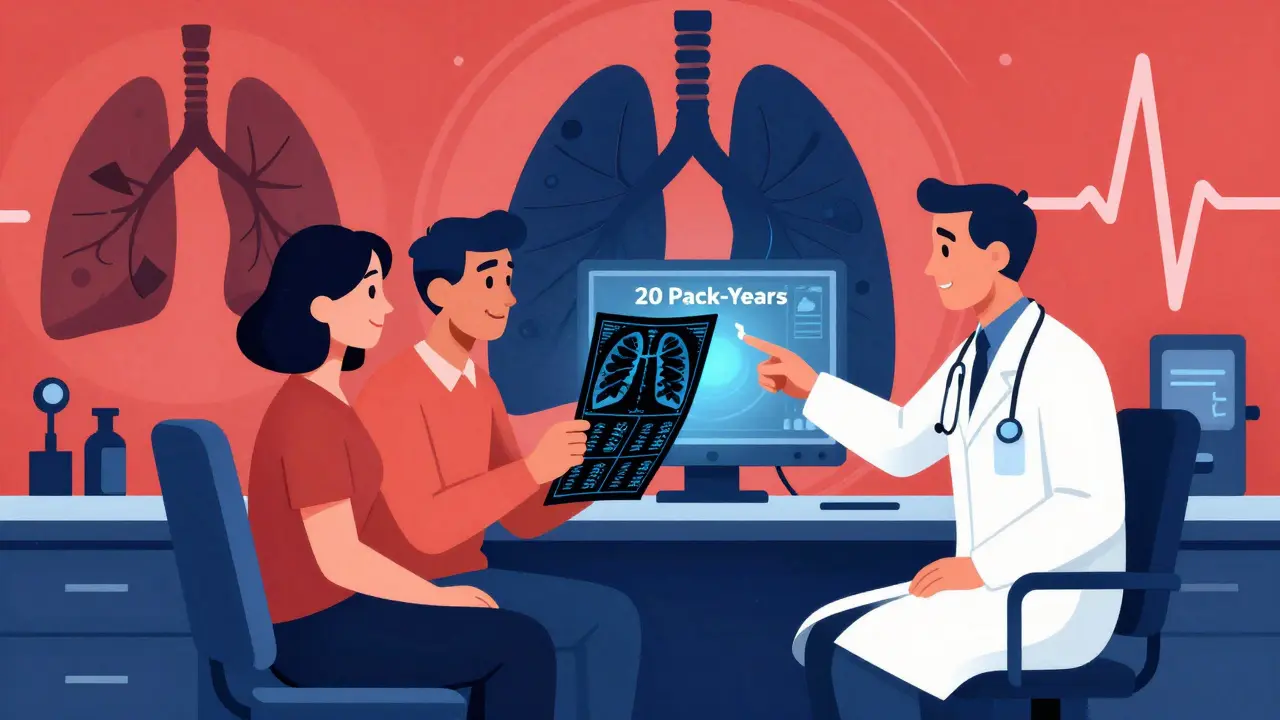
Every year, over 120,000 people in the U.S. die from lung cancer. Most of them are diagnosed too late - when the disease has already spread and treatment options are limited. But there’s a simple, proven way to catch it early: low-dose CT screening. It’s not for everyone. But if you’re in the right group, this scan could save your life.
Who Should Get a Low-Dose CT Scan?
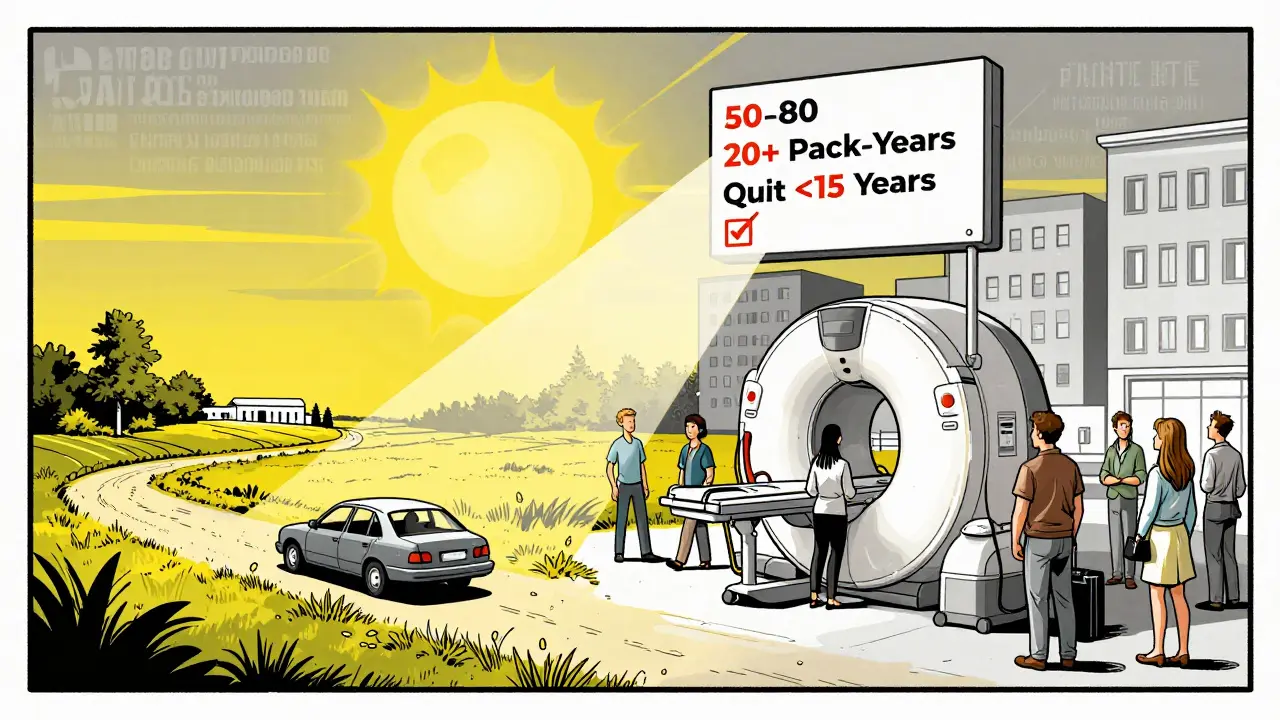
The rules aren’t complicated, but they’re specific. You qualify for annual low-dose CT screening if you meet all three of these criteria:- You’re between 50 and 80 years old
- You’ve smoked at least 20 pack-years (that’s one pack a day for 20 years, or two packs a day for 10 years)
- You currently smoke, or you quit smoking within the last 15 years
Why the change? Because research showed that lung cancer risk doesn’t disappear after 15 years of quitting. In fact, about one-third of lung cancers happen in people who quit more than 15 years ago. That’s why some groups, like the American Cancer Society and the National Comprehensive Cancer Network (NCCN), now suggest screening even beyond that 15-year cutoff - especially if you have other risk factors like family history, exposure to asbestos, or a history of lung disease.
But here’s the catch: even if you qualify, you won’t get the scan unless you talk to your doctor first. Medicare and most insurers require a shared decision-making visit. That means your provider will explain the risks and benefits. You’ll learn about false positives, radiation exposure, and what happens if something shows up. This isn’t a routine test you can just walk in for - it’s a targeted tool for high-risk people.
What Does the Scan Actually Show?
A low-dose CT scan is like a detailed X-ray of your lungs. It uses a fraction of the radiation of a standard CT - about 1.2 millisieverts (mSv), roughly equal to what you’d get from natural background radiation over four months. The machine takes hundreds of thin slices, so even tiny nodules - as small as 4 millimeters - can be seen.Most scans come back normal. But if something shows up, it doesn’t mean you have cancer. In fact, over 96% of all positive findings turn out to be harmless. These are often scar tissue, old infections, or benign growths. Still, finding them means you need follow-up.
Here’s how it typically breaks down:
- Normal scan? You’ll be asked to return in one year.
- Small nodule (4-6 mm)? You’ll get another scan in 6 months to see if it grows.
- Larger nodule (over 6 mm)? You may need a PET scan, biopsy, or referral to a specialist.
The NLST found that LDCT detects three times more early-stage lung cancers than a regular chest X-ray. Of all cancers found through screening, 71% are Stage I - meaning they’re still localized and curable with surgery alone. Without screening, most cancers aren’t found until they’ve spread - when survival rates drop sharply.
What Are the Real Risks?
Some people worry about radiation. But the dose from a low-dose CT is so low that the risk of it causing cancer is tiny - about one extra death per 1,000 people screened over a lifetime. Meanwhile, for every 810 people screened annually for 6.5 years, one lung cancer death is prevented. That’s a huge net gain.The bigger issue is false positives. About 24% of first-time scans show something unusual. That leads to more tests - more CTs, more biopsies, more anxiety. One study found that 42% of people felt significant stress while waiting for follow-up results. Some pay out-of-pocket costs too. At Massachusetts General Hospital, patients averaged $187 in extra costs after a positive screen.
And not everyone gets screened. Rural patients face major barriers: the nearest facility might be 32 miles away. Only 18.5% of eligible people in rural areas get screened, compared to 34.7% in cities. Black Americans are 15% more likely to get lung cancer - but they’re screened at 28% lower rates. These gaps aren’t just inconvenient. They’re deadly.
What Happens If Something Is Found?
If a nodule is found, you won’t be left hanging. Accredited screening centers follow strict protocols. They’re required to have a team of specialists - radiologists, pulmonologists, thoracic surgeons - ready to act. Most small nodules are monitored with repeat scans. Only about 1.2% of 4-6 mm nodules turn into cancer over two years.If surgery is needed, it’s usually done with video-assisted thoracoscopic surgery (VATS). This minimally invasive technique means shorter hospital stays - down to 3.1 days from 5.2 days a decade ago. Recovery is faster. Pain is less. And survival rates are higher than ever.
One woman from Ohio, Mary Johnson, found out she had Stage 1 adenocarcinoma during her annual scan. She had no symptoms. No cough. No shortness of breath. Just a 6mm nodule. Surgery removed it. She’s now cancer-free. “I’d be dead without that scan,” she says.
But not everyone has a happy ending. James Wilson, 62, had a false positive. He spent three months in anxiety, paid $450 out of pocket, and went through two extra scans before doctors confirmed it was nothing. “I didn’t know what I was signing up for,” he told a support group.
Why Isn’t Everyone Getting Screened?
Despite clear evidence, only about 23% of eligible Americans - roughly 3.3 million out of 14.2 million - are getting screened. That’s far below what experts say is needed.Why? For starters, many people don’t know they qualify. Doctors don’t always bring it up. And some are scared of what they might find.
There’s also a system problem. Only 59% of U.S. counties have an accredited screening center. In rural states like West Virginia or Montana, you might have to drive 100 miles. Medicaid expansion helped - states that expanded it had 37% higher screening rates. But in non-expansion states, access remains uneven.
And then there’s cost. Even though Medicare covers it 100%, some private insurers still require co-pays. And if you’re uninsured? You’re out of luck unless you find a free clinic or research program.
What’s Next for Lung Screening?
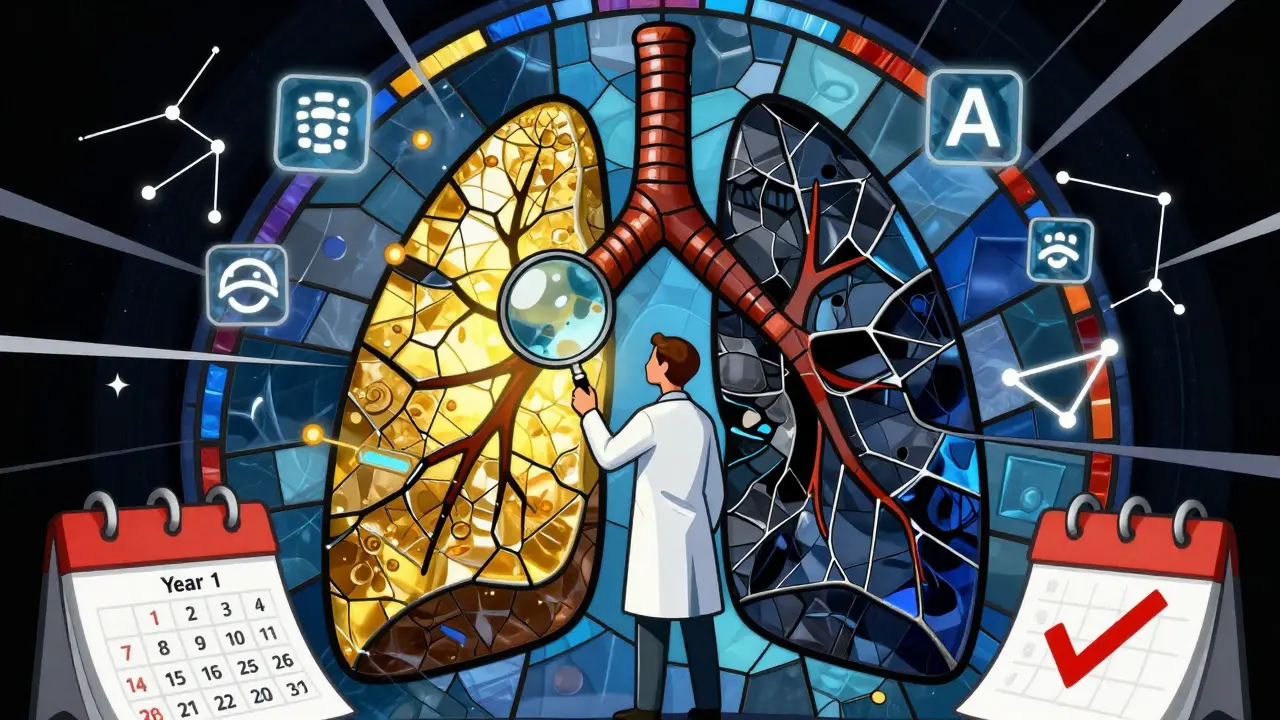
The future is getting smarter. New AI tools are helping radiologists read scans faster and more accurately. One FDA-approved tool, LungPoint®, cuts reading time by 30% and still catches 97% of nodules over 6 mm. Blood tests are also in the works. The EarlyCDT-Lung test, which detects cancer-related antibodies, showed 94% accuracy in ruling out cancer in recent trials.The NELSON trial from Europe showed that screening every two years - instead of every year - can cut mortality by 24%, with fewer false positives. That could mean less anxiety and lower costs. The U.S. is reviewing this data now.
And there’s talk of expanding eligibility even further. Removing the 15-year quit rule could open screening to 19.2 million people - and prevent 12,000 more deaths each year. The Centers for Medicare & Medicaid Services (CMS) is actively considering this change.
But the biggest challenge isn’t technology. It’s awareness. It’s access. It’s making sure the people who need this scan the most - Black smokers, rural residents, former smokers over 15 years out - actually get it.
What Should You Do?
If you think you might qualify:- Calculate your pack-years: multiply packs per day by years smoked. If it’s 20 or more, you’re in the ballpark.
- Check if you’re between 50 and 80 - and whether you quit within the last 15 years.
- Ask your doctor: “Am I a candidate for low-dose CT screening?” Don’t wait for them to bring it up.
- If you’re eligible, get screened every year. Consistency matters.
- Keep track of your results. Ask for copies. Know what your next steps are.
There’s no magic bullet for lung cancer. But for high-risk people, this scan is the closest thing we have. It’s not perfect. It’s not painless. But for thousands of people every year, it’s the difference between life and death.
Who is eligible for low-dose CT lung screening?
You’re eligible if you’re between 50 and 80 years old, have smoked at least 20 pack-years (e.g., one pack a day for 20 years), and either still smoke or quit within the past 15 years. Some guidelines, like NCCN’s, extend eligibility beyond 15 years if you have other risk factors like family history or lung disease.
Is low-dose CT screening safe?
Yes. The radiation dose is very low - about 1.2 mSv, similar to four months of natural background radiation. The risk of radiation causing cancer is extremely small: about one extra death per 1,000 people screened over a lifetime. This is far outweighed by the benefit - one lung cancer death prevented for every 810 people screened annually over 6.5 years.
What if the scan finds a nodule?
Finding a nodule doesn’t mean cancer. Over 96% of positive scans turn out to be benign. If the nodule is 4-6 mm, you’ll likely get a follow-up scan in 6 months. Larger nodules may need a PET scan or biopsy. Only about 1.2% of small nodules become cancerous over two years. Most screen-detected cancers are caught early and are curable with surgery.
Are false positives common?
Yes - about 24% of first-time scans show something unusual. That’s why follow-up is built into the process. By the third year, false positives drop to 10.5%. Most are scar tissue or old infections. Still, they can cause anxiety and lead to extra tests. The benefit of catching cancer early outweighs these risks for eligible people.
Does insurance cover low-dose CT screening?
Yes. Medicare covers it 100% for eligible beneficiaries. Most private insurers follow suit under the Affordable Care Act. However, you must have a shared decision-making visit with your provider before the scan. If you’re uninsured, check with local health departments or cancer centers - some offer free or low-cost screening programs.
Can I get screened if I quit smoking more than 15 years ago?
The USPSTF and Medicare say no - you must have quit within the last 15 years. But other groups, like the American Cancer Society and NCCN, say yes - especially if you have other risk factors. Evidence shows 34% of lung cancers occur in former smokers who quit more than 15 years ago. Many experts believe the 15-year rule should be removed, and CMS is currently reviewing this.
How often should I get screened?
Annually. The NLST and all major guidelines recommend yearly scans for eligible individuals. Skipping a year reduces the benefit. Studies show the best outcomes come from consistent, annual screening. If you’re 81 or older, screening is generally not recommended unless you’re in excellent health and have strong risk factors.
What if I live in a rural area?
Access is harder - the median distance to a screening center is 32 miles in rural areas. Only 18.5% of eligible rural patients get screened, compared to 34.7% in cities. Talk to your doctor about telehealth options or referral networks. Some mobile screening units are starting to appear. Also, check if your state has expanded Medicaid - those states have 37% higher screening rates.
Is low-dose CT screening worth it for non-smokers?
No. Low-dose CT screening is only recommended for people with a significant smoking history. Non-smokers have very low risk, and the chance of a false positive outweighs any benefit. Other risk factors - like radon exposure or family history - don’t currently qualify you for screening under standard guidelines, though research is ongoing.
Can AI help with reading the scans?
Yes. AI tools like LungPoint® are now FDA-approved and used in many accredited centers. They cut radiologist reading time by 30% and maintain 97% sensitivity for nodules over 6 mm. AI doesn’t replace doctors - it helps them spot things faster and more consistently. In the next few years, AI will likely become standard in all screening programs.
Timothy Olcott
March 22, 2026 AT 02:01matthew runcie
March 23, 2026 AT 00:21Nishan Basnet
March 23, 2026 AT 12:34Allison Priole
March 25, 2026 AT 03:56Casey Tenney
March 25, 2026 AT 19:39Jackie Tucker
March 26, 2026 AT 06:33Thomas Jensen
March 27, 2026 AT 11:23Solomon Kindie
March 28, 2026 AT 17:45Natali Shevchenko
March 30, 2026 AT 06:27Nicole James
April 1, 2026 AT 02:24Chris Dwyer
April 1, 2026 AT 08:12Desiree LaPointe
April 2, 2026 AT 18:44shannon kozee
April 4, 2026 AT 08:29trudale hampton
April 5, 2026 AT 06:11Shaun Wakashige
April 6, 2026 AT 07:06