
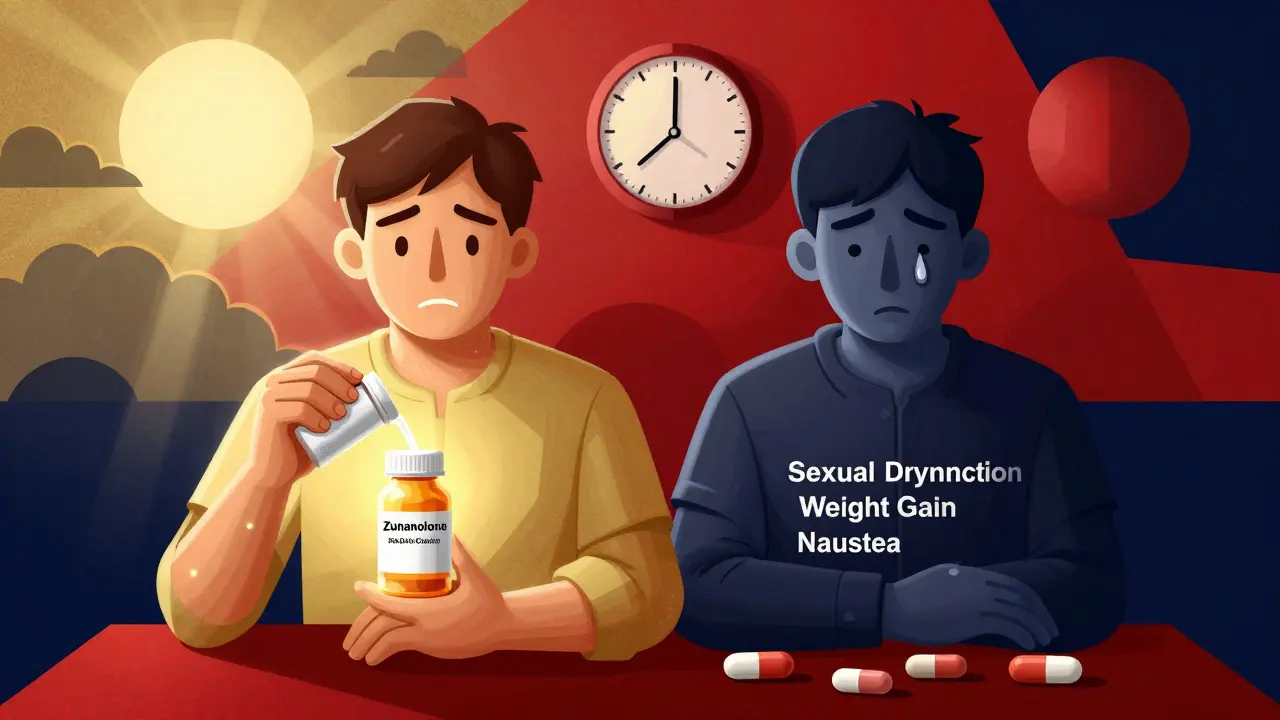
Antidepressant Side Effect Comparison Tool
Your Priorities
Select the side effects that matter most to you
How This Works
We compare your priorities against data from clinical trials in the article, showing:
- Sexual dysfunction rates (SSRIs: 30-70% vs new drugs: 2-55%)
- Weight gain (SSRIs: 10-15% vs new drugs: 0-8%)
- Onset of action (SSRIs: 4-8 weeks vs new drugs: 2 days to 10 days)
- Dissociation risks (only relevant for SPRAVATO)
For years, people taking antidepressants have been stuck between two bad choices: feel better emotionally, or feel better physically. Traditional SSRIs like sertraline or escitalopram help lift depression-but they often bring unwanted guests: sexual dysfunction, weight gain, nausea, and fatigue. For many, these side effects are worse than the depression itself. That’s changing. In 2026, a new wave of antidepressants is hitting the market, designed not just to work, but to work without wrecking your body.
Why Old Antidepressants Keep Failing People
The standard antidepressants-SSRIs and SNRIs-have been around since the 1980s. They work by increasing serotonin levels in the brain. Simple, right? But the brain doesn’t just have one switch. It’s a complex network. When you flood it with serotonin, you don’t just fix mood-you accidentally turn on other systems too. That’s why up to 70% of people on SSRIs report sexual problems. Why 15% gain 10 pounds or more in six months. Why half feel nauseous for weeks before anything improves. These drugs take 4 to 8 weeks to kick in. By then, many patients have already quit-not because the depression got worse, but because the side effects felt unbearable. A 2025 review in The Lancet showed that nearly 1 in 3 people stop their first antidepressant within three months because of side effects. That’s not treatment failure. That’s a system failure.The New Players: How They’re Different
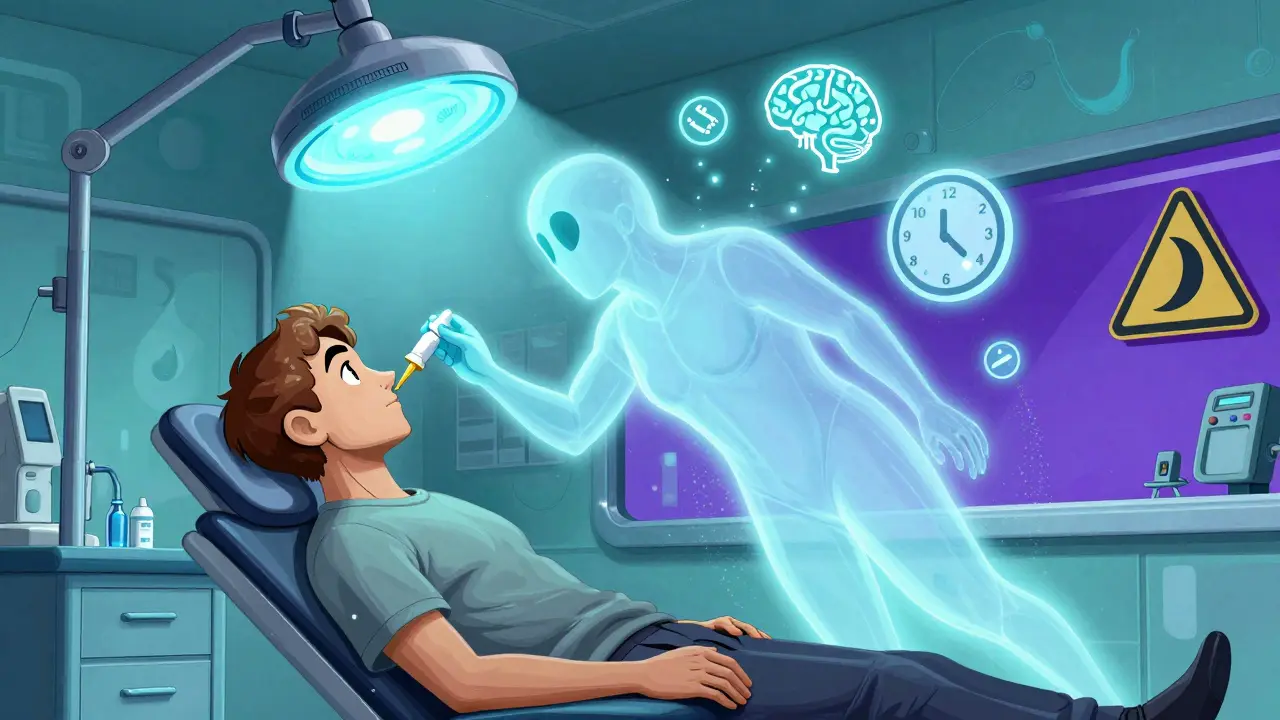
The new generation of antidepressants doesn’t just tweak serotonin. They target entirely different brain pathways. Three have gained FDA approval since 2022, and their profiles are radically different. Auvelity (dextromethorphan/bupropion), approved in 2022, combines two existing drugs in a new way. Dextromethorphan blocks NMDA receptors-the same ones ketamine acts on-while bupropion slows down how fast your body breaks it down. This combo works in days, not weeks. In trials, 70% of users saw improvement in under 10 days. Side effects? Mostly mild headaches and dizziness. Sexual dysfunction? Only 15-20% of users report it, compared to 40-50% with SSRIs. Weight gain? Almost none. SPRAVATO (esketamine), approved in 2019, is a nasal spray version of ketamine. It’s not a party drug-it’s a controlled medical treatment. It works fast: 56% of patients show symptom relief within 24 hours. But it comes with trade-offs. About half of users feel dissociated-like they’re floating or detached from reality-right after dosing. That’s why it’s only given in certified clinics, with 2 hours of monitoring afterward. It’s effective, especially for treatment-resistant depression, but it’s not for everyone. Zuranolone (Zurzuvae), approved in 2023 for postpartum depression and expanded to major depression in late 2025, is a neurosteroid. It calms overactive brain circuits by boosting GABA, the brain’s natural chill-out chemical. You take it as a pill for just 14 days. No daily dosing for months. No weight gain. No sexual side effects. In trials, 70% of new mothers saw improvement in their depression within 3 days. Side effects? Dizziness in 25%, sleepiness in 20%. Both fade after the course ends.Side Effect Showdown: What’s Actually Better?
Here’s how the new drugs stack up against the old ones:| Side Effect | SSRIs (e.g., sertraline, citalopram) | Auvelity | Zuranolone | SPRAVATO |
|---|---|---|---|---|
| Sexual dysfunction | 30-70% | 15-20% | 2-5% | 10-15% |
| Weight gain | 10-15% over 6 months | 2-5% | 0-1% | 5-8% |
| Onset of action | 4-8 weeks | 2-10 days | 2-5 days | 24-48 hours |
| Dizziness/sedation | 10-20% | 10-15% | 25% (temporary) | 15-20% |
| Dissociation | 0% | 0% | 0% | 45-55% |
| Duration of treatment | Long-term daily | Daily | 14-day course | Weekly, ongoing |
Notice how Zuranolone avoids sexual side effects and weight gain almost entirely. Auvelity cuts weight gain by 80% compared to duloxetine. SPRAVATO is fastest, but the dissociation is real-many users describe it as "feeling like you’re watching yourself from outside your body." That’s not a side effect you can ignore.
Who Benefits Most?
These new drugs aren’t magic bullets. They’re precision tools. If you’ve tried 2-3 antidepressants and nothing worked, you’re likely dealing with treatment-resistant depression. SPRAVATO and Auvelity have response rates of 50-65% in this group, compared to 30-40% for SSRIs. That’s a huge jump. If you’re a new mom with postpartum depression, Zuranolone is a game-changer. You don’t need to be on meds for months while trying to bond with your baby. A 14-day course can get you back on your feet fast. If you’re struggling with sexual side effects after years on SSRIs, Exxua (gepirone), approved in 2023, is the first new antidepressant in over a decade with sexual side effects under 3%. One Reddit user wrote: "After 15 years of sexual dysfunction, switching to Exxua felt like waking up. I didn’t know how much I’d missed feeling normal."The Catch: Cost, Access, and Long-Term Gaps
None of this is cheap. A 30-day supply of fluoxetine (generic Prozac) costs $4. Zuranolone’s 14-day course? $9,450. SPRAVATO? $880 per dose. Insurance coverage is spotty. Over 90% of commercial plans require prior authorization for SPRAVATO. Many people can’t get it. Access is another hurdle. SPRAVATO must be given in a certified clinic. There are only 1,243 such clinics in the U.S. If you live in rural Nebraska or Montana, you might need to drive 300 miles for each dose. And here’s the biggest question: What happens after 14 days? Or 6 months? Zuranolone is only studied for short-term use. We don’t know if it prevents relapse. SPRAVATO requires ongoing doses. Auvelity is taken daily. Long-term safety data? Still missing. As Dr. Prasad Nishtala from STAT News warned in October 2025: "All these studies last 8 weeks. Real depression lasts years. We’re flying blind on the long game."
What’s Next?
The pipeline is full. Aticaprant, a kappa opioid blocker, is in Phase 3 trials and could be approved by mid-2026. Early data shows 60% response in treatment-resistant cases-with almost no weight gain. The real future isn’t just about new drugs. It’s about matching the right drug to the right person. The NIH is funding research to develop a genetic test that predicts which antidepressant will cause side effects in you-with 85% accuracy. Imagine: a simple blood test tells you, "Don’t take SSRIs. Try Zuranolone. It’s safer for you."What Should You Do?
If you’re on an SSRI and tolerating it fine? Keep going. Don’t switch just because something new exists. If you’re struggling with side effects, or your current drug isn’t working after 6-8 weeks? Talk to your doctor. Ask about Auvelity, Zuranolone, or SPRAVATO. Bring up the side effect profile. Ask: "Is there a medication here that won’t make my sex life worse or make me gain weight?" If you’re in a crisis and need fast relief? SPRAVATO might be an option-but only if you’re in a certified clinic and understand the dissociation risk. If you’re a new parent with depression? Zuranolone’s 14-day course could be the reset you need. The old model-"Try one, then another, then another"-is over. The new model is: "What’s the best fit for your body, your life, your risks?" That’s progress.Frequently Asked Questions
Are these new antidepressants safe for long-term use?
We don’t know yet. Most clinical trials last 8-12 weeks. Zuranolone is approved only for 14-day use. SPRAVATO requires ongoing dosing, but long-term safety data beyond 12 months is limited. Experts agree: we need more studies. For now, these are best used for acute episodes or treatment-resistant cases, not as lifelong replacements for SSRIs unless no other option works.
Can I switch from an SSRI to one of these new drugs myself?
No. Never stop or switch antidepressants without medical supervision. Stopping SSRIs suddenly can cause withdrawal symptoms like brain zaps, dizziness, or anxiety. Switching to a new drug requires careful timing and dosing adjustments. For example, Auvelity can’t be started until you’ve been off an SSRI for at least 14 days. Your doctor needs to manage the transition.
Why is Zuranolone only given for 14 days?
Zuranolone works by resetting brain chemistry through short-term modulation of GABA receptors. Studies showed that a 14-day course delivered maximum benefit, with most patients staying in remission for at least 30 days after stopping. Longer use didn’t improve outcomes but increased side effects like dizziness. It’s designed as a "reset button," not a daily maintenance drug.
Do these new drugs work for anxiety too?
Some do. Auvelity and SPRAVATO have shown benefits for anxiety symptoms in people with major depression. Zuranolone was tested in postpartum depression, which often includes severe anxiety. But none are FDA-approved specifically for anxiety disorders yet. If anxiety is your main issue, talk to your doctor about whether one of these could help-but don’t assume they’re replacements for anti-anxiety meds like benzodiazepines or buspirone.
Is there a cheaper alternative to these expensive new drugs?
Yes. Some older antidepressants have better side effect profiles than others. For example, bupropion (Wellbutrin) causes less sexual dysfunction and weight gain than SSRIs. Agomelatine (available outside the U.S.) can even cause weight loss. Celexa (citalopram) has lower rates of insomnia than sertraline. If cost or access is an issue, ask your doctor: "Is there an older drug with fewer side effects that might work for me?" You don’t always need the newest option.

steve rumsford
January 7, 2026 AT 19:48Andrew N
January 8, 2026 AT 11:53Aparna karwande
January 10, 2026 AT 07:29Jessie Ann Lambrecht
January 11, 2026 AT 07:08Christine Joy Chicano
January 12, 2026 AT 07:12Adam Gainski
January 12, 2026 AT 19:58Sai Ganesh
January 13, 2026 AT 14:21Paul Mason
January 14, 2026 AT 22:06LALITA KUDIYA
January 15, 2026 AT 12:53Poppy Newman
January 17, 2026 AT 10:48Vince Nairn
January 18, 2026 AT 05:26Ayodeji Williams
January 18, 2026 AT 07:51Kyle King
January 19, 2026 AT 03:25Kamlesh Chauhan
January 19, 2026 AT 22:47Emma Addison Thomas
January 21, 2026 AT 06:47