

Medication Risk Assessment Tool
This tool helps you assess your risk of medication-induced psychosis based on the medications you're taking and any symptoms you're experiencing. It's designed to provide immediate guidance on whether you should seek emergency care or consult your doctor.
Important: This tool is not a medical diagnosis. If you or someone you know is experiencing acute psychosis, seek emergency medical care immediately.
Your Current Medications
Current Symptoms
Please complete the assessment to see your results.
When someone suddenly starts seeing things that aren’t there, believing they’re being watched, or speaking in ways that don’t make sense, it’s easy to assume it’s schizophrenia or another mental illness. But sometimes, the cause isn’t the mind breaking down-it’s a pill they took. Medication-induced psychosis is more common than most people realize, and it can happen with drugs you’d never expect-steroids, antibiotics, even over-the-counter sleep aids. The good news? Most cases clear up fast once the trigger is stopped. The bad news? If you don’t recognize it, you could end up on lifelong antipsychotics for a problem that never should’ve been there in the first place.
What Exactly Is Medication-Induced Psychosis?
Medication-induced psychosis, also called substance-induced psychotic disorder, happens when psychotic symptoms appear because of a drug’s direct effect on the brain. It’s not a mental illness-it’s a physical reaction. The DSM-5, the official guide doctors use to diagnose mental conditions, says this type of psychosis must start during drug use or within a month after stopping it. If symptoms last longer than that, it might be something else.
Unlike schizophrenia, which usually shows up slowly over months or years, medication-induced psychosis hits fast. Someone might be fine one day, then, within hours or days of starting a new medicine, they’re convinced their phone is spying on them or hear voices telling them to run. The key difference? When the drug is removed, the symptoms usually vanish. That’s why identifying the cause is critical.
Common Symptoms You Can’t Ignore
The signs aren’t subtle. Here’s what to watch for:
- Delusions: False beliefs that stick even when proven wrong. Paranoia-thinking someone is plotting against you-is the most common. Others believe they’re being poisoned, followed, or have special powers.
- Hallucinations: Seeing, hearing, smelling, or feeling things that aren’t real. Auditory hallucinations (hearing voices) happen in over 80% of cases. Some people report seeing shadows move or feeling bugs crawling on their skin.
- Disorganized speech: Jumping from topic to topic, using made-up words, or speaking in a way that makes no sense.
- Confusion and memory loss: Forgetting recent events, struggling to follow conversations, or not recognizing familiar people.
- Erratic behavior: Acting out of character-yelling for no reason, stripping off clothes in public, or becoming violently agitated.
These symptoms don’t always show up at once. Often, mood changes come first: sudden anxiety, irritability, or depression. That’s your early warning. If someone on steroids starts feeling unusually nervous or depressed, it could be the start of something worse.
Which Medications Can Trigger This?
You might think only illegal drugs like cocaine or meth cause psychosis. But prescription and even OTC drugs are big players. Here are the most common culprits:
- Corticosteroids: Used for asthma, arthritis, or autoimmune diseases. About 5.7% of people on high doses develop psychosis. It’s one of the most frequent causes because these drugs are so widely prescribed.
- Antimalarials: Mefloquine (Lariam), used for malaria prevention, has been linked to over 1,200 psychosis cases since the 1980s. The European Medicines Agency warns it can cause hallucinations and paranoia, even in healthy travelers.
- Antiretrovirals: Efavirenz, used for HIV, affects about 2.3% of users with severe psychiatric side effects. The FDA requires a warning label for this exact reason.
- Antidepressants: SSRIs and SNRIs rarely cause psychosis, but it happens-especially in people with undiagnosed bipolar disorder. A sudden switch or dose increase can trigger mania with psychotic features.
- Stimulants: ADHD meds like methylphenidate or amphetamines can cause paranoia and hallucinations, especially at high doses or when misused.
- Antihistamines: Diphenhydramine (Benadryl), especially in older adults or when taken in large amounts, can cause delirium and hallucinations.
- Opioids and NSAIDs: High-dose ibuprofen or long-term opioid use can trigger psychosis in rare cases.
- Alcohol and benzodiazepine withdrawal: After heavy, long-term use, stopping suddenly can cause hallucinations and delusions that last days.
Even some herbal supplements and energy drinks with hidden stimulants have been linked to psychotic episodes. If the symptom started after a new medication, supplement, or change in dosage-it’s likely the cause.
Who’s at Highest Risk?
Not everyone who takes these drugs gets psychosis. But certain factors make it much more likely:
- History of mental illness: People with schizophrenia, bipolar disorder, or a family history of psychosis are far more vulnerable.
- Female sex: Studies show women are more likely than men to develop psychosis from medications like steroids and antimalarials.
- Age: Older adults are more sensitive to drug side effects. Their bodies process meds slower, and brain changes make them more prone to confusion.
- Substance use: Over 70% of people hospitalized for first-time psychosis have a history of alcohol or drug abuse. The brain is already on edge.
- High doses or long-term use: The longer you’re on a drug or the higher the dose, the greater the risk.
One study found that 62% of people having their first psychotic episode were actively using substances at the time. That doesn’t mean they’re “crazy”-it means their brain is reacting to a chemical overload.
Emergency Management: What to Do Right Now
If someone is in full psychosis-talking to voices, terrified, or aggressive-don’t wait. Call emergency services. But don’t panic. Here’s what actually works:
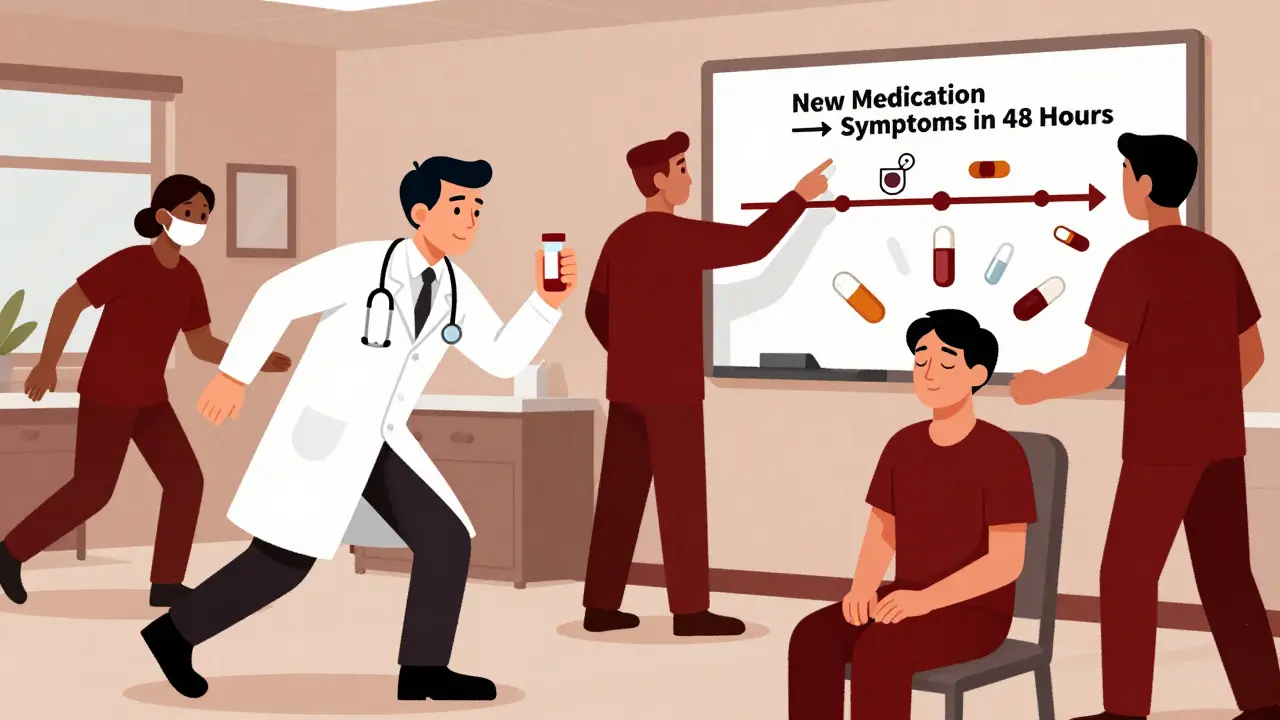
- Stop the drug immediately. This is the single most important step. In many cases, symptoms fade within hours or days once the trigger is removed. Don’t wait for a doctor’s approval-call the prescribing provider right away.
- Don’t try to reason with them. If someone believes their house is bugged, arguing won’t help. Stay calm. Speak slowly. Say: “I’m here. You’re safe.”
- Keep them safe. Remove sharp objects, locks, or anything dangerous. Don’t leave them alone.
- Go to the ER. Emergency departments are equipped to handle this. They’ll check for infections, electrolyte imbalances, or other medical causes. Blood tests and urine screens are routine.
- Antipsychotics may be used-but cautiously. Medications like olanzapine or quetiapine can calm severe agitation. But they’re not always needed. Many patients improve without them. Doctors avoid them if possible because they can interact dangerously with the original drug.
- Watch for withdrawal risks. If the drug was alcohol or a benzodiazepine, stopping suddenly can lead to seizures or delirium tremens. Medical supervision is mandatory.
Hospitalization isn’t always needed, but it’s recommended if the person is a danger to themselves or others, can’t care for themselves, or if the cause isn’t clear.
Recovery and What Comes Next
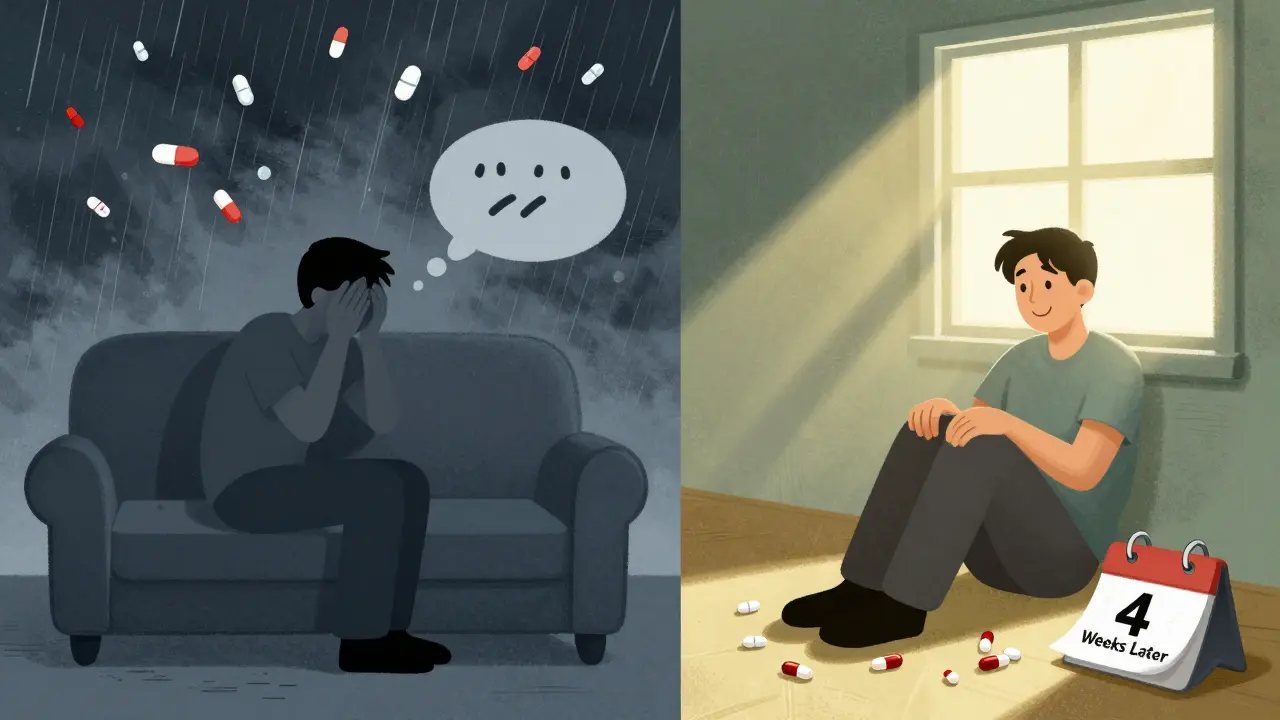
The outlook is usually good. Most cases resolve completely:
- Steroid-induced psychosis: clears in 4-6 weeks after stopping.
- Cocaine or amphetamine psychosis: often gone in 24-72 hours.
- Antihistamine or OTC drug psychosis: improves within hours.
- Alcohol withdrawal psychosis: may last up to 10 days, needs medical monitoring.
But here’s the catch: some people don’t fully recover. If psychosis lasts longer than a month after stopping the drug, doctors will look for an underlying disorder like schizophrenia or bipolar disease. That’s why follow-up is critical. A psychiatric checkup 3 months after symptoms fade is standard practice.
Some cases leave lasting damage. Long-term alcohol abuse can cause Wernicke-Korsakoff syndrome-permanent memory loss and confusion from thiamine deficiency. That’s not psychosis from a drug-it’s brain damage. The difference matters for treatment.
How to Prevent It
Prevention is simple: ask questions.
- Ask your doctor: “Can this drug cause mental side effects?”
- Ask your pharmacist: “Is this linked to hallucinations or paranoia?”
- Keep a log of new meds and any mood or behavior changes.
- Never start a new drug without telling your doctor about past mental health issues-even if it was years ago.
- If you’re on a high-risk drug (steroids, efavirenz, mefloquine), watch for early signs: anxiety, insomnia, irritability. Report them immediately.
The FDA now requires warning labels on drugs like efavirenz and mefloquine. But many doctors still don’t mention them. Don’t assume they know. Be your own advocate.
Why This Is Often Missed
Only 38% of primary care doctors feel confident diagnosing medication-induced psychosis. Most assume it’s schizophrenia. A patient on prednisone for asthma who starts hearing voices? They get referred to psychiatry. But if the doctor doesn’t ask about recent meds, they’ll miss the real cause.
Emergency rooms are better at catching it-because they run drug screens and check timelines. But even there, it’s easy to overlook. A 65-year-old on Benadryl for allergies who’s confused and agitated? They’re labeled as “demented.” But it might just be a drug reaction.
The fix? Always ask: “When did this start? What changed?” If it lines up with a new medication, stop it. Not next week. Not after the weekend. Now.
Final Takeaway
Medication-induced psychosis isn’t rare. It’s underdiagnosed. And it’s treatable. The most dangerous myth is that psychosis always means a lifelong illness. It doesn’t. Sometimes, it just means you took the wrong pill. Stop it. Get help. Watch closely. Most people recover completely. But only if someone recognizes what’s really going on.
Can over-the-counter drugs cause psychosis?
Yes. High doses of diphenhydramine (Benadryl), pseudoephedrine (in some cold meds), or even some herbal sleep aids with hidden stimulants can trigger hallucinations and paranoia-especially in older adults or people with underlying brain changes. It’s rare, but it happens.
How long does medication-induced psychosis last?
It depends on the drug. Cocaine-induced psychosis can fade in under 72 hours. Steroid-induced psychosis usually takes 4-6 weeks to clear after stopping. Alcohol withdrawal psychosis may last up to 10 days. If symptoms last longer than a month after quitting the drug, it’s likely a different condition.
Is medication-induced psychosis the same as schizophrenia?
No. Schizophrenia develops slowly, often in teens or early adulthood, and lasts for years. Medication-induced psychosis appears suddenly after taking a drug and usually resolves completely once the drug is stopped. The symptoms can look similar, but the cause and outcome are very different.
Can you get psychosis from stopping a drug?
Yes. Withdrawal from alcohol, benzodiazepines, or even some antidepressants can trigger hallucinations and delusions. This is especially dangerous with alcohol-stopping cold turkey can lead to seizures or delirium tremens. Always taper under medical supervision.
Do antipsychotic medications always help?
Not always. In many cases, simply stopping the triggering drug is enough. Antipsychotics like olanzapine or quetiapine are used for severe agitation or if symptoms don’t improve quickly. But they carry risks-especially if the original drug is still in the system. Drug interactions can be dangerous. They’re a tool, not a cure.
Dylan Patrick
March 14, 2026 AT 20:46tynece roberts
March 15, 2026 AT 11:40Kathy Leslie
March 17, 2026 AT 10:43Serena Petrie
March 18, 2026 AT 16:05Elsa Rodriguez
March 20, 2026 AT 10:24Stephanie Paluch
March 21, 2026 AT 10:05Aaron Leib
March 22, 2026 AT 17:49Amisha Patel
March 23, 2026 AT 23:15Buddy Nataatmadja
March 24, 2026 AT 00:40mir yasir
March 25, 2026 AT 19:14