
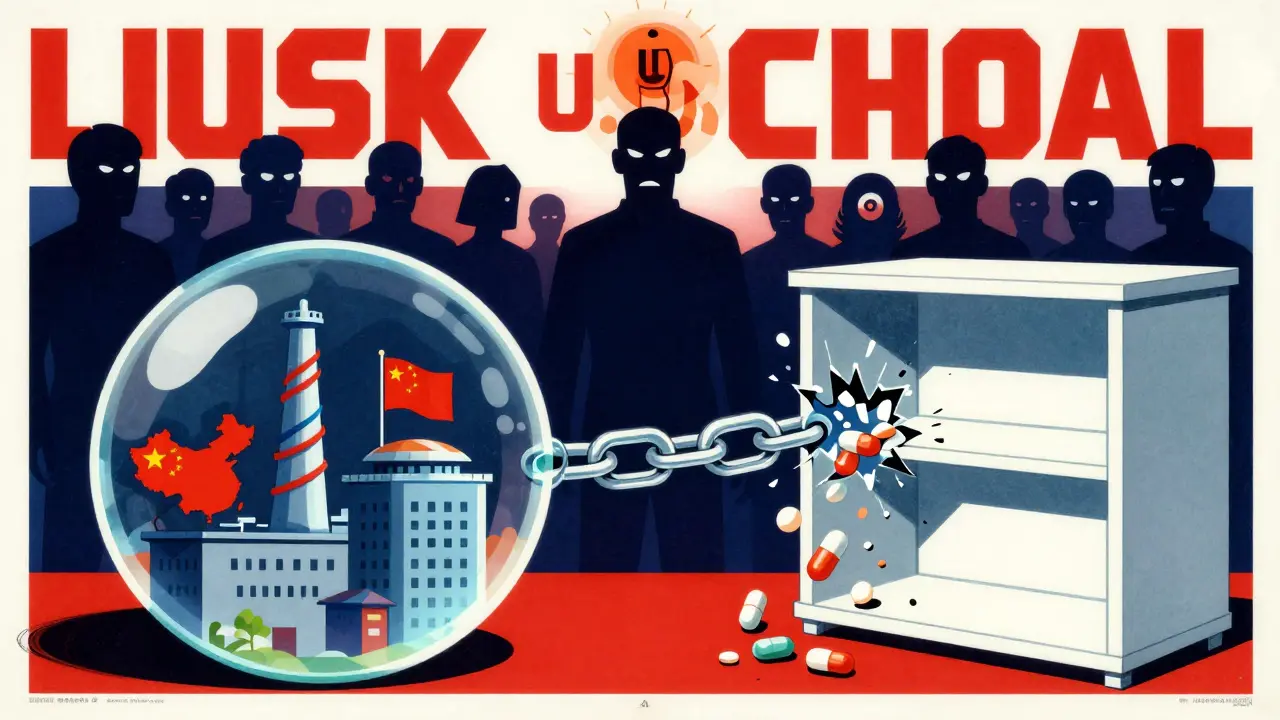
When a life-saving drug disappears from shelves, it’s not just an inconvenience-it’s a crisis. In 2024, over 300 critical medications faced shortages in the U.S. alone, from antibiotics to insulin and heart medications. These aren’t random glitches. They’re the result of fragile, over-optimized supply chains that ignored one simple truth: resilience isn’t optional-it’s essential. The question isn’t whether another shortage will happen, but when. And more importantly, what are we doing to stop it?
Why Your Medicine Might Vanish Tomorrow
Most people assume pharmaceuticals are made close to home. They’re wrong. Around 80% of the active ingredients in U.S. drugs come from just two countries: China and India. That means a flood in a factory in Hyderabad, a trade restriction in Shanghai, or even a labor strike in Mumbai can ripple across hospitals from New York to Melbourne. The system was built for efficiency, not safety. Lean inventory. Single suppliers. Long, complex chains with 12 to 15 tiers of subcontractors. One break, and the whole thing collapses. The pandemic didn’t create this problem-it exposed it. When demand spiked, manufacturers couldn’t shift production fast enough. Raw materials stalled at borders. Shipping containers piled up. Hospitals ran out of syringes, IV fluids, and even basic painkillers. The U.S. FDA confirmed that 40% of finished drug products and 80% of active pharmaceutical ingredients (APIs) are imported. And of those, 68% come from just two nations. That’s not a supply chain-it’s a single point of failure.What Resilience Really Means
Resilience in pharmaceutical supply chains isn’t about stockpiling every drug ever made. It’s about designing systems that can bend without breaking. The Mathematica Inc. report from 2023 defined it clearly: the ability to anticipate, prepare for, respond to, and recover from disruptions while still delivering critical medicines. That means three things: preparedness, response, and recovery. Preparedness means knowing where your risks are. Leading companies now map out every supplier, down to the third-tier chemical vendor. They track which factories produce the most critical APIs. They ask: What happens if China cuts exports? What if a key plant burns down? What if a shipping lane closes? They don’t just guess-they simulate. Scenario planning isn’t a boardroom exercise anymore. It’s a daily tool. Response means having backup plans that actually work. That’s where dual-sourcing comes in. Instead of relying on one supplier for a life-saving drug, companies now secure at least two, ideally in different regions. For the most critical medications, they’re building buffer stocks-keeping 60 to 90 days of inventory on hand. That’s not waste. It’s insurance. One medtech company reduced its response time during a disruption by 50% just by having two suppliers in India and one in Mexico, instead of three all in India. Recovery means bouncing back fast. That’s where new manufacturing tech comes in. Traditional batch production takes months to set up. Continuous manufacturing, on the other hand, can be up and running in 12 to 18 months. It uses smaller, modular units-think shipping containers full of drug-making equipment-that can be shipped and installed anywhere. These systems cut facility size by 30-40%, reduce waste by 15-20%, and improve quality control. The FDA approved only 12 continuous manufacturing lines as of 2025, but that number is rising fast.The Tech That’s Changing the Game
Technology isn’t just helping-it’s redefining what’s possible. AI is now predicting supply chain disruptions 60 to 90 days in advance with 85-90% accuracy. By analyzing weather patterns, political unrest, port congestion, and even social media chatter from manufacturing hubs, these systems flag risks before they become crises. One large U.S. drugmaker cut its forecast errors by 70% in just nine months using AI-driven supply intelligence. Blockchain is another quiet hero. In pilot programs, it’s slashed counterfeit drug rates by 70-75%. How? By giving every pill a digital passport. From the raw API to the final tablet, every step is recorded on an unchangeable ledger. Pharmacies, hospitals, and regulators can verify authenticity in seconds. That’s not just about safety-it’s about trust. And then there’s continuous manufacturing. Unlike old-school batch production, where you make 10,000 tablets at a time and wait for quality checks, continuous manufacturing runs 24/7 in a single, automated line. It’s faster, cheaper per unit, and far more flexible. One company using this method reduced its production cycle from 14 days to 48 hours. That means if a hospital suddenly needs 50% more insulin, they can scale up without waiting months.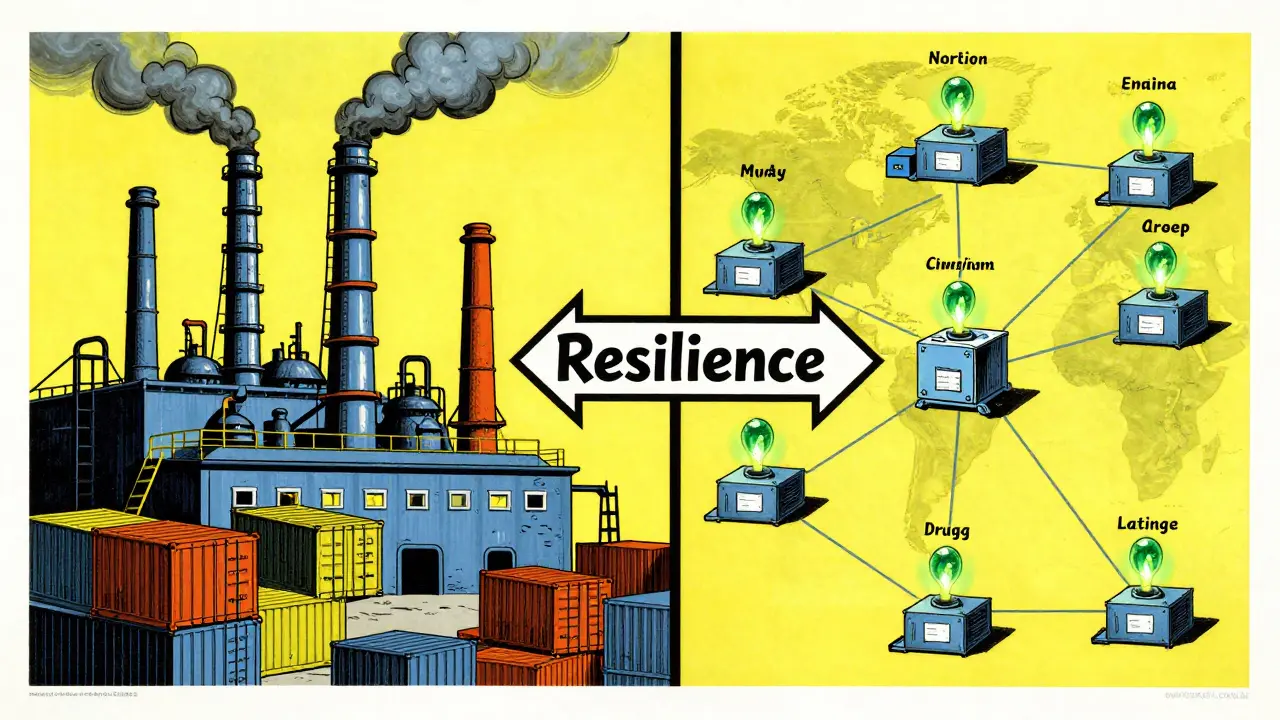
The Real Cost of Ignoring Resilience
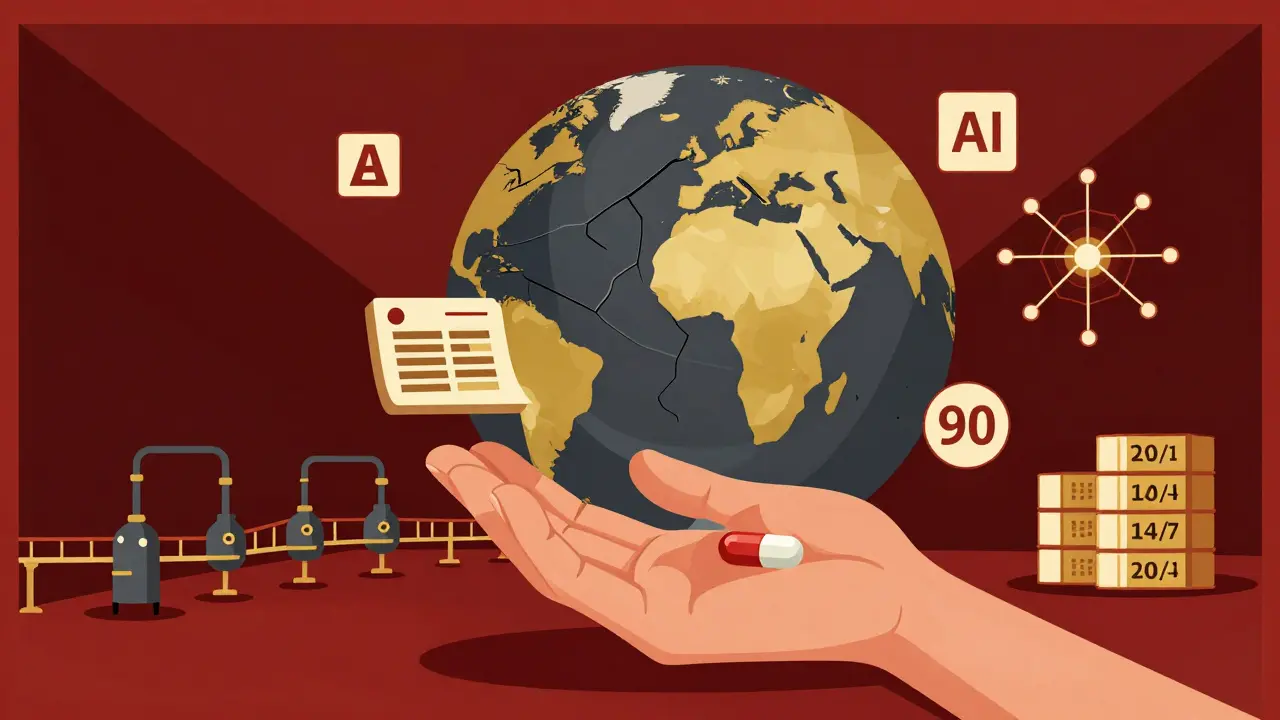
Some executives say, “Why spend more when we’ve been fine?” But the cost of doing nothing is staggering. ZS Associates found that companies with strong resilience strategies avoided $14.7 million in lost revenue per major disruption. That’s not hypothetical. In 2023, a single API shortage cost one major hospital network $22 million in emergency purchases, overtime, and canceled surgeries. The financial burden isn’t just on hospitals. Patients pay too. When a drug is scarce, prices spike. A 2024 study showed that shortages led to price increases of 300-500% for some generic drugs. That’s why resilience isn’t just a supply chain issue-it’s a public health and economic one. The U.S. government is stepping in. In August 2025, an executive order created the Strategic Active Pharmaceutical Ingredients Reserve, aiming to stockpile 90 days’ worth of 150 critical drugs by 2027. The government also pledged $1.2 billion through the CHIPS Act for domestic manufacturing. But money alone won’t fix this. You can’t build a resilient supply chain by just making more pills in the U.S. if your workers aren’t trained, your regulations are outdated, and your suppliers are still isolated.How Companies Are Actually Doing It
The best performers aren’t waiting for government mandates. They’re acting now. Here’s what works:- Diversify geographically: Don’t put all your eggs in one basket. Leading firms now source APIs from 3-4 regions: North America, Southeast Asia, Eastern Europe, and Latin America. This cuts dependency on any single country.
- Invest in buffer stock: For essential medicines-especially injectables and antibiotics-keeping 60-90 days of inventory is now standard. It’s expensive, but cheaper than a hospital emergency.
- Adopt continuous manufacturing: Even if you’re not ready to build a full facility, pilot a modular unit. It’s like testing a prototype before going all-in.
- Use AI for risk forecasting: Start small. Use cloud-based tools to monitor supplier risk scores. Many platforms now offer free trials.
- Build cross-functional teams: Supply chain, regulatory, finance, and procurement teams must work together. Companies with siloed departments took 3x longer to recover from disruptions.
The Hard Truths No One Talks About
Resilience isn’t cheap. It adds 8-12% to the cost of goods sold. Some companies are scared. But here’s what they’re not saying: the cost of *not* doing it is higher. A single disruption can cost millions in lost sales, regulatory fines, and damaged reputation. Also, domestic manufacturing alone won’t save us. The U.S. currently produces only 28% of essential APIs. For sterile injectables? Just 12%. Antibiotics? 17%. Even if we built 10 new factories tomorrow, we couldn’t make up the gap in time. The solution isn’t isolation-it’s smart diversification. A global network with strategic domestic anchors. And let’s not forget the workforce. By 2027, the industry will be short 250,000 skilled technicians, engineers, and quality control specialists. No amount of AI or automation fixes that. Training programs, apprenticeships, and partnerships with community colleges are now part of every resilience plan.What You Can Do-Even If You’re Not a Pharma Giant
You don’t need a billion-dollar budget to start building resilience. Start here:- Identify your top 5 most critical drugs. Which ones would cause the most harm if they vanished?
- Find out where their APIs come from. Ask your supplier. If they can’t tell you, that’s a red flag.
- Ask for dual sourcing. If they only have one supplier, push for a second.
- Build a 30-day buffer stock for your top 3 drugs. It’s manageable. It’s doable.
- Use free tools. The FDA’s Drug Shortages database, WHO’s Essential Medicines list, and supply risk dashboards from industry groups can help you spot trouble early.
Why do drug shortages keep happening even with advanced technology?
Technology helps, but it can’t fix broken systems. Most shortages stem from over-reliance on single suppliers, lack of buffer stock, and poor communication between manufacturers, regulators, and distributors. AI can predict risks, but if no one acts on the warning, the shortage still happens. The real issue is organizational inertia-not tech gaps.
Can the U.S. make all its own drugs?
No, and trying to do so would be a mistake. The U.S. lacks the workforce, infrastructure, and cost efficiency to produce 100% of its APIs. Even if every factory in the country ran at full capacity, it could only cover about 40% of demand. The goal isn’t total self-sufficiency-it’s strategic independence. Focus on securing domestic capacity for the 50-100 most critical drugs, while keeping global supply chains for the rest.
Are generic drugs more vulnerable to shortages than brand-name drugs?
Yes, and for a simple reason: generics have razor-thin profit margins. Manufacturers won’t invest in backup suppliers or buffer stock if they can’t make money. Many generic drugmakers operate on 2-3% margins. When a raw material price spikes or a shipment is delayed, they shut down production rather than absorb the cost. Brand-name drugs have more financial cushion, so they’re better equipped to handle disruptions.
How long does it take to build a resilient supply chain?
It’s not a project with an end date-it’s an ongoing process. A basic resilience plan (mapping suppliers, identifying top risks, setting up dual sourcing) can be built in 6-12 months. True resilience-where you’ve tested scenarios, trained teams, and integrated AI tools-takes 3-5 years. The key is starting now. Every month you delay increases your risk.
What role do regulators play in supply chain resilience?
Regulators set the rules, but they’re often behind. The FDA has approved only 12 continuous manufacturing facilities since 2000, while over 10,000 batch facilities are in use. That’s a massive gap. In 2025, the FDA began speeding up approvals for continuous manufacturing-from 36 months to 12-18 months. That’s progress. But regulators also need to standardize global inspections and share data across borders. Resilience isn’t a national issue-it’s a global one.


Laura B
February 20, 2026 AT 07:59Really appreciate this breakdown. I work in hospital procurement, and I’ve seen firsthand how a single API shortage can derail entire units. We had a 3-month insulin gap last year-staff were scrambling, patients were scared, and we ended up paying 4x the normal price just to keep people alive. It’s not just about cost-it’s about dignity. Starting with buffer stock for top 3 drugs? That’s the first step. No excuse not to.
Also, the part about dual sourcing? Game changer. One of our suppliers just added a Mexican backup last quarter. We went from zero visibility into their supply chain to real-time tracking. Small win, huge impact.
Hariom Sharma
February 20, 2026 AT 14:23As someone from India, I gotta say-yeah, we make a ton of APIs, but the narrative’s always ‘China and India’ like we’re one big factory. We’re not. There are 100+ manufacturers in Gujarat alone, and half of them are family-run shops with zero digital tracking. The problem isn’t where we make it-it’s that nobody audits the third-tier suppliers. If you think this is just about geography, you’re missing the real mess: corruption, poor quality control, and no transparency.
But hey, I’m not here to trash my own country. I’m here to say: if you want resilience, start with blockchain for API tracking. We’ve got the tech. We just need the will.
Caleb Sciannella
February 22, 2026 AT 10:28While the article presents a compelling case for supply chain resilience, it is imperative to recognize that the structural underpinnings of pharmaceutical manufacturing are not merely logistical-they are epistemological. The paradigm of efficiency-as-primacy, entrenched since the 1980s, has systematically eroded redundancy as a value proposition. This is not a failure of policy, but of epistemic culture.
Furthermore, the assertion that continuous manufacturing reduces waste by 15-20% is empirically sound, yet it overlooks the regulatory inertia that continues to favor batch production under current cGMP frameworks. The FDA’s approval of only 12 continuous lines since 2000 is not a technological limitation, but a systemic one rooted in risk-averse governance. To achieve true resilience, we must reframe regulatory compliance not as a barrier to innovation, but as an enabler of adaptive capacity. This requires a fundamental recalibration of how we define ‘quality’ in pharmaceutical manufacturing.
Davis teo
February 23, 2026 AT 00:26Okay but have you seen the documentaries? The ones where the Chinese factories are dumping waste into rivers and the Indian workers are breathing in chemical fumes just to make your blood pressure pills? This isn’t a supply chain issue-it’s a moral crisis.
I’m not saying we should boycott everything. I’m saying we need to look our damn medicine in the eye and ask: who suffered to make this? And if we’re okay with that, then we’re not just broken-we’re complicit.
Also, why is no one talking about the fact that 70% of these drugs are made by people making $2 a day? That’s not capitalism. That’s slavery with a FDA stamp.
Chris Beeley
February 23, 2026 AT 11:37Let me cut through the fluff. You’re all talking about ‘resilience’ like it’s some newfangled buzzword. Newsflash: this has been predictable since 2010. I worked at a WHO advisory panel back then. We warned them. We presented the data. We mapped the single points of failure. They laughed. Said it was ‘overcautious.’
Now we’re here. And you want to fix it with AI? Please. AI can’t fix greed. AI can’t fix short-term quarterly thinking. AI can’t fix the fact that pharma execs get bonuses for cutting costs, not for preventing crises.
The real solution? Fire every CEO who thinks ‘lean’ means ‘barebones.’ Replace them with people who’ve worked in a hospital ER. Then maybe we’ll stop pretending this is a logistics problem. It’s a leadership failure. Period.
Arshdeep Singh
February 24, 2026 AT 21:59Generic drugs are more vulnerable? Duh. You think Big Pharma gives a damn about insulin? They made billions off it for decades, then let the generics take the fall. Now they cry ‘shortage’? Please. The real problem? Profit margins. If you’re making 2% on a drug, you don’t invest in backup suppliers-you invest in a vacation house.
And don’t get me started on ‘domestic manufacturing.’ The U.S. has 300,000 pharmacists and 200,000 engineers. But only 12,000 of them work in API production. Why? Because nobody wants to work in a chemical plant in Ohio when they can code in Austin. We’re not short on tech-we’re short on will.
And yes, I’m from India. And yes, I’m tired of being blamed. But if you want to fix this, stop pointing fingers and start paying people enough to care.
Liam Crean
February 25, 2026 AT 12:38Just wanted to say I’ve been quietly doing what the article suggests-starting small. Took my hospital’s top 3 drugs, called the supplier, asked for their API sources. They gave me a PDF with no detail. So I dug deeper. Found one had a second source in Poland. Told procurement. They were skeptical. Now we’ve got 30 days of buffer stock for two of them.
It’s not glamorous. No AI. No blockchain. Just asking questions and refusing to accept ‘we’ve always done it this way.’
Maybe resilience isn’t about grand plans. Maybe it’s just one person refusing to look away.
Tommy Chapman
February 27, 2026 AT 02:36Enough with the globalist nonsense. We don’t need ‘smart diversification.’ We need AMERICA to make AMERICAN drugs. 80% imported? That’s national security failure. Period.
We’ve got the land. We’ve got the talent. We’ve got the money. Why are we letting China and India control our medicine? Are we really that weak? The FDA approves 12 continuous lines? That’s a betrayal.
Pass the CHIPS Act? Great. Now pass the ‘MAKE AMERICAN MEDICINE ACT.’ Ban imports on anything life-saving. Build the factories. Train the workers. Pay them well. Or keep watching people die because we’re too lazy to do what’s right.
Resilience? No. Patriotism.