
Carb Intake & Side Effects Estimator
Input Your Details
Results
When you're managing Type 2 diabetes, the goal isn't just to lower blood sugar-it's to do it without making your daily life unbearable. That's where alpha-glucosidase inhibitors come in. These drugs, like acarbose and miglitol, are designed to blunt the spike in blood sugar after meals by slowing down how fast your body breaks down carbs. Sounds smart, right? But for many people, the trade-off is brutal: constant gas, bloating, and diarrhea. If you've been prescribed one of these medications and are wondering if the side effects will ever get better, you're not alone.
Why Do These Drugs Cause So Much Gas?
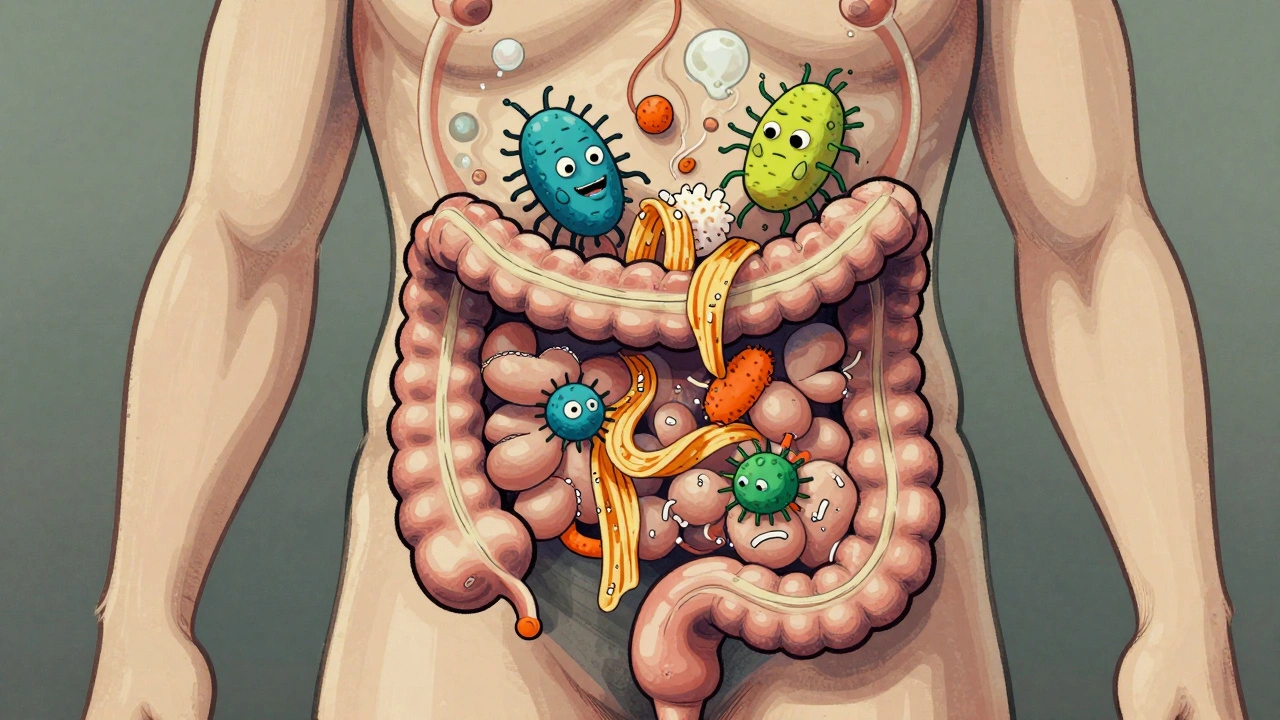
Alpha-glucosidase inhibitors don’t get absorbed into your bloodstream like most drugs. Instead, they sit in your small intestine and block the enzymes that break down complex carbs-like bread, pasta, rice, and potatoes-into simple sugars. That means those carbs don’t get digested where they should. Instead, they travel all the way to your colon, where your gut bacteria feast on them. The result? A lot of gas, swelling, and loose stools.
It’s not just a minor annoyance. Clinical studies show that between 30% and 50% of people starting acarbose or miglitol experience noticeable flatulence within the first few weeks. In the first month, that number jumps to as high as 73%. The bloating can be so bad that people stop wearing tight jeans. Diarrhea affects 10% to 20% of users, and for some, it’s frequent enough to disrupt work or social plans.
The reason this happens is simple: your body wasn’t designed to digest carbs in the colon. When bacteria ferment undigested starches, they produce hydrogen, methane, and carbon dioxide-gases that build up and cause pressure. The osmotic pull of those undigested sugars also draws water into the colon, leading to loose stools.
How Common Are These Side Effects?
Let’s look at real numbers. According to the FDA’s label for acarbose, up to half of users report gas. About one in three feel abdominal discomfort. Diarrhea affects about one in five. These aren’t rare side effects-they’re the norm.
And it’s not just clinical trials. Real-world data tells the same story. On Drugs.com, acarbose has an average rating of 4.8 out of 10 from nearly 500 reviews. Over half of users say the side effects made them stop taking it. Reddit threads are full of posts like: "Started acarbose at 50 mg three times a day. Gas was so bad I couldn’t leave the house. Stopped after two weeks."
But here’s the twist: not everyone has the same experience. Some people adapt. In fact, studies show that after six months, the rate of flatulence drops from 73% to around 25%. Why? Because your gut microbiome adjusts. The bacteria that thrive on these undigested carbs multiply and become more efficient at handling them. It’s like your gut learns to live with the new rules.
How Do These Side Effects Compare to Other Diabetes Drugs?
Metformin, the most common diabetes pill, causes nausea and stomach upset in about 25% of users. But that’s mostly in the upper GI tract-heartburn, vomiting, feeling full fast. Alpha-glucosidase inhibitors hit lower down: bloating, cramping, diarrhea. They don’t cause hypoglycemia like sulfonylureas, and they don’t lead to genital infections like SGLT2 inhibitors. But they do make you feel like your digestive system is in open rebellion.
GLP-1 agonists like semaglutide cause nausea in up to half of users, but that tends to fade after a few weeks. AGIs? The gas doesn’t fade as predictably. And unlike metformin, where you can take it with food to reduce nausea, you can’t avoid the gas from AGIs by changing how you eat-you have to change what you eat.
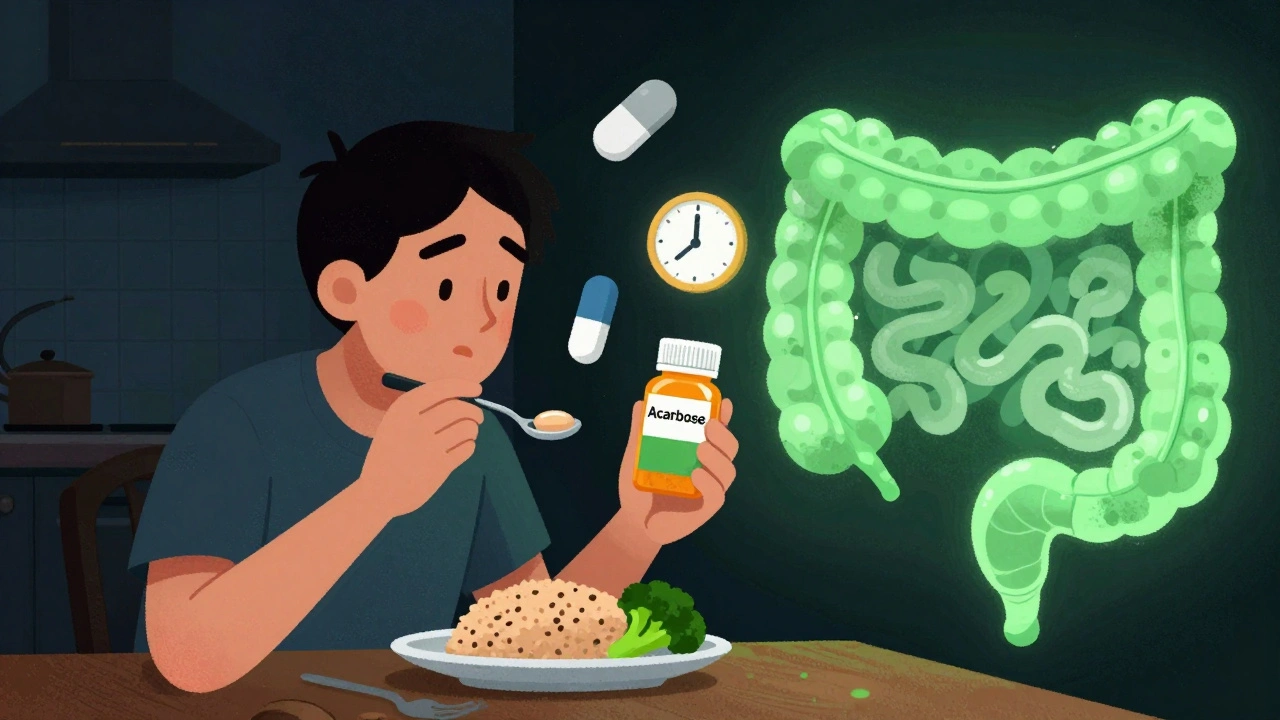
How to Reduce the Side Effects (Without Stopping the Drug)
If you’re on an alpha-glucosidase inhibitor and want to keep taking it, you need a strategy. It’s not about hoping it gets better-it’s about making it better.
Start Low, Go Slow
Most people make the mistake of starting at the full dose. Don’t. The standard starting dose for acarbose is 25 mg once a day-with your biggest meal. Stay there for a full week. Then, if you’re tolerating it, bump up to 25 mg twice a day. After another week, go to 25 mg three times a day. Some doctors even recommend staying at 25 mg three times daily for a month before increasing to 50 mg. This slow ramp-up gives your gut time to adjust.
Change Your Carbs
Not all carbs are created equal. White bread, white rice, potatoes, and sugary snacks break down quickly and cause the worst symptoms. Swap them for whole grains, legumes, and vegetables with fiber. These digest more slowly, meaning less undigested starch reaches your colon.
Try to keep your carb intake per meal to 30-45 grams. That’s about one slice of whole grain bread, half a cup of brown rice, and a cup of broccoli. Avoid fruit juices, candy, and baked goods-they’re sugar bombs that will trigger gas even if you’re on the drug.
One study from the London Diabetes Centre found that patients who got detailed dietary counseling were more than twice as likely to stick with the medication after six months.
Use Simethicone for Gas Relief
Over-the-counter simethicone (like Gas-X or Mylanta Gas) can help break up gas bubbles and reduce bloating. Take 125 mg before meals. Don’t use Beano or other alpha-galactosidase products-they interfere with how acarbose works and can make things worse.
Manage Diarrhea Wisely
If diarrhea becomes a problem, loperamide (Imodium A-D) is safe to use occasionally. Take 2 mg when needed. But don’t rely on it daily. High-fat foods make diarrhea worse, so avoid fried foods, butter-heavy dishes, and creamy sauces.
Consider Probiotics
A 2023 study found that taking a probiotic with Lactobacillus acidophilus and Bifidobacterium lactis reduced gas severity by 35% in people on acarbose. Look for a supplement with at least 10 billion CFUs of these strains. It won’t eliminate symptoms, but it can make them bearable.
Who Should Still Consider These Drugs?
Despite the side effects, alpha-glucosidase inhibitors still have a place-especially for certain people.
- Elderly patients who can’t risk low blood sugar from other drugs.
- People with kidney problems-unlike metformin or SGLT2 inhibitors, AGIs don’t rely on kidney function.
- Those who can’t afford newer drugs-generic acarbose costs $15-$25 a month.
- People with prediabetes-lower doses are often better tolerated, and acarbose has been shown to reduce the chance of developing full diabetes by 25%.
In Asia, where meals are heavy in rice and noodles, these drugs are still widely used. In the U.S., they’re mostly reserved for niche cases. But if you’re in one of those categories, they can still work.

When to Quit
There’s a line between tolerating side effects and letting them ruin your life. If after three months of following all the tips above-slow dosing, dietary changes, probiotics, simethicone-you’re still having daily diarrhea, constant bloating that makes you avoid social events, or gas so severe you’re embarrassed to leave the house-it’s time to talk to your doctor.
Stopping these drugs isn’t dangerous. Your blood sugar will rise again, but there are other options: GLP-1 agonists, SGLT2 inhibitors, or even insulin if needed. The goal isn’t to suffer through a drug that doesn’t fit your life.
What’s the Future for These Drugs?
Alpha-glucosidase inhibitors are fading in popularity. In the U.S., they make up just 3.2% of diabetes prescriptions, down from over 5% in 2018. Newer drugs are more effective and better tolerated. But they’re not gone.
They’re still used in low-resource settings because they’re cheap and don’t cause hypoglycemia. They’re still prescribed to older adults and those with kidney issues. And research is still happening-like combining them with probiotics or adjusting dosing based on meal composition.
For now, they’re a tool in the toolbox-not the first choice, but not useless either. The key is knowing when they might help, and when they’ll just make life harder.
Final Thoughts
Alpha-glucosidase inhibitors work. They lower post-meal blood sugar without causing low blood sugar or weight gain. But they come with a heavy price: your digestive peace of mind.
If you’re considering them-or already on them-don’t just accept the gas and bloating as part of the deal. Use the strategies above. Talk to your doctor. Adjust your diet. Give it time. But don’t suffer in silence. There are other options. And you deserve to manage your diabetes without feeling like your gut is your biggest enemy.
patrick sui
December 1, 2025 AT 13:40Okay but let’s be real - the gut microbiome adaptation thing is wild. It’s like your colon throws a rave for the undigested carbs, and eventually, the bacteria learn to chill out. I’ve been on acarbose for 8 months now, and the gas? Down 70%. Probiotics + slow carb intro = game changer. 🙌
Declan O Reilly
December 1, 2025 AT 18:28so i tried this after my doc pushed it cuz i cant take metformin anymore... first week i thought i was possessed. like, i could hear my intestines arguing with each other. but after 2 months? weirdly fine. its like my gut got a new job description. 🤷♂️
Conor Forde
December 1, 2025 AT 19:08ALPHA-GLUCOSIDASE INHIBITORS?! More like ALPHA-GAS INHIBITORS. I swear this drug was invented by someone who hated social interaction. I once had to cancel a date because I was basically a human whoopee cushion with a blood sugar problem. But hey - at least I didn’t gain weight. 😘
Walker Alvey
December 2, 2025 AT 15:35People complain about gas but won’t give up white rice like it’s a sacred right. You want to eat like a human? Then act like one. This isn’t a diet, it’s a wake-up call. Your body’s begging you to stop treating carbs like oxygen.
Adrian Barnes
December 4, 2025 AT 10:14It is imperative to recognize that the pathophysiological mechanism underlying the adverse gastrointestinal effects of alpha-glucosidase inhibitors is rooted in the malabsorption of oligosaccharides, resulting in colonic fermentation and osmotic diarrhea. This is not a side effect - it is a biological consequence of pharmacological intervention. One must accept the cost of metabolic control.
Patrick Smyth
December 5, 2025 AT 16:03My husband took this for 3 weeks and cried every night because he was too scared to leave the house. I had to sit with him while he farted into a pillow. He said it felt like his insides were trying to escape. I don’t care how cheap it is - no one should have to suffer like this.
Nnaemeka Kingsley
December 7, 2025 AT 15:50bro i was in nigeria and my doc gave me this because metformin was out of stock. i thought i was gonna die. but i switched to yam and plantain instead of rice and boom - life changed. no more panic attacks before meetings. you can do this.
Kshitij Shah
December 8, 2025 AT 16:00India: where we eat 3 rotis with dal and still think we're healthy. Then we get prescribed acarbose and suddenly we're questioning our entire food culture. Funny how medicine makes you feel guilty about your grandma's cooking.
Jaswinder Singh
December 10, 2025 AT 08:37You people are whining like babies. I took this for 6 months with zero issues because I stopped eating white bread. If you can’t control your diet, don’t blame the drug. This isn’t magic, it’s biology. Get your shit together.
Bee Floyd
December 11, 2025 AT 19:01I started with 25mg once a day and just… waited. No rush. No drama. Took 3 months to get to full dose. The gas didn’t vanish, but it became background noise. Like a quiet roommate who eventually stops stealing your socks. Still here. Still alive. Still not embarrassed to laugh in public.
Jeremy Butler
December 12, 2025 AT 05:15The empirical data presented in this article substantiates the hypothesis that pharmacological inhibition of alpha-glucosidase enzymes leads to a statistically significant increase in colonic fermentation products, resulting in gastrointestinal distress. The mitigation strategies proposed, while clinically plausible, require further longitudinal validation to establish efficacy beyond anecdotal reports.
Courtney Co
December 12, 2025 AT 23:30I took this for two weeks and my partner left me because I smelled like a compost bin. I cried for three days. Then I switched to metformin. I didn’t miss the gas. I missed my dignity.