
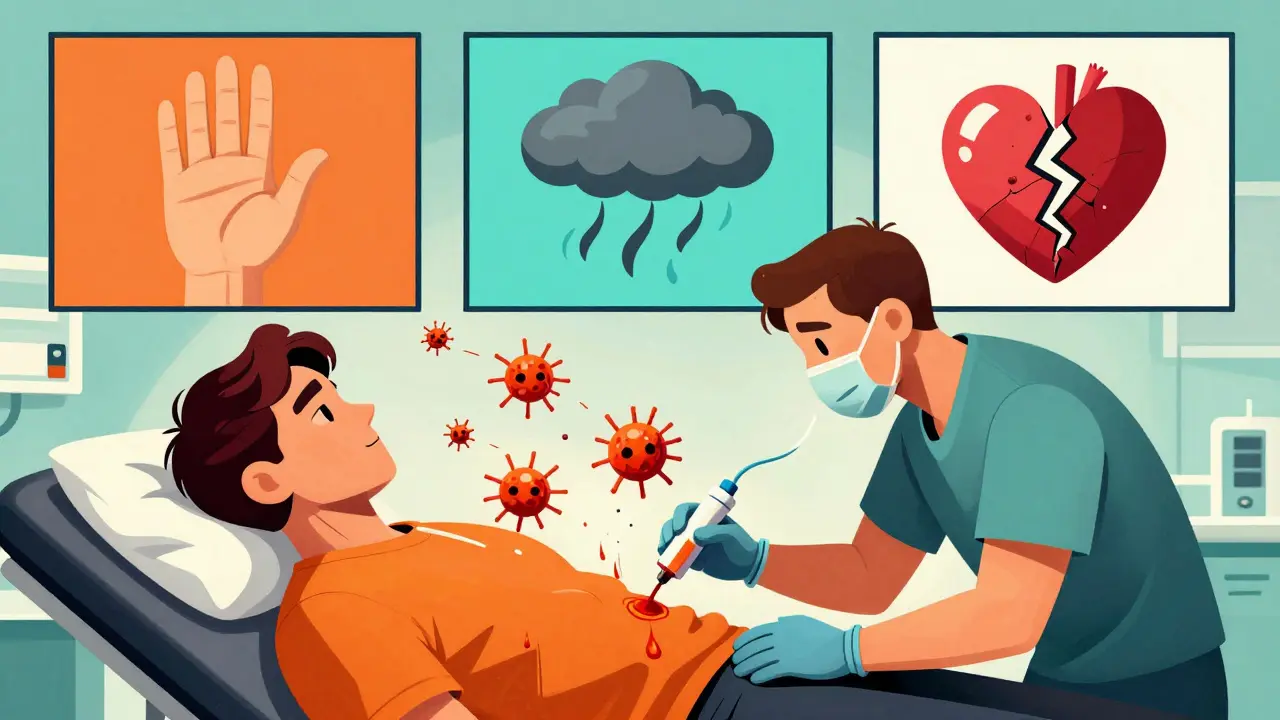
When you get a CT scan or an X-ray with contrast dye, most people don’t think twice about it. But for some, that small injection can trigger a serious reaction. It’s not common - about 1 in 500 people might have any kind of reaction - but for those who’ve had one before, the risk jumps. And that’s where pre-medication and safety planning become life-saving steps, not just paperwork.
What Exactly Is a Contrast Dye Reaction?
Contrast dye, usually iodine-based, helps doctors see blood vessels, organs, and tumors more clearly during imaging. But your body doesn’t always treat it like a harmless helper. Some people react to it like an invader. These reactions aren’t true allergies in the way peanut or bee sting allergies work. They’re more like an overreaction from your immune system - called an anaphylactoid response - that can mimic an allergic reaction without involving IgE antibodies. Reactions come in three flavors:- Mild: Nausea, flushing, itching, or a metallic taste. These happen in up to 3% of scans and usually go away on their own.
- Moderate: Hives, vomiting, wheezing, or a drop in blood pressure. These need treatment but rarely turn deadly.
- Severe: Trouble breathing, swelling in the throat, cardiac arrest. These are rare - about 1 in 2,500 - but can be fatal if not handled fast.
The biggest red flag? If you’ve had a reaction before, your chance of having another one is 35%. That’s not a guess. That’s from years of tracking patients across major hospitals like UCSF, Yale, and Memorial Sloan Kettering.
Who Needs Pre-Medication?
Not everyone needs it. In fact, most people don’t. But if you’ve had a moderate or severe reaction to contrast dye in the past, your doctor will almost always recommend pre-medication. The goal? Cut that 35% recurrence risk down to about 2%.Here’s the catch: it doesn’t work if you wait too late. If you show up at the imaging center and say, “I had a reaction last year,” and they try to give you a pill then and there - it won’t help. You need time for the meds to work.
And here’s another myth busted: shellfish allergies don’t mean you’re at higher risk. A lot of people think if you’re allergic to shrimp, you can’t have contrast dye. That’s not true. Iodine isn’t the issue. It’s the dye molecule itself. People with shellfish allergies have about the same risk as anyone else - maybe a tiny bit higher, but not enough to justify pre-medication unless they’ve actually reacted to contrast before.
The Two Main Premedication Protocols
There are two main ways to prep your body: oral and IV. Which one you get depends on how much time you have.Oral Protocol (For Elective Scans - 13 Hours Notice)
This is the classic plan used for outpatient scans scheduled days in advance:- Prednisone 50 mg - taken at 13 hours before the scan
- Prednisone 50 mg - taken again at 7 hours before
- Prednisone 50 mg - taken again at 1 hour before
- Diphenhydramine (Benadryl) 50 mg - taken 1 hour before
Benadryl makes you sleepy. Like, really sleepy. So if you’re on this plan, you must have someone drive you to and from the appointment. No exceptions. Some centers won’t even let you do the scan if you show up alone.
IV Protocol (For Emergencies or Inpatient Cases - 4+ Hours Notice)
If you’re in the hospital or the scan is urgent, they’ll use IV meds. Two common options:Option 1:
- Methylprednisolone (Solu-Medrol) 40 mg IV - given right away, then every 4 hours until scan
- Diphenhydramine 50 mg IV - given 1 hour before contrast
Option 2:
- Hydrocortisone (Solu-Cortef) 200 mg IV - given right away, then every 4 hours until scan
- Diphenhydramine 50 mg IV - given 1 hour before contrast
Both work. Hospitals choose based on what they keep in stock. The key is timing: you need at least 4 to 5 hours for these to be effective. Rushing it doesn’t help.
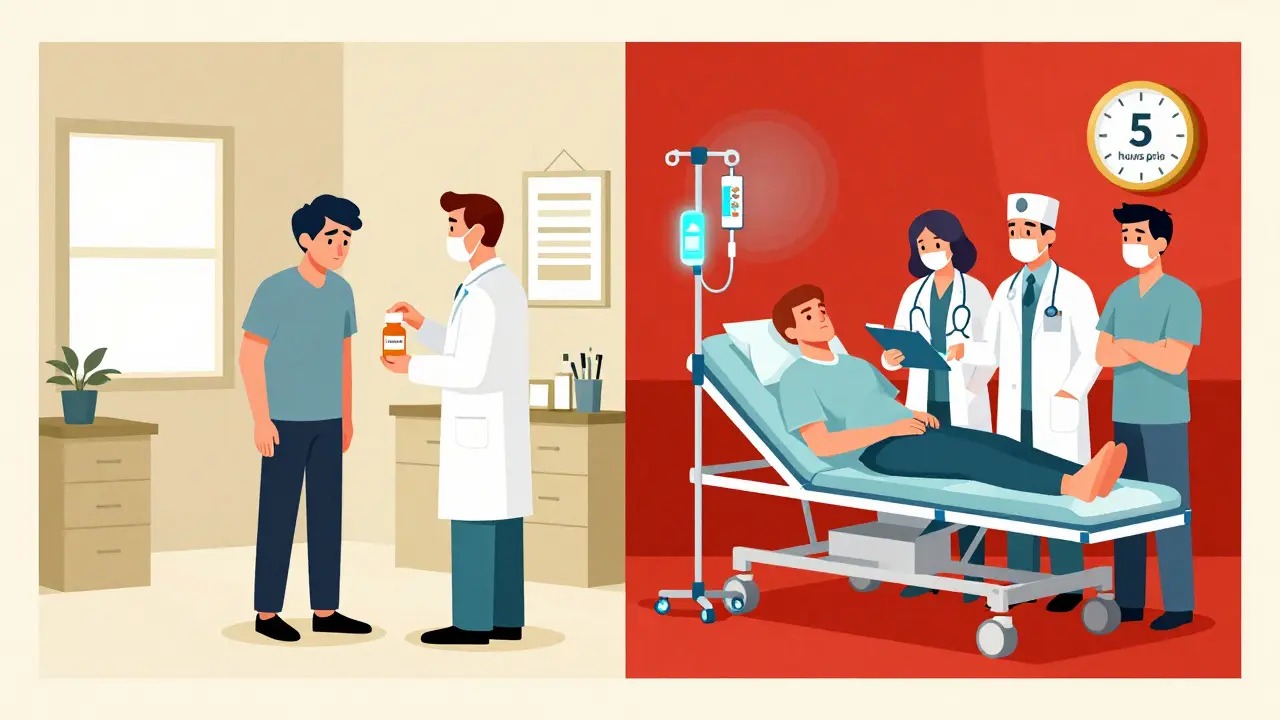
The Faster Option: 5-Hour Protocol
What if you need a scan tomorrow and you’re not ready? There’s a newer, faster option backed by a 2017 study in Radiology that compared the old 13-hour plan to a 5-hour one:- Methylprednisolone 32 mg by mouth - taken 5 hours before
- Methylprednisolone 32 mg by mouth - taken 1 hour before
- Diphenhydramine 50 mg - taken 1 hour before
Turns out, it works just as well. No more waiting a full day. This is now used in many ERs and urgent imaging centers. But it’s still not perfect. The evidence is solid, but not as broad as the older plan.
What About Kids?
Children don’t get the same doses. For kids 6 and older who need pre-medication, UCSF recommends:- Cetirizine (Zyrtec) 10 mg by mouth - 1 hour before the scan
They avoid steroids in kids unless absolutely necessary. Benadryl is still used, but only if needed, because it can make kids hyper or overly sleepy. The goal is to use the least amount of meds possible while keeping them safe.
What Happens If You Still React?
Even with all the right meds, about 2% of people still have a reaction. That’s why safety planning isn’t just about pills - it’s about the whole system.- Location matters: If you’ve had a severe reaction before, your scan must be done at a hospital with a full emergency team on standby - not a free-standing imaging center.
- Staff must be trained: The radiology team needs to know you’re high-risk. They’ll have crash carts, oxygen, and epinephrine ready.
- Doctor-to-doctor handoff: Your referring doctor must talk to the radiologist before the scan. No skipping this step.
At UCLA, they even specify which buildings are approved for high-risk patients: 200 Medical Plaza or Ronald Reagan UCLA Medical Center. Why? Because those places have the teams and protocols ready.
Is There a Better Way?
Yes - and it’s getting more attention.Instead of premedicating, some experts now suggest switching the type of contrast dye. If you reacted to one brand (say, iohexol), maybe you can safely use another (like ioversol). Both are low-osmolar, but they’re chemically different. A 2021 study showed switching agents reduced recurrence just as much as steroids and antihistamines - without the side effects.
The American College of Radiology is expected to update its guidelines in late 2024 to reflect this. The new message? Switch the dye first. Only add premedication if you have no choice.
Why? Because premedication isn’t harmless. Steroids can raise blood sugar, mess with sleep, or cause mood swings. Benadryl can make you foggy for hours. If you can avoid it, you should.
Cost and Accessibility
The cost of pre-medication is tiny. Prednisone 50 mg tablets cost about 25 cents each. Benadryl is 15 cents a dose. Compared to a $1,000 CT scan, it’s pennies. But access isn’t equal.At big academic hospitals - like those in Boston, San Francisco, or New York - premedication protocols are followed almost 100% of the time. But in smaller community clinics? Only about 78% follow the full guidelines. That’s a gap. And it’s dangerous.
If you’ve had a reaction before, don’t assume your local imaging center knows what to do. Ask: “Do you have a protocol for patients with prior contrast reactions?” If they look confused, ask for a referral to a hospital-based imaging center.
What You Can Do Now
If you’ve ever had a reaction to contrast dye:- Keep a written record - note the date, symptoms, and what dye was used.
- Tell every doctor, nurse, and radiology tech - even if they don’t ask.
- Ask if switching contrast agents is an option before agreeing to premedication.
- If you’re scheduled for a scan, confirm your premedication plan at least 48 hours in advance.
- Never go alone if you’re taking Benadryl. Arrange a ride.
It’s not about fear. It’s about control. You have the right to safe care. And with the right planning, you can get the scans you need without risking your life.
Rich Robertson
December 15, 2025 AT 07:45Man, I had a mild reaction last year after a CT with contrast. Felt like my face was on fire and my tongue went numb for 20 minutes. Scared the crap out of me. Turns out I didn’t even know I was at risk until the tech asked if I’d ever reacted before. Never thought to mention that weird rash I got after an old X-ray in 2018. Lesson learned: always speak up, even if it seems minor.
Now I keep a little card in my wallet with the dye name and symptoms. Got it laminated. Feels weird, but way better than getting rushed into a scan without prep.
Sarthak Jain
December 16, 2025 AT 15:20bro i just found out my cousin got a severe reaction last month and they had to intubate her in the radiology room 😭
she had a shellfish allergy so everyone assumed she was high risk but she never had a contrast reaction before. turns out the doc just gave her benadryl on the spot and it did jack. she’s fine now but holy hell. premedication isn’t optional if you’ve been burned before. seriously, if you’ve had a reaction - don’t trust the clinic’s ‘we’ve got this’ vibe. ask for the protocol. demand it.
Daniel Thompson
December 17, 2025 AT 12:14While I appreciate the clinical detail presented here, I must emphasize that the reliance on pharmacological premedication as a primary risk mitigation strategy reflects a systemic failure in diagnostic imaging protocol optimization. The medical community continues to treat iodinated contrast as an inert agent, despite documented non-IgE-mediated pathophysiological pathways that suggest a need for more sophisticated patient stratification. The suggestion to switch contrast agents is not merely an alternative - it is a paradigm shift that has been empirically validated in multiple multicenter trials since 2019. Why is this not yet standard of care?
Daniel Wevik
December 18, 2025 AT 05:00Let me tell you something - premedication isn’t just about safety, it’s about dignity.
I’ve had two contrast reactions. Both times, I was treated like a liability instead of a patient. The second time, they tried to rush me through with just Benadryl because my scan was ‘urgent.’ I refused. I sat in the lobby for three hours until they called the radiology director and got the full IV protocol. It took longer, but I walked out feeling respected.
Don’t let anyone make you feel like you’re being ‘difficult’ for asking for your life to be protected. You’re not. You’re the reason these protocols exist.
Natalie Koeber
December 19, 2025 AT 00:23Okay but have you ever wondered if the contrast dye is secretly part of a government tracking program?
I mean, why do they always make you wait 13 hours? Why not just inject it and go? Why the steroids? Why the weird metallic taste? And why do all the big hospitals have the same exact protocol? Coincidence? Or is this how they tag people who get too many scans? I read somewhere that the iodine binds to your DNA and sends signals to satellites. I’m not saying it’s true… but I’m also not saying it’s not.
Also, my cousin’s neighbor’s dog had a reaction to ‘dog contrast’ - wait, dogs don’t get contrast… unless they’re being tracked too. 🤔
Rulich Pretorius
December 19, 2025 AT 07:18There’s a quiet revolution happening in radiology, and most people don’t even know it.
We’ve spent decades treating contrast reactions like a medical emergency to be managed with drugs - but what if the real solution is avoiding the trigger entirely? Switching dyes isn’t just safer - it’s elegant. It doesn’t burden the patient with drowsiness, blood sugar spikes, or the anxiety of wondering if the meds worked.
And let’s not forget: people in rural clinics still don’t have access to the newer agents. That’s not just a gap in care - it’s a moral failure. We know better. So why are we still letting people risk their lives because of budget constraints?
Advocacy isn’t just about shouting. It’s about asking: ‘What’s the alternative?’ And then demanding it.
Thomas Anderson
December 19, 2025 AT 15:07I work at a small imaging center and we just started doing the 5-hour protocol last month. No more calling people the day before to ask if they’re taking prednisone. Now we just give them two pills at check-in and a Benadryl an hour before. Works great. Staff love it. Patients don’t feel like they’re on a drug regimen. Honestly? It’s about time.
Still, if someone’s had a bad reaction before, we always double-check with the hospital they went to. We don’t wing it. Safety first, even if it’s a pain.
Wade Mercer
December 19, 2025 AT 22:26People think they’re being proactive by asking for premedication. But most of them just want to avoid responsibility. If you’re allergic to shellfish and you’re scared of contrast dye, that’s not a medical issue - that’s anxiety. You don’t need steroids. You need to stop letting fear control your health decisions.
I’ve had three contrast scans. No meds. No issues. Stop treating every patient like a ticking time bomb.
Dwayne hiers
December 19, 2025 AT 23:17Let’s clarify the pharmacology here: anaphylactoid ≠ anaphylactic. The distinction matters because it informs mechanism, not just terminology. Iodinated contrast induces mast cell degranulation via direct osmotic and complement activation - not IgE-mediated pathways. That’s why antihistamines and corticosteroids are effective prophylactics: they blunt the downstream inflammatory cascade, not prevent antigen binding.
Switching contrast agents works because different molecules have varying affinity for complement proteins and mast cell receptors. Ioversol has lower protein binding than iohexol, reducing complement activation. This isn’t anecdotal - it’s in the JACR meta-analysis from 2021.
Pre-medication is still gold standard for high-risk patients, but agent substitution is now Tier-1 evidence. The ACR guidelines update will reflect this. The lag in community practice is unacceptable.
Jonny Moran
December 20, 2025 AT 17:13My mom had a severe reaction back in 2015. She’s been through hell since - missed scans, delayed diagnoses, anxiety every time she needs a CT. Last year, we switched from iohexol to ioversol and she had zero reaction. Zero. No steroids, no Benadryl, no driving someone to pick her up.
She cried when she walked out of the scan. Not from fear. From relief.
If you’ve had a reaction before, don’t accept ‘we’ve always done it this way.’ Ask: ‘Can we try a different dye?’ It might be the simplest, safest thing you ever do.