
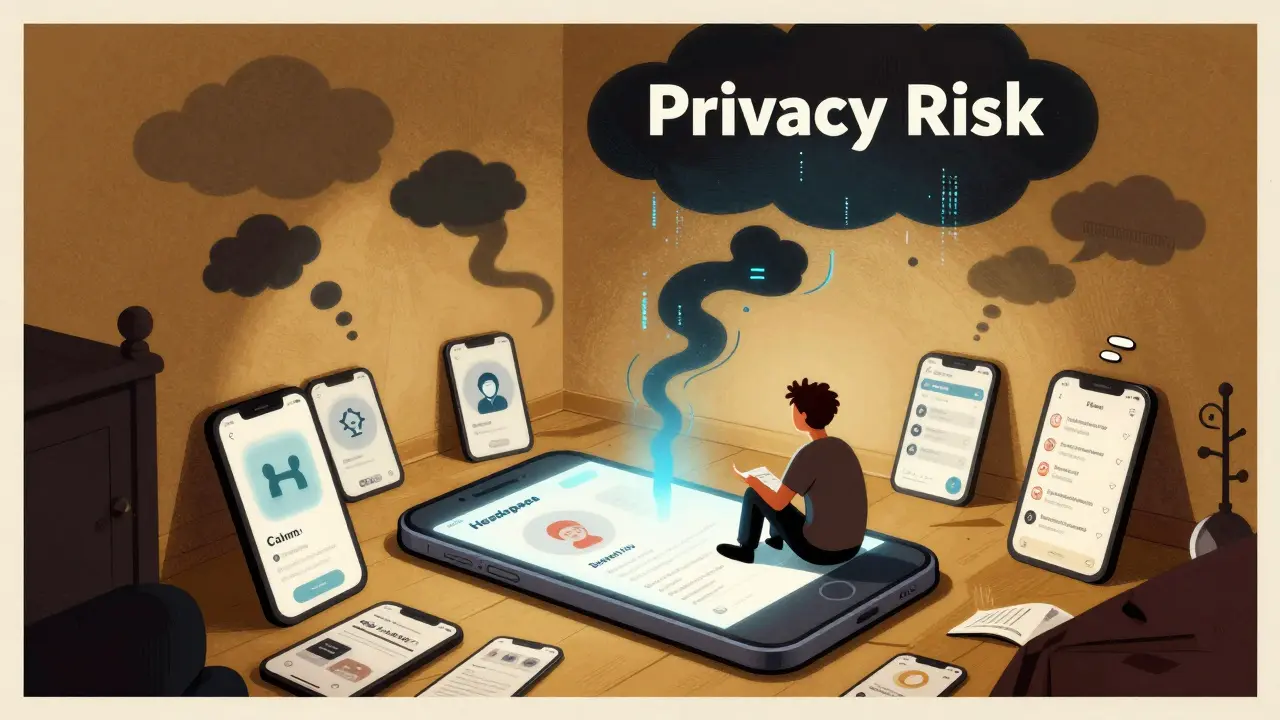
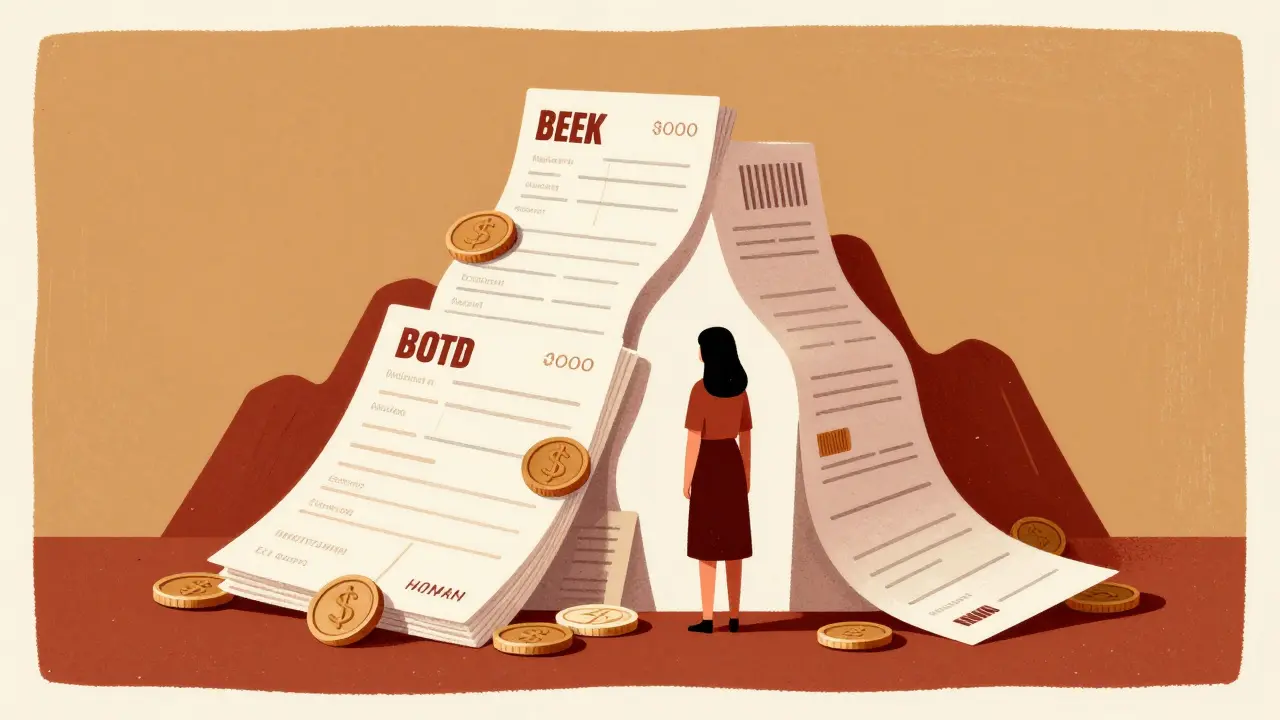
More people are using apps to manage anxiety, depression, and stress than ever before. In 2024, over 7 billion downloads of mental health apps happened globally. But here’s the catch: most of those apps get deleted within a month. Why? Because the hype doesn’t match the reality. You download Calm or Headspace, do a few breathing exercises, feel better for a day, and then life gets busy. The app sits there, gathering dust. Meanwhile, teletherapy platforms like BetterHelp and Talkspace promise 24/7 access to therapists-but charge $70 a week, and not everyone gets the help they need.
What’s Actually in These Apps?
Mental health apps aren’t all the same. Some are just guided meditations. Others use AI to simulate cognitive behavioral therapy (CBT). Wysa, for example, has been tested in 14 clinical studies. Youper has published 7 peer-reviewed papers. These aren’t just fancy mood trackers-they’re built to recognize patterns in your writing, voice, or daily check-ins and adjust their responses. If you type, "I can’t get out of bed again," a good app won’t just say "Try to be positive." It might ask, "When was the last time you felt like this? What changed?" That’s not magic. It’s programmed CBT.
But here’s the problem: out of 20,000 mental health apps on the market, only a tiny fraction have real clinical backing. A 2025 review of 578 apps found that 87% had serious privacy flaws. That means your thoughts, sleep patterns, mood logs, and even voice recordings could be sold, leaked, or used for targeted ads. You’re not just sharing data-you’re sharing your mental state.
Teletherapy: Convenience vs. Quality
Teletherapy sounds perfect: talk to a licensed therapist from your couch, in pajamas, at 11 p.m. when you’re overwhelmed. And for many, it works. BetterHelp has over 12,500 reviews on Trustpilot, with 78% praising the therapist matching system. But 63% of negative reviews complain about cost. $60-$90 a week adds up fast. And not every therapist is equally skilled. Some are great. Others are overwhelmed, juggling 30 clients a week, replying with templated messages.
There’s also the issue of continuity. If your therapist leaves the platform, you’re sent a new one. No transition. No history. Just a fresh start with someone who doesn’t know your story. That’s not therapy-it’s transactional support.
Germany is doing something different. They have something called DiGA: Digitale Gesundheitsanwendungen. These are mental health apps approved by the government, prescribed by doctors, and covered by public health insurance. Over 40% of all DiGA approvals are for anxiety and depression. That’s not just an app-it’s part of the healthcare system. In Australia, we’re still years away from that level of integration.
Privacy Isn’t Just a Feature-It’s a Lifeline
Think about this: if your fitness tracker knows you ran 5K today, that’s one thing. But if your mental health app knows you cried three times this week, avoided social media for four days, and typed "I don’t want to live" into a journal, that’s a whole different level of vulnerability.
Most apps don’t tell you how your data is used. Terms of service are written in legal jargon that even lawyers struggle with. Some apps sell anonymized data to advertisers. Others share it with third-party analytics companies. A 2025 study found that 87% of mental health apps send user data to Facebook, Google, or similar trackers-even if they claim to be "private."
Here’s what to look for:
- Does the app say it uses end-to-end encryption for messages?
- Can you delete your data permanently, or does it linger in backups?
- Does it require you to give access to your contacts, location, or microphone?
- Is there a clear privacy policy written in plain language?
If the answer to any of those is "no," you’re risking more than your privacy-you’re risking your mental safety.
Why Most People Quit
92% of people try a mental health app at least once. Only 29% stick with it past three months. Why?
First, apps are often too generic. "Mindfulness for everyone" doesn’t work. If you’re a 22-year-old student with social anxiety, you don’t need the same meditation as a 55-year-old manager with burnout.
Second, there’s no accountability. With a therapist, you have a scheduled appointment. With an app? You’re on your own. No one checks in. No one asks if you did your exercises. It’s easy to forget-or to feel guilty for not using it.
Third, many apps are designed to hook you, not heal you. Free versions offer basic tools. Premium unlocks "advanced" features like mood analysis or personalized coping plans. It’s a business model built on frustration.
One Reddit user wrote: "Downloaded five apps during lockdown. Stuck with Calm for three months. Then the free version stopped letting me access sleep stories. I felt manipulated. I deleted it."
What Works-and What Doesn’t
Not all digital mental health tools fail. Some are changing lives.
Hybrid models-where you use an app for daily check-ins and have weekly video sessions with a therapist-show 43% higher completion rates than either option alone. That’s the sweet spot: technology for consistency, human connection for depth.
Enterprise solutions are also proving effective. One Australian company rolled out a mental wellness platform for its staff. Within six months, mental health-related sick days dropped by 50%. Employees reported feeling more supported. The key? They didn’t just buy an app. They trained managers, integrated it into HR workflows, and made it part of the culture.
For individuals, the best approach is simple:
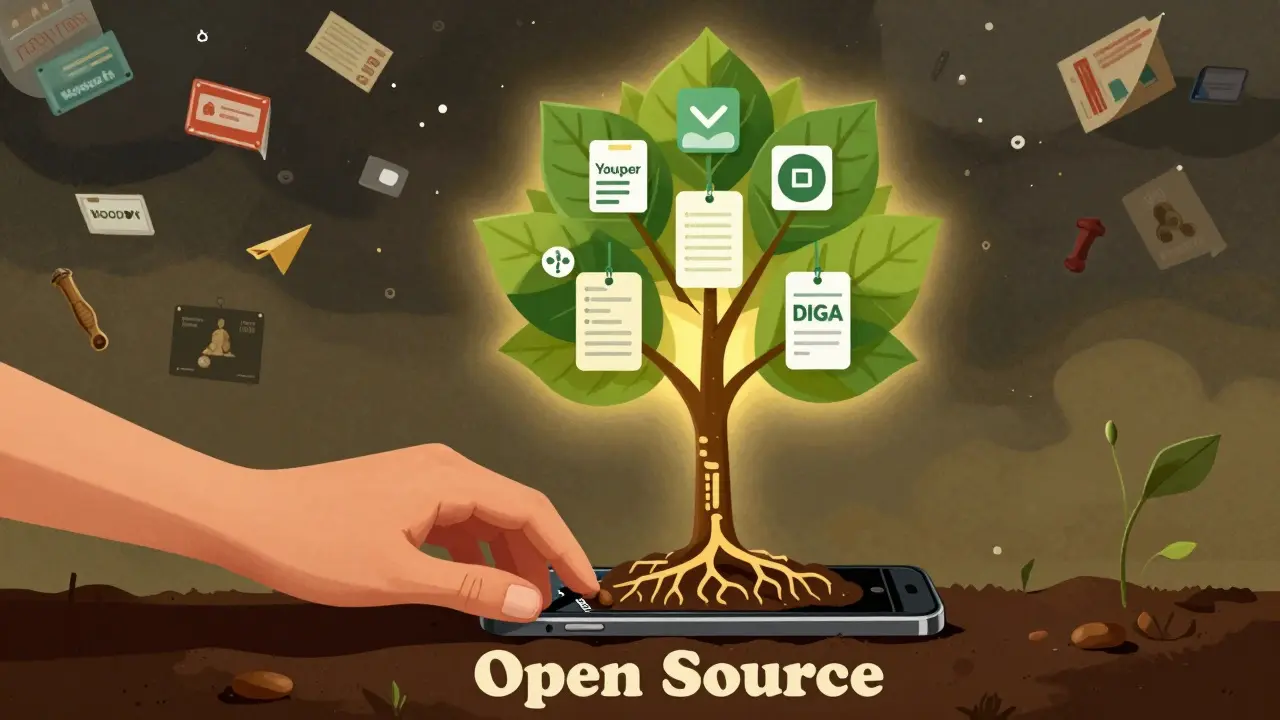
- Start with free, open-source tools like Moodfit or Sanvello (they’re transparent about data use).
- Use apps to track, not replace. Log your mood daily. Notice patterns. Bring those insights to a real therapist.
- Never pay for an app without checking if it’s clinically validated. Look for mentions of peer-reviewed studies or regulatory approval (like DiGA in Germany).
- Ask your GP if they know of any approved digital tools. In Australia, some GPs are starting to recommend them.
The Future: Integration, Not Isolation
Digital mental health isn’t going away. But its future depends on one thing: whether it becomes part of real healthcare-or just another app store product.
By 2027, experts predict 65% of mental health apps will have direct links to licensed professionals. That means if you’re feeling worse, the app can alert your therapist before you even ask for help. That’s not sci-fi. It’s already happening in pilot programs in the U.S. and Europe.
But until then, be careful. Apps can help. They can’t cure. They can support. They can’t replace. And if your privacy isn’t protected, you’re putting your mental health at risk just to save a few bucks.
The best digital mental health tool isn’t the fanciest app. It’s the one you’ll actually use-and the one that keeps your data safe.
Are mental health apps actually effective?
Some are, but most aren’t. Apps backed by clinical studies-like Wysa or Youper-have shown measurable improvements in anxiety and depression symptoms. But out of 20,000 apps available, only a small fraction have been tested in peer-reviewed research. Many rely on placebo effects or generic mindfulness exercises that don’t address underlying issues. Look for apps that mention specific therapies like CBT or ACT, and check if they’ve been studied in real clinical trials.
Can teletherapy replace in-person therapy?
For mild to moderate anxiety, depression, or stress, teletherapy can be just as effective as in-person sessions, according to multiple studies. But for severe conditions like psychosis, suicidal ideation, or complex trauma, in-person care with a specialist is still essential. Teletherapy works best as a supplement or bridge-not a full replacement. The quality of the therapist matters more than the platform.
How do I know if a mental health app is safe with my data?
Check three things: First, does the app use end-to-end encryption for messages? Second, can you permanently delete your account and data? Third, does the privacy policy clearly say they don’t sell your data to advertisers or third parties? Avoid apps that ask for unnecessary permissions like contacts, location, or microphone access. Open-source apps like Moodfit or MindEase are more transparent than big-name brands.
Why do people stop using mental health apps so quickly?
Most apps fail because they’re not personalized, lack accountability, and feel like a chore. Free versions often lock key features behind paywalls, making users feel tricked. There’s no human to check in on you, no consequence for skipping sessions. People also get overwhelmed by too many options. The key is to pick one app that fits your needs and stick with it for at least 30 days-not download five and give up on all of them.
Are there free mental health apps I can trust?
Yes. Moodfit, MindEase, and Woebot are free, clinically tested, and transparent about data use. They don’t sell your information or lock essential features behind subscriptions. Woebot uses AI to guide users through CBT exercises without charging. These apps aren’t perfect, but they’re safer and more ethical than most paid alternatives. Always check if the app is listed on trusted health platforms like the NHS App Library or DiGA registry in Germany.
What’s the difference between a mental health app and a wellness app?
Wellness apps-like Calm or Headspace-focus on relaxation, sleep, and general stress reduction. They’re great for daily mindfulness but aren’t designed to treat clinical conditions like depression or PTSD. Mental health apps, like Sanvello or Wysa, use evidence-based therapies like CBT and are built to help manage diagnosed conditions. If you’re struggling with persistent sadness, panic attacks, or intrusive thoughts, you need a clinical-grade tool-not just a breathing app.
Aliyu Sani
December 21, 2025 AT 22:28bro this is wild. i been usin apps for anxiety since 2020, and yeah most just be ghostin u after a week. but youper? that lil AI got me talkin bout my dad’s death like it was nothin. it didn’t just say "u got this"-it asked when i last felt safe. that shit stuck. also, data? i delete my history every 48hrs. paranoid? maybe. alive? definitely.
Candy Cotton
December 23, 2025 AT 06:19While I appreciate the anecdotal nature of this discourse, it is imperative to recognize that the proliferation of unregulated digital health applications constitutes a significant public health vulnerability. The absence of FDA or equivalent regulatory oversight in the majority of these platforms renders them not merely ineffective, but potentially hazardous. The notion that a consumer-grade algorithm can replicate the nuanced therapeutic alliance formed in clinical settings is, frankly, a dangerous illusion.
Kiranjit Kaur
December 23, 2025 AT 16:02Yessss this!! 😍 I tried Calm for a month and then realized it was just fancy ASMR with a $120/year price tag. Moodfit? Free. No ads. No creepy tracking. I log my moods and sometimes it says "you’ve been having a rough week" and I’m like… yep, that’s why I’m here. 🙌 Also, my GP in Bangalore actually prescribed Woebot last month. Crazy, right?
Sai Keerthan Reddy Proddatoori
December 25, 2025 AT 06:57They're watching you. Every breath you take in that app. Every tear. Every time you type "i hate my life." They sell it to advertisers. Then the ads follow you-depression pills, therapy, even suicide hotlines. It's all a trap. The government knows. The tech giants know. You're just a data point in a global experiment. Wake up.
Art Van Gelder
December 26, 2025 AT 03:17Let me tell you something-I used to think mental health apps were just digital band-aids. Then I got laid off, lost my apartment, and spent three months living in my car. I downloaded Sanvello because it was free and didn’t ask for my credit card. It didn’t fix me. But it gave me a way to say out loud-just to myself-"I’m not okay." And that tiny journal entry? That was the first step. I didn’t cry for two weeks after I wrote it. Not because the app healed me. But because I finally had a witness. Even if it was just code.
Jeremy Hendriks
December 26, 2025 AT 17:52Here’s the metaphysical truth no one wants to admit: technology doesn’t heal. It mirrors. And if you’re using an app to avoid your pain instead of sitting with it, you’re not practicing self-care-you’re practicing self-erasure. The algorithm doesn’t care if you’re sad. It just wants you to stay logged in. The real therapy? It’s in the silence after you close the app. The one where you ask yourself: "Why am I running?"
Jim Brown
December 28, 2025 AT 00:02The fundamental flaw in the current paradigm is the conflation of accessibility with efficacy. While teletherapy platforms democratize access, they simultaneously commodify vulnerability. The human element-empathy, presence, the unscripted pause-is not replicable by AI, nor is it scalable by venture capital. The future lies not in replacing therapists, but in augmenting them with ethically governed, clinically validated tools that serve as conduits-not substitutes-for human connection.
Tarun Sharma
December 29, 2025 AT 03:07App usage statistics are misleading. Many users download for curiosity, not treatment. Clinical validation requires longitudinal studies, which most apps lack. For low-resource settings, even basic tools with encryption and offline functionality are valuable. But regulation must precede innovation.
Johnnie R. Bailey
December 30, 2025 AT 19:48Let’s be real-most apps are designed like slot machines. You pull the lever (open the app), you get a tiny dopamine hit (a cute animation, a zen chime), and you keep pulling hoping for the jackpot (feeling better). But real healing? It’s messy. It’s inconsistent. It requires showing up even when you hate yourself. No app can force that. Only you can. The app? It’s just a mirror. And if you’re not ready to look, it’ll just sit there… collecting dust.
Gabriella da Silva Mendes
December 30, 2025 AT 23:34OMG YES. I deleted 7 apps in 2024. One made me pay $9.99 to unlock a breathing animation. I was like… I can do that on YouTube for free. And don’t even get me started on the privacy stuff. I once saw an ad for therapy in my Instagram feed 3 HOURS after typing "I think I need help" in a journal app. I screamed. I deleted everything. 🤮 I now use Moodfit and I tell my therapist what I logged. She says it’s "the most honest intake I’ve ever had." 💪 No ads. No tracking. Just me and my feelings. And my dog. He’s my real therapist.
Sam Black
December 31, 2025 AT 11:13As an Aussie, I’ve watched this unfold from the sidelines. DiGA in Germany? Brilliant. We’re still stuck in a patchwork of private insurers and corporate wellness packages. But here’s the quiet revolution: some rural GPs in Queensland are now prescribing Woebot and linking it to telehealth sessions. No cost to patients. No data sold. Just a simple, secure bridge between digital tools and human care. It’s not perfect. But it’s a start. And sometimes, that’s enough.