
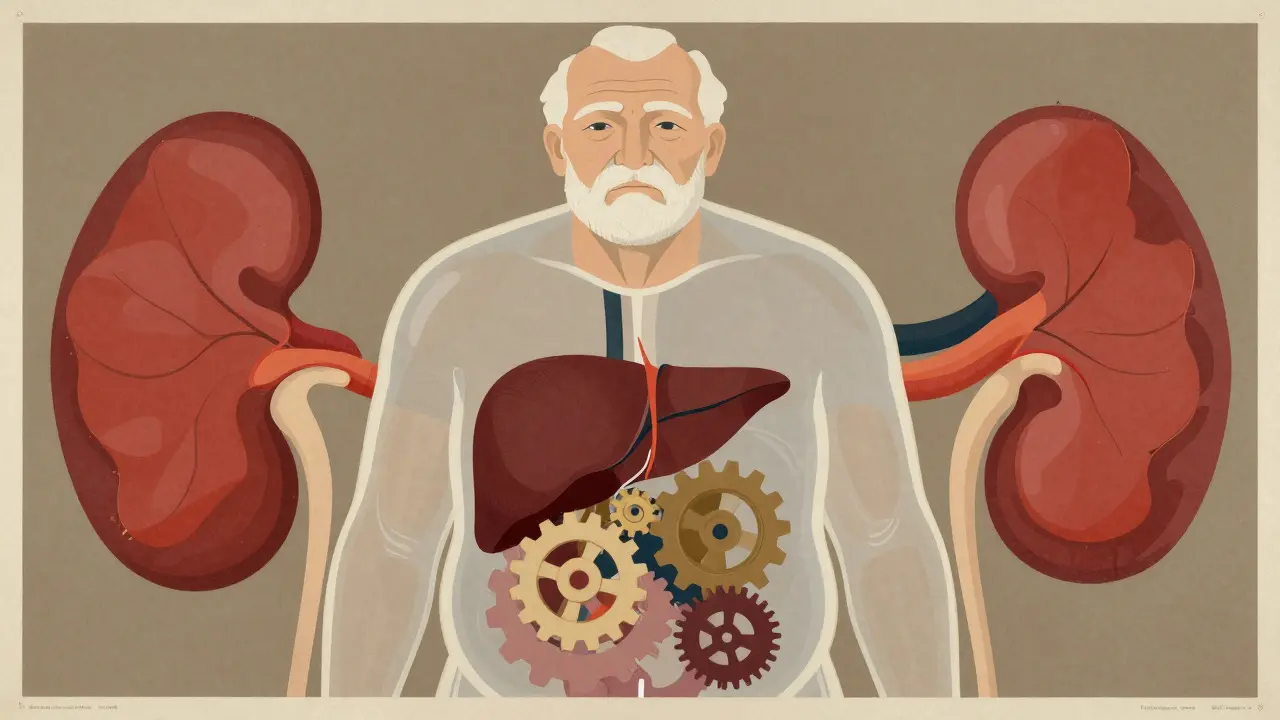
Generic drugs are pharmaceutical products containing the same active ingredients, strength, dosage form, and route of administration as brand-name drugs. The U.S. Food and Drug Administration (FDA) requires them to be bioequivalent within 80-125% of the brand-name drug's pharmacokinetic profile. However, for older adults, this standard doesn’t always translate to equal safety due to age-related physiological changes. Understanding generic drug safety for seniors requires more than just knowing the active ingredient-it’s about how aging affects drug processing, polypharmacy risks, and practical steps to prevent harm.
How Aging Changes Your Body's Response to Medicines
As we age, our bodies change in ways that directly impact how medications work. By age 75, metabolism can decline by up to 30%, according to a 2023 study cited by MedShadow.org. This means drugs stay in the system longer, increasing the risk of side effects. The National Institute on Aging explains that older adults often have less muscle mass and more body fat, which changes how drugs are absorbed and distributed. Kidney function also declines, reducing the body's ability to clear medications. For example, a 'normal dose' of a medication can be an overdose for many seniors due to these physiological changes, as noted in Caregiver.org's 2023 fact sheet.
Central nervous system (CNS) medications like sedatives or antidepressants pose particular risks. Older adults are extra sensitive to these drugs, leading to confusion, dizziness, or falls. A 2023 study in the Journal of Thrombosis and Haemostasis found that even small variations in blood levels of drugs like warfarin can cause serious bleeding or clotting issues in seniors. These changes mean that what works for a 50-year-old may not be safe for someone over 65.
The Hidden Danger of Multiple Medications
Polypharmacy-taking five or more medications-is common among seniors but carries significant risks. A 2023 study published in PMC shows that adverse drug reactions (ADRs) jump from 13% with two medications to 58% with five, and skyrocket to 82% when seven or more drugs are involved. This is especially dangerous for older adults whose bodies process medications differently. For example, beta blockers can cause bradycardia (25-30% incidence) and heart failure (15-20% incidence) in seniors. Digoxin increases arrhythmia risk by 10-15%, while insulin and sulfonylureas can lead to hypoglycemia, causing falls and confusion in 20-25% of cases.
The Beers Criteria, updated in 2023 by the American Geriatrics Society, identifies specific medications that are risky for older adults regardless of generic or brand status. These include benzodiazepines for sleep, NSAIDs for pain, and anticholinergics for overactive bladder. The criteria also warns about opioid-benzodiazepine combinations, which increase overdose risk by 154% according to a 2015 JAMA Internal Medicine study. Managing multiple medications isn’t just about taking pills-it’s about ensuring each one is truly necessary.
High-Risk Medications to Avoid
Some medications are simply too risky for seniors, even if they’re generic. The Beers Criteria 2023 update specifically flags certain drugs for older adults. For example, diphenhydramine (found in Benadryl and many sleep aids) is listed as potentially inappropriate due to its strong anticholinergic effects, which can cause confusion and falls. Similarly, the muscle relaxant cyclobenzaprine (Flexeril) increases fall risk, as documented in a National Council on Aging case study involving an 88-year-old woman.
Direct oral anticoagulants like rivaroxaban carry 28% higher gastrointestinal bleeding risk for adults over 75 compared to warfarin, according to the 2023 Beers Criteria. For diabetes management, sulfonylureas like glyburide are flagged because they cause severe hypoglycemia in 20-25% of seniors. Even aspirin for primary prevention is now cautioned for those over 70 due to a 2.3x increased bleeding risk with no cardiovascular benefit, per a 2016 systematic review. These aren’t just theoretical risks-they’re real dangers that healthcare providers must address during medication reviews.
Generic vs Brand-Name: Separating Myths from Facts
Many seniors believe generic drugs are less safe than brand-name versions. A 2023 study in 'Beliefs about generic drugs among elderly adults in hospital-based care' found 42% of seniors thought generic warfarin was riskier than brand-name Coumadin. However, clinical studies show generic warfarin has 98.7% therapeutic equivalence to brand-name versions, according to the Journal of Thrombosis and Haemostasis (2021). The FDA maintains that generic drugs are just as safe and effective, but acknowledges special considerations for older adults.
For drugs with a narrow therapeutic index (NTI), like warfarin, small differences in concentration can have big impacts. However, the FDA’s Sentinel Initiative data shows that adverse event profiles for most generic drugs are similar to brand-name versions. A 2023 FDA Adverse Event Reporting System report noted only 1.8x higher reporting rates for generic warfarin among adults over 80, which may reflect increased monitoring rather than actual safety issues. The real issue isn’t generic versus brand-it’s appropriate medication selection based on age-related pharmacokinetics and multimorbidity, as emphasized by Dr. Michael Steinman in a 2022 JAMA Internal Medicine review.
Practical Steps for Safer Medication Use
There are concrete steps seniors and caregivers can take to improve medication safety. First, get a comprehensive medication review from a pharmacist at least once a year. A 2022 Annals of Internal Medicine meta-analysis found that pharmacist-led reviews reduce adverse events by 27%. Second, use pill organizers or automated dispensers-these tools reduce medication errors by 34% according to a 2021 Journal of the American Geriatrics Society study.
The FDA recommends checking expiration dates and proper storage, as 22% of medication errors in seniors involve expired or improperly stored drugs. Requesting larger print labels can help with vision challenges affecting 65% of adults over 65. Additionally, maintaining an updated medication list and reviewing all prescriptions at each doctor visit reduces duplicate therapies by 41%, as documented by the National Council on Aging. These simple actions can make a huge difference in preventing harmful side effects.
What's Next for Senior Medication Safety?
Researchers and regulators are actively working to improve medication safety for older adults. The National Institute on Aging has allocated $27 million for geriatric pharmacology studies in its 2023-2027 Strategic Plan, focusing on age-specific pharmacokinetics. The FDA’s pilot program launching in Q2 2024 will require enhanced labeling for high-risk generics used by seniors. Meanwhile, the American Geriatrics Society plans to introduce AI-driven personalized medication risk assessment tools in 2024.
Industry trends also show progress. In 2022, the FDA approved 37 new age-appropriate generic formulations, including easier-to-swallow tablets and simplified dosing regimens. A 2023 Health Affairs economic analysis projects that optimizing generic drug safety could save Medicare $18 billion annually by reducing medication-related problems. These developments highlight the growing recognition that safe medication use for seniors requires tailored approaches-not just one-size-fits-all prescriptions.
Are generic drugs as safe as brand-name drugs for seniors?
Yes, generic drugs are just as safe as brand-name versions when used appropriately. The FDA requires them to meet strict bioequivalence standards, meaning they work the same way in the body. However, older adults face unique risks due to age-related physiological changes, not because of the drug's generic status. For example, a 2023 study found 42% of seniors incorrectly believed generic warfarin was riskier than brand-name Coumadin, but clinical data shows 98.7% therapeutic equivalence. The real safety concerns come from how aging affects drug processing and polypharmacy-not the drug's brand or generic label.
How does aging affect how my body processes medication?
Aging changes how your body absorbs, distributes, metabolizes, and eliminates drugs. By age 75, metabolism can decline by up to 30%, causing medications to stay longer in your system. Kidney function decreases, reducing drug clearance, and body composition shifts (more fat, less water) alters how drugs are distributed. For example, a 'normal dose' for a younger person could be an overdose for seniors. CNS medications like sedatives are especially risky because older adults are extra sensitive to their effects, leading to confusion, dizziness, or falls. These changes mean dosing must be carefully adjusted for age.
What medications should older adults avoid?
The Beers Criteria 2023 update identifies several medications to avoid in seniors. These include benzodiazepines for sleep (increased fall risk), NSAIDs for pain (bleeding and kidney issues), anticholinergics like diphenhydramine (confusion and falls), and muscle relaxants like cyclobenzaprine (Flexeril). Opioids combined with benzodiazepines increase overdose risk by 154%, while sulfonylureas for diabetes can cause severe hypoglycemia. Even aspirin for primary prevention is now cautioned for those over 70 due to higher bleeding risk. Always review your medications with a pharmacist or geriatric specialist.
What is polypharmacy, and why is it dangerous for seniors?
Polypharmacy means taking five or more medications at once. For seniors, it’s dangerous because each additional drug increases the risk of adverse reactions. A 2023 study shows ADR risk jumps from 13% with two medications to 58% with five, and skyrockets to 82% with seven or more. Older adults are especially vulnerable due to slower metabolism and kidney function. Common issues include confusion, falls, bleeding, and organ damage. For example, beta blockers can cause heart failure in 15-20% of seniors on multiple drugs, while insulin and sulfonylureas lead to hypoglycemia in 20-25% of cases. Regular medication reviews are critical to avoid unnecessary prescriptions.
How can I reduce medication errors as a senior?
Start by getting a comprehensive medication review from a pharmacist at least once a year. This reduces adverse events by 27%, according to a 2022 meta-analysis. Use pill organizers or automated dispensers to prevent missed or double doses-these tools cut errors by 34%. Request larger print labels if vision is an issue, and always check expiration dates and storage conditions (22% of senior errors involve expired or improperly stored drugs). Maintain an updated medication list and review all prescriptions at each doctor visit to avoid duplicates. These simple steps can significantly improve safety and effectiveness.
one hamzah
February 6, 2026 AT 08:09Hey everyone! Just read this amazing post on generic drug safety for seniors. 🌟 It's so important because aging affects how our bodies process meds. Did you know that by age 75, metabolism can drop by 30%? That means drugs stay longer in the system. 😲 Also, kidney function declines, so clearance is slower. This is why a 'normal dose' for younger folks can be dangerous for seniors. 🚨 I love how the article breaks down polypharmacy risks-taking five or more meds jumps ADRs to 58%! And with seven+ meds, it's 82% risk. Yikes! 📉 But there's hope! Pharmacist reviews reduce adverse events by 27%, and pill organizers cut errors by 34%. 🧠💊 Also, the FDA's Sentinel Initiative shows generics are mostly safe, but for drugs like warfarin, small differences matter. Still, the real issue is age-related pharmacokinetics, not generic vs. brand. 🌍 India has strict regulations too, and we're seeing good results. Let's all stay informed and advocate for better senior care! 🙌 #HealthForAll 💯 Always consult your doctor before changing meds, and keep a detailed list of all your medications for safety!
Matthew Morales
February 7, 2026 AT 05:46This is really useful info! I've been helping my grandma with her meds and this makes sense. Typos happen, but the points are solid! 👍
Diana Phe
February 8, 2026 AT 03:35Big Pharma is pushing generics to save money. They don't care about seniors. The FDA is in on it. 😠
Carl Crista
February 9, 2026 AT 20:21The FDA is lying about generics. They know they're unsafe. Don't trust them. Period.
Andre Shaw
February 9, 2026 AT 22:14This article is wrong. Generics are way more dangerous. The FDA data is skewed. I know because I read studies.
Dr. Sara Harowitz
February 10, 2026 AT 23:28This is a serious issue! Seniors must be vigilant! The FDA's standards are insufficient! You need to check with a specialist immediately!
Joyce cuypers
February 11, 2026 AT 04:55Thanks for sharing! 😊
Brendan Ferguson
February 12, 2026 AT 20:01It's a complex topic. I've seen both sides. The key is personalized care. Let's work together to improve this.