
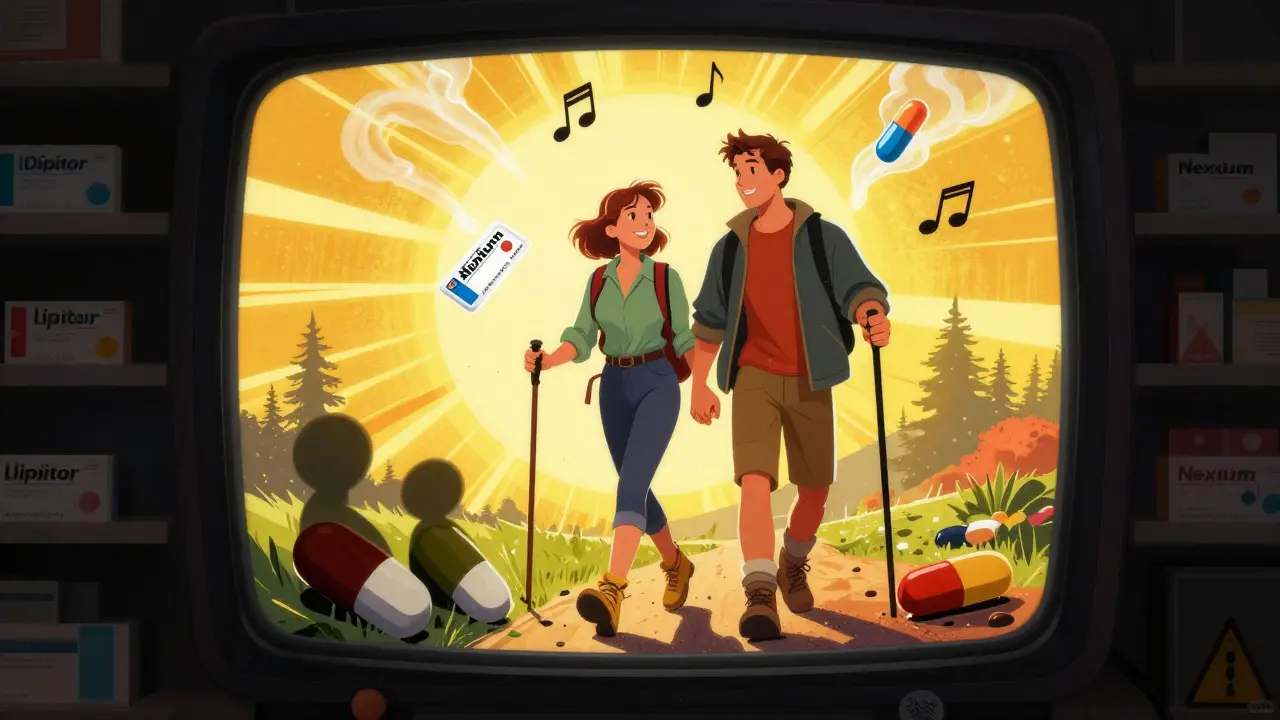
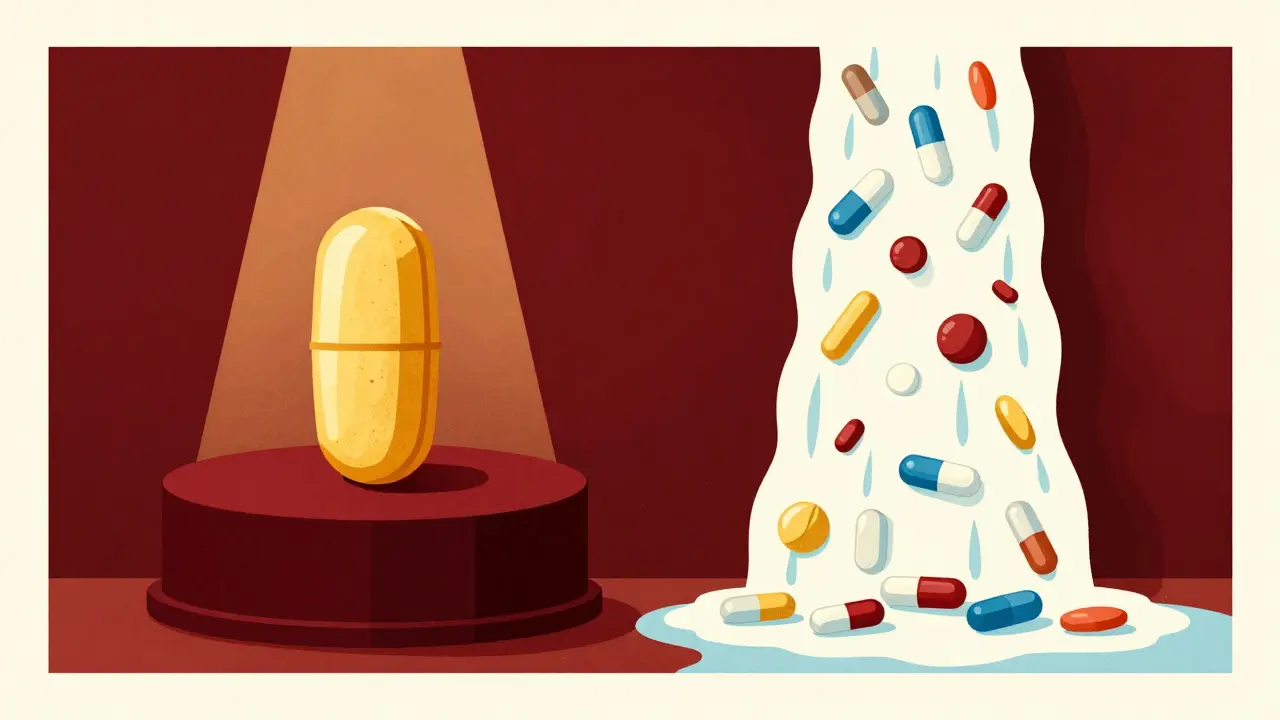
Every time you see a drug ad on TV, it’s not just selling a pill-it’s shaping what you think is best for your health. In the U.S., pharmaceutical companies spend over $6 billion a year on direct-to-consumer (DTC) ads for prescription drugs. That’s more than ten times what they spent in 1996. And here’s the twist: most of these ads aren’t for generic drugs. They’re for the expensive, brand-name versions-drugs like Lipitor, Nexium, or Humira. Meanwhile, the cheaper, equally effective generics sit quietly on the pharmacy shelf, rarely advertised, rarely seen.
Ads Don’t Just Inform-They Create Demand
It’s easy to think these ads are just giving you information. But research shows they’re doing something much more powerful: they’re creating demand where none existed before. A 10% increase in advertising exposure leads to about a 5% rise in prescriptions. And here’s the kicker: 70% of that rise comes from people starting a new medication because they saw an ad. Not because their doctor recommended it. Not because they were having symptoms. Just because they saw a smiling couple hiking in the mountains while a voiceover whispered, “Could this be you?”
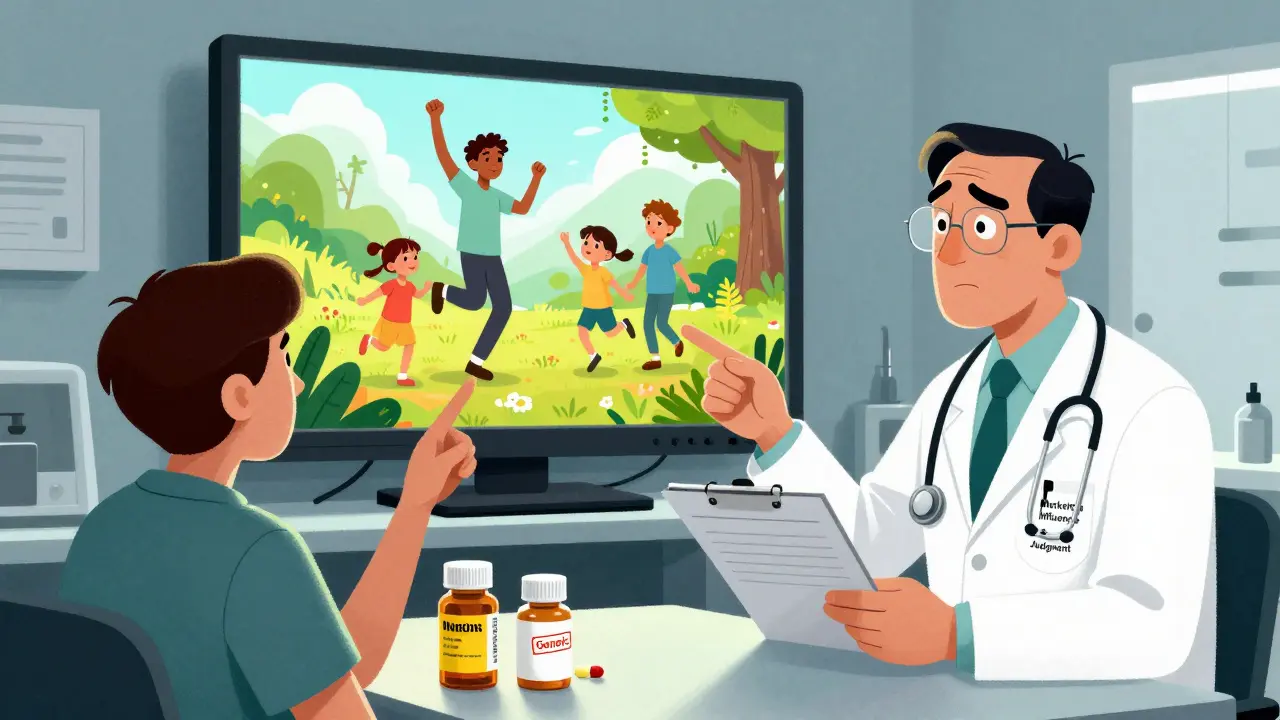
Patients walk into clinics asking for the drug they saw on TV. Doctors, even if they know a generic would work just as well, often give in. One study found that 69% of physician requests driven by ads were for treatments the doctor considered inappropriate. That’s not patient empowerment. That’s marketing hijacking clinical judgment.
The Spillover Effect: Generics Get a Free Ride
Here’s where it gets interesting. Even though the ads are for brand-name drugs, they often lead to prescriptions for generics. Why? Because when a patient asks for Lipitor, the doctor might say, “We have a generic version that’s just as good-and way cheaper.” The patient, not knowing the difference, agrees. So the ad for the brand ends up boosting sales of the generic too. This is called the “spillover effect.”
But here’s the problem: the spillover doesn’t change the patient’s perception. They still think the brand is better. They just end up taking the generic because it’s what the doctor handed them. The ad didn’t educate them about generics. It just made them want *something* from that drug class. And the brand got all the credit.
Why Generics Stay Invisible
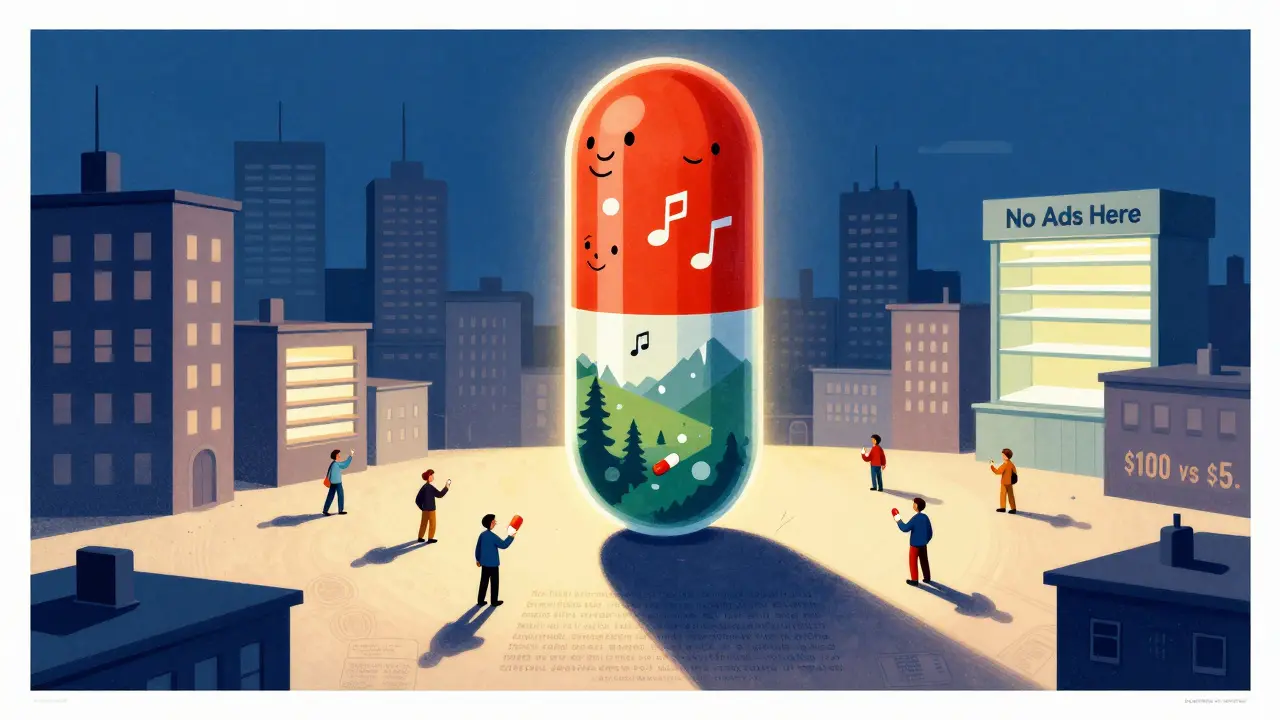
Generic manufacturers don’t run ads. Why? Because they can’t afford to. Or because they don’t need to. Once a drug loses its patent, dozens of companies can make the same pill. The price drops by 80% or more. There’s no profit margin left for flashy commercials. So while Pfizer spends millions on a 60-second ad for its branded statin, the generic version-made by a company you’ve never heard of-gets zero airtime.
Meanwhile, the ads you see are carefully crafted. They show vibrant landscapes, happy families, and people dancing in the kitchen. They use music that makes you feel hopeful. They mention side effects in a quiet voice, buried under upbeat tones. One study analyzed 230 ads and found that the emotional visuals distracted viewers from the fine print. People remembered the feeling, not the risks. And they definitely didn’t remember that a cheaper version existed.
The Information Gap: What Ads Hide
The FDA requires ads to mention risks. But research shows people don’t retain that information. Even after seeing an ad four times, most people still couldn’t accurately recall the side effects. Risk details need more repetition than benefit details to stick-and most ads don’t give them that. Meanwhile, the benefits? They’re front and center. “Feel better. Live more. Get back to what matters.”
That’s a problem for generics. Because generics don’t have ads. So patients never hear, “This generic version works just like the brand, costs 90% less, and has the same active ingredient.” Instead, they hear, “This brand is the best.” And they believe it.
Lower Adherence, Higher Costs
Here’s another uncomfortable truth: people who start a drug because of an ad are less likely to stick with it. Studies show that while advertising increases adherence among existing patients by just 1-2%, those who begin treatment because of an ad have lower average compliance. Why? Because their motivation isn’t medical-it’s emotional. They saw a commercial. They felt inspired. But when the side effects kick in, or the refill is due, they don’t have a strong reason to keep going.
This leads to wasted money. Billions of dollars are spent on prescriptions that don’t stick. And the people who lose out? The ones who could’ve been on a cheap, effective generic-and actually taken it regularly.
Who Benefits? Not You
For every dollar spent on DTC advertising, drug companies get over $4 in sales. That’s a 400% return. And most of that revenue comes from branded drugs. Generics? They’re the quiet winners in volume, but they’re the losers in perception. The system is designed to make you think the brand is superior. Even when it’s not.
It’s not that generics are inferior. They’re not. The FDA requires them to be identical in active ingredient, strength, dosage, and performance. But perception doesn’t follow science. It follows ads.
What Can You Do?
When you see an ad for a brand-name drug, pause. Ask yourself: Is this the only option? Is there a generic? What does my doctor say? Don’t assume the most expensive one is the best. Don’t assume the one you saw on TV is the right one.
Ask your pharmacist: “Is there a generic version of this?” Ask your doctor: “Is this the most cost-effective option?” Don’t let marketing dictate your health choices. Generics save the U.S. healthcare system over $300 billion a year. But they can’t save you if you don’t know they exist-or if you think they’re second-rate.
Next time you’re handed a prescription, check the label. If it’s a brand name, ask why. You might be surprised what you find.
kate jones
January 29, 2026 AT 23:35Let’s be real: DTC ads are a masterclass in behavioral manipulation. The FDA’s requirements are toothless when the emotional payload outweighs the risk disclosure by 100:1. People don’t remember ‘increased risk of pancreatitis’-they remember the sunset over the vineyard and the voice saying ‘you deserve this.’ Generics aren’t inferior; they’re invisible by design. The system isn’t broken-it’s working exactly as intended for shareholders, not patients.
Pharmacists are the unsung heroes here. If you walk in asking for a brand, ask them: ‘Is there a generic?’ They’ll tell you. They see this every day. But patients rarely ask. That’s the real failure-not the ad, but the passive acceptance of marketing as medical advice.
Natasha Plebani
January 31, 2026 AT 19:01The cognitive dissonance here is fascinating from a semiotic perspective. The pharmaceutical industry doesn’t sell pharmacology-it sells narrative architecture. The brand-name ad constructs a mythos: health as aesthetic performance, wellness as lifestyle branding. The generic, by contrast, is ontologically erased. It exists only as a functional substitute, stripped of symbolic capital. What we’re witnessing isn’t just market distortion-it’s the colonization of therapeutic identity by capital. The patient internalizes the brand as self-worth: ‘I am Lipitor.’ Not ‘I am someone who takes atorvastatin.’ That’s not healthcare. That’s consumerist spiritualism.
Yanaton Whittaker
February 2, 2026 AT 02:59AMERICA ISN’T BROKEN-IT’S WORKING PERFECTLY FOR THE CORPORATIONS 😤💸
Why should a company care if you live or die? As long as you keep buying their $200 pills instead of the $5 generic, they’re winning. Stop being sheep. Ask your doctor. Ask your pharmacist. Stop letting TV commercials decide your health. #StopDTCAds #GenericsAreJustAsGood
Carolyn Whitehead
February 2, 2026 AT 06:34i just had to get a new prescription last week and asked about generics and my dr was like 'oh yeah totally, same thing, way cheaper' and i was like wow why didn't i think of that before 😅
thanks for reminding me to ask next time ❤️
Amy Insalaco
February 3, 2026 AT 10:49It’s worth noting that the entire DTC paradigm operates under the neoliberal fantasy of the rational consumer-an illusion perpetuated by the very institutions that profit from its collapse. The ad doesn’t merely inform; it performs a kind of epistemic violence, substituting pharmaceutical branding for medical literacy. The generic, in this framework, is not merely unadvertised-it is epistemologically illegible. To prefer a brand is to participate in a ritual of symbolic capital, wherein the body becomes a site of status performance. The FDA’s disclaimer requirements are performative theater, designed to absolve regulatory bodies of complicity while the market continues its extraction. This isn’t healthcare policy. It’s cultural hegemony disguised as consumer choice.
Katie and Nathan Milburn
February 4, 2026 AT 15:38It is a matter of considerable public health concern that direct-to-consumer advertising of prescription pharmaceuticals remains legally permissible in only two countries worldwide-the United States and New Zealand. The absence of such advertising in virtually all other developed nations correlates strongly with lower overall pharmaceutical expenditures and higher rates of generic utilization. The ethical implications of commodifying medical decision-making through emotionally manipulative media are profound, and the regulatory inertia in this domain represents a systemic failure of governance. One must question the extent to which market logic should govern therapeutic outcomes.
Russ Kelemen
February 6, 2026 AT 04:05Hey, I get it-ads are everywhere and they’re slick. But here’s the thing: you’re not powerless. The next time you see one of those ads, pause for five seconds. Take a breath. Ask yourself: ‘What am I feeling right now?’ Then ask your doctor or pharmacist: ‘Is there a generic?’
Most people don’t realize how much power they have in that moment. You don’t need to be a expert. You just need to ask. And if you’re on a generic and feel fine? That’s not compromise. That’s smart. You’re saving money, helping the system, and staying healthy. Win-win.
Also-shoutout to pharmacists. They’re the real MVPs here. They see the whole picture. Talk to them.
Sheila Garfield
February 6, 2026 AT 17:51My mum’s on a generic statin and she’s been fine for 7 years. She didn’t even know it wasn’t the brand until I pointed it out. She was like ‘oh, so it’s just the same?’
Turns out, yeah. Just cheaper. And she’s not dead. 😄
Maybe we need to stop treating medicine like luxury goods?