

Lithium Toxicity Risk Calculator
Lithium Toxicity Risk Assessment
This tool helps you understand how common medications might affect your lithium levels. Enter your current lithium level and select medications you're taking to assess potential risk.
Results
Most people don’t realize that a common mood stabilizer like lithium can turn dangerous with just a simple over-the-counter painkiller or a water pill. Lithium has been used for over 50 years to treat bipolar disorder, and for many, it’s the only thing that keeps their moods stable. But its narrow window between helping and harming means even small changes in your body can push lithium into toxic territory. The biggest culprits? Diuretics and NSAIDs. These aren’t rare or exotic drugs-they’re among the most commonly prescribed and self-administered medications in the world. And when they mix with lithium, the results can be deadly.
Why Lithium Is So Fragile
Lithium doesn’t get broken down by your liver. It doesn’t bind to proteins. It doesn’t hide in fat tissue. It travels through your bloodstream and gets filtered out by your kidneys-exactly like sodium. That’s why anything that changes how your kidneys handle sodium also changes how much lithium stays in your body. The therapeutic range? Just 0.6 to 1.2 mmol/L. Go above 1.5 mmol/L, and you’re in mild toxicity territory. At 2.0 mmol/L, symptoms get serious: tremors, confusion, vomiting. Above 2.5 mmol/L, you’re at risk of seizures, coma, or death.
Most people on lithium have their levels checked every 3 to 6 months. But if you start a new medication, especially a diuretic or NSAID, that schedule isn’t enough. Levels can spike within days. A 2018 study found that lithium toxicity often shows up within the first week of starting these drugs. That’s why monitoring needs to jump to every 4 to 5 days after beginning a new interaction.
Diuretics: The Silent Lithium Triggers
Diuretics make you pee more. That sounds harmless-until you’re on lithium. When your kidneys excrete more sodium, they also reabsorb more lithium. It’s a direct, mechanical link. Thiazide diuretics like hydrochlorothiazide and bendroflumethiazide are the worst offenders. They can push lithium levels up by 25% to 40%, and in some cases, even fourfold. That’s not a small bump. That’s crossing from safe to toxic in under a week.
Loop diuretics like furosemide are less risky, but still dangerous. They raise lithium levels by 10% to 25%, especially if you already have reduced kidney function (eGFR under 60). The key difference? Thiazides act where lithium reabsorption is highest. Loop diuretics act higher up in the kidney, so the effect is weaker-but not safe.
Here’s the reality: many patients are prescribed thiazides for high blood pressure without their psychiatrist knowing. A 72-year-old woman in New Zealand died after starting hydrochlorothiazide while on lithium. Her levels went from 0.8 to 1.9 mmol/L in seven days. She had kidney issues, but no one checked her lithium levels after the new prescription. That case isn’t rare. It’s a textbook example of preventable harm.
NSAIDs: The Over-the-Counter Killer
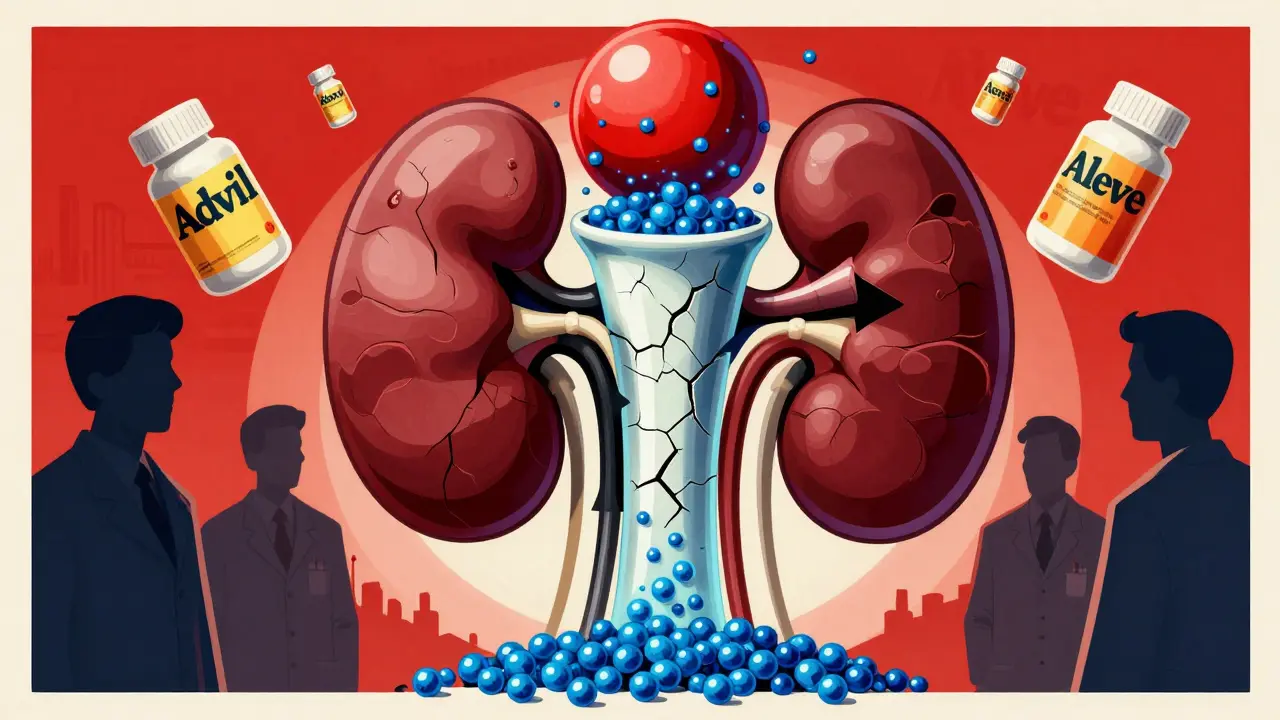
NSAIDs are everywhere. Ibuprofen. Naproxen. Aspirin. People take them for headaches, arthritis, menstrual cramps. They’re sold in grocery stores and pharmacies without a prescription. But they’re one of the top causes of lithium toxicity.
NSAIDs block prostaglandins in the kidneys. That reduces blood flow to the filtering units, lowering the glomerular filtration rate by 10% to 20%. Less filtration means less lithium gets flushed out. The result? Lithium builds up.
Not all NSAIDs are equal. Indomethacin is the strongest-raising levels by 20% to 40%. Piroxicam and naproxen follow closely. Ibuprofen? It’s common, but still risky: 15% to 30% increase. Celecoxib? It’s the safest NSAID option for lithium users, with only a 5% to 10% rise. That’s why guidelines now recommend celecoxib if you absolutely need an NSAID.
Here’s the hidden danger: people don’t tell their doctors they’re taking Advil or Aleve. They think it’s harmless. But a 2023 case report described a patient who took 600 mg of ibuprofen three times a day for back pain. Lithium levels jumped to 2.8 mmol/L. He needed dialysis. Even after his blood levels dropped, he stayed at risk because lithium lingers inside cells. The blood test can lie. Symptoms matter more.
Other Drugs That Can Worsen the Risk
It’s not just diuretics and NSAIDs. ACE inhibitors like lisinopril and ARBs like valsartan also reduce kidney filtration and raise lithium levels by 10% to 25%. Calcium channel blockers like verapamil don’t change lithium levels much, but they make neurological side effects like tremors and ringing in the ears much worse.
Even some antidepressants-especially SSRIs like fluoxetine-can interfere with lithium clearance. And don’t assume herbal supplements are safe. St. John’s wort, ginkgo biloba, and others have no safety data with lithium. The NHS warns: “There’s not enough information to say they’re safe.”
What You Should Do
If you’re on lithium, here’s what you need to do right now:
- Never start a new medication without telling your psychiatrist. That includes OTC painkillers, diuretics, blood pressure pills, or supplements.
- Ask for a lithium level check 4 to 5 days after starting any new drug. Don’t wait for your next routine check-up.
- If you’re on a diuretic, ask if furosemide can replace a thiazide. It’s not perfect, but it’s safer.
- If you need pain relief, choose celecoxib over ibuprofen or naproxen. And use the lowest dose for the shortest time possible.
- Watch for symptoms. Tremors, nausea, confusion, dizziness, muscle weakness, or frequent urination could mean lithium is building up. Don’t wait for a blood test-call your doctor.
Some patients are told to reduce their lithium dose by 20% when starting a thiazide, or 15% with NSAIDs. But that’s not a fix. It’s a band-aid. The real solution is avoiding the interaction altogether.
The Bigger Picture
Lithium isn’t going away. It’s still the most effective mood stabilizer for preventing suicide in bipolar disorder-studies show a 44% reduction compared to placebo. But it’s a powerful tool that demands respect. The market for lithium monitoring is growing because more people are being prescribed it, and more are getting hurt by drug interactions.
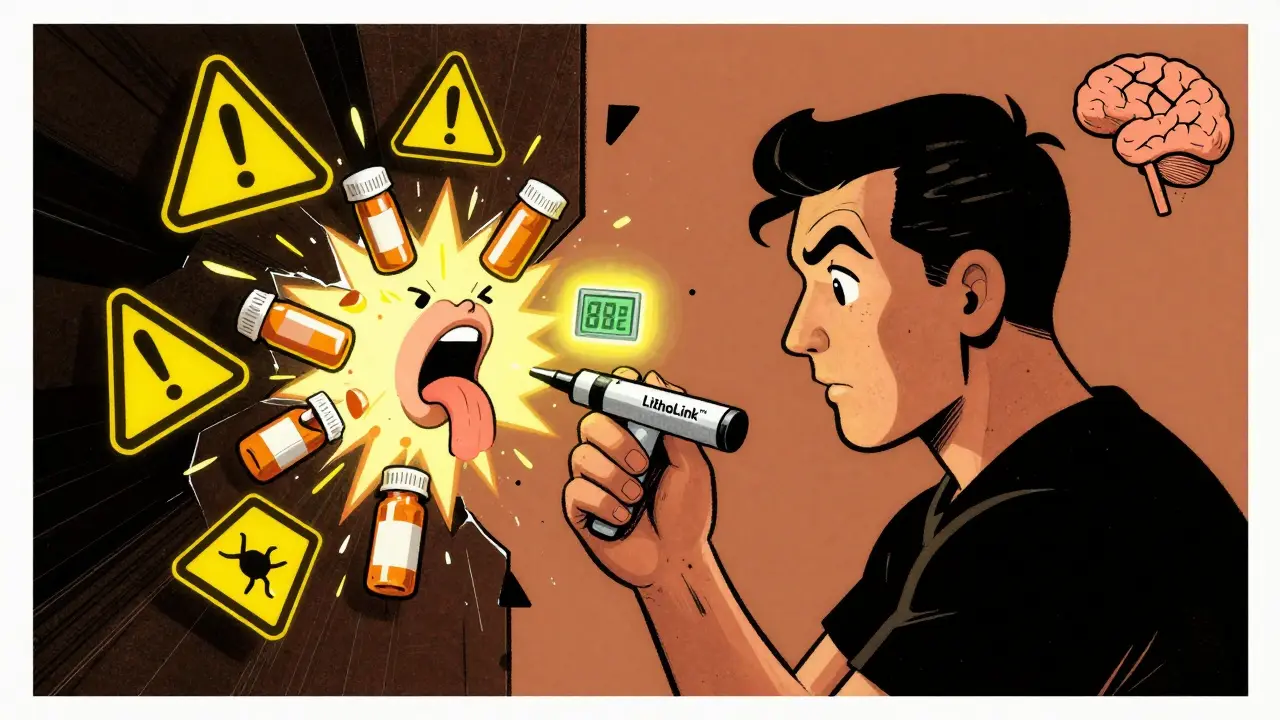
New tools are emerging. In 2023, the FDA approved a home-monitoring device called LithoLink™ that lets patients test their levels with a finger-prick and send results directly to their doctor. It’s still new, but it’s a step forward. Researchers are also testing nano-encapsulated lithium that releases slower and is less affected by kidney changes. Early results show 40% less fluctuation when taken with ibuprofen.
But technology won’t fix the problem if patients and doctors don’t talk. Electronic health records now flag lithium interactions, but only 45% of psychiatrists consistently follow up after a new drug is added. That’s not enough. Every patient on lithium deserves a full medication review every time a new prescription is written.
Final Warning
Lithium toxicity doesn’t always come with warning signs. Sometimes, it just shows up as fatigue, a headache, or a slight tremor-symptoms people dismiss as stress or aging. But if you’re on lithium and you take NSAIDs or diuretics, those symptoms could be your body screaming for help. Don’t wait. Check your levels. Talk to your doctor. And never assume a common drug is safe just because it’s sold over the counter.
Can I take ibuprofen if I’m on lithium?
You can, but it’s risky. Ibuprofen can raise lithium levels by 15% to 30%, which may push you into toxic range. If you need pain relief, use the lowest dose for the shortest time and check your lithium level 4 to 5 days after starting. Better yet, talk to your doctor about celecoxib, which has a much weaker interaction.
What are the first signs of lithium toxicity?
Early signs include hand tremors, nausea, vomiting, diarrhea, dizziness, muscle weakness, and frequent urination. As toxicity worsens, you may develop confusion, slurred speech, unsteady walking, or seizures. If you notice any of these, stop taking NSAIDs or diuretics and contact your doctor immediately. Don’t wait for a blood test-symptoms matter more than numbers.
How often should lithium levels be checked when starting a diuretic?
Check lithium levels every 4 to 5 days for the first two weeks after starting a diuretic. After that, weekly checks for the first month are recommended. Once stable, you can return to routine checks every 3 to 6 months-but only if no other interacting drugs are added. Thiazide diuretics require the most vigilance.
Is furosemide safer than hydrochlorothiazide with lithium?
Yes. Furosemide raises lithium levels by 10% to 25%, while hydrochlorothiazide can cause increases of 25% to 40%, and sometimes more. If you need a diuretic while on lithium, furosemide is the preferred choice. But it’s not risk-free. You still need close monitoring, especially if your kidney function is already reduced.
Can lithium toxicity be reversed?
Yes, but it depends on severity. Mild toxicity (levels 1.5-2.0 mmol/L) often resolves by stopping the interacting drug and increasing fluid intake. Moderate to severe toxicity (above 2.0 mmol/L) requires hospitalization. In cases above 2.5 mmol/L, especially with neurological symptoms, hemodialysis is needed. Lithium doesn’t just stay in the blood-it builds up in brain and muscle cells. Dialysis is the only way to remove it quickly enough to prevent permanent damage.
Are there any alternatives to lithium that don’t interact with NSAIDs?
Yes, but they’re not always better. Valproate, lamotrigine, and atypical antipsychotics like quetiapine are alternatives. However, lithium is still the most effective at preventing suicide in bipolar disorder. Switching isn’t automatic. If you’re stable on lithium, avoiding interactions is safer than switching medications. Work with your doctor to find the best balance between safety and effectiveness.
What to Do Next
If you’re on lithium, take 10 minutes today to review your medication list. Write down every prescription, OTC drug, and supplement you take. Then call your psychiatrist or pharmacist. Ask: “Could any of these raise my lithium levels?” Don’t rely on memory. Bring the list. If you’re not sure about a drug, assume it’s risky until proven otherwise.
Keep a log of your lithium levels and the dates they were checked. Note any new medications or changes in how you feel. This isn’t just paperwork-it’s your safety net. Lithium saves lives. But only if you treat it with the respect it demands.

Tom Swinton
January 5, 2026 AT 20:39Okay, I just read this and I’m shaking my head-this is the kind of info that should be stamped on every bottle of ibuprofen, like ‘WARNING: MAY KILL YOU IF YOU’RE ON LITHIUM.’ I’ve got a cousin on lithium for bipolar, and she was popping Advil like candy for her migraines-no one told her it was a ticking time bomb. She ended up in the ER with tremors and confusion, and her levels were 2.7. They had to dialyze her. She’s fine now, but it took a near-death experience to wake everyone up. Please, if you’re on lithium, treat OTC meds like they’re loaded guns. Not ‘maybe,’ not ‘probably’-DEFINITELY. Your brain isn’t a lab rat. Don’t gamble with it.
Venkataramanan Viswanathan
January 6, 2026 AT 22:59This is a critical public health issue that remains grossly under-addressed in clinical practice. In India, where access to psychiatric care is uneven and over-the-counter analgesics are ubiquitously consumed without medical consultation, the confluence of lithium therapy and NSAID use presents a significant risk of iatrogenic toxicity. The absence of standardized patient education protocols and the lack of integration between primary care and psychiatric records exacerbate this vulnerability. Mandatory pharmacist counseling and electronic prescribing alerts are urgently required to mitigate preventable mortality.
Kelly Beck
January 7, 2026 AT 18:52I’m so glad someone finally put this out there 💙 I’ve been on lithium for 8 years and I used to take ibuprofen like it was gum-until my psychiatrist looked at me like I’d just set fire to her favorite sweater. She said, ‘You’re not just having a headache, you’re playing Russian roulette with your brain.’ I switched to celecoxib and now I keep a little notebook of every pill I take-even the gummies. My levels are stable, I’m not in the hospital, and I can still hug my dog without shaking. You don’t need to be perfect-you just need to be aware. And if you’re reading this? You already are. 🙌
Katie Schoen
January 8, 2026 AT 15:08So let me get this straight: the drug that keeps people from killing themselves is also the one that can kill them if they take a Tylenol PM? And we’re surprised when people die? 😒 I mean, congrats, medicine-your ‘safety protocols’ are basically a game of ‘guess what’s in my medicine cabinet.’ At least the FDA approved that home monitor. Took long enough. Now if only doctors would actually check the damn thing before the patient turns into a human tremor.
Stuart Shield
January 8, 2026 AT 15:31It’s not just the drugs-it’s the silence around them. I’ve seen it in clinics: the patient says, ‘I’m fine,’ and the doc says, ‘Great, see you in six months.’ Meanwhile, the patient’s been popping naproxen for his knee since last Tuesday. Lithium’s like a silent ghost in the bloodstream-it doesn’t scream, it just… accumulates. And by the time the tremors start, it’s too late for a casual chat. We need to stop treating this like a footnote and start treating it like a live wire in a wet bathroom.
Jeane Hendrix
January 10, 2026 AT 03:46Wait-so if you're on lithium and you take an NSAID, your kidneys just... stop filtering it? Like, they literally don't know what to do? I always thought it was metabolism, not renal reabsorption. And celecoxib is the 'safe' one? That's wild. I'm gonna start keeping a log of every med I take-prescription, OTC, even that turmeric capsule my aunt swears by. I don't want to be the one who 'didn't know' when it's too late. Also, is it just me or does everyone forget that lithium stays in cells? Blood levels lie. Symptoms don't. 🤔
Leonard Shit
January 10, 2026 AT 06:42My buddy got diagnosed with bipolar last year. He’s on lithium. Last week he told me he’s been taking Aleve for his back. I said, ‘Dude, you’re gonna die.’ He laughed. Said, ‘It’s just painkillers.’ I sent him this article. He hasn’t replied. I’m worried. Like, really worried. He’s the kind of guy who thinks ‘doctor’ means ‘person who gives you pills.’ If you’re reading this and you’re on lithium? Don’t be him. Check your levels. Talk to someone. Even if you think it’s fine. It’s not.
Vinayak Naik
January 11, 2026 AT 12:20From India, here: we have zero awareness about this. My uncle takes lithium and uses diclofenac gel for arthritis-he thinks topical means safe. It doesn’t. I showed him this post. He said, ‘But I don’t swallow it.’ I told him, ‘It goes into your blood, uncle.’ He’s now seeing his doctor. We need more public service ads in local languages. Not just English. Not just hospitals. WhatsApp forwards, radio jingles, pharmacy posters. This kills people quietly-and in places where no one’s watching.
Kiran Plaha
January 11, 2026 AT 15:30My sister is on lithium. She never tells anyone when she starts new meds. I just asked her if she’s taken anything new. She said, ‘Oh, just that cream for my eczema.’ I looked it up. It had ibuprofen in it. I freaked out. We called her doctor. They said to get a level check tomorrow. I’m so scared. I didn’t know topical NSAIDs could do this. Thank you for this post. I’m printing it out and putting it on her fridge.