

When your liver is struggling, food isn’t just fuel-it’s medicine. If you’ve been told you have fatty liver, elevated liver enzymes, or early-stage fibrosis, the right diet can turn things around. Not with magic pills or expensive supplements, but with real, everyday food. The science is clear: what you eat directly impacts how your liver heals. And the best evidence points to one pattern above all-the Mediterranean diet.
Why Food Matters More Than You Think
Your liver works 24/7. It filters toxins, makes bile, stores energy, and regulates blood sugar. When it’s overloaded-especially by sugar, refined carbs, and unhealthy fats-it starts storing fat. That’s non-alcoholic fatty liver disease (NAFLD), now called MASLD. Left unchecked, it can lead to inflammation, scarring, and even cirrhosis. The scary part? Most people don’t feel it until it’s advanced. But here’s the good news: studies show you can reduce liver fat by 25-40% in just 6-12 months without drugs. How? By changing what’s on your plate. A 2022 review in the Journal of Hepatology found that dietary changes improved liver enzymes by 20-30%. That’s not a guess. That’s measurable, repeatable results from real patients.The Mediterranean Diet: Not a Trend, But a Treatment
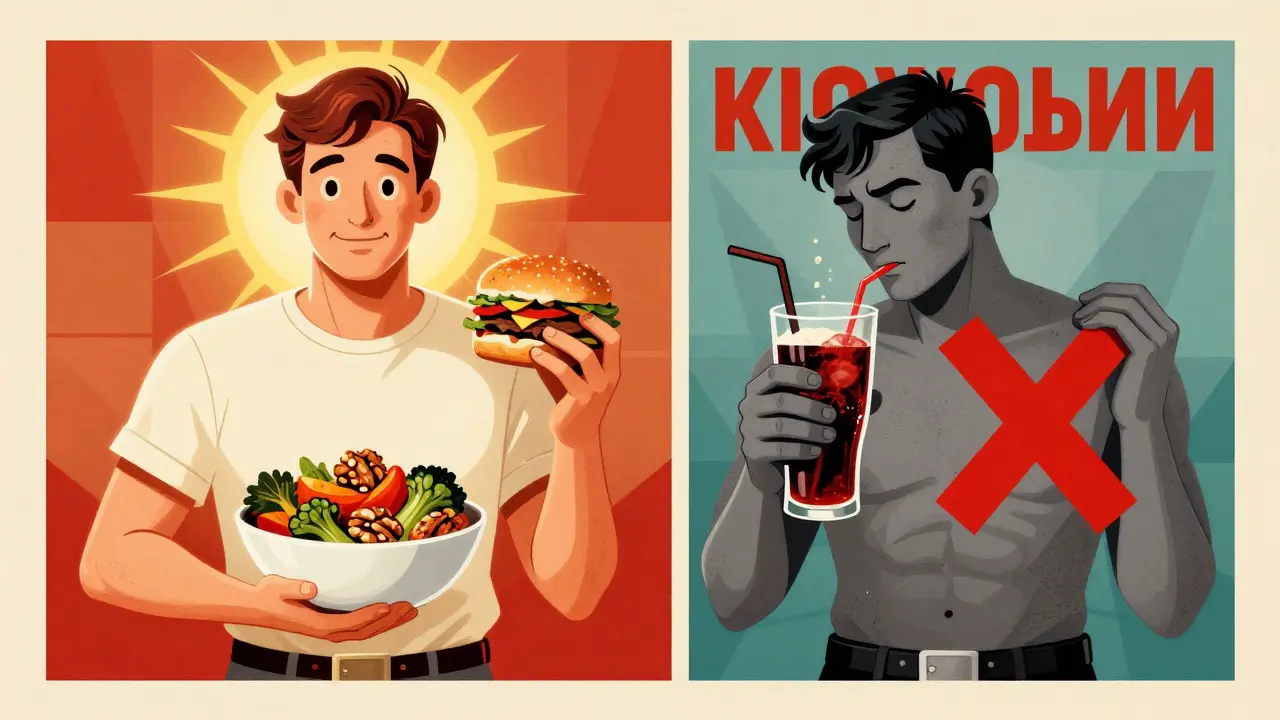
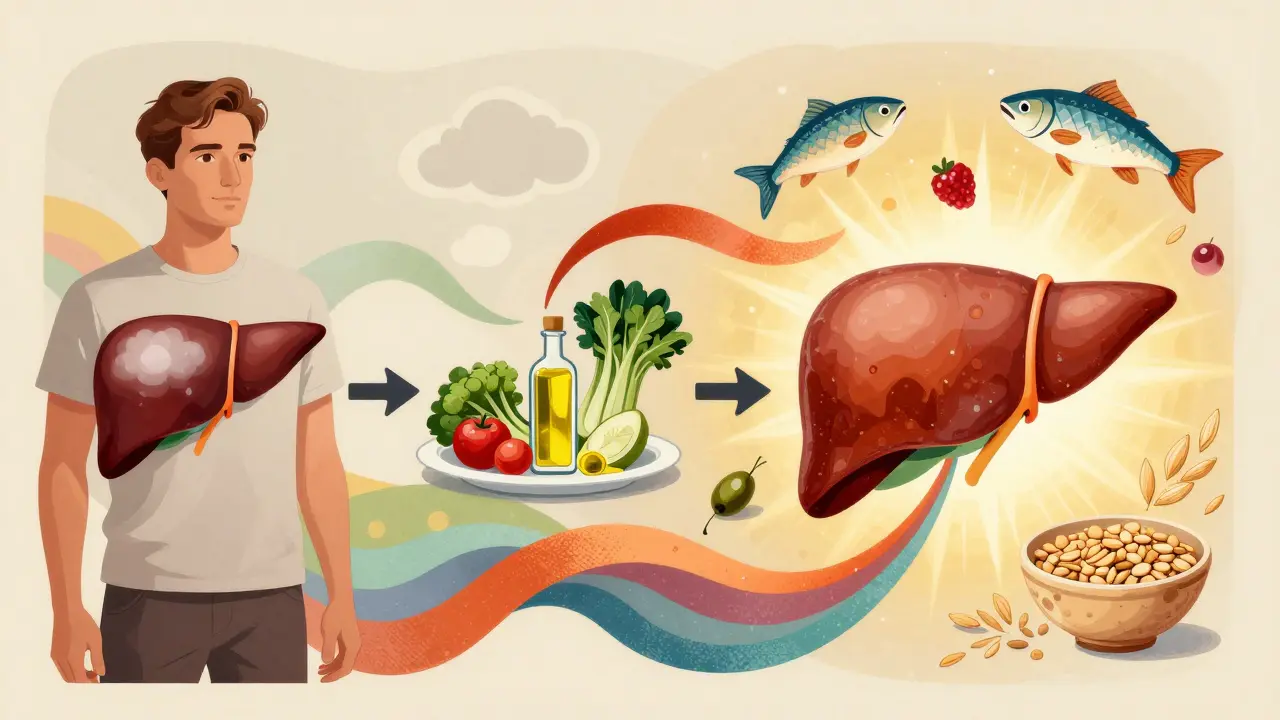
This isn’t about eating more olive oil because it’s trendy. It’s about following a pattern backed by decades of research. The Mediterranean diet is the only eating pattern with Level 1 evidence-meaning it’s been tested in large, controlled trials-for improving liver tissue itself, not just blood markers. Here’s what it actually looks like:- 40-50% of calories from complex carbs: whole grains like oats, barley, quinoa, brown rice, and legumes. These slow down sugar spikes and feed good gut bacteria.
- Less than 10% of calories from added sugar or refined carbs: no white bread, pastries, or sugary drinks. One 12-ounce soda has 150-200 empty calories-enough to push fat into your liver.
- 40% of fat intake from monounsaturated fats: olive oil, avocados, nuts. These lower bad cholesterol and reduce liver inflammation.
- 15-20% of calories from lean protein: fish, chicken, tofu, eggs, beans. Aim for a portion the size of a deck of cards per meal.
- Half your plate filled with vegetables and fruits: at least 3 servings of veggies and 2 of fruit daily. Color matters-blueberries, purple grapes, red cabbage, and spinach pack antioxidants that slash liver inflammation by up to 25%.
What to Cut Out-For Good
Some foods aren’t just unhealthy-they actively damage your liver. These are non-negotiable:- Sugary drinks: soda, energy drinks, sweetened coffee, fruit juice. Even “natural” juices spike blood sugar faster than candy. Swap for water, unsweetened tea, or sparkling water with lemon.
- Trans fats: found in fried foods, margarine, and packaged snacks. Look for “partially hydrogenated oils” on labels. These increase liver fat and inflammation.
- Excess sodium: more than 2,000mg a day strains your liver and can cause fluid buildup if you have advanced disease. Skip processed meats, canned soups, and salty snacks. Flavor with herbs, lemon, garlic, or vinegar instead.
- Alcohol: even small amounts can worsen liver damage. If you have MASLD, zero alcohol is the safest choice.
What Other Diets Get Wrong
You’ve probably heard about keto, low-fat, or juice cleanses for liver health. Let’s cut through the noise.- Keto diets: while they can help with weight loss, they often rely on saturated fats (bacon, butter, cheese) that don’t help the liver. A 2021 study found they improved liver fat less than the Mediterranean diet and didn’t reduce fibrosis as well.
- Low-fat diets: these often replace fat with sugar and refined carbs. That’s a disaster for fatty liver. One trial showed they were 32% less effective than Mediterranean eating at reducing liver fat.
- Detox teas and juice cleanses: the American Liver Foundation says flat-out: “There is zero scientific evidence supporting liver detox diets.” Your liver detoxes itself. You don’t need a $40 bottle of herbs to do it.
Real People, Real Results
John, 58, from Ohio, had stage 2 liver fibrosis. His FibroScan score was 12.5 kPa-borderline for cirrhosis. His ALT (a liver enzyme) was 112 U/L (normal is under 40). He started the Mediterranean diet and walked 30 minutes daily. After 9 months, his FibroScan dropped to 6.2 kPa. His ALT fell to 45. He didn’t take a single pill. On Reddit’s r/FattyLiver community, 68% of over 1,200 people said their energy improved within 3 months. But 42% said it was hard to avoid processed food because it’s cheaper. That’s real. A USDA analysis shows the Mediterranean diet costs about $1.50 more per meal. But there are workarounds: frozen veggies, canned beans, bulk oats, and buying seasonal fruit cut costs without cutting nutrition. Sarah, from Texas, had migraines when she cut out all sugar. Her doctor adjusted her plan: 15g of natural sugar a day from berries was fine. Flexibility matters. This isn’t about perfection-it’s about progress.How to Start Without Getting Overwhelmed
You don’t need to overhaul your life overnight. Start small:- Swap one sugary drink for water or herbal tea each day.
- Add one extra serving of vegetables to lunch or dinner.
- Use olive oil instead of butter for cooking.
- Choose whole grain bread or brown rice instead of white.
- Make one full Mediterranean-style meal per week-like grilled salmon, roasted veggies, and quinoa.
Support That Actually Helps
You’re not alone. The VA Health System offers a free 12-week telehealth nutrition program. 87% of participants rated it highly. The Liver Foundation Australia’s “Fridge Guide” has visual portion charts-download it for free. Batch cooking on Sundays cuts daily stress. Frozen spinach, broccoli, and berries work just as well as fresh. If you work nights or have irregular hours, meal timing matters less than food quality. Focus on what you eat, not when.The Bigger Picture
This isn’t just about your liver. The Mediterranean diet also cuts heart disease risk by 30%. It lowers blood pressure, improves insulin sensitivity, and helps with weight loss. You’re not just healing your liver-you’re protecting your whole body. New research is even more exciting. Scientists are testing time-restricted eating-eating only within a 10-hour window-combined with the Mediterranean diet. Early results show a 27% greater drop in liver fat than diet alone. And the Mayo Clinic is studying how your gut bacteria predict which foods work best for you. Personalized nutrition is coming.What’s Next?
By 2030, doctors may track your dietary adherence like they track your cholesterol. Because food is now proven medicine. The global market for liver disease nutrition programs is growing fast. Insurance companies like UnitedHealthcare are covering nutrition counseling for millions. You don’t need a perfect diet. You need a consistent one. Start with one change. Stick with it. Your liver doesn’t need miracles-it needs you to show up, day after day, with real food.Can you reverse fatty liver with diet alone?
Yes, especially in early stages. Studies show that following a Mediterranean-style diet can reduce liver fat by 25-40% in 6-12 months, even without weight loss. Liver enzymes often drop by 20-30%. This isn’t speculation-it’s from clinical trials published in Hepatology and the Journal of Hepatology. Advanced cirrhosis may need medical treatment, but diet still slows progression.
Is the keto diet good for fatty liver?
Not ideal. While keto can help with weight loss, many versions rely on saturated fats from cheese, butter, and red meat, which don’t help liver inflammation. A 2021 meta-analysis found the Mediterranean diet reduced liver fat 32% more than low-fat diets and improved fibrosis better than keto. For liver health, unsaturated fats (olive oil, nuts, fish) are far more effective than high saturated fat intake.
What foods are best for liver repair?
Foods rich in antioxidants and fiber are key. Walnuts (30g/day) lower LDL cholesterol and reduce liver fat. Cruciferous veggies like broccoli and Brussels sprouts contain indole-3-carbinol, shown to reduce liver fat by 18% in 6 months. Berries, especially blueberries and blackberries, have anthocyanins that cut inflammation by 25%. Olive oil, fatty fish like salmon, green tea, and coffee (unsweetened) also support liver health.
Do liver detox teas or cleanses work?
No. The American Liver Foundation states there is zero scientific evidence that detox teas, juices, or supplements cleanse or heal the liver. Your liver detoxes itself naturally. These products often contain laxatives or diuretics that can dehydrate you and strain your kidneys. They’re expensive and unnecessary. Real food-not supplements-is what heals.
How much protein should someone with liver disease eat?
Most people with early or moderate liver disease need 15-20% of daily calories from protein-about 3 ounces per meal. Protein helps prevent muscle loss, which worsens outcomes. Only in advanced cirrhosis with hepatic encephalopathy might protein be temporarily limited, but even then, recent guidelines say adequate protein is safer than restriction. Always follow your doctor’s advice, but don’t fear protein-it’s essential.
Is it too expensive to eat liver-healthy?
It can cost $1.50 more per meal, but it doesn’t have to. Frozen vegetables, canned beans, bulk oats, eggs, and seasonal fruit are affordable. Buy whole chickens instead of pre-cut pieces. Cook in batches. Skip processed snacks and sugary drinks-those cost more and hurt your liver. Community cooking programs have shown 35% cost reduction while keeping nutrition intact. It’s not about luxury-it’s about smart choices.

Victoria Rogers
December 17, 2025 AT 23:44Meghan O'Shaughnessy
December 18, 2025 AT 11:16Jody Patrick
December 20, 2025 AT 07:31Radhika M
December 21, 2025 AT 00:51Philippa Skiadopoulou
December 23, 2025 AT 00:34Pawan Chaudhary
December 23, 2025 AT 14:23Anna Giakoumakatou
December 24, 2025 AT 17:34Erik J
December 26, 2025 AT 02:46