
Medication Safety Checker
Check your risk of medication-related liver damage. Enter medications/supplements you're currently taking to get personalized safety recommendations based on the latest medical guidelines.
Your Risk Assessment
Critical Symptoms to Watch For
Monitor for these signs of liver damage:
- Yellowing skin or eyes (jaundice)
- Dark urine or pale stools
- Severe itching or right-sided abdominal pain
- Unexplained nausea or extreme fatigue
URGENT ACTION NEEDED
If you have jaundice plus two or more of the above symptoms, seek emergency care immediately. Time is critical for liver damage treatment.
If You're at Risk
Stop the medication immediately and contact your doctor within 24 hours. For acetaminophen overdose, seek help within 8 hours for maximum effectiveness of treatment.
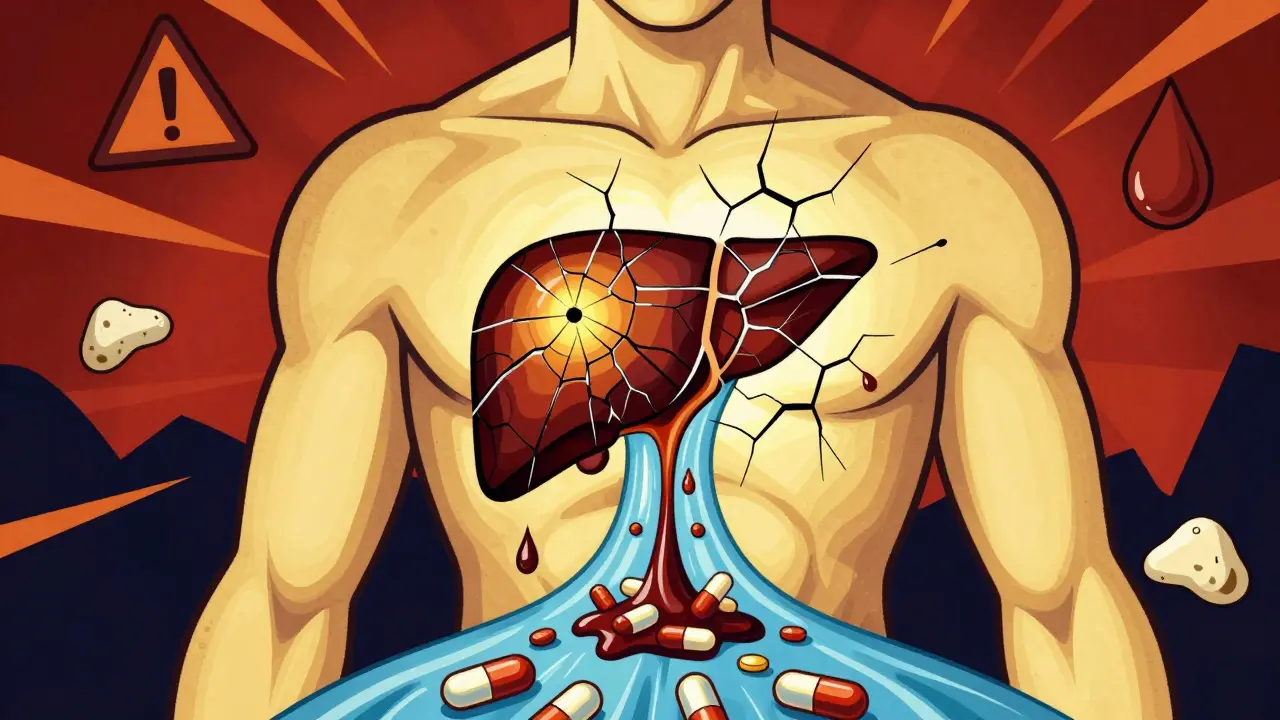
Most people don’t think about their liver until something goes wrong. But if you’ve started a new medication-whether it’s a prescription, an over-the-counter painkiller, or even a popular herbal supplement-your liver might be working overtime, and you could be at risk for something serious: medication-related liver damage.
This isn’t rare. In Western countries, about 1 in 5,000 people will develop liver injury from a drug each year. And it’s not just the big-name drugs. Even common ones like amoxicillin-clavulanate, ibuprofen, or turmeric supplements can trigger it. The scary part? Many people don’t notice the warning signs until it’s too late.
What Exactly Is Medication-Related Liver Damage?
It’s called drug-induced liver injury (DILI). That’s when a medication, supplement, or even a herbal product harms your liver. Your liver is your body’s main detox center. It breaks down everything you take-pills, vitamins, alcohol-and sometimes, those substances turn toxic while being processed. The result? Inflammation, cell death, or bile flow blockage.
There are three main patterns doctors look for:
- Hepatocellular injury: Liver cells are dying. ALT levels spike above 5 times the normal limit. This is common with isoniazid (used for TB) and acetaminophen.
- Cholestatic injury: Bile can’t flow out of the liver. Alkaline phosphatase and GGT rise sharply. This happens often with amoxicillin-clavulanate and birth control pills.
- Mixed pattern: Both cell damage and bile flow issues happen together. This is the trickiest to treat.
One key fact: acetaminophen (Tylenol) is the #1 cause of acute liver failure in the U.S. A single overdose of 10 grams can kill liver cells within hours. Even taking 4,000 mg a day over weeks-especially with alcohol or if you’re thin or older-can slowly wreck your liver.
Signs You Might Be Developing Liver Damage
The liver doesn’t have pain receptors. So you won’t feel it hurting like a sprained ankle. But your body will send other signals. Here’s what to watch for:
- Yellowing skin or eyes (jaundice): This is the classic red flag. It means bilirubin-a waste product-is building up because your liver can’t process it.
- Dark urine: Like tea or cola. That’s bilirubin spilling into your kidneys.
- Light-colored stools: Stools should be brown. If they’re pale or clay-colored, bile isn’t reaching your intestines.
- Severe itching: Not just a rash. It’s deep, constant, and worse at night. Caused by bile salts building up in your skin.
- Pain under your right ribs: A dull ache or sharp stab. That’s your liver swelling or inflamed.
- Unexplained nausea, vomiting, or loss of appetite: These aren’t just ‘flu.’ If they hit right after starting a new drug, it’s a red flag.
- Extreme fatigue: Not just tired. Bone-deep exhaustion that sleep doesn’t fix.
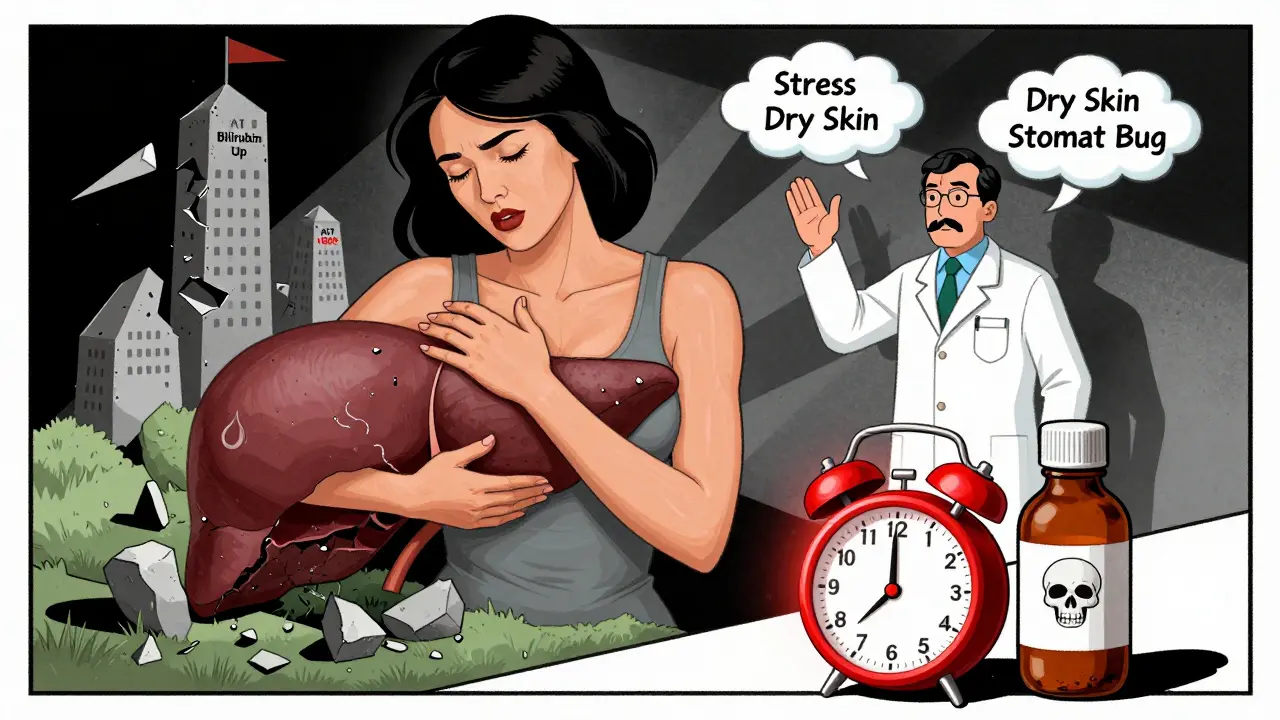
One patient in Australia told her doctor she felt ‘off’ for three weeks after starting amoxicillin-clavulanate for a sinus infection. Her doctor thought it was just the infection dragging on. By the time her eyes turned yellow, her ALT was 1,800 IU/L-over 60 times normal. She spent 10 days in the hospital.
When to Act-Right Now
You don’t need to wait for a blood test. If you’re taking any new medication and you notice jaundice plus two of these-dark urine, right-side pain, or nausea-you need emergency care. Don’t wait for your GP appointment. Go to the ER.
For acetaminophen overdose, time is everything. If you took more than recommended-especially if you drank alcohol or took it for pain over days-get help within 8 hours. N-acetylcysteine, the antidote, works best then. Every hour you wait drops its effectiveness by 10%.
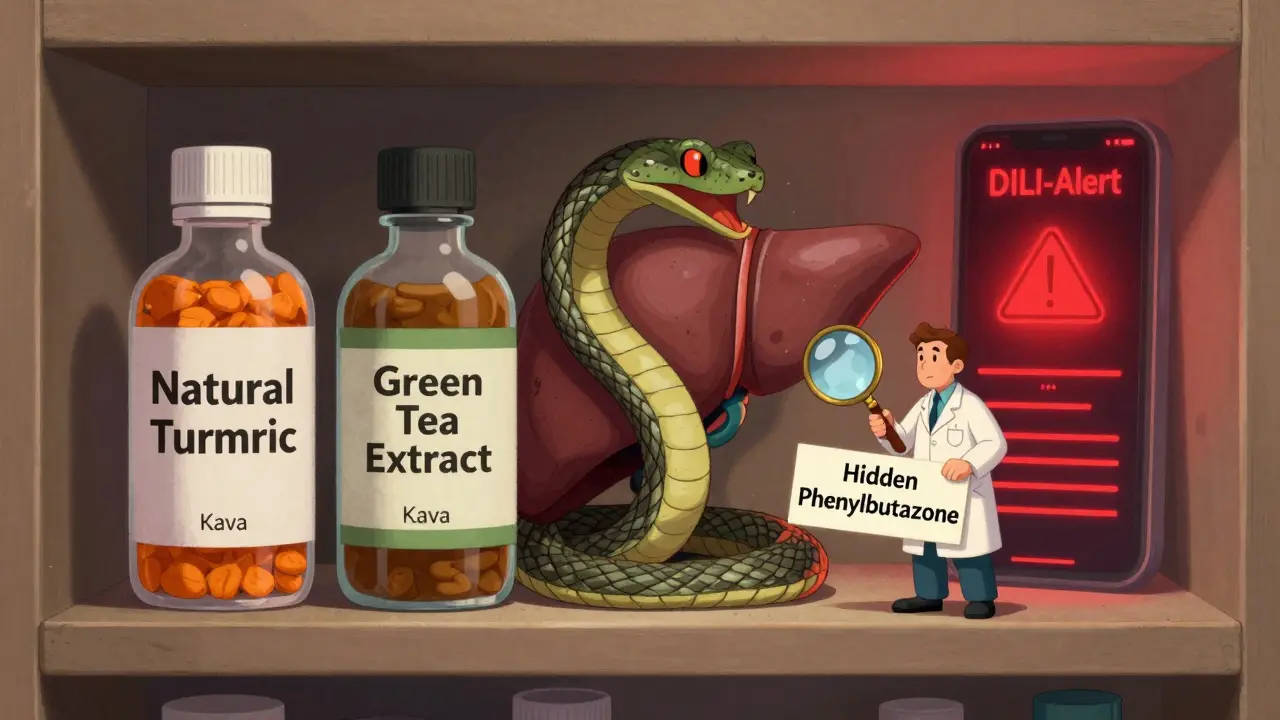
And don’t ignore supplements. Green tea extract, kava, and even high-dose turmeric have caused liver failure. One 2023 study found that 37% of supplement-related liver injuries came from green tea extract. People think ‘natural’ means safe. It doesn’t. Your liver can’t tell the difference between a pill and a capsule labeled ‘herbal.’
Why Doctors Miss It-And How to Protect Yourself
Doctors don’t always connect the dots. In a 2023 survey, 68% of DILI patients were misdiagnosed at first. Fatigue? ‘Stress.’ Itching? ‘Dry skin.’ Nausea? ‘Stomach bug.’
But here’s the fix: keep a medication log. Write down every pill, capsule, powder, or tea you take-dose and start date. Include vitamins, herbal products, and even CBD oil. Bring this list to every doctor visit.
Also, know your risk factors:
- Age over 50
- Female (women are more prone to cholestatic DILI)
- Chronic alcohol use
- Pre-existing liver disease
- Taking more than five medications
If you’re on isoniazid for TB or anticonvulsants like valproate, your doctor should check your liver enzymes every 4-6 weeks. If you’re on statins, don’t panic-true liver damage is extremely rare. But if your ALT jumps more than 3x normal, get it checked.
What Happens After Diagnosis?
The first step? Stop the drug. That’s it. In 90% of cases, the liver starts healing on its own once the trigger is removed. But not always.
Severe cases can lead to acute liver failure. That’s when your liver stops working entirely. In the U.S., DILI now causes more acute liver failure than hepatitis A or B. If it gets that bad, a transplant may be the only option.
There’s no magic pill to fix it. No supplement, no juice cleanse, no detox. Only time and stopping the offending agent. And even then, some people are left with permanent scarring (cirrhosis).
What’s Changing in 2026?
Technology is catching up. The FDA approved a new app called DILI-Alert in late 2023. You scan your pill bottle or type in the name-it checks against 1,200 known hepatotoxic drugs and tells you your personal risk level. It’s not perfect, but it’s a start.
Researchers are also testing blood markers like microRNA-122, which rises within hours of liver injury-long before ALT spikes. That could mean early detection in your doctor’s office, not the ER.
But the biggest threat? Unregulated supplements. In Europe, DILI cases from herbal products jumped 27% between 2015 and 2022. In Australia, sales of ‘liver detox’ powders have tripled since 2020. Most don’t list active ingredients. Some contain hidden prescription drugs. One brand sold as ‘natural turmeric’ was found to contain phenylbutazone-a banned human anti-inflammatory.
Doctors are now pushing for better labeling. The European Commission now requires herbal products to carry a liver risk warning. The FDA is moving in the same direction. But until then, it’s on you.
Bottom Line: Know Your Risks, Speak Up, Act Fast
Medication-related liver damage doesn’t come with a warning siren. It creeps in quietly. By the time you feel it, your liver might already be damaged.
Don’t assume your doctor knows every drug you’re taking. Don’t assume ‘natural’ is safe. Don’t wait for symptoms to get worse.
If you’ve started a new medication or supplement and feel off-really off-get your liver checked. Ask for ALT, AST, alkaline phosphatase, and bilirubin. If jaundice shows up, go to the hospital. No second chances.
Your liver can regenerate. But only if you catch it early.
laura Drever
January 15, 2026 AT 06:56jaundice plus dark urine and right side pain = go to er no exceptions
Gregory Parschauer
January 16, 2026 AT 10:14let me guess - someone’s still popping turmeric capsules like candy because ‘natural’ means ‘harmless’? newsflash: your liver doesn’t care if it’s in a capsule or a pill. it just sees toxins. and now we’ve got a whole industry selling ‘detox powders’ that contain banned NSAIDs. this isn’t wellness, it’s chemical roulette. if you’re taking more than three supplements, you’re not healing - you’re poisoning yourself. and don’t even get me started on green tea extract. 37% of supplement-induced liver failure? that’s not a statistic, that’s a crime against common sense.
Avneet Singh
January 17, 2026 AT 02:17the hepatocellular-cholestatic-mixed triad is a clinically elegant framework, but the real issue lies in the epistemic opacity of pharmacovigilance systems. most primary care providers lack the metabolic literacy to parse transaminase dynamics in real time, and the regulatory lag between market entry and hepatotoxicity signal detection is on average 4.2 years. we’re treating symptoms, not systems.
James Castner
January 18, 2026 AT 08:37the liver is the most resilient organ we possess - capable of regenerating even after losing 75% of its mass - but resilience is not an invitation to abuse. every time we normalize the idea that ‘a little extra’ won’t hurt - whether it’s an extra Tylenol for a headache, a double dose of turmeric for ‘inflammation,’ or a ‘natural’ weight-loss tea loaded with unlisted compounds - we erode the collective understanding of biological boundaries. this isn’t about fear-mongering. it’s about reverence. your liver filters everything you consume, from your morning coffee to your midnight supplement regimen. treat it like the sacred, tireless organ it is - not a trash compactor for modern wellness myths.
Rosalee Vanness
January 18, 2026 AT 13:43you know what helped me the most after my doctor caught my ALT spike from that ‘harmless’ joint supplement? writing down every single thing i put in my body - even the chamomile tea i drank at night. i thought i was being careful, but i had 11 different ‘natural’ products in rotation. once i stopped them all and tracked symptoms, the itching stopped in 72 hours. no magic, no cleanse - just silence. if you’re feeling ‘off’ after starting something new, don’t wait for jaundice. start your log today. your liver will thank you in quiet, invisible ways.
lucy cooke
January 20, 2026 AT 04:16isn’t it poetic? we live in an age where we can map the human genome but still think a $12 bottle of ‘liver detox’ powder is a valid alternative to medical science. we romanticize ‘natural’ like it’s a spiritual state, not a chemical compound. the liver doesn’t care if it’s processed by Big Pharma or a yoga instructor’s basement lab. it just dies. quietly. elegantly. tragically. and we call it ‘bad luck’ instead of collective negligence.
Trevor Davis
January 22, 2026 AT 03:24my aunt took ibuprofen for her arthritis for 8 months straight - 800mg three times a day. never told her doctor. thought she was being ‘responsible’ because it was ‘over the counter.’ ended up in the hospital with acute liver failure. turned out she had undiagnosed fatty liver from years of diet soda. the irony? she’d been taking milk thistle ‘to protect her liver.’
Trevor Whipple
January 22, 2026 AT 04:58acetaminophen is the #1 cause of liver failure? lol so is water. drink too much and you drown. take too much tylenol and you fry your liver. duh. also, ‘herbal’ doesn’t mean safe? shocker. next you’ll tell me fire is hot.
Lethabo Phalafala
January 23, 2026 AT 02:51i’m a nurse in Johannesburg, and i’ve seen this too many times. a woman came in with jaundice, said she’d been drinking ‘herbal tea for detox’ for three weeks. turned out it had hidden metronidazole. her husband didn’t know she was taking it. she was scared to tell anyone because she thought it was ‘just a tea.’ i held her hand while she cried. this isn’t just medical - it’s emotional. people are scared of doctors, scared of sounding silly, scared of being judged. we need more compassion, not just warnings.
Lance Nickie
January 24, 2026 AT 12:09nah bro, liver damage is just a myth invented by pharma to sell more tests.
Milla Masliy
January 24, 2026 AT 22:35i’m from Mumbai, and here, people take ayurvedic remedies for years without telling anyone. one patient had been taking a ‘liver tonic’ made from neem and kutki - no labels, no dosage info. ALT was 2,300. she thought it was ‘cleansing.’ i showed her the paper on DILI from herbal products in South Asia. she started crying. we need culturally grounded education, not just western medical jargon. this isn’t just about drugs - it’s about trust, tradition, and fear.
Damario Brown
January 26, 2026 AT 01:15you people are obsessed with liver enzymes like they’re some kind of spiritual barometer. here’s a radical thought: maybe your liver isn’t the problem. maybe your stress, your sleep, your sugar intake, your chronic inflammation from processed food is the real issue. fix your lifestyle, stop obsessing over alt levels, and maybe you won’t need to panic every time you take ibuprofen. also, ‘natural’ doesn’t mean safe? wow. groundbreaking.
sam abas
January 27, 2026 AT 19:39so the solution is to stop taking supplements? what about people who actually need them? my mom’s on statins, metformin, and vitamin d - she’s 72, diabetic, and hypertensive. are we supposed to just stop everything because some guy on reddit says ‘natural’ is dangerous? the real problem is that doctors don’t monitor properly. if your doctor doesn’t check liver enzymes after 6 weeks of a new drug, find a new doctor. this isn’t about fear - it’s about accountability.
John Pope
January 29, 2026 AT 01:26the irony of modern medicine: we’ve built an entire diagnostic architecture around liver enzymes - alt, ast, ggt, bilirubin - yet we still treat the liver like a black box. we measure the smoke but never ask why the fire started. we don’t look at genetic polymorphisms in cyp450 enzymes that make some people metabolize drugs into toxins while others don’t. we don’t talk about epigenetic triggers. we just say ‘stop the drug’ like it’s a switch. but what if the switch was flipped by your grandmother’s diet, your childhood antibiotic use, your gut microbiome? we’re treating symptoms, not the architecture of harm.
Clay .Haeber
January 29, 2026 AT 08:46oh wow, so the FDA’s gonna ‘require warnings’ on herbal supplements now? groundbreaking. next they’ll ban oxygen because too much of it causes oxidative stress. ‘natural’ is dangerous? tell that to the 4 billion people who’ve survived on herbs for 10,000 years. the real danger? people who think a 2023 FDA app can replace 2,000 years of traditional knowledge. also, ‘liver detox’ powders are a scam? newsflash: your liver is already detoxing. you don’t need a $30 powder to do its job. you need to stop eating Cheetos and drinking soda. but hey, let’s sell more apps and fear.