
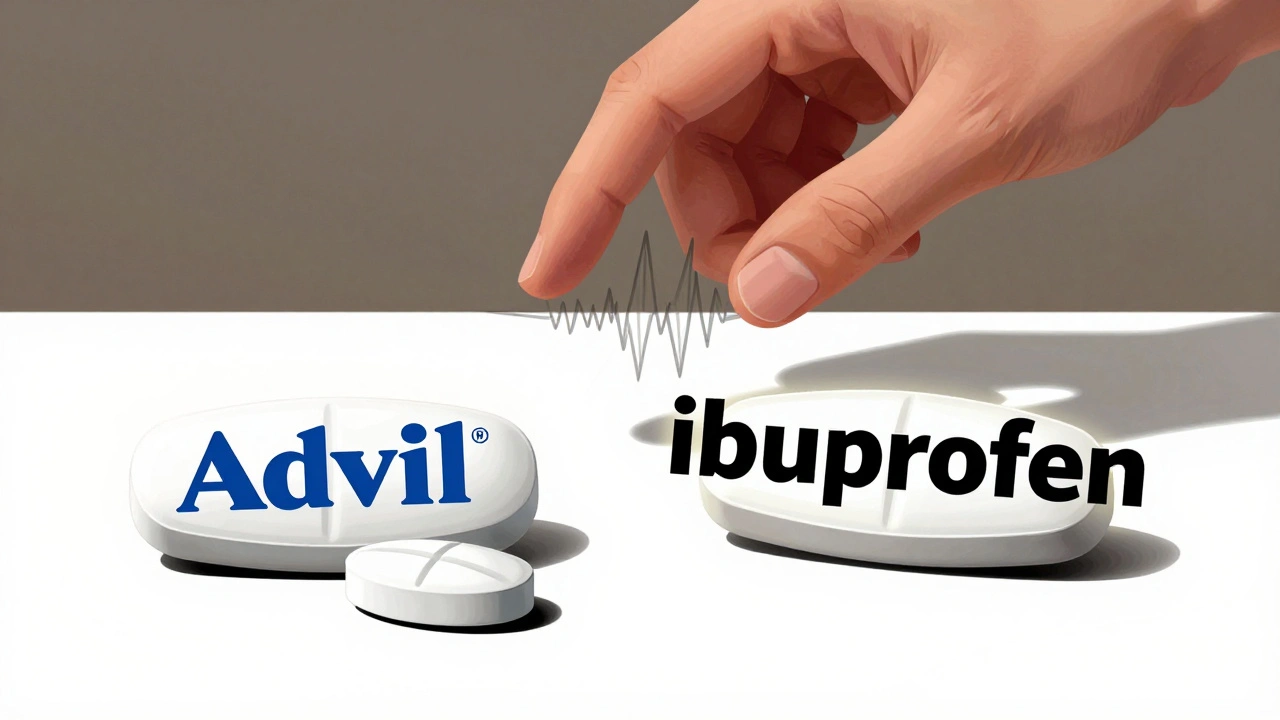
You take a pill. It’s supposed to help. But what if the pill itself isn’t the problem - it’s what you think it is?
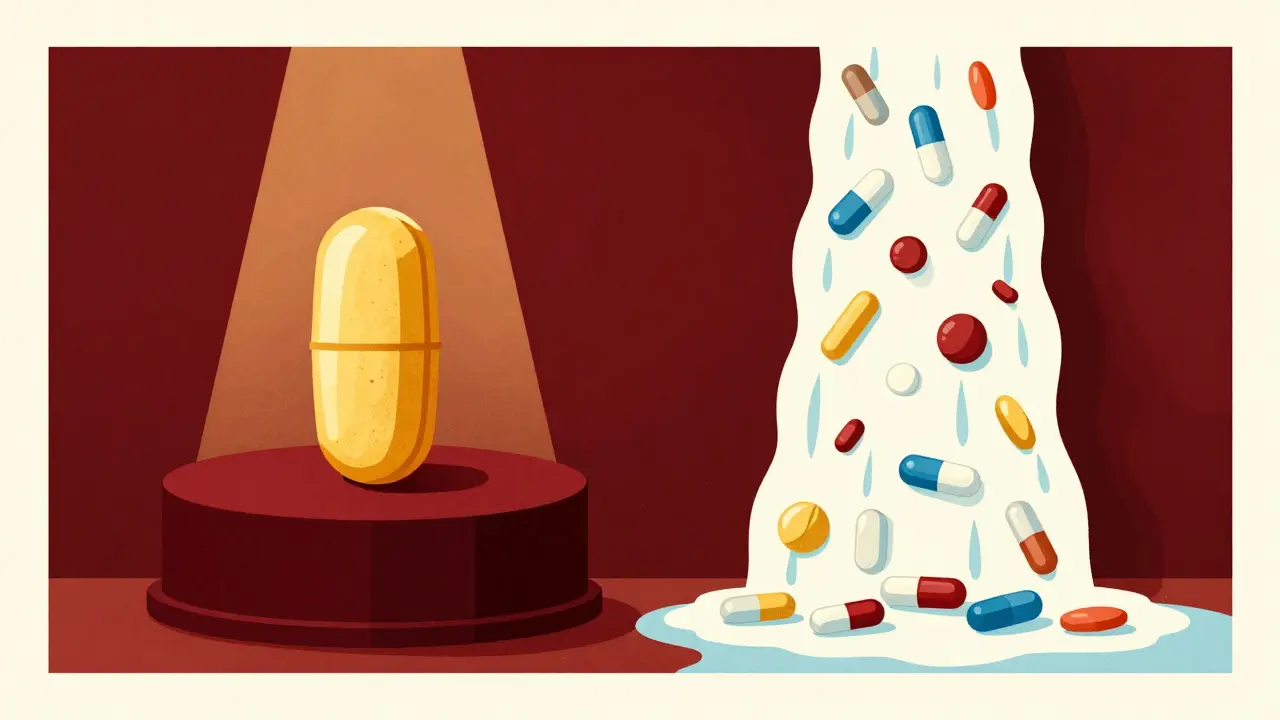
Imagine this: two identical tablets. Same active ingredient. Same dosage. Same manufacturer. One says ibuprofen in plain white letters. The other says Advil with bold blue lettering and a familiar logo. You’re told one is a brand, the other is generic. You take both on different days. Guess which one works better?
It’s not a trick. Studies show the branded one often feels more effective - even when it’s just a sugar pill. And the generic? Even though it’s chemically identical, your brain might not believe it’s doing anything at all.
Why a $0.02 pill feels weaker than a $4 one
In 2014, researchers at the University of Auckland gave 87 students fake painkillers. Half got pills labeled as a well-known brand. The other half got the exact same pills labeled as a generic. Both groups were told they were getting real medicine. The brand-labeled group reported nearly twice the pain relief. Not because the pills worked better. But because their brains expected them to.
This isn’t rare. A 2014 study in Neurology found Parkinson’s patients who were told they received a $1,500 injection (it was saline) improved 28% more than those told it was a $100 shot. The brain responded to price as a signal of quality. Your body doesn’t know the difference between a $200 bottle and a $15 bottle. But your mind does. And your mind controls your pain, your fatigue, your nausea - even your dopamine levels.
It’s not just price. Packaging matters. A 2023 trial in Wisconsin gave hypertension patients generic pills in redesigned packaging that looked like brand-name drugs - same colors, same font, same layout. No change in ingredients. Just the look. Result? Nocebo complaints dropped by 37%. People stopped reporting side effects they never had before - simply because the pill looked more trustworthy.
The nocebo effect: when your brain makes you sick
The placebo effect gets all the attention. But the real problem with generics is the nocebo effect - when you expect something bad to happen, and your body delivers it.
Take statins. In a 2014 meta-analysis of 12 trials, patients told they were taking a generic version reported 2.1 times more muscle pain than those told they were taking the brand - even though both were sugar pills. Same drug. Same dose. Same everything. Just different labels. The brain, wired to protect you, started sounding alarms: This isn’t the real thing. Something’s wrong. And suddenly, muscles ached. Fatigue set in. Sleep got worse.
This isn’t just in the lab. On Reddit, users write: "Switched from Nexium to generic. My GERD came back. My doctor says it’s psychological - but I feel it." In epilepsy clinics, 39% of patients report more seizures after switching to generics. Yet EEGs show no actual change in brain activity. The seizures are real to the patient. But they’re triggered by fear, not chemistry.
And it’s worse for people who already feel powerless. A 2023 JAMA Psychiatry study found low-income patients experience 2.3 times stronger nocebo effects. Why? Because they’ve been conditioned to believe cheaper = worse. If you’re choosing between food and medicine, and the medicine looks like something you’d get at a discount store - your brain assumes it’s less powerful. That’s not irrational. It’s survival logic. But it’s killing your health.
Generics aren’t weak. Your expectations are.
The FDA requires generics to be within 80-125% of the brand’s absorption rate. That’s not a loophole. That’s a scientifically proven range where therapeutic outcomes are identical in 98.5% of cases. The World Health Organization agrees. So do the pharmacists who fill your prescriptions.
Yet 30% of Americans still believe generics are less effective. That’s not ignorance. It’s marketing. Brand names spent billions on trust. They bought ads, sponsored doctors, created logos that feel like promises. Generics? They’re labeled with a chemical name and a barcode. No story. No emotion. No reassurance.
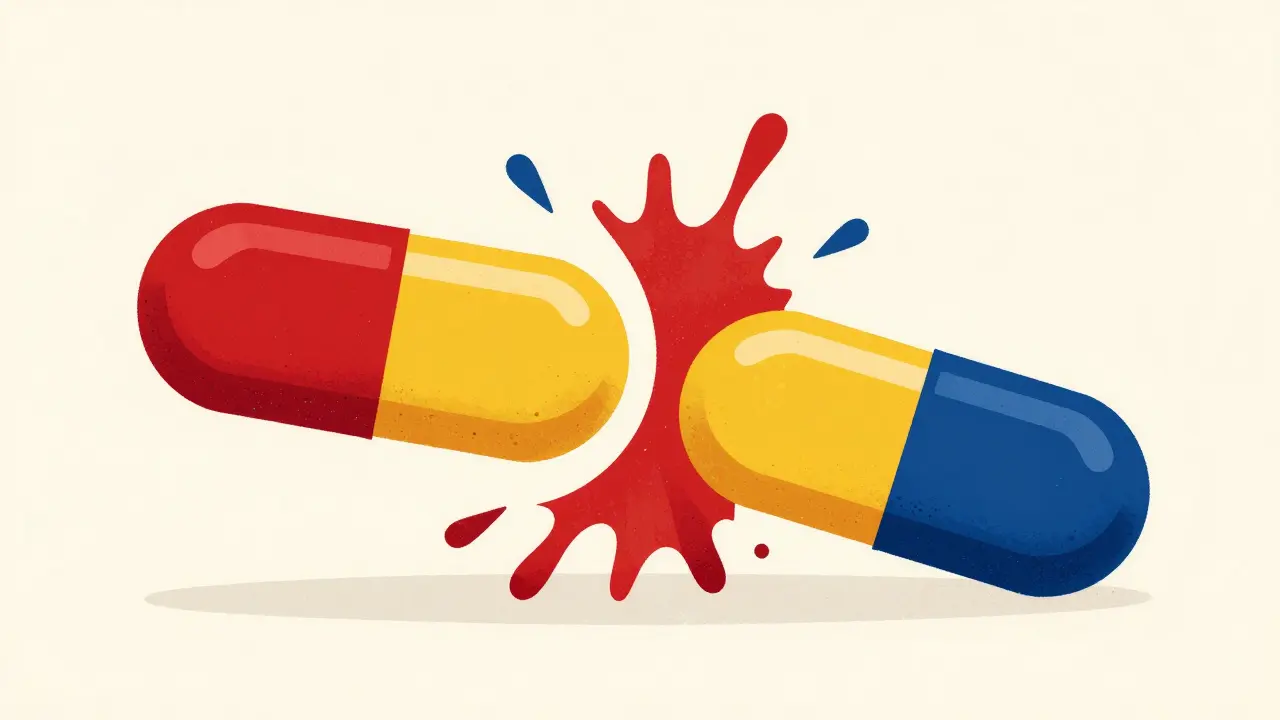
Here’s the truth: a generic ibuprofen tablet has the same molecules as the brand. The same chemical structure. The same half-life. The same mechanism. The only difference? The label.
And yet, in migraine studies, brand-labeled placebos reduced pain by 41%. Generic-labeled placebos? Just 22%. That’s not a drug difference. That’s a belief difference.

When does perception matter - and when doesn’t it?
Not all drugs are affected equally. The placebo effect is strongest in conditions where the brain plays a big role: pain, depression, anxiety, migraines, Parkinson’s, GERD. These aren’t “all in your head.” They’re real conditions where your brain actively shapes your experience.
But if you have pneumonia? A generic antibiotic works just as well as the brand. Your immune system doesn’t care what the pill looks like. If you have high blood pressure? The numbers don’t lie - your systolic pressure drops the same whether the pill says Losartan or Cozaar.
So why do some people swear generics don’t work for their anxiety? Because their brain is hyper-focused on how they feel. If they expect to feel worse, they notice every twitch, every flutter, every moment of unease. They blame the pill. Not because it changed. But because their mind did.
What doctors aren’t telling you (and how to fix it)
Most doctors don’t have time to explain bioequivalence. They write the script. The pharmacy fills it. You get a different-looking pill. You panic. You stop taking it. You end up back in the ER.
But there’s a fix. In a 2018 study at the University of Chicago, doctors spent just 7 minutes explaining to patients: "This generic has the same active ingredient. It’s not cheaper because it’s worse. It’s cheaper because we don’t pay for ads or fancy packaging. Your body can’t tell the difference. But your brain can - so let’s make sure it knows the truth."
After that talk, generic acceptance jumped from 58% to 89%. Six months later, 72% of those patients were still taking their meds. In the control group? Only 44%.
It’s not about convincing. It’s about re-framing. Saying “This is just as good” doesn’t work. Saying “This is the exact same medicine, just without the marketing” does. It turns a loss (cheaper) into a win (same result, more money in your pocket).
Some clinics now use apps that show 3D animations of how the drug works - side by side, brand and generic. One study found this boosted adherence by 29%. You see the molecules. You see the absorption curves. You see they’re identical. And suddenly, the pill doesn’t feel like a gamble.
What you can do right now
1. Ask your pharmacist: “Is this generic the same as the brand?” They’ll show you the bioequivalence data. Most don’t know it’s available - but it is.
2. Don’t assume side effects are from the drug. If you feel worse after switching, wait a week. Track your symptoms. Are they new? Or are they just things you started noticing because you were worried?
3. Ask your doctor to explain. Say: “I’ve heard generics work the same, but I’m not sure. Can you help me understand why?” Most will be happy to help - if you give them the chance.
4. Look for better packaging. Some generic manufacturers now use color-coded pills, familiar shapes, even branded-style bottles. If you’re skeptical, ask for one with better design. It’s not placebo. It’s psychology.
5. Know your numbers. If you’re on blood pressure meds, check your readings before and after switching. If you’re on antidepressants, track your mood. Data beats fear.
It’s not about trust. It’s about control
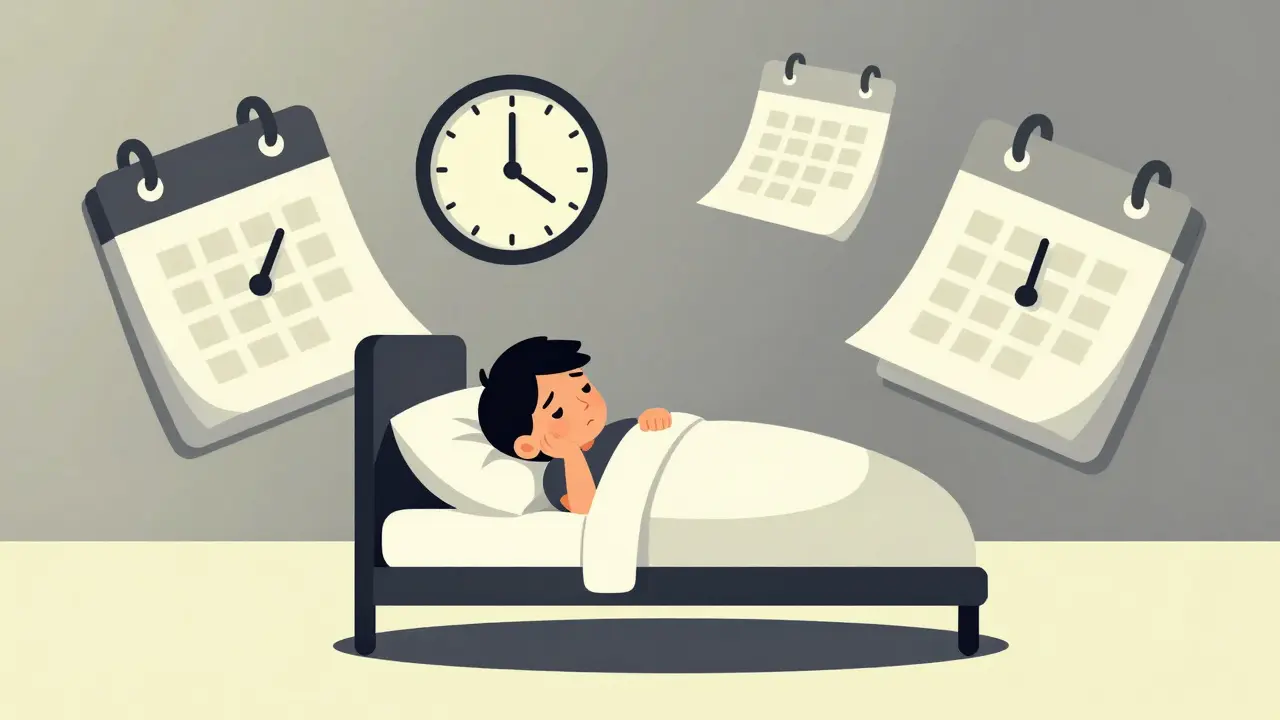
People don’t reject generics because they’re dumb. They reject them because they feel powerless. The healthcare system is confusing. Prices are hidden. Pills change without warning. When you’re sick, you want control. And the only thing you can control is what you believe.
But here’s the power move: you can choose to believe the truth. That a generic isn’t a downgrade. It’s a smart choice. That your body doesn’t care about logos. That your mind does - and you can train it.
The science is clear. The savings are real. The results? Identical.
Next time you get a generic, hold the pill in your hand. Look at it. Remember: this tiny thing saved you hundreds. It’s not magic. But it doesn’t need to be. It just needs you to believe it works - because it does.
Do generic drugs really work the same as brand-name drugs?
Yes. By law, generic drugs must contain the same active ingredient, strength, dosage form, and route of administration as the brand-name version. They must also meet the same FDA standards for quality, purity, and performance. Bioequivalence studies show they work the same in the body - 98.5% of the time. The only differences are in inactive ingredients (like fillers) and packaging - which don’t affect how the medicine works.
Why do I feel worse on generic medication?
You’re likely experiencing the nocebo effect - when expecting side effects causes you to feel them. Studies show people report more side effects from generics simply because they believe they’re inferior. Your brain notices sensations you might have ignored before. This isn’t your imagination - it’s your brain reacting to belief. Tracking symptoms over time, and comparing them to your brand-name experience, can help separate real side effects from psychological ones.
Can the placebo effect make a real difference in how I feel?
Absolutely. For conditions like pain, depression, anxiety, migraines, and Parkinson’s, your brain plays a major role in how you experience symptoms. Expectations can trigger real biological changes - like increased dopamine or reduced inflammation. A brand-labeled placebo has been shown to reduce pain nearly as much as real ibuprofen. That’s not magic. It’s neuroscience. Your belief literally changes your body’s response.
Are generic drugs less safe than brand-name drugs?
No. Generic drugs are held to the same strict manufacturing standards as brand-name drugs. The FDA inspects both types of facilities equally. The only real difference is cost - generics are cheaper because they don’t spend money on advertising, branding, or patent protection. Some patients report differences due to inactive ingredients, but these are rare and usually minor. If you have a reaction, talk to your doctor - but don’t assume it’s because it’s generic.
How can I convince myself that generics work?
Start with facts. Ask your pharmacist for the bioequivalence data. Use apps that show side-by-side comparisons of brand and generic drugs. Track your symptoms with a journal - compare how you felt before and after switching. Talk to your doctor about the science behind placebo effects. And remember: the pill doesn’t change. Your mind does. You can retrain it by choosing to believe in the evidence, not the label.
sagar bhute
December 3, 2025 AT 03:05The entire healthcare system is a scam built on placebo branding. Companies spend billions on logos so you'll pay 20x more for the exact same chemical. Your brain is a gullible child being fed candy labeled 'premium' just because it's wrapped in blue foil. Stop letting corporations program your nervous system.
Cindy Lopez
December 4, 2025 AT 01:58Actually, the FDA requires generics to be within 80–125% bioequivalence, not ‘identical.’ That’s a 45% variance window - which, statistically, can produce clinically meaningful differences in narrow-therapeutic-index drugs like warfarin or levothyroxine. Your article oversimplifies a complex pharmacokinetic reality.
James Kerr
December 4, 2025 AT 20:49Hey, I used to think generics were trash too. Then I switched my blood pressure med to generic losartan and saved $80 a month. No side effects, no weird feelings. My BP readings were spot on. Sometimes the mind plays tricks - but the numbers don't lie. Give it a real shot before you quit.
shalini vaishnav
December 5, 2025 AT 10:29Of course generics work. India manufactures 40% of the world's generic drugs. We don't have fancy packaging or American marketing budgets. We have science. If you're too weak-minded to trust a tablet because it doesn't have a logo, maybe you shouldn't be taking medicine at all.
Archie singh
December 5, 2025 AT 19:55They're lying to you. The real reason generics 'work' is because Big Pharma doesn't want you to know they're all made in the same factories. The same machines. The same workers. The brand name? Just a sticker. The FDA? A rubber stamp. You're being sold a myth so they can keep charging you $200 for ibuprofen.
Gene Linetsky
December 6, 2025 AT 06:31Wait - so you're telling me the government is letting pharmaceutical companies swap out pills and we're supposed to believe the brain is the only thing changing? What if the generic has different fillers that trigger autoimmune responses? What if the absorption curve is off just enough to cause long-term damage? Nobody tests that. Nobody cares. It's all profit.
Ignacio Pacheco
December 6, 2025 AT 21:24So you're saying if I call my water 'Premium H2O' with a fancy logo, I can charge $10 a bottle and people will swear it hydrates better? That’s not placebo. That’s just capitalism with a lab coat.
Jim Schultz
December 8, 2025 AT 11:51Let’s be clear: the nocebo effect is real - but so is the fact that some generics have different inactive ingredients that cause GI distress in sensitive individuals. You’re dismissing legitimate concerns as ‘psychological’ - which is exactly what doctors said about chronic pain for decades. Don’t conflate correlation with causation - and don’t condescend to patients who’ve been burned.
Kidar Saleh
December 10, 2025 AT 04:01In the UK, we have a system where pharmacists are trained to explain bioequivalence at the counter. We don’t have the same fear culture. People take generics without a second thought - not because they’re ignorant, but because they’re informed. The problem isn’t the pill. It’s the silence from the medical establishment. Talk to people. Don’t just prescribe.
Chloe Madison
December 11, 2025 AT 00:30You are not powerless. You have agency. You can ask for data. You can track your symptoms. You can choose to believe the science - not the sticker. This isn't about money. It's about reclaiming your health from marketing noise. You deserve to feel better - and you can, without paying extra. Start today.
Vincent Soldja
December 11, 2025 AT 13:23