
Sertraline GI Symptom Tracker
Your Recommendations
Starting sertraline can feel like a leap of faith - you’re hoping it’ll lift your mood, but your stomach might be the first to rebel. About sertraline nausea and diarrhea aren’t rare surprises; they’re expected for nearly one in three people. If you’ve been feeling queasy or having loose stools since you started your prescription, you’re not alone. And you don’t have to just endure it. Most of these side effects fade, but only if you know how to handle them.
Why Sertraline Hits Your Stomach First
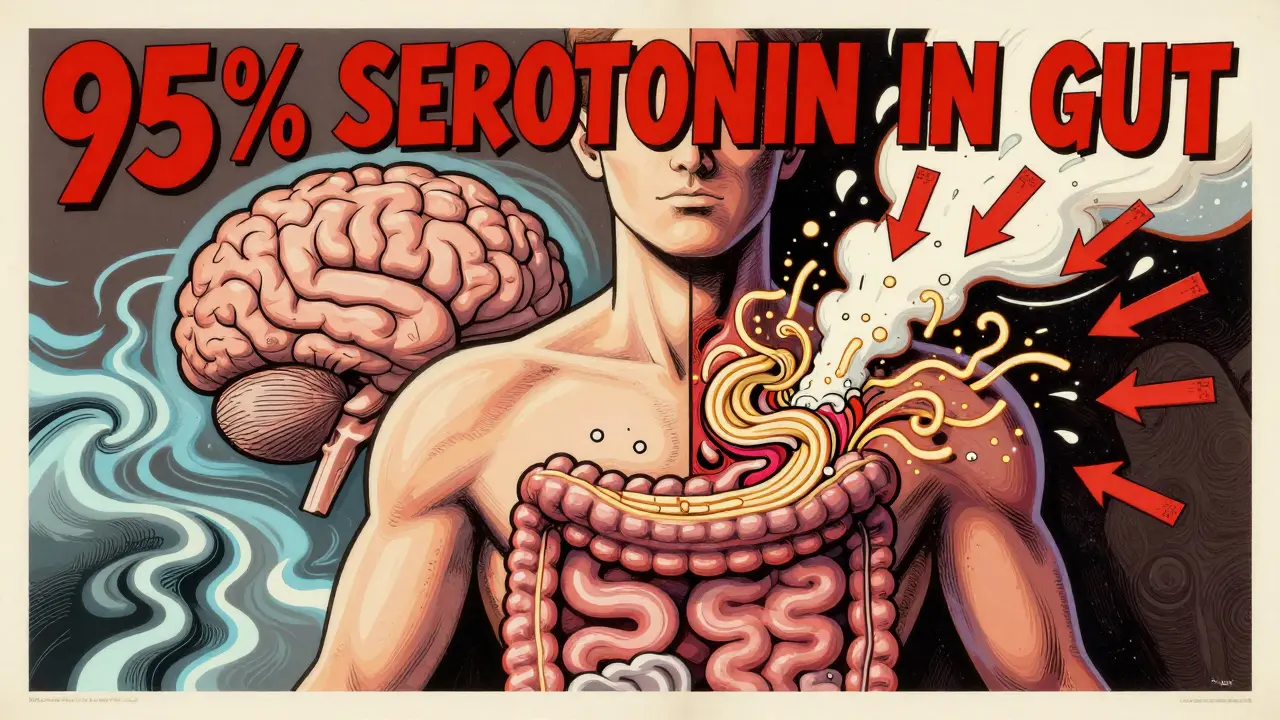
Sertraline doesn’t just work in your brain. It also floods your gut with extra serotonin. That’s because 95% of your body’s serotonin receptors live in your digestive tract. When those receptors get overstimulated, your intestines speed up, fluids shift, and your stomach gets cranky. That’s why nausea and diarrhea are the top two complaints - not headaches or sleep issues. In fact, a 2022 analysis of over 5,000 patients found sertraline was 11.5% more likely to cause GI trouble than any other SSRI, including fluoxetine or escitalopram. The TGA in Australia and the FDA both list diarrhea as a “very common” side effect, affecting at least 10% of users. Nausea? That’s even more frequent - hitting 25% of people in the first few weeks.When It’s Normal - and When It’s Not
Most people feel better within 2 to 6 weeks. Clinical trials show 87% of patients see nausea and diarrhea fade by the end of month one. If your symptoms are mild, getting worse after meals, or happening mostly in the morning, it’s likely just your body adjusting. But if diarrhea lasts more than 4 weeks, gets worse, or includes blood, mucus, or severe cramping, it could be something else. There’s a documented link between long-term sertraline use and microscopic colitis - a type of inflammation in the colon that mimics IBS. The American College of Gastroenterology recommends testing for this if symptoms don’t improve. Same goes for nausea that won’t quit past 3 weeks. That’s not just tolerance - it’s a sign your body isn’t adapting.What to Eat (and What to Avoid)
Food isn’t just fuel - it’s your first line of defense. Taking sertraline on an empty stomach is like lighting a fire in a dry forest. The American Psychiatric Association and Mayo Clinic both recommend taking it with food. Not just any food - something bland and protein-rich. A boiled egg, a slice of toast with peanut butter, or a small bowl of oatmeal can cut nausea by up to 40%. Avoid spicy, greasy, or sugary meals. They irritate your gut and make diarrhea worse. Cut out caffeine and alcohol. Coffee doesn’t just wake you up - it speeds up your bowels. Alcohol dehydrates you and inflames your gut lining. Both make diarrhea linger. Deep-fried foods? Skip them. High-fat meals delay stomach emptying, which makes nausea worse. Stick to simple carbs: rice, bananas, applesauce, plain crackers. These are the go-to foods for any GI upset - and they work here too.
Natural Relief That Actually Works
Ginger isn’t just for seasickness. A 2021 study in the Journal of Psychopharmacology found ginger supplements reduced nausea severity by 27% compared to placebo in people starting sertraline. Try ginger tea, ginger chews, or even a small spoonful of raw grated ginger in warm water. It’s gentle, safe, and works faster than most anti-nausea meds for this specific type of side effect. Sucking on sugar-free hard candy can also help. It triggers saliva production, which soothes the stomach and distracts your brain from the nausea signal. Mint or lemon flavors work best. Don’t chew gum - the swallowing motion can trigger more nausea. For diarrhea, stay hydrated. Water alone isn’t enough. Use oral rehydration solutions (like those used for kids with stomach bugs) to replace lost electrolytes. Coconut water is a natural option, but avoid sugary sports drinks - too much sugar can make diarrhea worse.Dose Matters - More Isn’t Better
Many people start sertraline at 50mg or even 100mg because they want fast results. But that’s often the mistake. The American Psychiatric Association’s 2023 guidelines say: if GI side effects stick around after 2-3 weeks, drop the dose to 25mg or 50mg and go slow. Increase by 25mg every 1-2 weeks. This approach cuts nausea and diarrhea in half without reducing antidepressant effectiveness. One 2022 study showed patients who titrated slowly were 3x more likely to stick with sertraline long-term. If you’re on 100mg and struggling, don’t just quit. Talk to your doctor about stepping down. You might be surprised how much better you feel at 50mg - and how much more stable your mood becomes once your gut calms down.When to Switch Antidepressants
Not everyone can tolerate sertraline. And that’s okay. NICE guidelines in the UK and the American Journal of Psychiatry both say: if GI side effects are severe or persistent after 2-4 weeks, consider switching. Escitalopram (Lexapro) is the top alternative - it’s 44% less likely to cause diarrhea than sertraline, according to the same 2022 meta-analysis. Fluoxetine is also gentler on the stomach, though it has other trade-offs like delayed onset. Real-world data backs this up. In 2023, 34.7% of primary care doctors in the U.S. now pick escitalopram as their first SSRI - up from 22% just five years ago - because patients keep reporting fewer stomach issues. If you’ve tried food, ginger, dose adjustments, and still feel awful, switching isn’t failure. It’s smart treatment.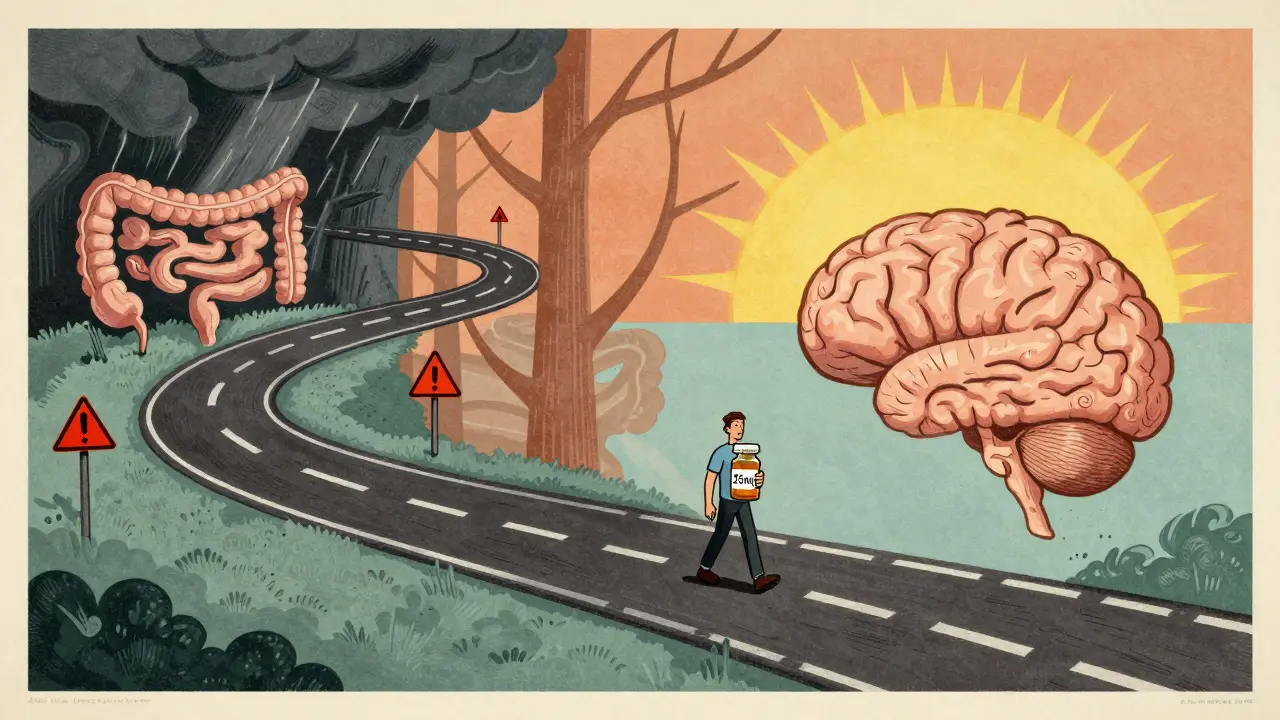


Chris Urdilas
January 29, 2026 AT 04:11Now I take it with peanut butter and a cup of chamomile tea like a civilized human. Nausea? Gone.
Still feel like a zombie, but at least I can keep food down.
matthew martin
January 30, 2026 AT 12:09Most people act like GI side effects are some personal failure, but no - your gut’s just a serotonin sponge.
I started at 100mg because I was desperate. Bad call.
Went down to 25mg, held for two weeks, then crept up.
My stomach stopped staging a coup by week 3.
My mood? Still climbing.
People need to stop treating dose escalation like a race.
It’s not about speed - it’s about survival.
And ginger? Yeah, that’s real. I drink it like it’s holy water.
Also, avoid coffee after 10am. Your colon will thank you.
And yes, I’m still on it. 8 months in.
Not perfect, but better than crying into my cereal every morning.
Thanks for writing this - it’s the guide I wish I had.
Mel MJPS
February 1, 2026 AT 10:15I was about to quit sertraline because I thought I was broken.
Then I found this and tried the peanut butter trick.
Day 2: less nausea.
Day 5: diarrhea slowed.
Now I’m at 6 weeks and feeling like myself again.
You’re not alone. And it gets better.
Katie Mccreary
February 2, 2026 AT 21:21Wow.
So much for neuroscience.
Rhiannon Bosse
February 4, 2026 AT 12:05They just didn’t tell you because Big Pharma needs you to keep taking it.
They’d rather you suffer than admit sertraline is a gut wreck.
And ginger? That’s what they give you to shut you up.
Meanwhile, TD-8142 is sitting in a lab because it doesn’t make enough money.
They’re not trying to fix it - they’re trying to profit off your nausea.
Phil Davis
February 5, 2026 AT 10:15Then I tried taking it at night.
Still felt like a sea monster threw up in my stomach.
Switched to escitalopram.
Zero GI issues.
Mood’s stable.
Wish I’d done it sooner.
Irebami Soyinka
February 5, 2026 AT 13:31Here in Nigeria, we take our meds like warriors - no toast, no tea, no excuses.
If your stomach can’t handle it, maybe your mind isn’t ready.
Just sayin'. 🌍💪
Rose Palmer
February 7, 2026 AT 04:44It is imperative that individuals experiencing gastrointestinal distress while initiating sertraline are empowered with actionable, non-judgmental strategies.
The data supporting dose titration and dietary modification is robust and should be standard of care.
I encourage all clinicians to distribute this resource to patients initiating SSRI therapy.
Well-researched and professionally presented.
SRI GUNTORO
February 8, 2026 AT 22:35Back in my day, we took medicine like adults - no ginger, no peanut butter, no ‘titration.’
Just swallowed it and suffered.
That’s how you build character.
Now everyone needs a diet plan and a TikTok remedy.
Weak.
Jeffrey Carroll
February 10, 2026 AT 19:34As someone who struggled with sertraline-induced nausea for nearly six weeks, I can confirm that the 25mg titration strategy worked for me.
It took patience, but the relief was real.
Also, the ginger tea recommendation was a game-changer - I now drink it daily, even when I’m not on meds.
Thank you for validating what many of us silently endure.