
Why Getting the Right Hepatitis Vaccine Schedule Matters
You don’t need to be a traveler, drug user, or healthcare worker to be at risk for hepatitis A or B. These viruses spread in ways you might not expect-through contaminated food, unsterile needles, or even close contact with an infected person. The good news? Both hepatitis A and B are preventable with vaccines. The bad news? Many people miss the window for protection because they don’t know the right schedule. Getting the doses at the wrong time, skipping a shot, or choosing the wrong vaccine brand can leave you unprotected-even if you think you’re covered.
How Hepatitis A and B Vaccines Work Differently
Hepatitis A and B are caused by two completely different viruses, so their vaccines aren’t interchangeable. Hepatitis A attacks the liver through contaminated food or water. It usually causes short-term illness but can be severe in older adults. Hepatitis B spreads through blood and bodily fluids. It can turn chronic, leading to liver cancer or cirrhosis decades later. That’s why timing matters more for hepatitis B.
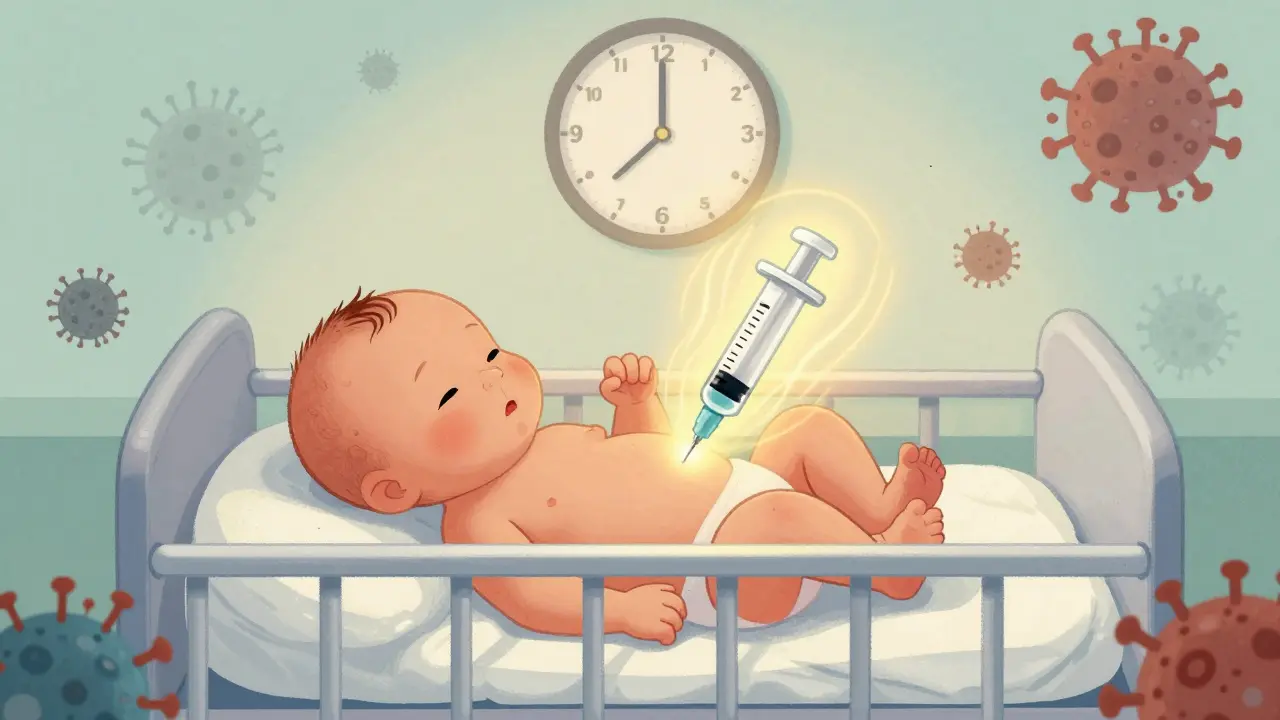
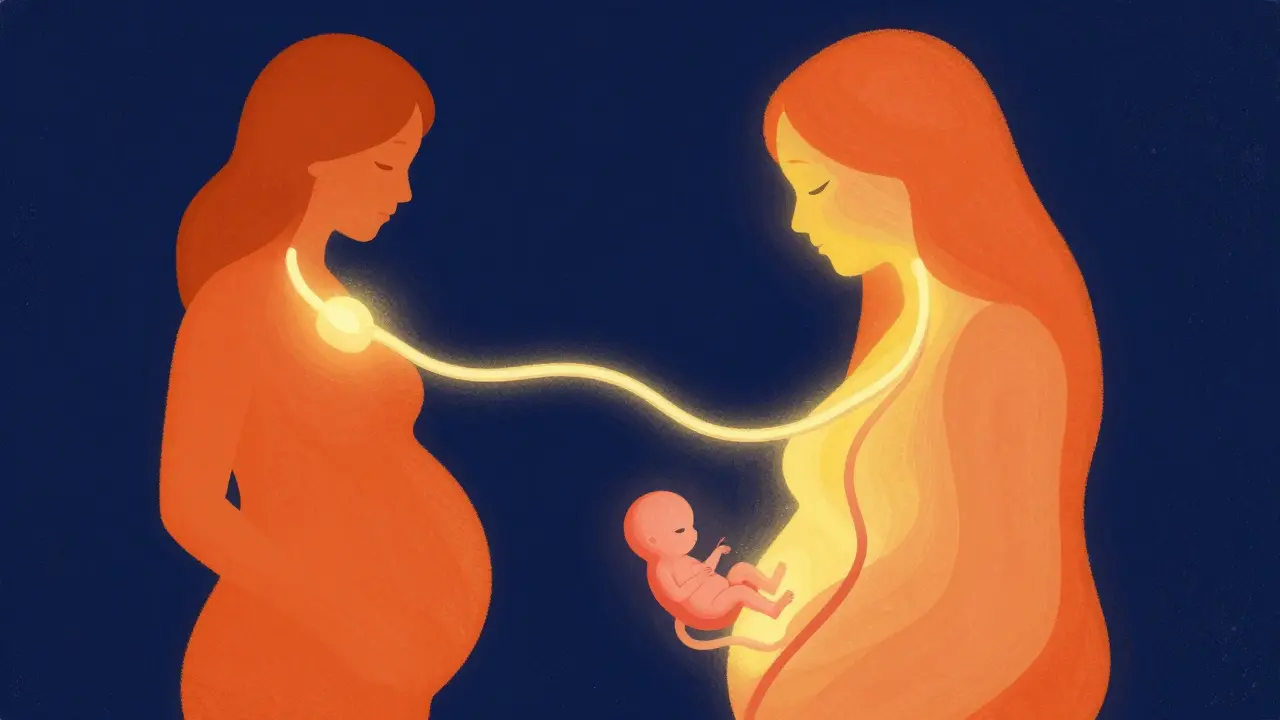
The hepatitis A vaccine is made from inactivated virus. It needs two shots, at least six months apart. The hepatitis B vaccine uses genetically engineered proteins, not live virus. It triggers your immune system to recognize and fight the virus before it can infect your liver. For babies, the first dose is given within 24 hours of birth. That’s not a suggestion-it’s a lifesaving step. Babies infected with hepatitis B have a 90% chance of developing lifelong infection. That number drops to less than 5% if they’re vaccinated at birth.
Standard Hepatitis B Vaccine Schedule for Infants and Children
For babies born in Australia, the United States, or most high-income countries, the hepatitis B vaccine schedule is straightforward:
- First dose: Within 24 hours of birth
- Second dose: At 1 to 2 months old
- Third dose: Between 6 and 18 months old
This three-dose series gives over 98% protection. The birth dose is critical. If a baby is born to a mother with hepatitis B, the first shot must be given with hepatitis B immune globulin (HBIG) within 12 hours. Even if the mother isn’t infected, the birth dose protects against accidental exposure-like a cut or open sore coming into contact with infected blood.
Missing the birth dose doesn’t mean you’ve lost your chance. But every day delayed increases risk. In Melbourne, about 22% of newborns miss the birth dose due to hospital staffing issues, according to local pediatric data. That’s why some clinics now offer standing orders-nurses can give the shot without waiting for a doctor’s sign-off.
Hepatitis A Vaccine Schedule for Children
The hepatitis A vaccine is given as two doses, six months apart. The first shot is recommended between 12 and 23 months of age. You can’t give it earlier than 12 months because the immune system doesn’t respond well before then. The second dose must be at least six months after the first. If you give it too soon, the protection won’t last.
Some parents wonder if their child needs it if they’ve never traveled. The answer is yes. Hepatitis A outbreaks happen in schools and daycare centers. Kids often show no symptoms but can spread the virus for weeks. The CDC reports that before routine childhood vaccination, there were 250,000 cases a year in the U.S. Now, it’s under 1,500. That’s the power of timing.
Adult Vaccination: What’s Different
Adults don’t get the same schedule as kids. For hepatitis B, adults need three doses over six months: at 0, 1, and 6 months. But there are newer options.
Heplisav-B is a two-dose vaccine for adults aged 18 to 59. You get the first shot, then the second one month later. It’s more effective-up to 90% seroprotection in older adults and diabetics-compared to 70-80% with the old three-dose version. But it comes with a black box warning: rare cases of heart problems have been reported. If you have heart disease, your doctor might skip this one.
PreHevbrio is another new option. It’s a three-dose vaccine given at 0, 1, and 6 months, just like the old one. But it’s designed to give stronger protection in people over 40, where immune response naturally drops. Studies show 95% of adults over 40 developed protection with PreHevbrio, compared to 75% with older vaccines.
For hepatitis A, adults follow the same two-dose schedule as kids. But if you’re traveling in two weeks? There’s a trick.
Accelerated Schedules for Travelers and High-Risk Groups
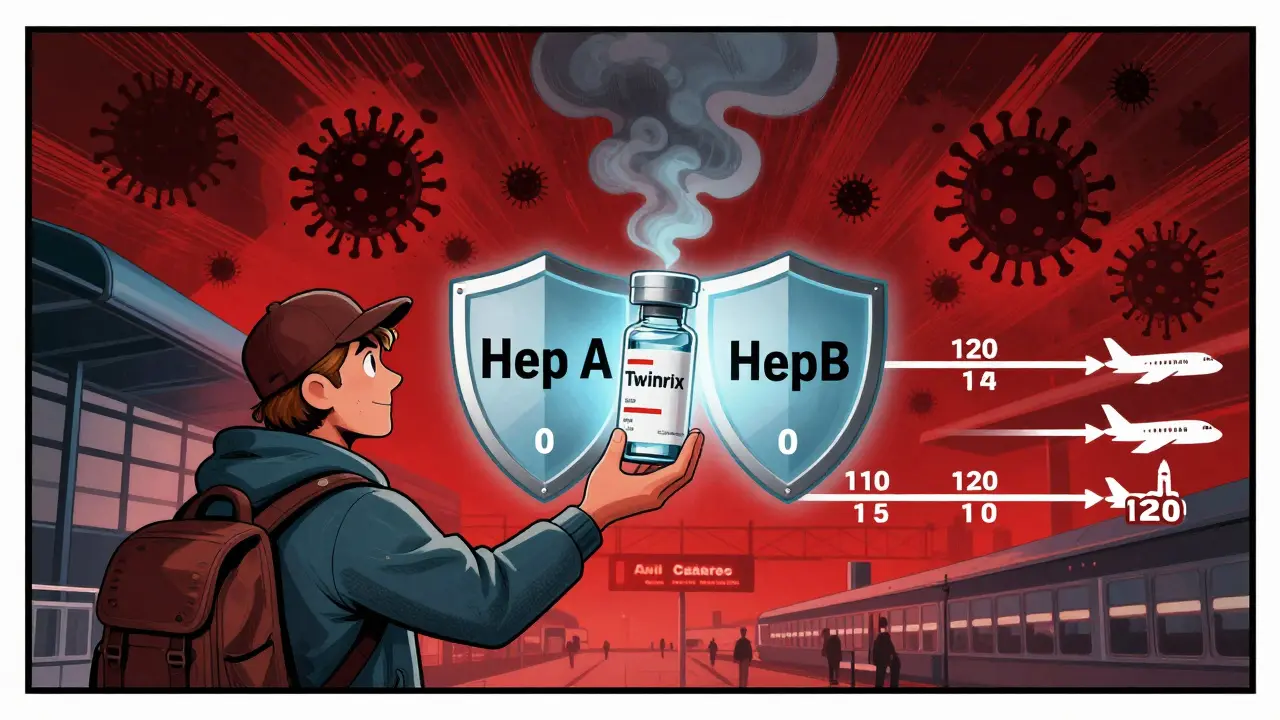
If you’re flying to Southeast Asia or Africa next month and haven’t been vaccinated, you can’t wait six months. That’s where combination vaccines like Twinrix come in.
Twinrix protects against both A and B in one shot. The standard schedule is three doses over six months. But there’s an accelerated version: four shots. You get doses on day 0, day 7, day 21, and then a booster at 12 months. By day 30, 94% of travelers have protective levels of antibodies. That’s faster than any other option.
But here’s the catch: you still need the fourth shot at 12 months. Without it, your protection against hepatitis B fades. One New York travel clinic found 12% of patients never came back for the final dose. That’s worse than not vaccinating at all-it gives false confidence.
People who inject drugs, men who have sex with men, and those with chronic liver disease should get both vaccines as soon as possible. For them, even a two-dose hepatitis B schedule like Heplisav-B can be life-saving. In needle exchange programs in Melbourne, switching to Heplisav-B boosted completion rates from 38% to 89%. One shot less means more people finish the series.
What Happens If You Miss a Dose?
You don’t start over. That’s a common myth. If you miss the second hepatitis B shot at one month, just get it as soon as you can. The third dose still needs to be at least 8 weeks after the second and 16 weeks after the first. For hepatitis A, if you miss the second dose by a year, just get it. You don’t need to restart.
The real danger is thinking you’re protected when you’re not. Studies show 41% of adults who start the hepatitis B series never finish it. They get one or two shots, feel fine, and assume they’re covered. But immunity doesn’t kick in until all doses are given. A single shot of hepatitis B gives you about 30% protection. Two doses? About 70%. Only the full series gives you 95%+.
Who Shouldn’t Get These Vaccines?
Very few people should avoid them. If you had a severe allergic reaction to yeast (in hepatitis B) or to a previous dose of the vaccine, don’t get it again. If you’re sick with a fever, wait until you’re better. Pregnancy is not a reason to skip hepatitis B or A vaccines-they’re safe during pregnancy and breastfeeding.
People with weakened immune systems (like those on chemotherapy or with HIV) need special attention. They may need four doses of hepatitis B, and higher doses. Blood tests after vaccination can confirm if they developed protection. Otherwise, they might think they’re safe when they’re not.
Cost, Insurance, and Access
In Australia, both vaccines are free for children under 10 and for high-risk adults through the National Immunisation Program. For adults not in those groups, costs vary. A single dose of hepatitis B vaccine runs $60-$80. Twinrix costs $150-$180 per dose. Heplisav-B is about $120 per dose.
Insurance often covers them, but not always. One 45-year-old in Melbourne told me his insurer denied PreHevbrio because it’s “not first-line,” even though ACIP recommends it for adults over 40. He paid $450 out-of-pocket. Pharmacists in Victoria now offer the vaccine without a prescription-check with your local pharmacy. They’re often cheaper and more convenient than GP visits.
What’s Next for Hepatitis Vaccines?
Researchers are working on a single-dose hepatitis B vaccine. Early trials show promise. There’s also a new combination vaccine in Phase 3 trials that could protect against both A and B with just two shots instead of four. That could change everything for travelers and high-risk groups.
But for now, the best protection is still the schedule you follow today. Birth dose on time. Two shots for hepatitis A, six months apart. Three for hepatitis B-or two, if you’re an adult and eligible for Heplisav-B. Don’t wait until you’re traveling or diagnosed to act. The virus doesn’t ask for an appointment.
Can I get hepatitis A and B vaccines at the same time?
Yes. You can get both vaccines on the same day, in different arms. There’s no interaction between them. In fact, many clinics give them together to reduce the number of visits. The combination vaccine Twinrix does this in one shot, but you can also get separate shots at the same appointment.
Do I need a booster after the full series?
For most people, no. The hepatitis B vaccine provides lifelong protection after the full series. The same is true for hepatitis A. Blood tests to check immunity are only needed for high-risk groups-like healthcare workers, dialysis patients, or people with HIV. If you’re healthy and completed the schedule, you’re protected for life.
Is the hepatitis B vaccine safe for newborns?
Extremely safe. Over 2 billion doses have been given worldwide since 1982. The birth dose has been linked to no serious side effects. Common reactions are mild: soreness at the injection site or a low fever. The risk of not vaccinating-chronic liver disease, cancer, or death-is far greater than any risk from the vaccine.
Why is the hepatitis B birth dose so important?
Because babies infected at birth have a 90% chance of becoming lifelong carriers. Most won’t show symptoms for decades, but they can spread the virus and develop liver cancer later. The birth dose cuts that risk to less than 5%. Countries that give the birth dose to over 90% of newborns have cut chronic hepatitis B in children to under 1%. It’s the single most effective step in ending hepatitis B.
Can I get vaccinated if I already had hepatitis A or B?
If you’ve had hepatitis A, you’re immune for life and don’t need the vaccine. If you’ve had hepatitis B, you’re also immune-but only if you recovered fully. If you’re not sure, a simple blood test can tell you. You don’t need to be vaccinated if you already have antibodies. But if you’re unsure, getting the vaccine won’t hurt you.
Marc Durocher
February 3, 2026 AT 03:25So let me get this straight - we’re giving newborns a vaccine for a virus they probably won’t touch for 20 years, but I can’t get my flu shot without a 30-minute lecture from the nurse? The system’s backwards, but hey, at least the baby’s covered. I’ll take it.
larry keenan
February 3, 2026 AT 16:27It is imperative to underscore the immunological mechanisms underpinning the efficacy of the hepatitis B vaccine regimen. The recombinant surface antigen (HBsAg) elicits a robust humoral response, with seroconversion rates exceeding 95% in immunocompetent populations following the standard three-dose protocol. Deviations from the recommended temporal intervals may compromise the development of immunological memory.
Gary Mitts
February 4, 2026 AT 14:21Birth dose = lifesaver. Skip it = gamble. No cap.
clarissa sulio
February 5, 2026 AT 12:59Why are we giving vaccines to every baby like they’re going to war? In my day, we just washed our hands and prayed. Now we’re injecting kids with science experiments. I’m not saying it doesn’t work - I’m saying it’s too much.
Anthony Massirman
February 6, 2026 AT 01:16Heplisav-B is a game changer. Two shots instead of three? Yes please. My buddy in Edmonton got it last year and never went back. He’s got more protection than half the people in his office. Why are we still using the old stuff?
Bridget Molokomme
February 7, 2026 AT 17:53Anyone else notice how the article says ‘you don’t need to be a traveler or drug user’ but then spends 70% of the time talking about travelers and drug users? Like… are we trying to scare people or reassure them?
Monica Slypig
February 9, 2026 AT 00:22Why does america even have hepatitis A anymore? We’re a first world country. We have running water. We have soap. This is like vaccinating kids against getting dirt on their knees. Also I think they misspelled ‘hepatitis’ in one of the headings. Or maybe I’m just tired.
Becky M.
February 10, 2026 AT 01:14i grew up in a small town where no one got the hep a vaccine and we never had an outbreak. now my kid has to get two shots and i’m supposed to be grateful? i get the science but sometimes it feels like we’re vaccinating against hypotheticals. also, i think the clinic gave me the wrong form - it said ‘hepatitis b’ but the sticker said ‘hepatits a’. i didn’t say anything. i just took it.
jay patel
February 10, 2026 AT 10:41bro i got the hep b vaccine in india like 15 years ago and i thought it was just one shot and i was fine for years until i got a job in a hospital and they made me get tested and i had no antibodies so i had to start all over again. i was so mad. why dont they just tell you you need three shots and not just say ‘vaccine available’ and leave it at that? also i think the one i got was fake or something because my arm hurt for a week and i still got sick with jaundice once. not sure if that was hep or just bad biryani. but point is people dont know what theyre doing and its scary.
Ansley Mayson
February 12, 2026 AT 03:00So the article says the birth dose is critical. But if 22% of newborns miss it in Melbourne, and most of those moms are healthy, then maybe the risk isn’t as high as they claim. Or maybe the system is just broken. Either way, I’m not paying $450 for a vaccine my kid probably doesn’t need.