
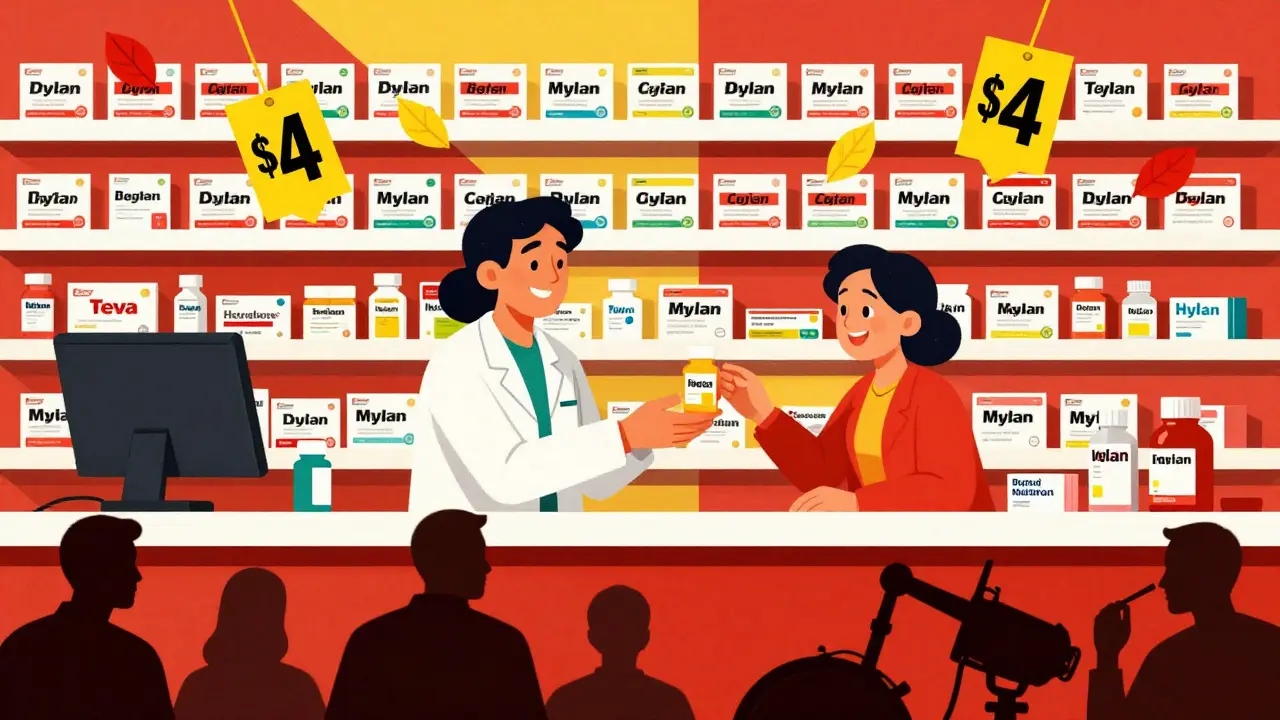
When you walk into a pharmacy in the US and pick up a month’s supply of generic lisinopril, you might pay $4. In Germany, the same pill could cost you €15. That’s not a mistake. It’s the result of two completely different systems-one built for competition, the other for control. And it’s why Americans pay less for generics but far more for brand-name drugs than people in Europe.
How the US Generic Market Works
The US generic drug market isn’t just competitive-it’s brutal. With over 90% of prescriptions filled with generics, manufacturers fight for every penny. Companies like Teva, Mylan, and Sandoz produce thousands of off-patent drugs, and they’re not afraid to undercut each other. Some generics are sold below manufacturing cost just to keep shelf space. That’s how prices drop so low.
Pharmacy Benefit Managers (PBMs) play a huge role. These middlemen negotiate rebates with drugmakers, often getting 35-40% off list prices for brand-name drugs. While those discounts don’t always reach the patient, they create pressure on generic makers to keep prices low to stay in formularies. Big pharmacy chains like CVS and Walmart use their buying power to drive down prices even further. The result? A system where volume wins, and margins are razor-thin.
But there’s a catch. When prices fall too far, manufacturers quit. A 2024 study found that some generic drugs disappeared from shelves because no one could make money selling them. Then, one company steps in, buys up the supply, and raises prices. That’s how we got the EpiPen crisis and the recent shortages of antibiotics and blood pressure meds.
How Europe Handles Generic Drugs
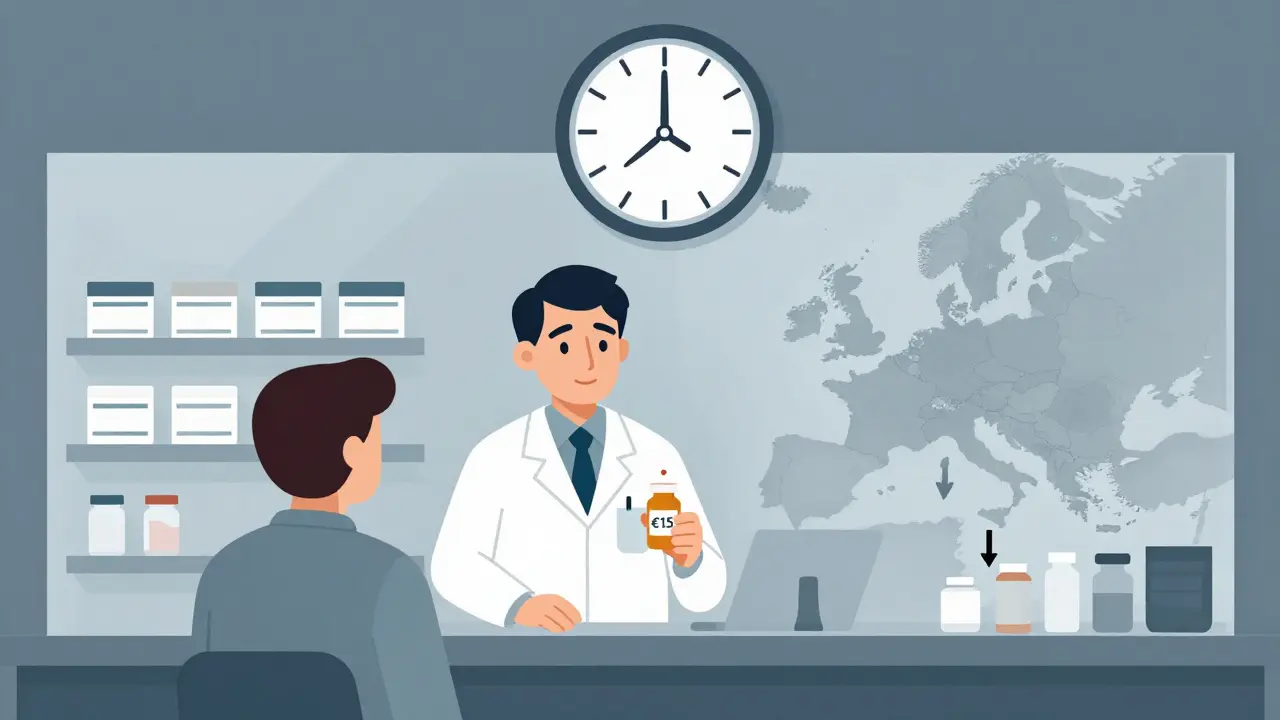
In Europe, the government doesn’t let the market decide prices. Instead, national agencies set them. Germany, France, and the UK all use centralized systems to negotiate with drugmakers. They don’t just look at cost-they ask: Is this drug worth it?
France and Germany use external reference pricing. That means they look at what other countries pay and set their own price close to the lowest. The UK’s NICE evaluates whether a drug provides enough health benefit to justify its cost. If it doesn’t, it won’t be covered by the public system. This keeps prices stable but also limits competition. Only 41% of prescriptions in Europe are for unbranded generics, compared to 90% in the US. Less competition means less downward pressure on prices.
European pharmacies also rarely switch generics automatically. In Germany, pharmacists can substitute, but in France, you need a doctor’s okay. That reduces pressure on manufacturers to lower prices because patients aren’t shopping around. And because the government pays most of the bill, patients don’t feel the pinch-until they travel to the US and see how cheap generics really are.
Why US Brand-Name Drugs Cost So Much More
Here’s the paradox: the US pays 3-4 times more for brand-name drugs than Europe. Why? Because the US system doesn’t cap prices. Drugmakers set list prices based on what they think the market will bear. Insurance companies and PBMs negotiate discounts behind the scenes, but the patient often sees the full list price unless they have good coverage.
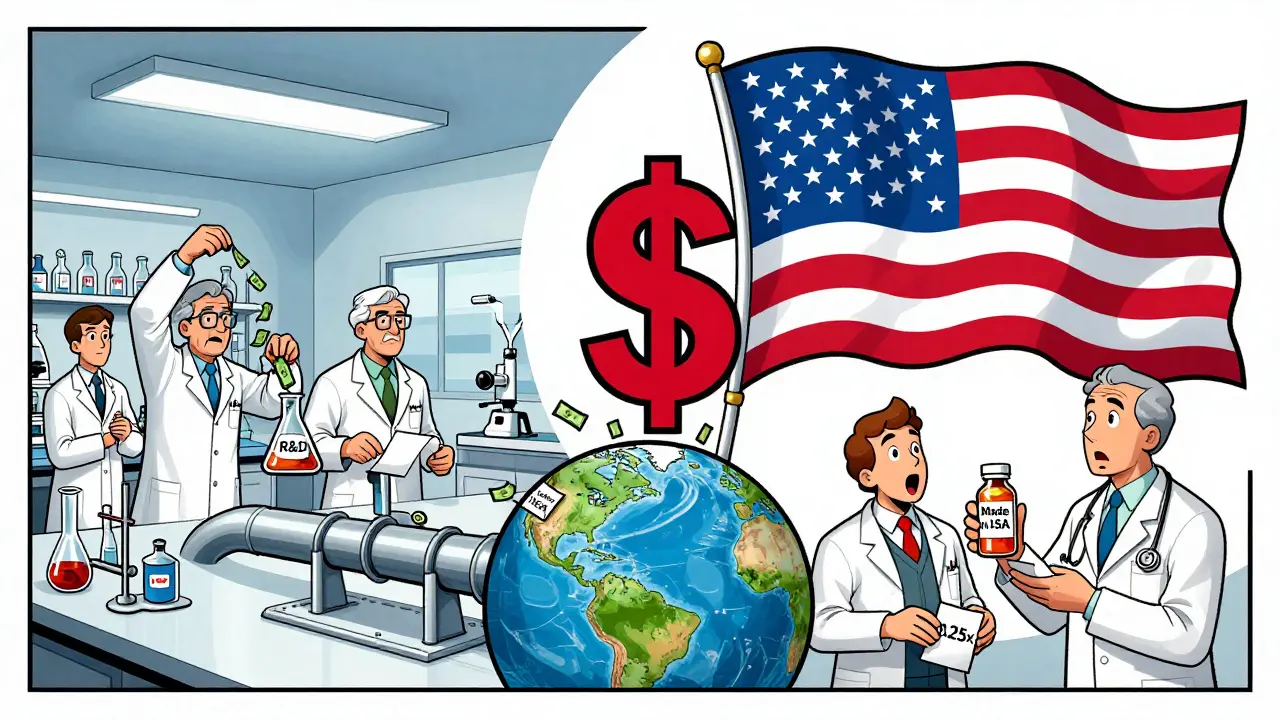
That’s not just bad policy-it’s intentional. The US funds most of the world’s drug innovation. About 60-70% of global pharmaceutical R&D spending comes from American sales. A 2024 Milbank Quarterly analysis showed that if the US paid the same prices as Germany or France, drug companies would lose over $100 billion a year. That’s money that funds new cancer drugs, Alzheimer’s treatments, and rare disease therapies.
European countries benefit from this. They get access to cutting-edge drugs at low prices because they don’t pay for the upfront risk. Dana Goldman from the University of Southern California calls it “free riding.” Americans pay the cost of discovery; Europe pays for the copy.
What’s Changing? Medicare Negotiations and Policy Shifts
That balance is starting to shift. The Inflation Reduction Act lets Medicare negotiate prices for 10 high-cost brand-name drugs. The first round included Jardiance and Stelara. Medicare’s negotiated price for Jardiance was $204-almost four times higher than the $52 average in other OECD countries. That’s not a win for affordability. It’s proof that even after negotiation, US prices still dwarf global averages.
But here’s the twist: these negotiations don’t touch generics. The law only applies to brand-name drugs with no competition. So while Medicare is trying to lower prices for expensive pills, the generic market keeps humming along, unchanged.
Former President Trump’s proposed “most favored nation” plan would have forced the US to pay the lowest price any other country pays. Experts warned it would backfire. If the US paid less, drugmakers would raise prices in Europe to make up the loss. That’s exactly what Alexander Natz of EUCOPE predicted: “It’s not a domestic fix-it’s a global shock.”
What This Means for Patients
For Americans on Medicare or with good insurance, generics are a win. You might pay $0-$10 a month for blood pressure meds, cholesterol pills, or antibiotics. But if you’re uninsured or underinsured, even $10 can be too much. And if your drug has a shortage? You’re stuck.
Europeans pay less out of pocket for brand-name drugs because the system shields them. But if you need a new drug that hasn’t been approved yet-or if your country decides it’s “not cost-effective”-you might wait months or years. Or pay for it privately, which can cost thousands.
One Reddit user from Germany wrote: “I paid €15 for generic lisinopril. My cousin in Ohio pays $4. I thought I was getting a good deal. Turns out, she’s the lucky one.”
And that’s the real story. The US isn’t the most expensive country for all drugs. It’s the most expensive for brand-name drugs. For generics? It’s the cheapest. That’s not luck. It’s structure.
The Bigger Picture: Who Pays for Innovation?
The global pharmaceutical industry makes about $1.5 trillion a year. The US, with just 4% of the world’s population, spends 40% of that. Per capita, Americans spend $1,443 on drugs annually. In the UK, it’s $512. In France, $621.
But here’s what most people don’t realize: those high US prices aren’t just profits. They’re investments. Between 2015 and 2023, 55% of all new drug approvals were first launched in the US. That’s because companies knew they could recover their R&D costs here.
If the US ever forces prices down to European levels, that pipeline slows. New drugs take 10-15 years and $2.6 billion to develop. Without the returns from the US market, that funding dries up. Europe may get cheaper drugs today-but tomorrow, it might get fewer new ones.
For now, the system holds. The US pays more for innovation. Europe pays less for copies. And the generic market? It’s the one place where the US wins outright.
Why are generic drugs cheaper in the US than in Europe?
The US has a highly competitive generic market with over 90% of prescriptions filled with generics. Manufacturers compete aggressively on price, and Pharmacy Benefit Managers use bulk purchasing power to drive costs down. European countries use centralized price controls and limit competition, resulting in higher generic prices despite lower overall drug spending.
Do Americans pay more for all prescription drugs?
No. Americans pay significantly more for brand-name drugs-up to 4 times higher than in Europe-but much less for generics. In fact, US generic prices are about one-third lower than the average in OECD countries. The high cost of brand-name drugs in the US helps fund global pharmaceutical innovation.
Why don’t European countries just lower their generic drug prices?
European governments prioritize budget control over market competition. They set prices based on what other countries pay or whether a drug offers enough health benefit. This limits price wars and reduces incentives for new generic manufacturers to enter the market. As a result, prices stay higher but are more predictable.
Can the US lower brand-name drug prices without hurting innovation?
It’s possible, but risky. Medicare drug negotiations are a first step, but they only apply to a small number of drugs. If the US forces broader price caps, drugmakers may raise prices elsewhere to compensate. That could reduce global access to new medicines. The real solution may be reforming how rebates work and increasing transparency-not just capping prices.
Are generic drug shortages a sign the US system is broken?
They’re a symptom. When prices drop too low, manufacturers leave the market. Once one company controls supply, it can raise prices. This cycle happens because the system rewards volume over sustainability. Fixing it requires better incentives for manufacturers to stay in low-margin markets-like guaranteed minimum orders or tax credits for producing essential generics.
jay patel
February 2, 2026 AT 22:58so like... america pays less for generics but more for brand names? that makes sense if you think about it. we got 90% of scripts filled with generics because everyone's fighting to be the cheapest. in europe they just say nope not worth it and cap it at €15. i paid €12 for my blood pressure med in delhi last year. my cousin in texas paid $3. she thought i was being ripped off. turns out she was the one getting the deal. capitalism works weird sometimes
Ansley Mayson
February 3, 2026 AT 18:33generic drugs are cheap because no one cares if they work. brand names have the science. america's system is just broken. we pay for innovation and europe gets to freeride. end of story. stop pretending this is about fairness
phara don
February 3, 2026 AT 23:31wait so if the us pays more for brand drugs and europe pays more for generics... who's actually winning? 🤔 also why do i keep hearing about shortages of like... basic antibiotics? is this system just one bad supplier away from collapse?
Eli Kiseop
February 5, 2026 AT 20:09i used to think europe was better at healthcare until i saw how long it took my friend to get her new cancer med. she waited 8 months. here in the us i got mine in 3 days. yeah the brand name cost me $800 but my insurance covered 90%. the generics? $5. no drama. no bureaucracy. just pills
Murarikar Satishwar
February 6, 2026 AT 02:00the real issue isn't who pays more or less-it's sustainability. when manufacturers can't make a profit on generics, they leave the market. then one company monopolizes the supply and jacks up prices. this happened with doxycycline and minocycline. the system rewards volume over reliability. we need guaranteed minimum orders for essential generics or tax incentives for manufacturers. otherwise we're just playing russian roulette with life-saving meds
Marc Durocher
February 6, 2026 AT 15:11so let me get this straight... we pay less for generics because we're cutthroat capitalists, and europe pays more because they're all about 'is this worth it?' but then they get all the new drugs first because we funded the R&D? that’s like paying for the whole pizza and letting your friends take the slices. also why does my neighbor in germany pay €15 for lisinopril and i pay $4? i feel like i’m the sucker here 😅
Akhona Myeki
February 7, 2026 AT 08:29It is a well-documented fact that the United States bears the disproportionate burden of global pharmaceutical innovation. The European Union, by contrast, engages in systematic price suppression through centralized price controls and external reference pricing, thereby extracting value without contributing proportionally to research and development expenditures. This is not merely economic disparity-it is institutionalized free-riding. One must ask: if the United States were to align its pricing with that of the United Kingdom or Germany, how many novel therapeutics would fail to reach clinical trials? The answer is: too many. The consequences would be catastrophic for global health equity.
Gary Mitts
February 9, 2026 AT 05:12generics are cheap here because no one makes money on them. that's why they keep disappearing. europe pays more but at least they're always there. we got the deal... until we don't
Bridget Molokomme
February 9, 2026 AT 18:39so america's system is basically: 'here's $4 for your blood pressure pill, now go find another one if this batch runs out' and europe's is: 'here's €15, we'll wait 6 months to approve the next version'... honestly both sound like bad customer service
Hannah Gliane
February 10, 2026 AT 11:57people act like the us is some drug paradise but you know what? if you're uninsured and need a generic that just went out of stock? you're screwed. 💸 and europe? they just say 'not cost-effective' and leave you to die quietly. both systems are broken. we're just screaming louder about it 😒
Ellie Norris
February 11, 2026 AT 21:59my mum's in the uk and she gets her statins for free, but she had to wait 14 months for her new glaucoma med because nice said 'eh, maybe next year'. meanwhile my cousin in florida gets the same med in a week for $12. i don't know what's worse-the wait or the price. both suck
larry keenan
February 12, 2026 AT 02:04the structural asymmetry in pharmaceutical pricing reflects a global division of labor wherein the United States assumes the risk and capital intensity of innovation, while other jurisdictions internalize the downstream benefits of commoditized generics. the absence of price elasticity in demand for essential therapeutics renders the current equilibrium vulnerable to supply chain shocks, as evidenced by the 2024 generic drug shortage data published by the FDA. policy interventions must therefore be calibrated to preserve incentive structures while mitigating market failures.
clarissa sulio
February 12, 2026 AT 05:15why do we even care about europe? we make the drugs they steal. if they want cheap pills they should pay for the research. end of discussion
Vatsal Srivastava
February 12, 2026 AT 17:43everyone says the us pays more for innovation but nobody talks about how the us also has the most expensive healthcare system on earth. we pay more for everything. insurance admin costs alone are 8x europe's. so yeah maybe we fund the drugs but we also pay $200 for a bandaid. this whole 'we're the heroes' narrative is just corporate propaganda